Reading comprehension Addition & Subtraction Worksheets for 9-Year-Olds - Page 2
26 filtered results
-
From - To
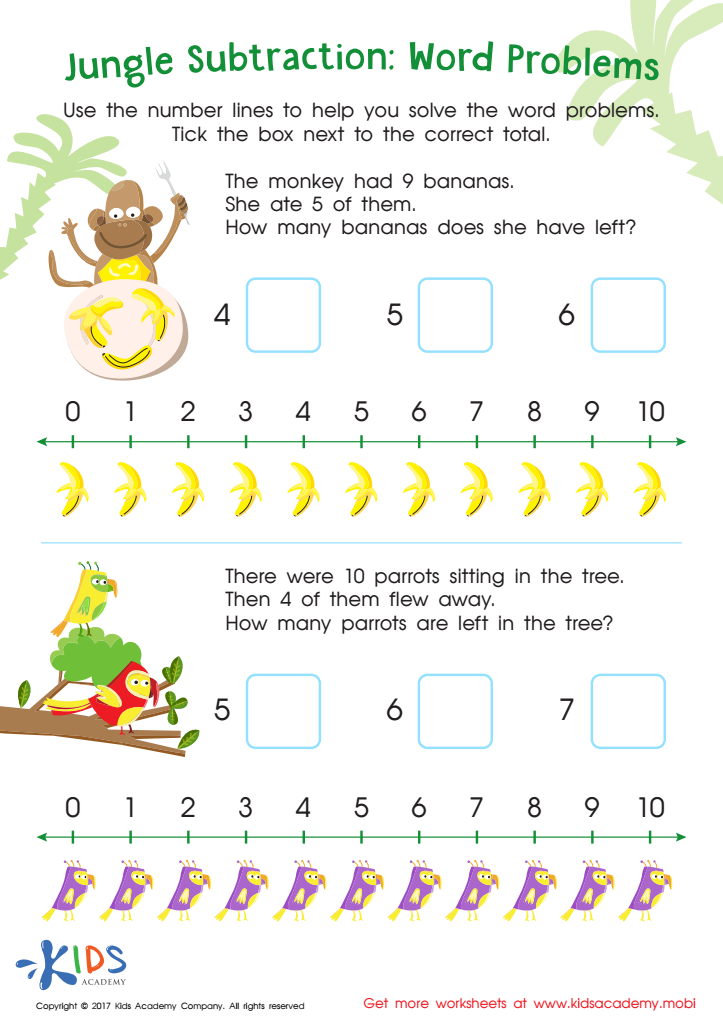
Jungle Subtraction Word Problems Substraction Worksheet
 Assign to My Students
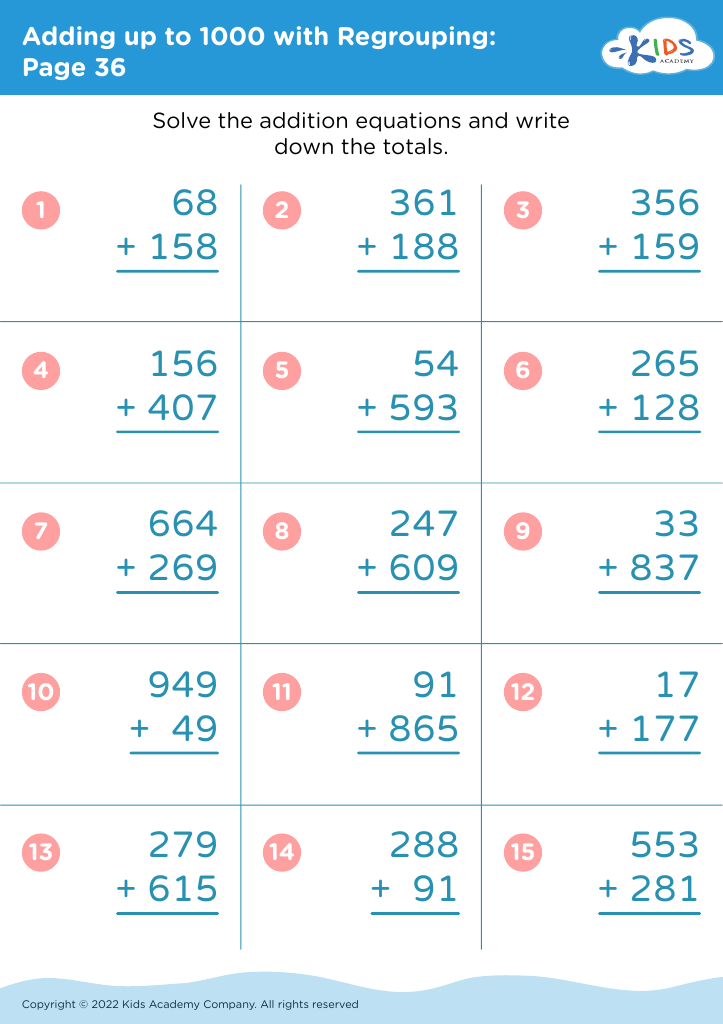





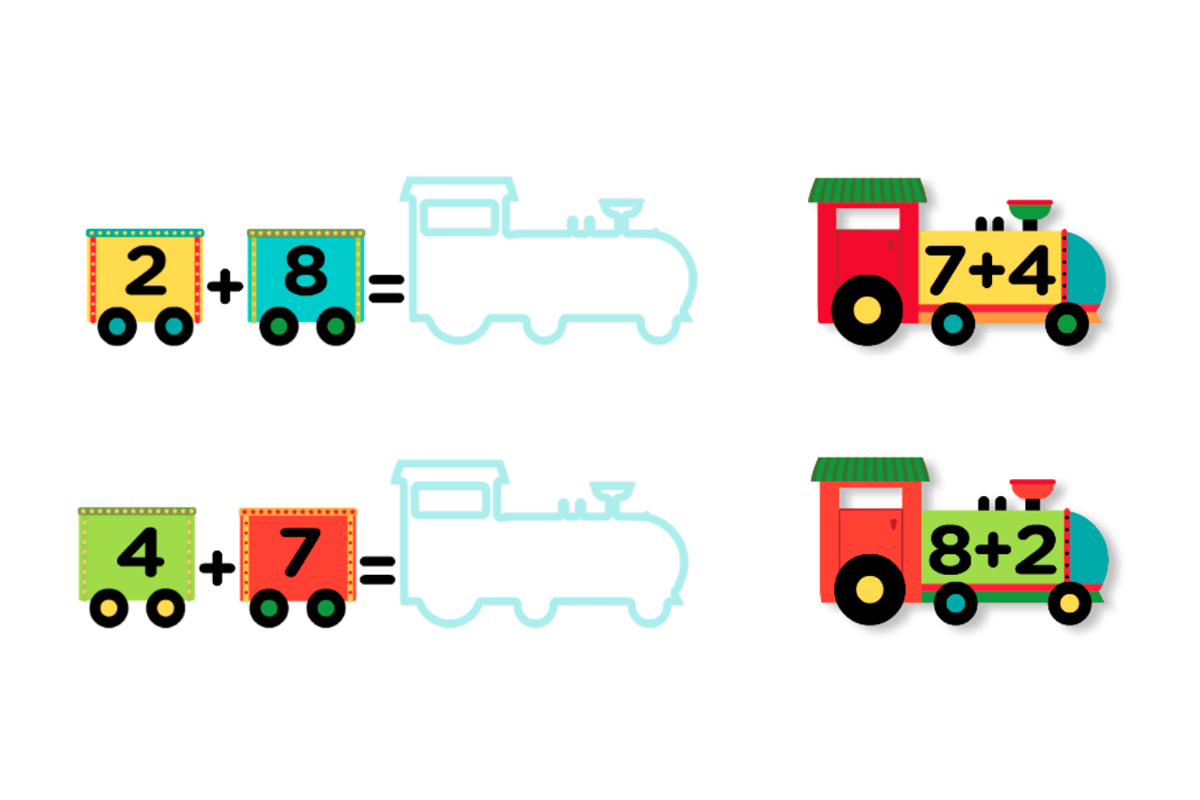


Reading comprehension and proficiency in addition and subtraction are foundational skills essential for 9-year-olds – these skills significantly influence a child's future academic success. Reading comprehension is the ability to understand and interpret text. At this age, children transition from learning to read to reading to learn. Strong reading comprehension helps students grasp new concepts across subjects, boosts their vocabularies, and enables critical thinking, all of which are crucial for their overall cognitive development.
In parallel, mastery of addition and subtraction is vital for their success in math. These basic arithmetic operations are building blocks for more complex mathematical concepts. Understanding addition and subtraction boosts numerical fluency, logical thinking, and problem-solving abilities. For example, these skills are necessary for learning multiplication, division, and fractions, all of which become increasingly crucial in higher grades.
Teachers and parents who prioritize these skills help set the stage for improved academic performance. Early mastery reduces the likelihood of future learning difficulties. Supportive learning environments, engaging educational activities, and consistent practice foster competence and confidence in these areas. Ultimately, proficiency in reading comprehension and basic arithmetic at a young age cultivates lifelong learners, capable of adapting to and excelling in new and diverse academic challenges.








