Fraction simplification Addition Worksheets for 9-Year-Olds
7 filtered results
-
From - To
Our Fraction Simplification Addition Worksheets for 9-Year-Olds are designed to make learning fractions fun and engaging. These printable worksheets offer a variety of exercises that help children understand how to simplify and add fractions effectively. With colorful graphics and clear instructions, kids can practice important math skills in a stress-free environment. Perfect for both classroom use and at-home learning, these worksheets boost confidence and proficiency in fraction simplification. Equip your child with the essential mathematical foundation they need for future success with our expertly crafted resources. Ideal for improving problem-solving skills and reinforcing concepts taught in school.
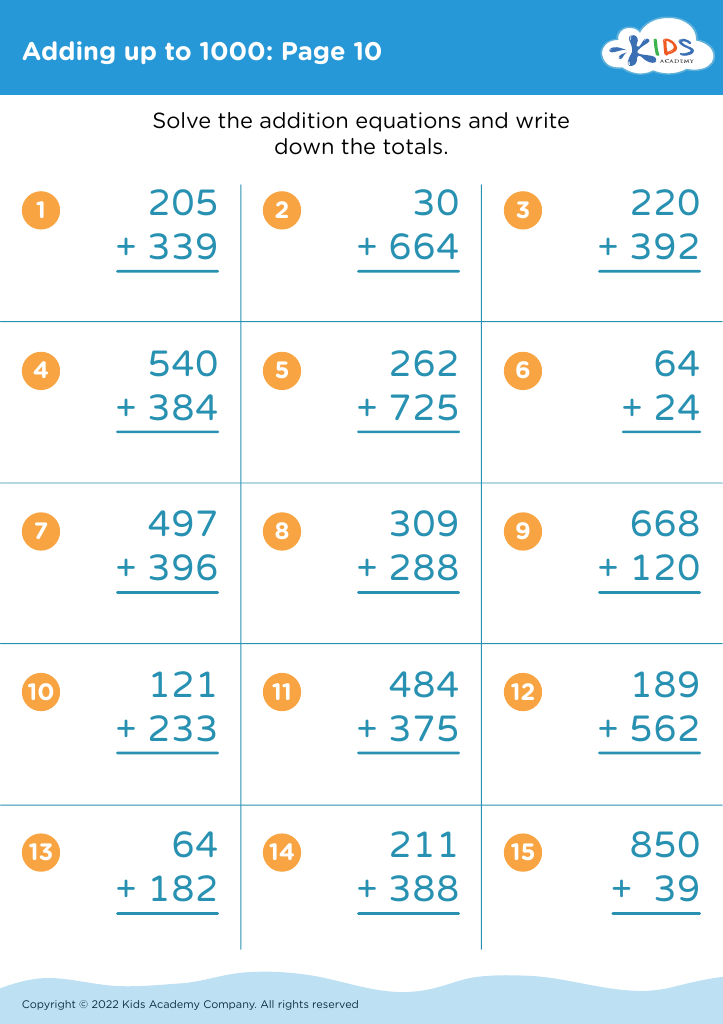
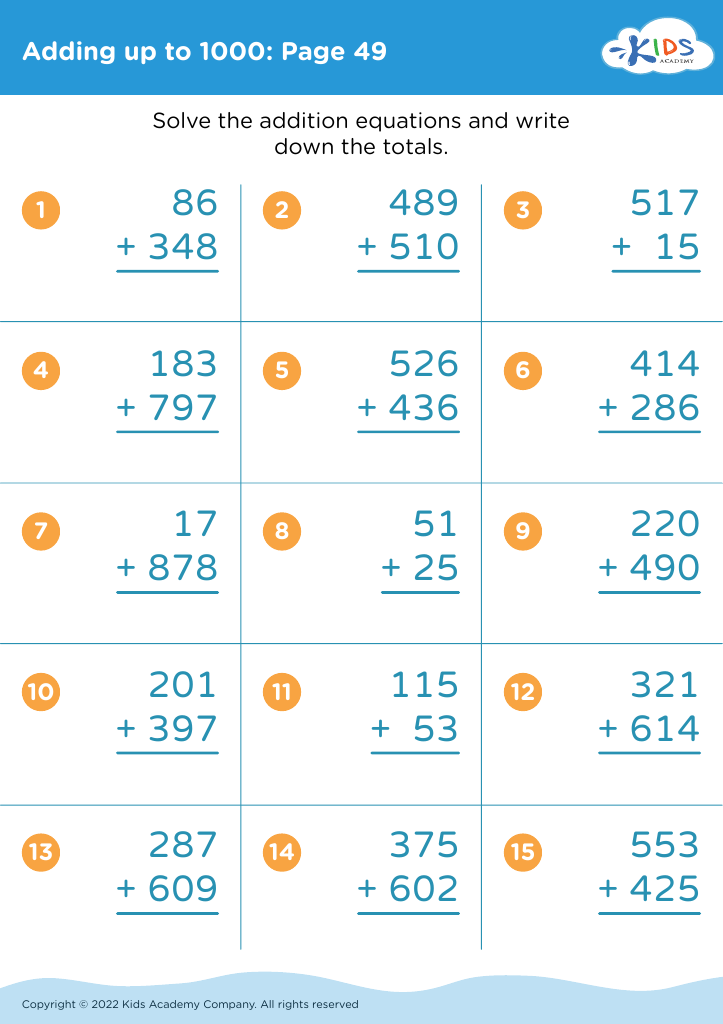
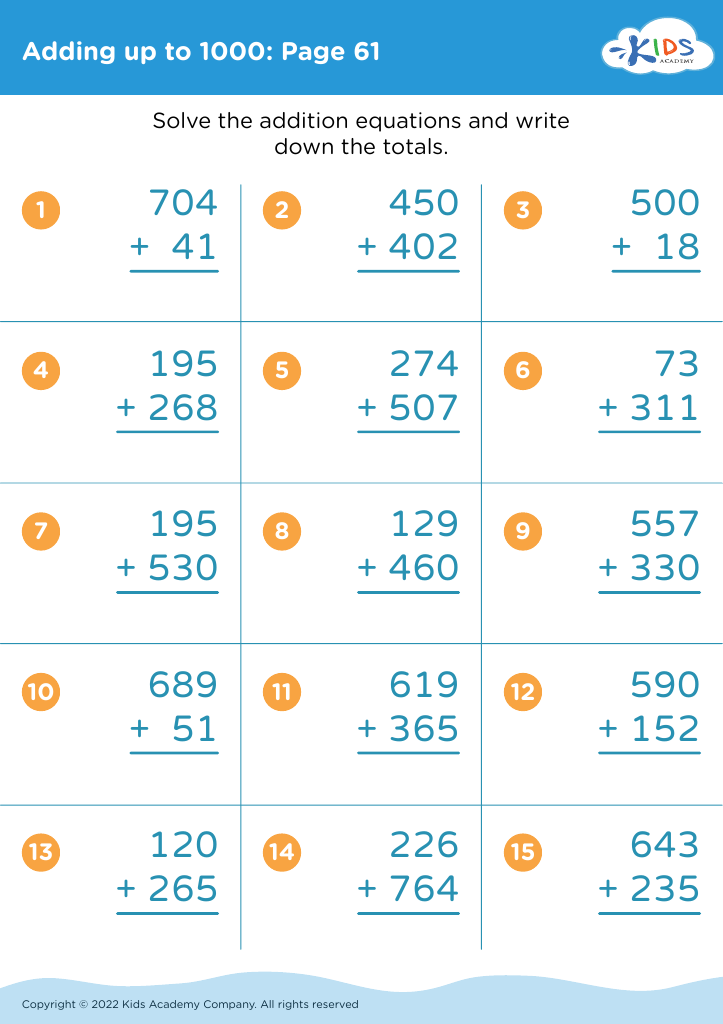
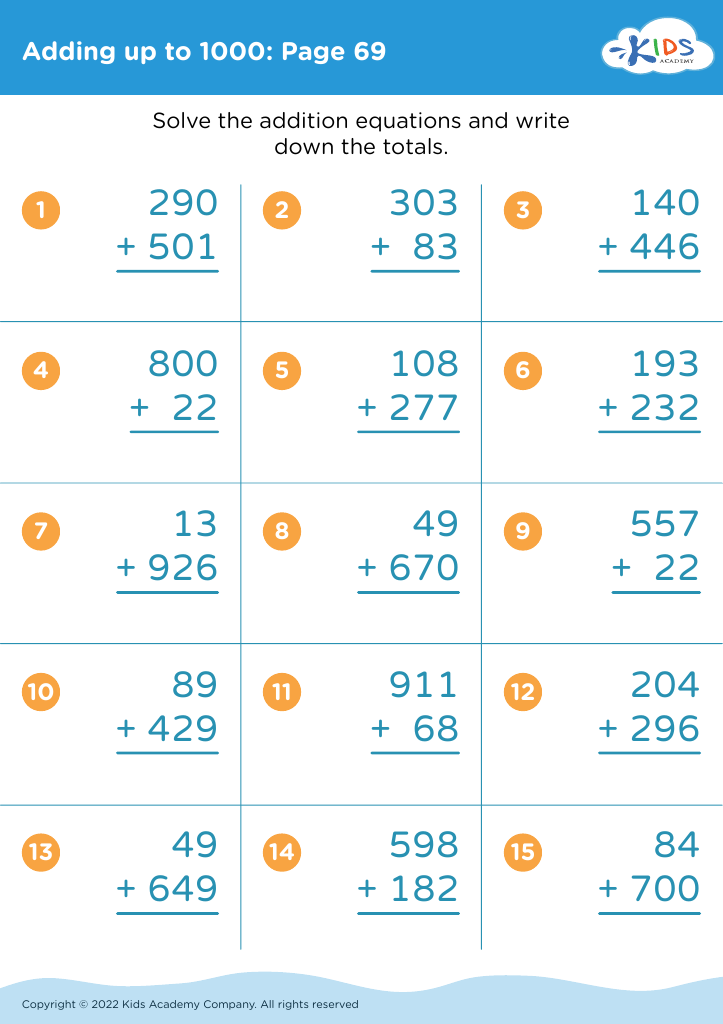








Understanding fraction simplification and addition is crucial for 9-year-olds, and it's important for parents and teachers to recognize why. First, mastering these skills lays a solid foundation for advanced math topics. If children grasp the concepts of simplifying fractions and adding them correctly, they'll find future topics like algebra and geometry much more manageable.
Second, these skills enhance problem-solving abilities. Fractions are everywhere—in cooking recipes, time management, and even in everyday shopping savings. By learning to simplify and add fractions, children gain practical tools they can apply in real-life situations, boosting their confidence and mathematical competency.
Moreover, working with fractions sharpens cognitive abilities such as logical thinking and analytical reasoning. It involves understanding parts of a whole, relationships between numbers, and developing a strong number sense, all of which are integral to overall academic success.
Lastly, early proficiency in fraction operations can foster a positive attitude toward math. When students achieve success in understanding and applying these concepts at a young age, they are more likely to view math as enjoyable and approachable, which cultivates a lifelong interest in learning.
Therefore, parents and teachers should engage students with fun, relatable fraction activities, fostering both academic growth and real-world application, setting the stage for future success.








