Identifying shapes Addition Worksheets for 9-Year-Olds
3 filtered results
-
From - To
Welcome to our "Identifying Shapes Addition Worksheets" designed for 9-year-old students! These engaging resources combine math and geometry, helping young learners enhance their addition skills while recognizing various shapes. Each worksheet features fun illustrations that make learning enjoyable and interactive. Through a series of varied exercises, students will practice adding numbers associated with different shapes, reinforcing their understanding of both math concepts and geometric identification. Perfect for at-home learning or classroom activity, these worksheets aim to build confidence and mastery in math while fostering creativity and spatial awareness. Explore our collection and watch your child excel in math and shapes!
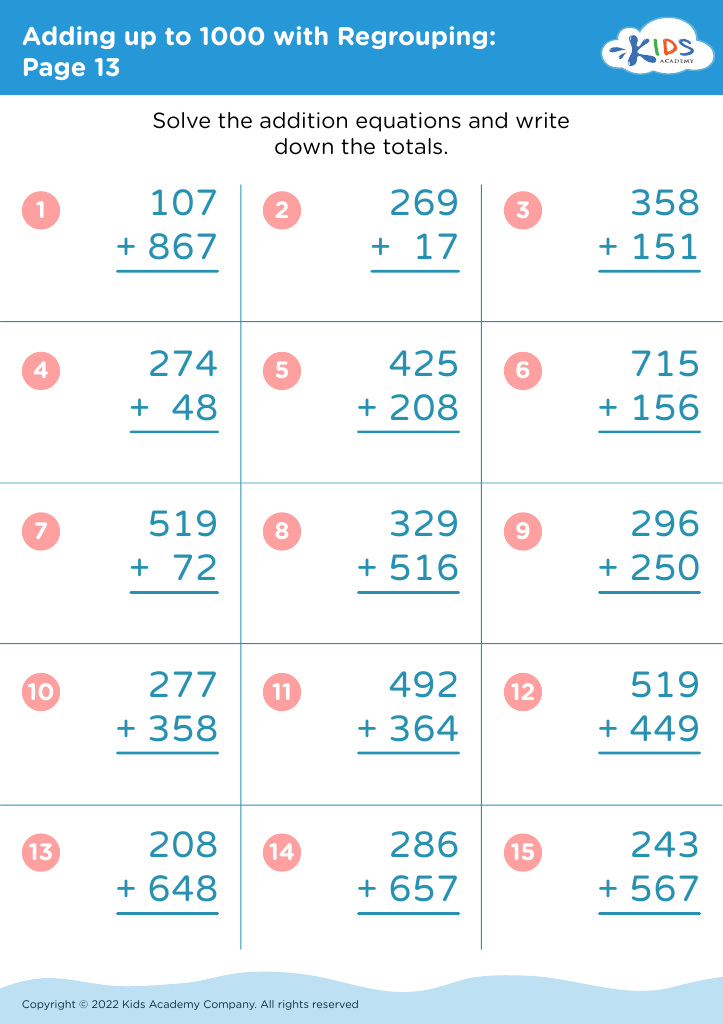
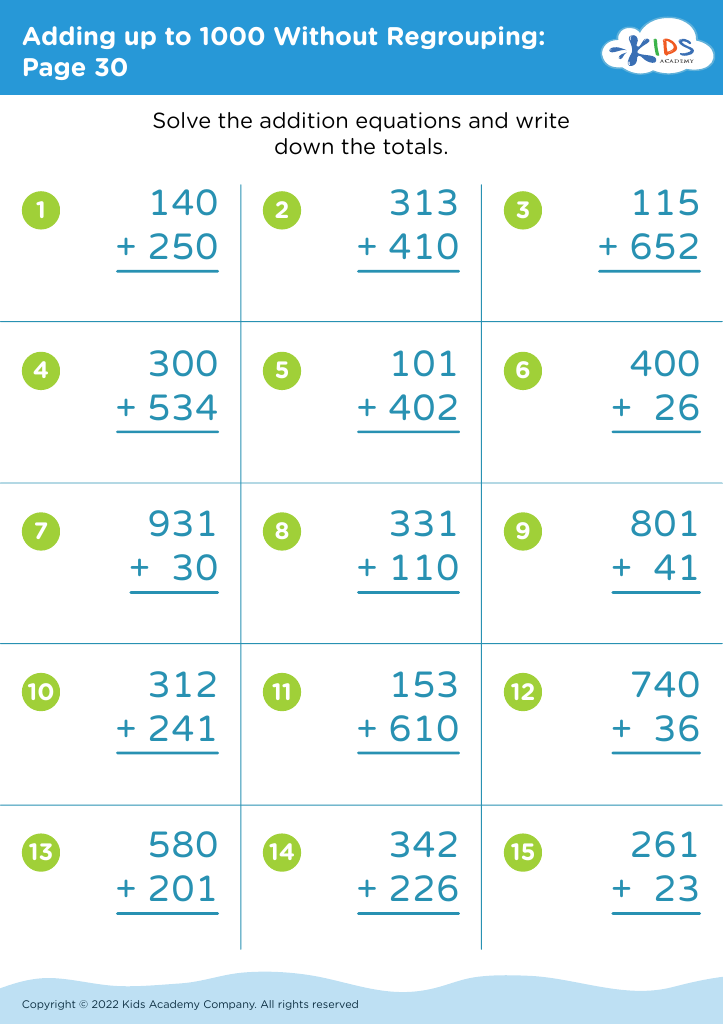
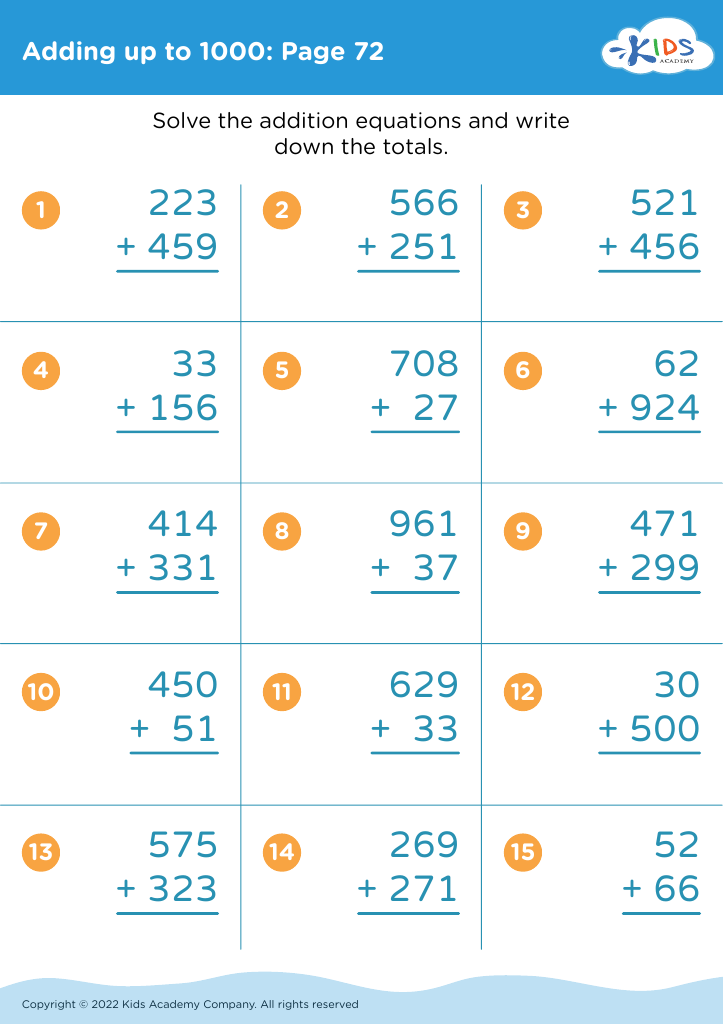








Identifying shapes and mastering addition are foundational skills critical for a 9-year-old's academic development. Understanding shapes extends beyond mere recognition; it enhances spatial awareness, critical thinking, and problem-solving abilities. When children learn to identify and categorize shapes, they develop skills necessary for future math concepts, such as geometry and measurement, which are integral in both everyday life and more advanced education.
In addition, the ability to perform addition lays the groundwork for all arithmetic. Proficiency in addition helps students tackle more complex mathematical operations, including subtraction, multiplication, and division. It is essential for everyday tasks such as budgeting, shopping, and time management, fostering logical thinking as they assess and solve real-world problems.
Furthermore, integrating shape identification with addition can make learning more engaging. Activities like counting shapes or solving problems that involve the number of sides in polygons promote interactive learning, making math enjoyable and relatable. This integration encourages critical engagement, preventing short-term rote memorization and fostering long-term understanding.
By ensuring that children grasp these concepts, parents and teachers set them on a path to success not just in mathematics, but in developing a proactive and analytical mindset for future academic challenges.








