Recognizing shapes Addition Worksheets for 9-Year-Olds
8 filtered results
-
From - To
Our "Recognizing Shapes Addition Worksheets for 9-Year-Olds" blend fun and learning to help young learners master math skills. Focusing on addition and shape recognition, these engaging worksheets develop critical thinking and problem-solving abilities. Featuring diverse exercises, they ensure students stay motivated while reinforcing essential concepts. Perfect for classroom use or at-home practice, our expertly designed worksheets make math enjoyable, keeping kids ahead in their mathematical journey. Created to align with educational standards, they provide a strong foundation for future math success. Help your child excel, nurture their curiosity, and build confidence with our interactive and educational resources.
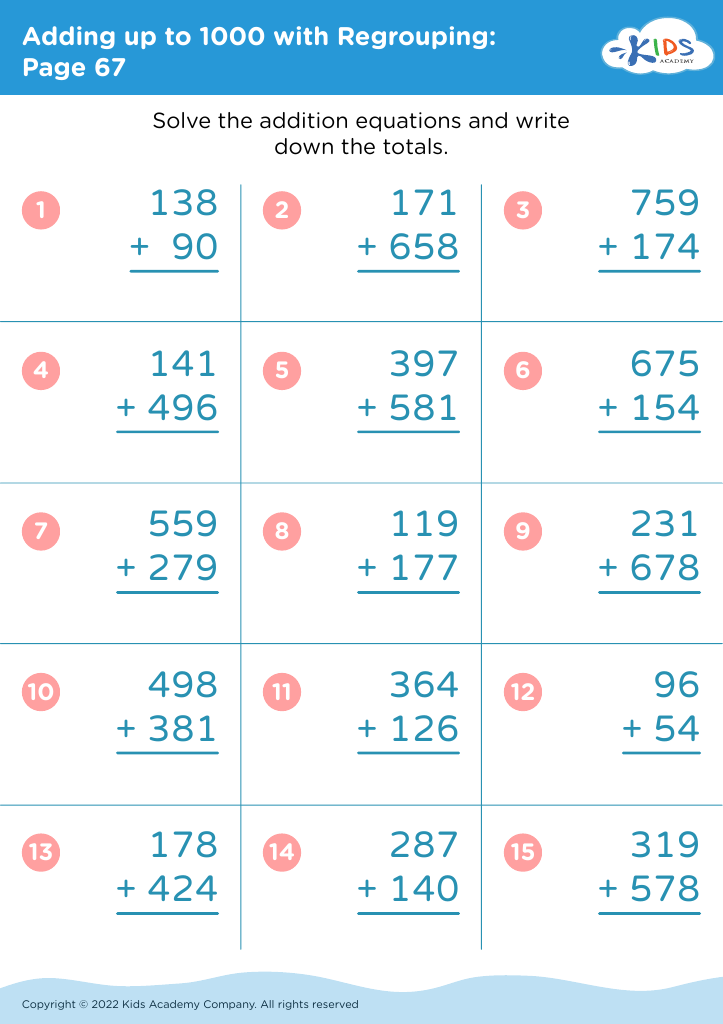
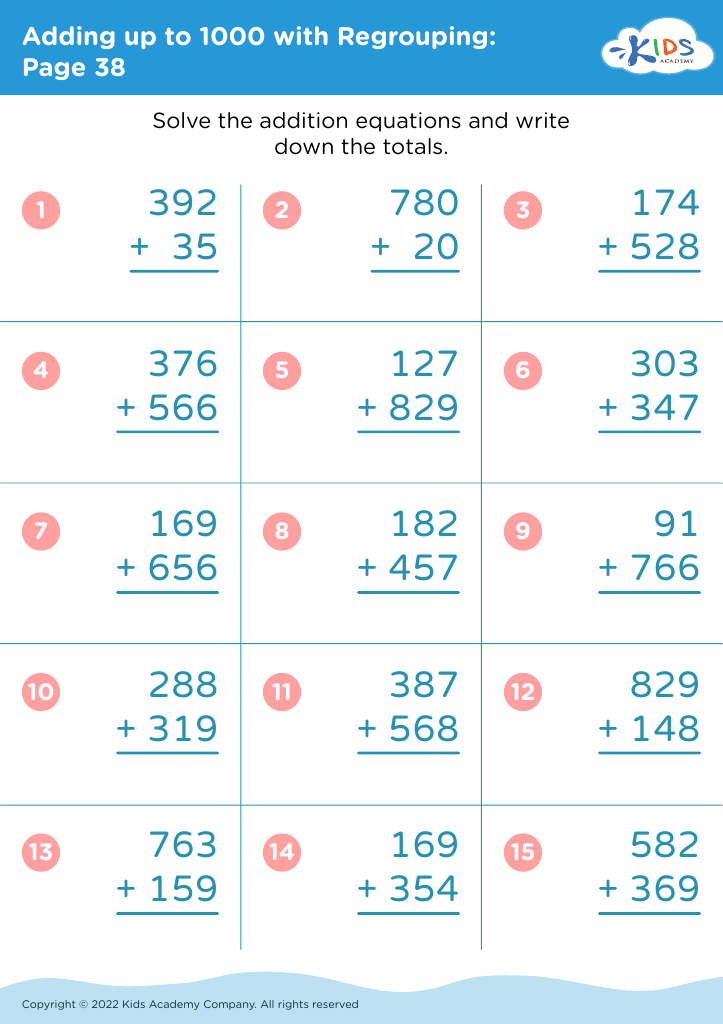
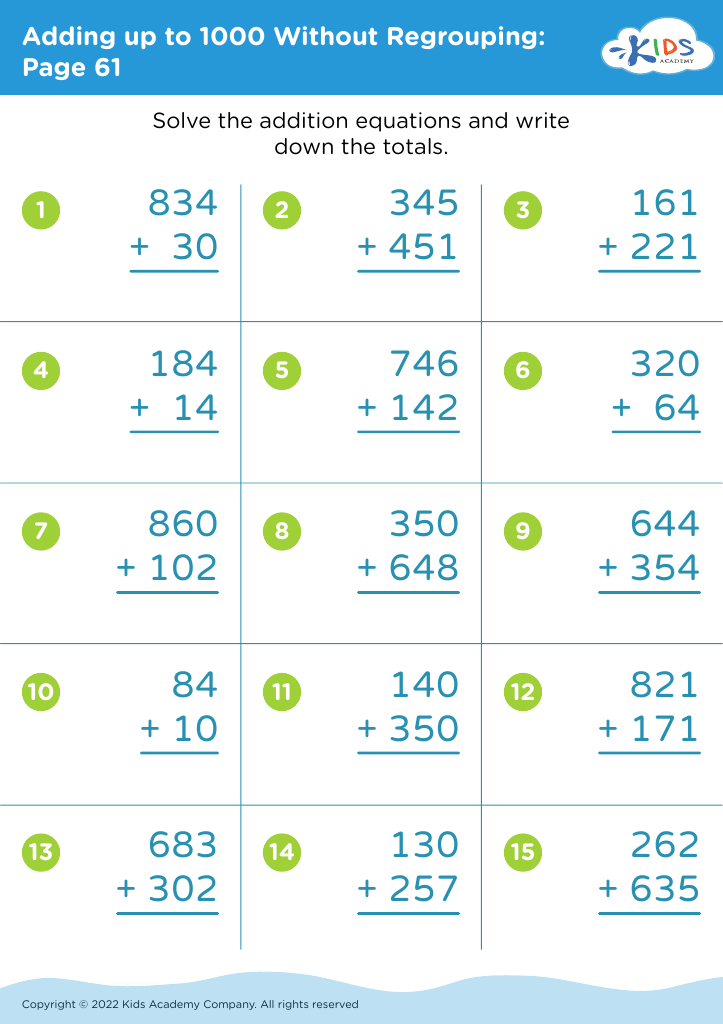
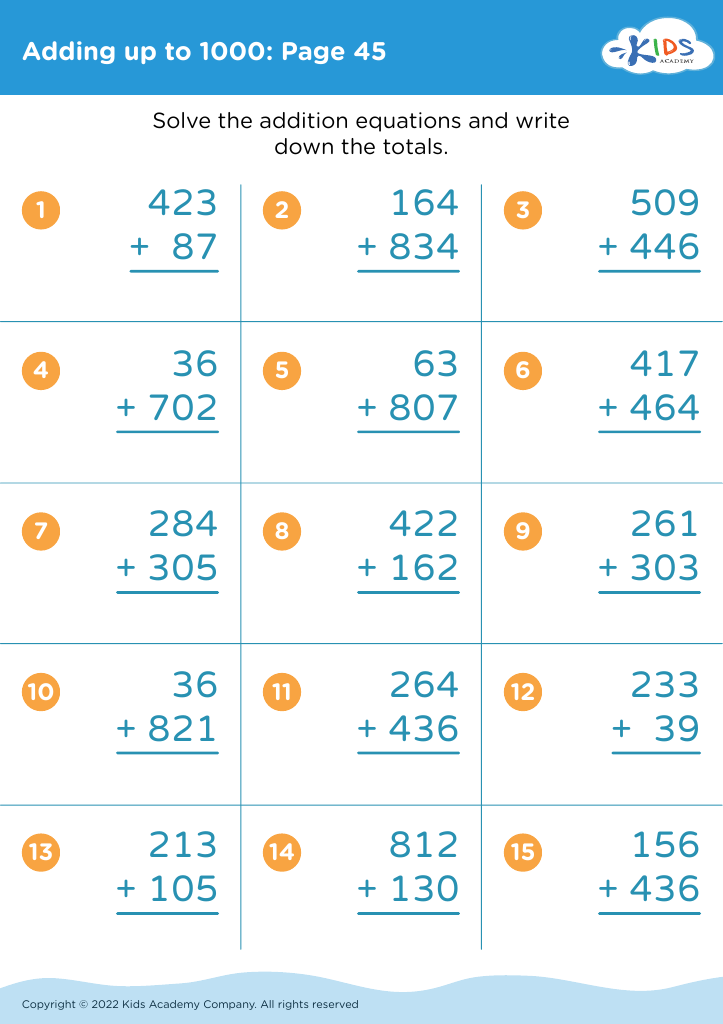








Recognizing shapes and understanding addition are fundamental skills that lay the groundwork for many aspects of a child's academic and cognitive development. For 9-year olds, these skills become increasingly important as they transition into more complex areas of math and other subjects.
Recognizing shapes enhances spatial awareness and visual perception, which are crucial for subjects like geometry, reading maps, and even understanding graphs in subjects like science. It also helps children classify and organize information, which aids in problem-solving and logical thinking. Additionally, familiarity with shapes is foundational for learning about fractions, patterns, and symmetry, all of which are critical concepts in later grades.
Addition, on the other hand, is a basic arithmetic skill that is a building block for all higher-level math, such as multiplication, division, and algebra. Mastering addition helps children develop a strong number sense, understand the relationship between numbers, and builds confidence in their mathematical abilities. This fluency supports their ability to solve more complex problems efficiently and accurately, which is essential not just in math class but in real-life situations requiring numerical calculations.
Therefore, parents and teachers should give due emphasis to recognizing shapes and addition, as they are cornerstones of not only mathematical education but broader cognitive development. This early investment pays dividends with enhanced academic performance and problem-solving skills in various domains.








