Subtraction practice Addition Worksheets for 9-Year-Olds
5 filtered results
-
From - To
Boost your child's math skills with our engaging Subtraction Practice Addition Worksheets designed specifically for 9-year-olds! These printable worksheets make learning fun while reinforcing essential subtraction concepts. Featuring a variety of exercises, from simple equations to word problems, our resources help children practice their subtraction abilities in a hands-on way. As they work through each worksheet, kids will improve their problem-solving skills and number sense. Perfect for at-home practice or in-class activities, these worksheets provide a solid foundation for future math success. Access now to give your child the tools they need to excel in mathematics!
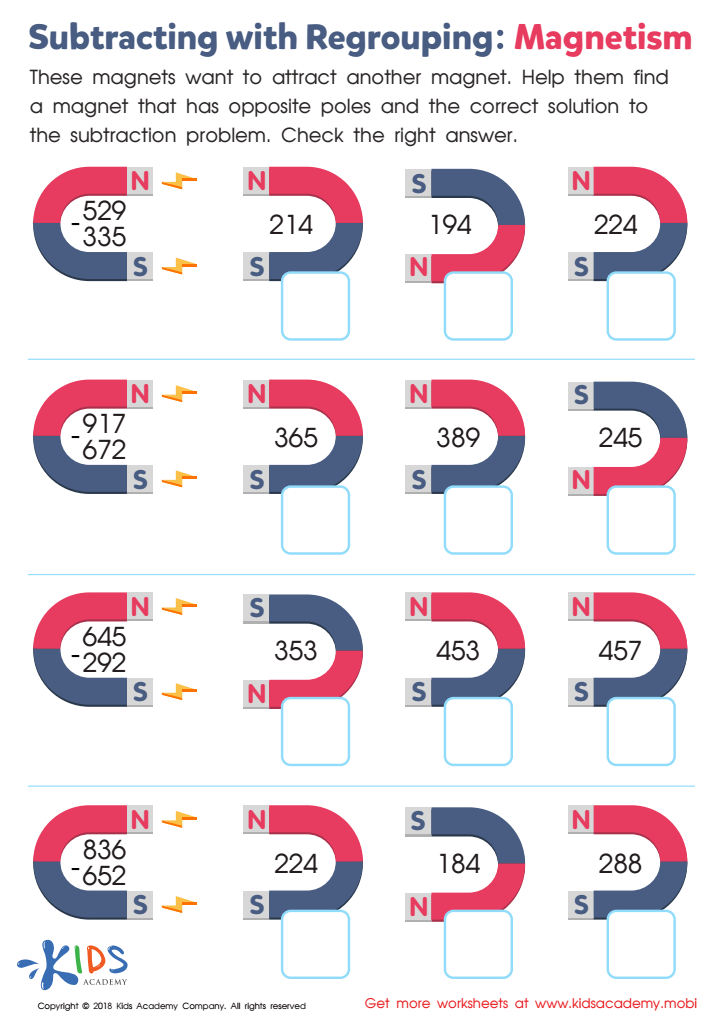
Subtracting with Regrouping: Magnetism Worksheet
 Assign to My Students
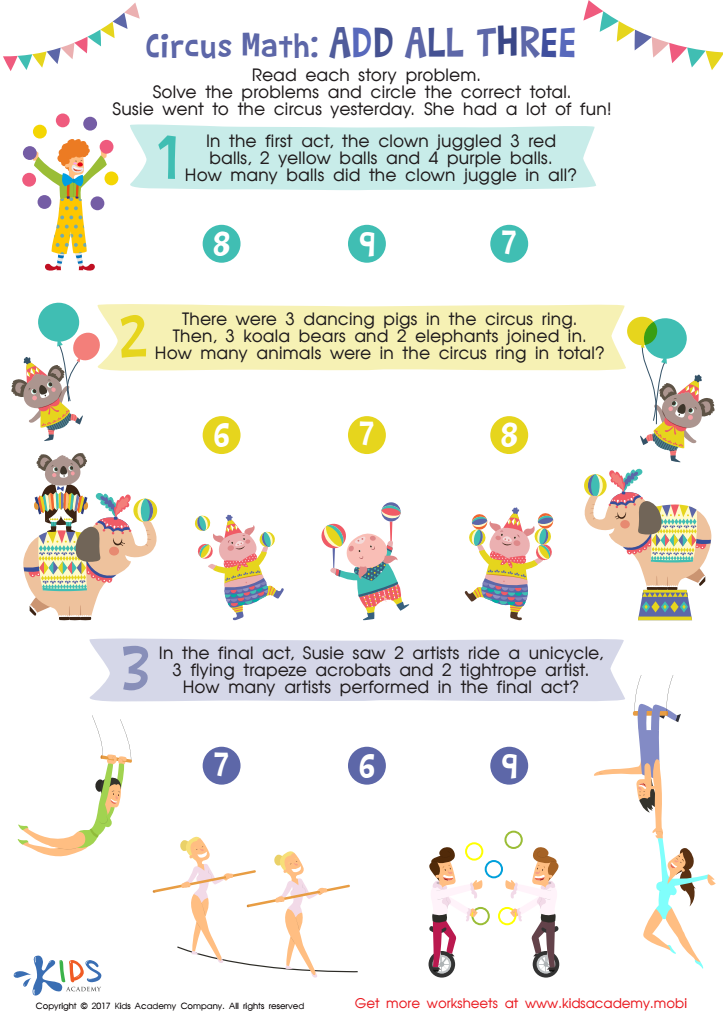
Circus Math Printable
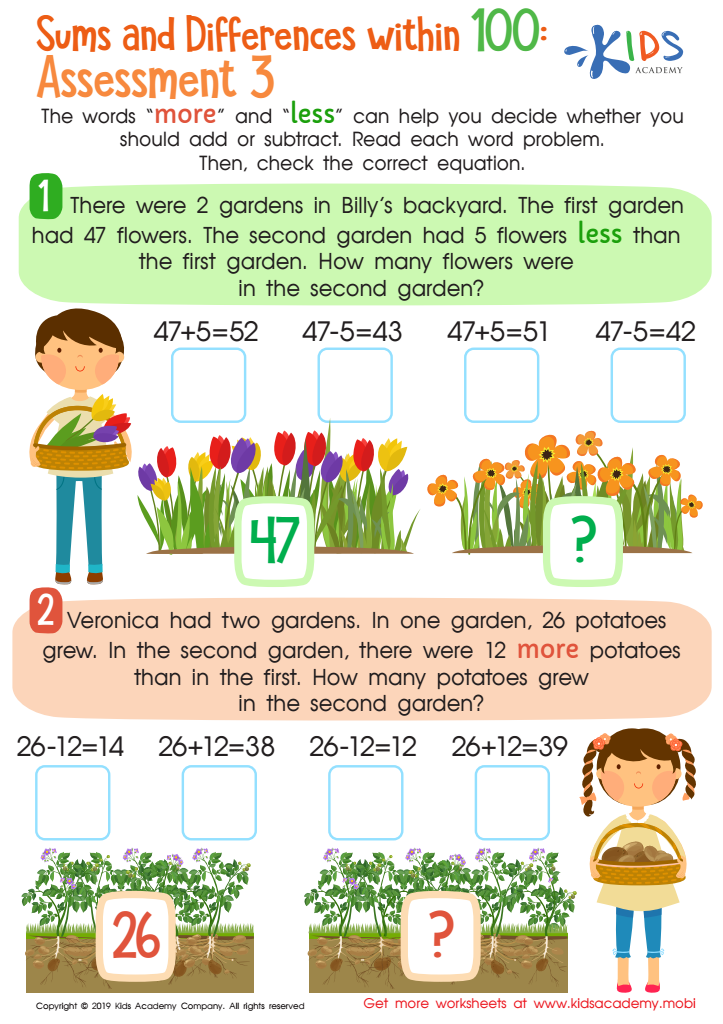
Sums and Differences Within 1 - Assessment 1 Worksheet
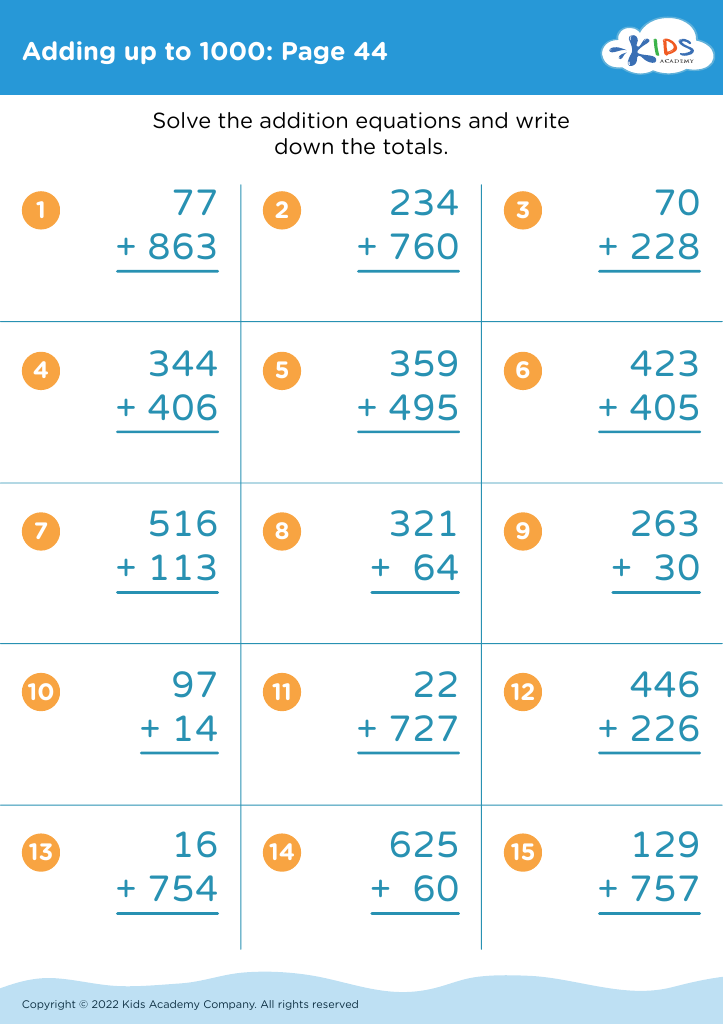
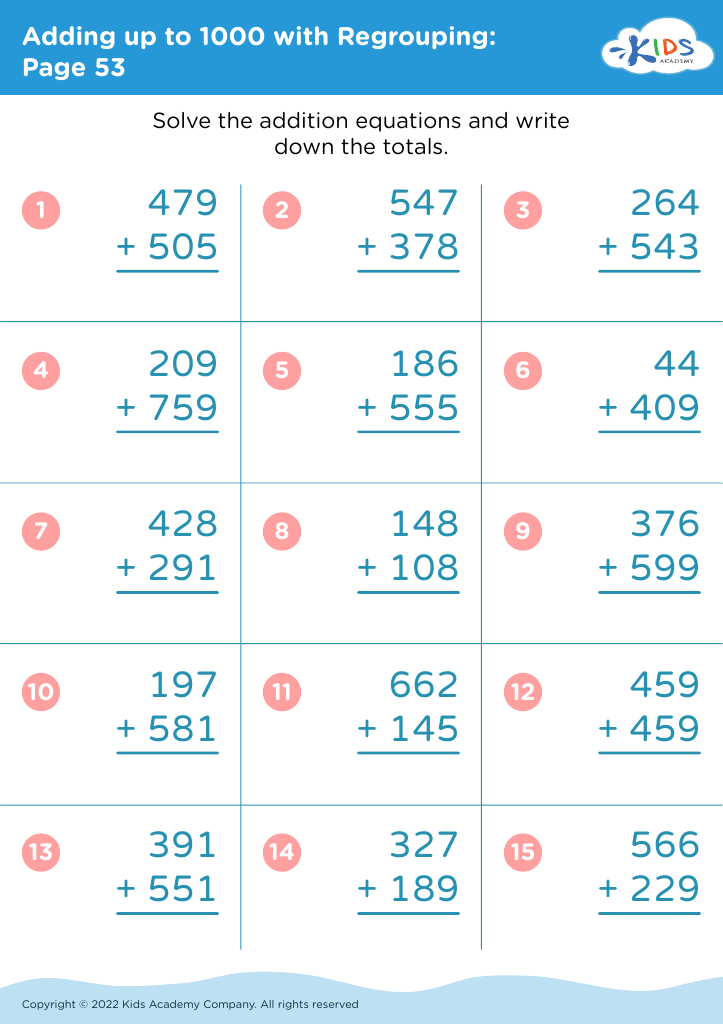








Subtraction practice is crucial for 9-year-olds as it establishes a strong foundation for overall mathematical fluency. At this stage, children are transitioning from basic arithmetic to more complex problem-solving and analytical thinking. Mastery of subtraction enhances their ability to understand relationships between numbers, which is essential for grasping concepts such as money management, measurement, and even time.
Moreover, when subtraction is practiced in conjunction with addition, students can develop a more comprehensive understanding of arithmetic operations. Recognizing that subtraction is essentially the inverse of addition aids in reinforcing number sense and reinforces the concept of fact families, where understanding one operation helps in grasping the others.
Strong subtraction skills also build confidence, enabling children to tackle word problems and engage in higher-level math as they progress. By prioritizing this practice, parents and teachers can support not only academic growth but also the development of critical life skills, such as logical reasoning. Furthermore, fostering a positive attitude toward math at an early age greatly diminishes the anxiety that many students face as they encounter more difficult concepts in later grades. Overall, integrating subtraction practice into the curriculum ensures children are well-prepared for future mathematical challenges.








