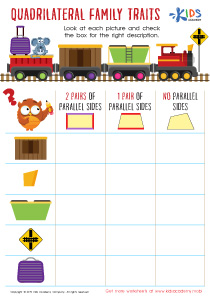
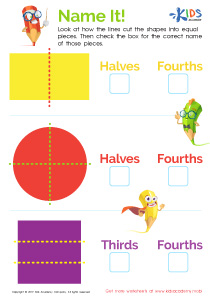
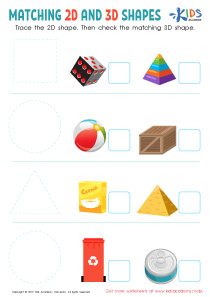
Shape Recognition Area and Perimeter Worksheets for 9-Year-Olds
3 filtered results
-
From - To
Discover engaging Shape Recognition Area and Perimeter Worksheets designed specifically for 9-year-olds at Kids Academy! Enhance your child's math skills with our fun, interactive printable worksheets focused on understanding and calculating the area and perimeter of various shapes. Perfect for adding a hands-on element to learning, these activities help students recognize and differentiate between different shapes, all while reinforcing key math concepts. Ideal for both classroom and home learning, our worksheets ensure that young learners build a solid foundation in geometry through engaging, age-appropriate challenges. Explore Kids Academy for the best resources in shape recognition, area, and perimeter mastery!
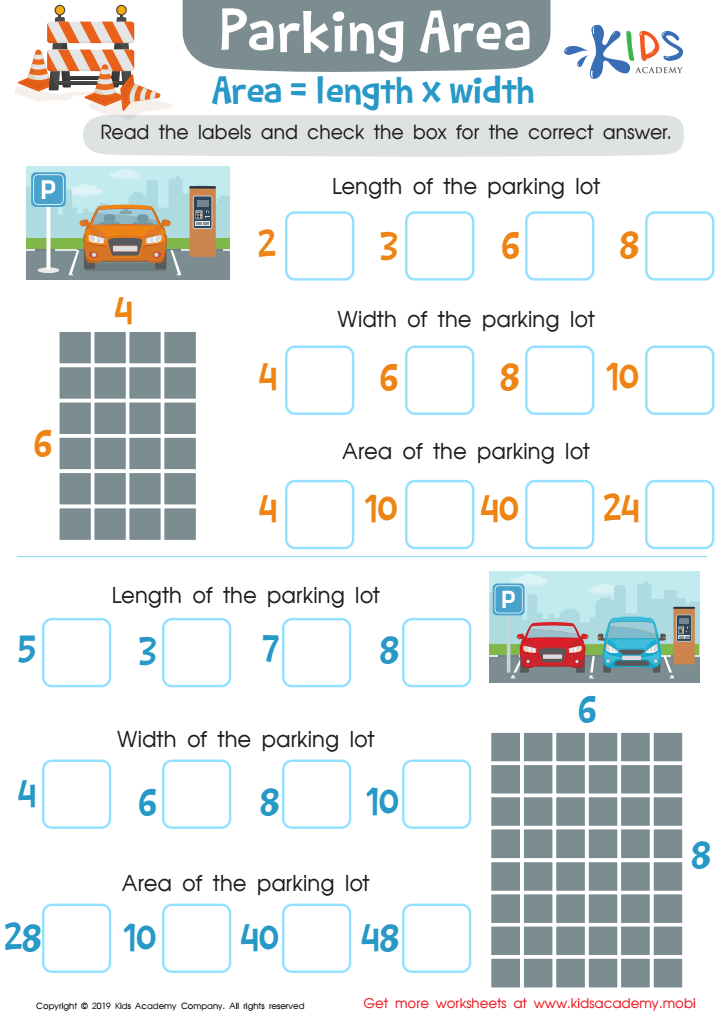
Parking Area Worksheet
 Assign to My Students
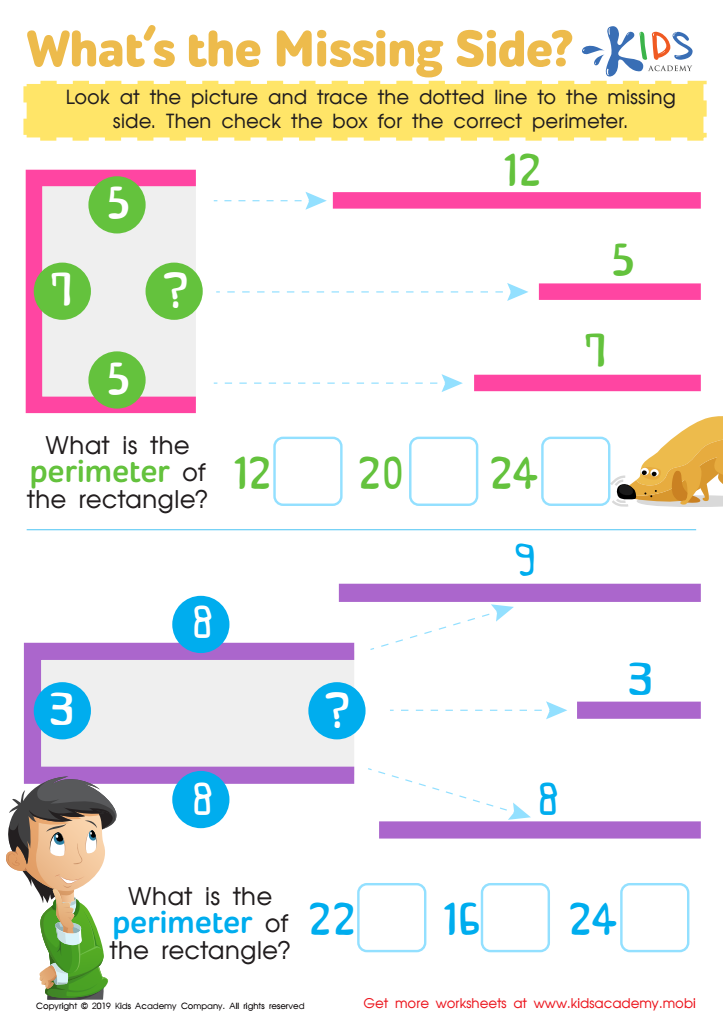
What's the Missing Side Worksheet
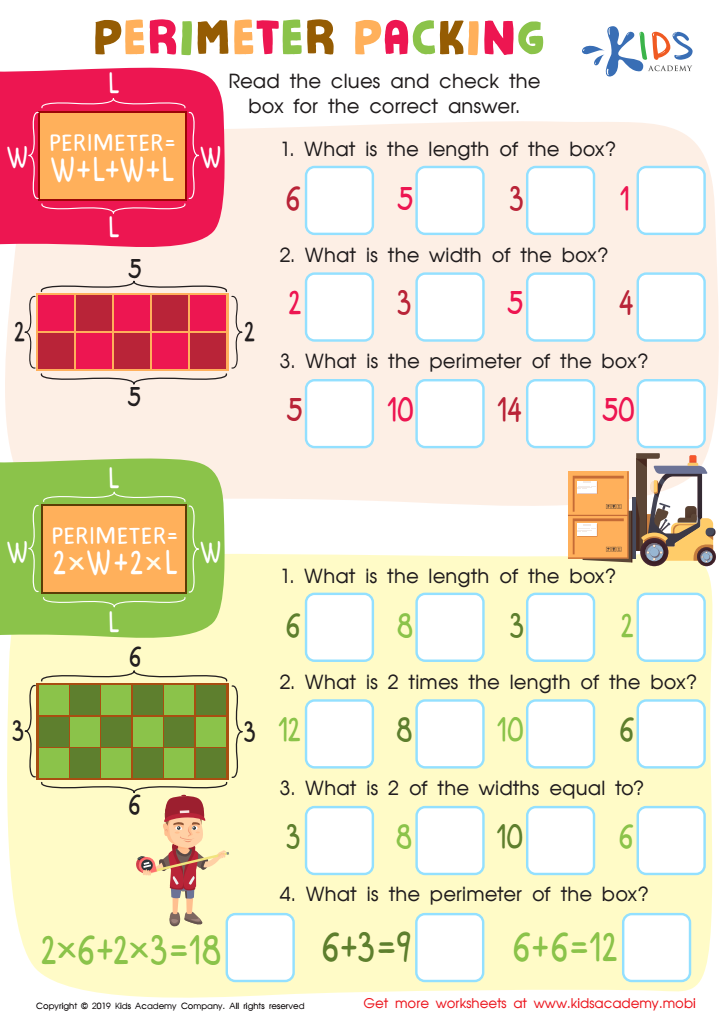
Perimeter Parking Worksheet








Shape recognition and understanding of area and perimeter are foundational skills that significantly impact a child's mathematical development. For parents and teachers, investing time in teaching these concepts to 9-year-olds brings multiple benefits.
Firstly, shape recognition enhances spatial awareness, which is crucial for interpreting and interacting with the world. It supports cognitive development and can improve skills in other areas such as reading, where recognizing letter shapes is fundamental.
Understanding area and perimeter goes beyond rote memorization of formulas; it builds problem-solving skills and logical thinking. These concepts apply to real-world situations like measuring spaces for new furniture, designing gardens, and even understanding art. Early proficiency in these areas can boost confidence and promote a positive attitude towards mathematics, reducing math anxiety later in life.
Furthermore, these topics align with curriculum standards and prepare students for more complex geometry and algebra topics. Engagement with practical activities that involve measuring objects and drawing shapes supports fine motor skills and practical math application.
In summary, focus on shape recognition, area, and perimeter for 9-year-olds is not just about math proficiency. It supports holistic development including spatial intelligence, problem-solving capabilities, and readiness for advanced educational challenges. Investing in these early skills fosters a solid mathematical foundation and an enduring understanding of how math interfaces with daily life.