Understanding area Area and Perimeter Worksheets for 9-Year-Olds
3 filtered results
-
From - To
Introducing our "Understanding Area and Perimeter Worksheets for 9-Year-Olds" – the perfect resource to make learning math enjoyable and engaging! Designed by educational experts, these worksheets help students grasp essential concepts of area and perimeter through fun exercises, improving both their math skills and confidence. Ideal for 3rd and 4th graders, each worksheet combines visual aids and practical problems, making abstract concepts clear and relatable. Dive into the world of rectangles, squares, and more while practicing calculating measurements with these easy-to-follow and interactive resources. Empower your child’s learning journey today with these fantastic worksheets!
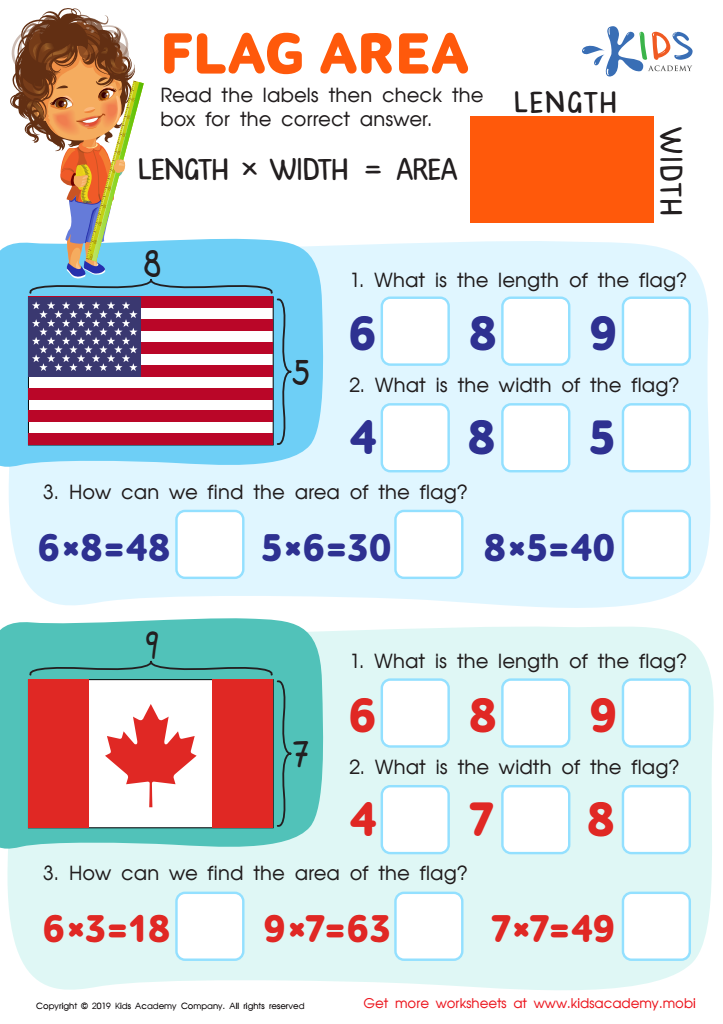
Flag Area Worksheet
 Assign to My Students
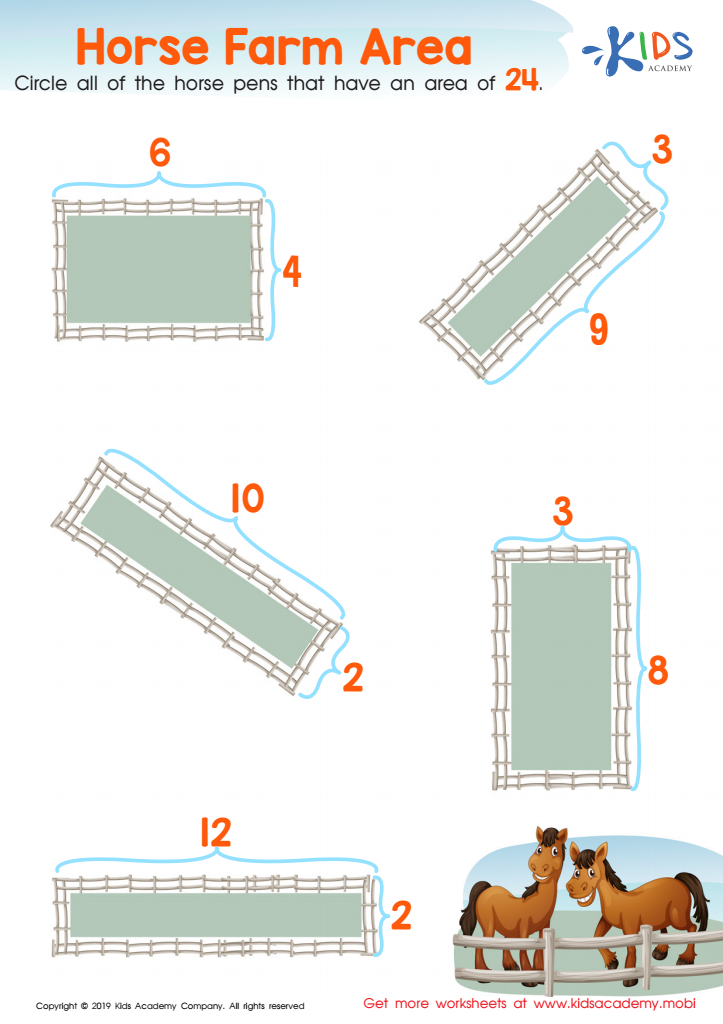
Horse Farm Area Worksheet
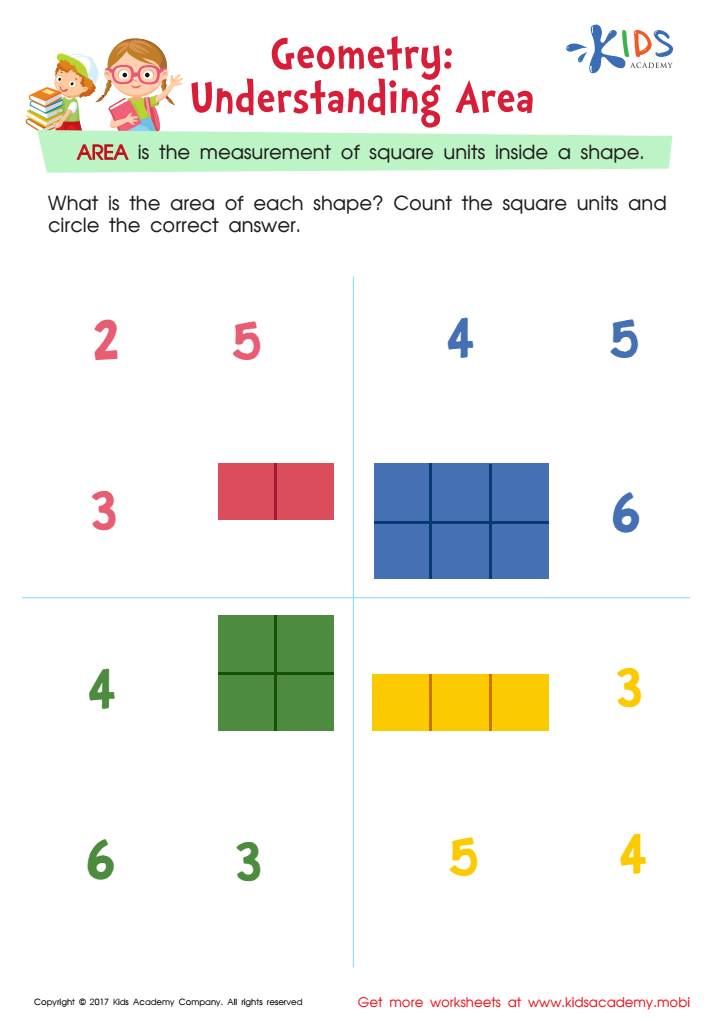
Understanding Area Worksheet








Understanding area and perimeter is crucial for 9-year-olds because these foundational concepts serve as building blocks for more advanced math and real-life applications. Firstly, grasping area and perimeter enhances spatial awareness and geometric understanding. Knowing how to calculate the area helps children appreciate the size of different surfaces, while understanding the perimeter allows them to visualize and measure boundaries. This practical knowledge is essential for everyday activities, such as understanding the dimensions of a playground, arranging furniture in a room, or wrapping a gift efficiently.
Furthermore, early mastery of these concepts builds confidence and prepares children for future mathematical topics like algebra, geometry, and even some aspects of calculus. It encourages logical thinking and problem-solving skills, enabling them to break complex problems into manageable parts.
For teachers, instilling an understanding of area and perimeter aligns with educational standards and curriculum goals, ensuring students meet grade-level expectations. For parents, fostering this knowledge supports academic success and allows them to be active participants in their child’s education. This mutual effort secures a strong mathematical foundation, giving children the critical thinking tools they need for continued educational achievement and practical life skills.