
Basic Math Skills Numbers Worksheets for 9-Year-Olds
7 filtered results
Difficulty Level
Grade
Age
-
From - To
Subject
Activity
Standards
Discover our engaging Basic Math Skills Numbers Worksheets designed specifically for 9-year-olds! These fun and interactive worksheets help children master essential math concepts, including number recognition, addition, subtraction, and number comparisons. Aligned with educational standards, our resources cater to different learning styles, making it easier for your child to grasp critical math skills. Each worksheet features colorful designs and age-appropriate challenges, ensuring a captivating learning experience. With a focus on building confidence and competence in math, our materials are perfect for both classroom use and at-home practice. Start your child’s journey toward math mastery today with our comprehensive collection!
Favorites
With answer key
Interactive
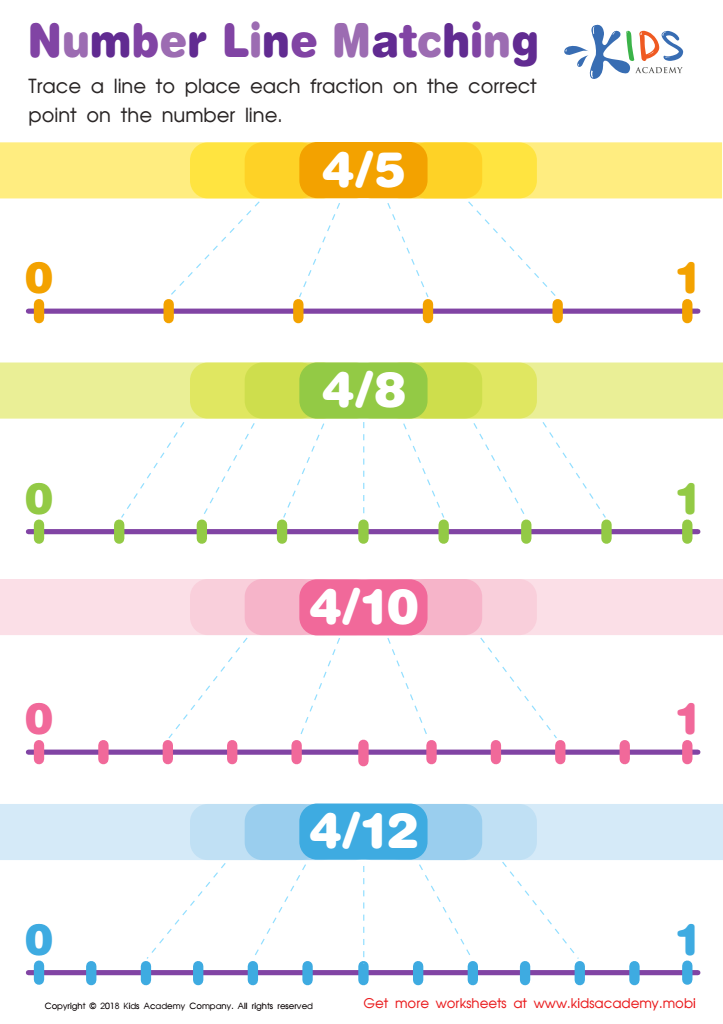
Number Line Matching Worksheet
Math can be fun! Have your child count points on the number line, then identify and trace fractions above it. It's a great way for them to learn and have some fun!
 Assign to My Students
Number Line Matching Worksheet
Worksheet
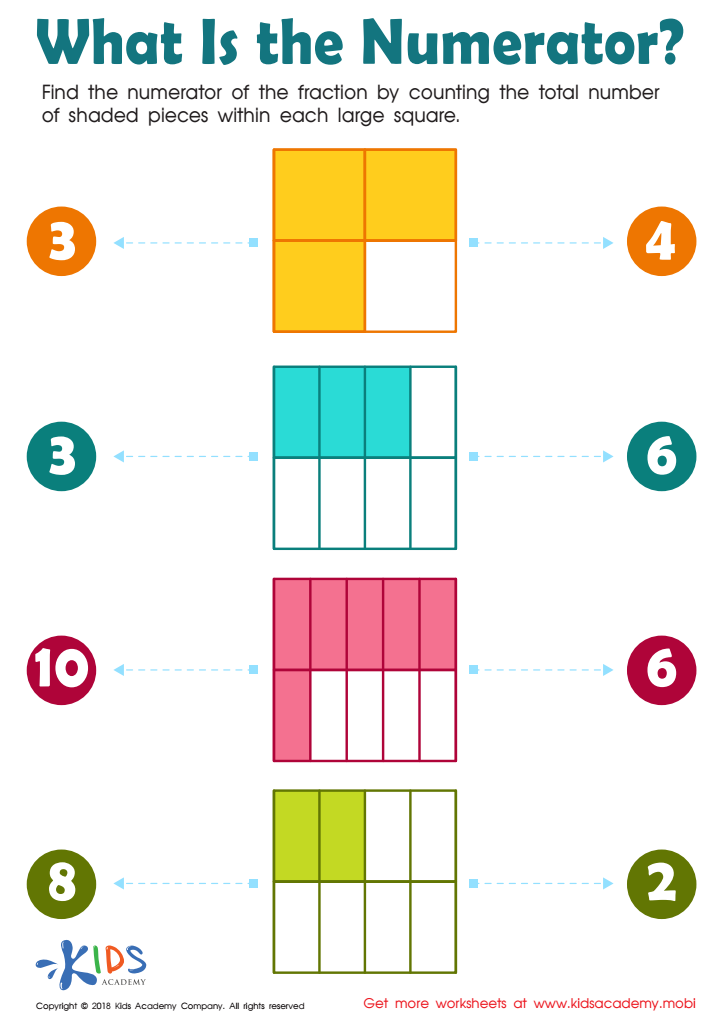
What Is the Numerator? Worksheet
Help your kids learn fractions with this simple worksheet. Explain that the numerator is the number atop another number, then have them count the shaded pieces in each large square to find the numerator of the fraction. This activity is perfect for young kindergartners starting out with fractions.
What Is the Numerator? Worksheet
Worksheet
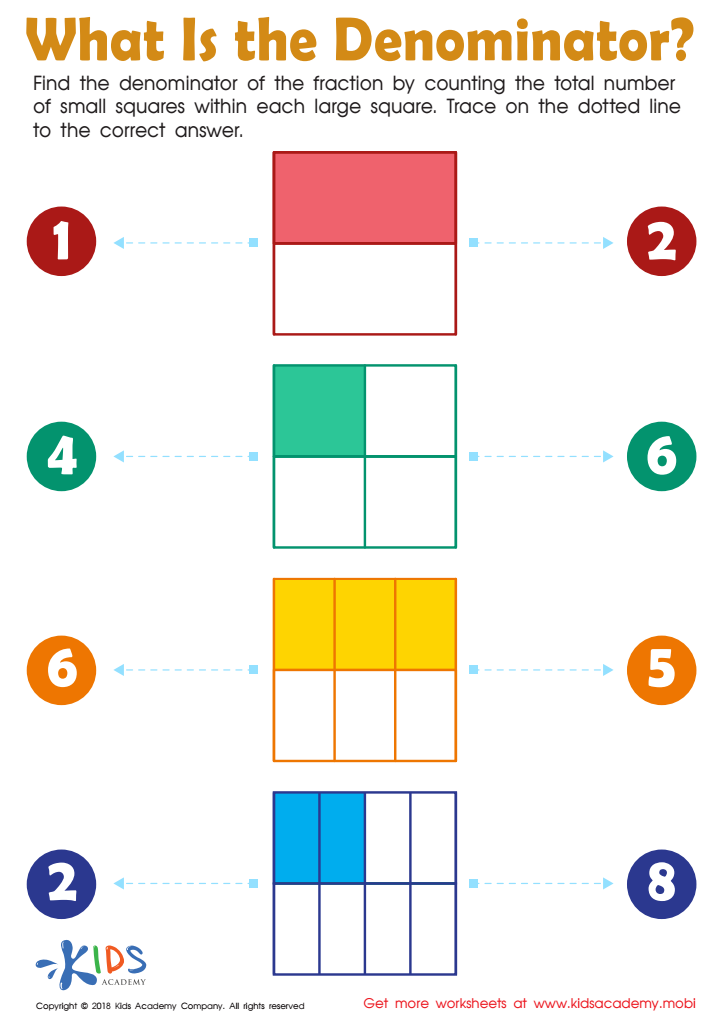
What Is the Denominator? Worksheet
If your kindergartener is struggling with fractions, don't worry. Use this worksheet to help them understand better. Ask them to count the total small squares in each large square to find the denominator, then trace on the dotted line to answer. This printable tracing sheet will help them learn fractions easier.
What Is the Denominator? Worksheet
Worksheet
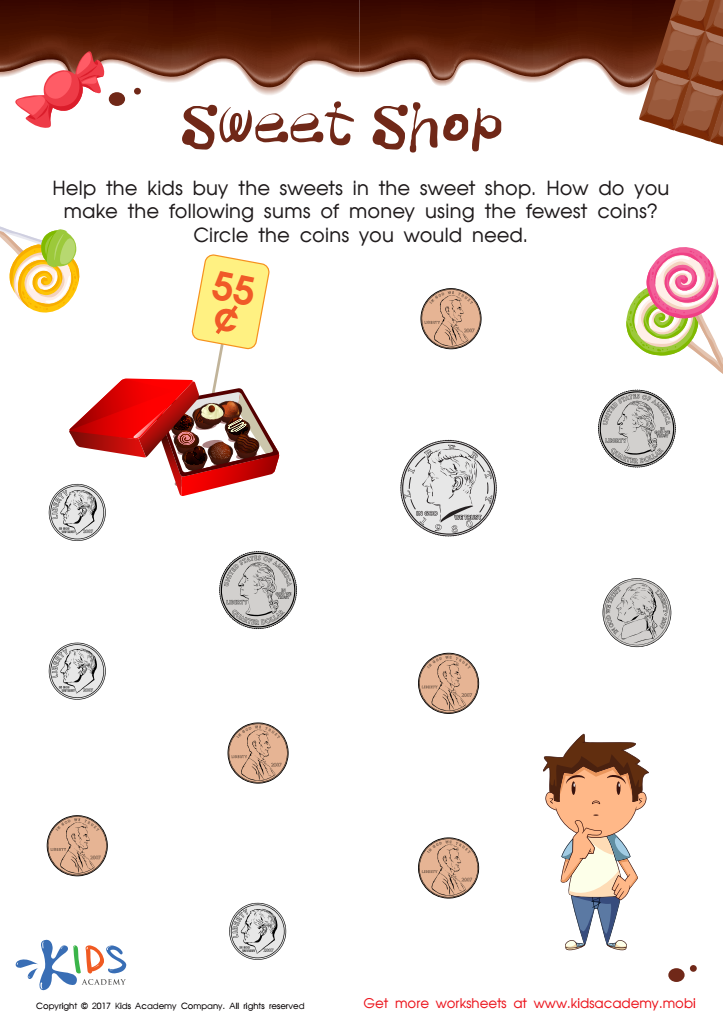
Sweet Shop – Counting Coins Worksheet
Help your child get ready to buy sweet treats with this coin counting worksheet. It'll challenge them to use the fewest coins possible. With knowledge of coin values, they'll work out the right combination to get the sweets!
Sweet Shop – Counting Coins Worksheet
Worksheet
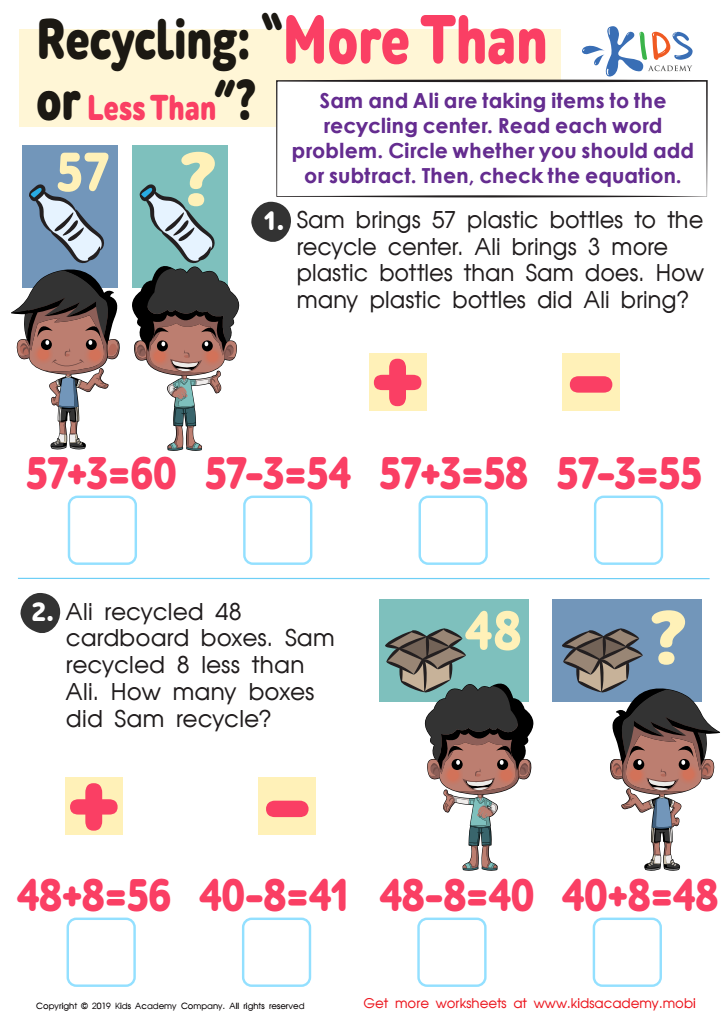
Recycling - More or Less Worksheet
Your child can compare numbers and solve word problems with this free worksheet. Help them understand what's being asked as Sam and Ali take items to the recycling center. They can choose the correct equation to match the word problem and apply their skills in reading and pulling out the appropriate information.
Recycling - More or Less Worksheet
Worksheet
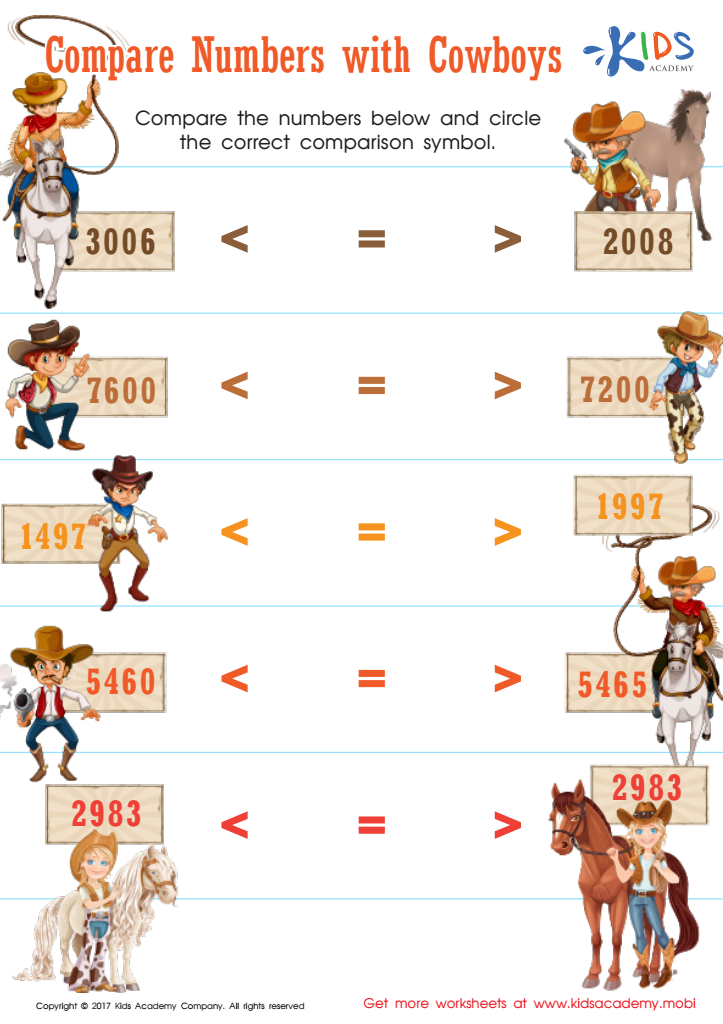
Compare Numbers Worksheet for 3rd Grade
Time to get a roundup on big numbers! Help your 3rd grader practice comparing thousands with this compare numbers worksheet. They'll use >, <, and = symbols for tricky numbers. Jump in and join the cowboys!
Compare Numbers Worksheet for 3rd Grade
Worksheet
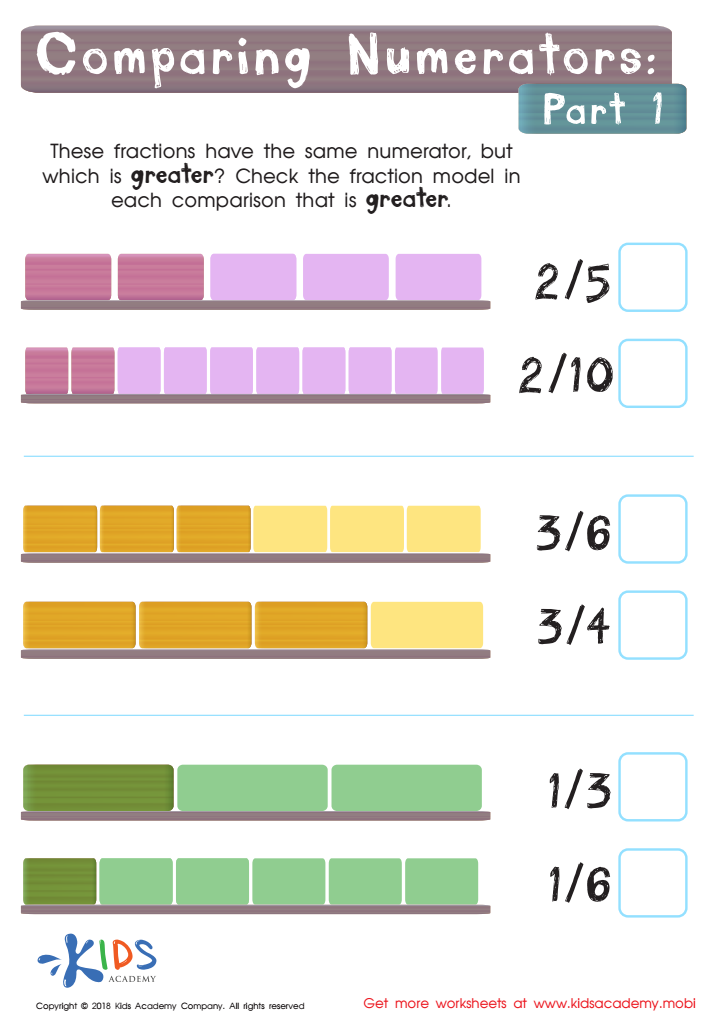
Comparing Numerators Part 1 Worksheet
This worksheet has 3 fractions groups with the same numerator. Your child must determine which fraction is greater in each comparison. Check the fraction model to see the greater one.
Comparing Numerators Part 1 Worksheet
Worksheet
Join Kids Academy for Free
Who is primarily going to use this learning content?


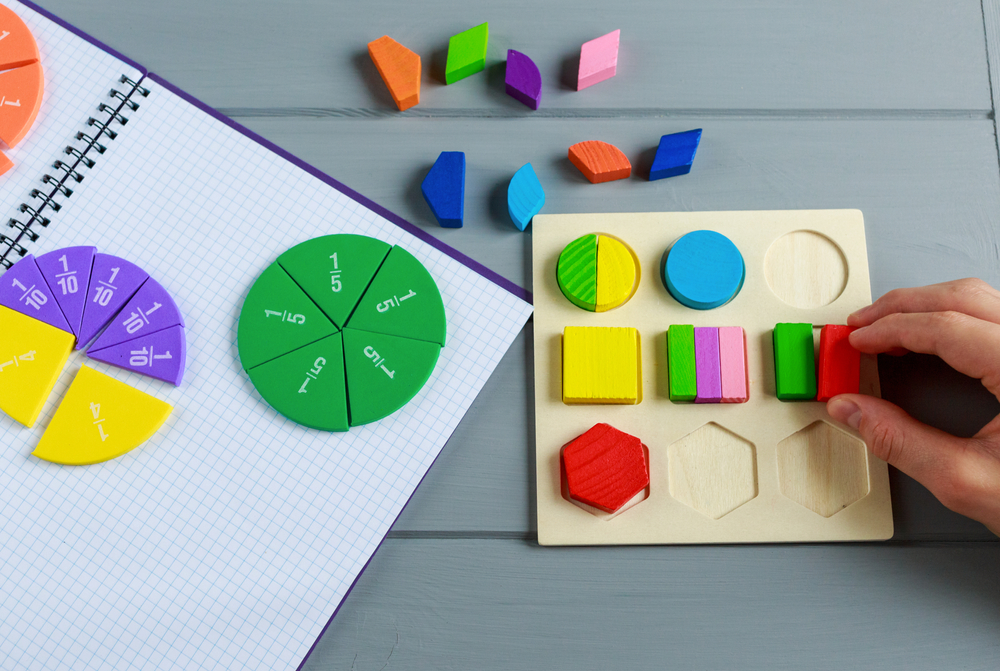





Parents and teachers should prioritize basic math skills for 9-year-olds because these foundational abilities are crucial for a child’s academic development and everyday life. First, at this age, children transition from simple arithmetic to more complex problem-solving tasks. Mastering numbers, addition, subtraction, multiplication, and division lays the groundwork for future math concepts, including fractions and decimals.
Furthermore, strong math skills enhance critical thinking and logic. When children learn to manipulate numbers and solve problems, they develop essential cognitive skills that extend beyond math, influencing areas such as science and technology. Also, as children gain confidence in their math abilities, they are likely to embrace new challenges and develop a love for learning—an advantage that extends into adolescence and adulthood.
Moreover, everyday situations—budgeting, cooking, or planning—require basic math skills. By understanding numbers, children equip themselves with practical tools they will use throughout life. Ultimately, fostering proficiency in basic math not only helps kids succeed academically, but it also contributes to their overall problem-solving abilities, enabling them to navigate life’s challenges more effectively. In investing time and energy into developing these skills, parents and teachers are helping prepare children for a well-rounded future.








