Understanding directions Math Worksheets for 9-Year-Olds
3 filtered results
-
From - To
Introduce your 9-year-old to the exciting world of math with our "Understanding Directions Math Worksheets." These printable worksheets from Kids Academy are designed to sharpen spatial awareness and directional skills while making learning enjoyable. Through engaging activities and fun challenges, children will master left, right, up, down, and intermediate directions. Ideal for home or classroom use, these exercises align with educational standards, ensuring your child gains the necessary skills to navigate math with confidence. Empower your young learner to excel in math with our expertly crafted worksheets focused on understanding directions, paving the way for future mathematics success.
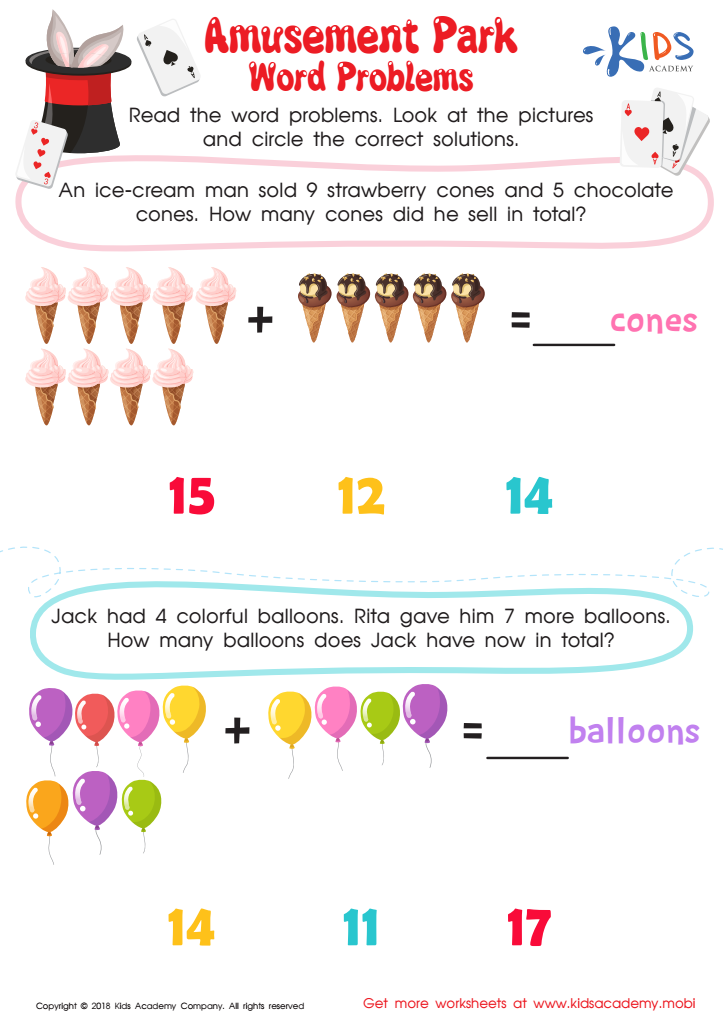
Amusement Park Word Problems Worksheet
 Assign to My Students








Understanding directions in math is a vital skill for 9-year-olds, and it's essential that parents and teachers pay close attention to this area. Firstly, grasping directions helps children follow complex instructions in various math problems, improving their problem-solving abilities. At this age, students are typically introduced to more advanced concepts such as multi-step word problems and geometric figures, all of which require a solid understanding of directions.
Following directions in math also boosts a child’s attention to detail. When they learn to carefully read and interpret instructions, they are less likely to make errors and more likely to develop precision, which is important not only in math but in all aspects of learning.
Moreover, this skill transcends academics, aiding children in everyday tasks and future workplace environments where following step-by-step instructions can be crucial. Enhanced comprehension skills lead to greater confidence. When students feel competent in understanding directions, they're more inclined to tackle challenging math problems with a positive attitude.
Overall, focused guidance from parents and teachers in sharpening this skill will lay a strong foundation for a child’s academic journey, promoting both disciplined thinking and detail-oriented work habits. This nurtures a capable, confident learner ready to conquer future challenges.








