Visual Learning Word Problems Worksheets for 9-Year-Olds
5 filtered results
-
From - To
Enhance your child's problem-solving skills with our Visual Learning Word Problems Worksheets designed specifically for 9-year-olds! These engaging activities turn abstract math concepts into visual, hands-on challenges, making learning both effective and fun. Developed by educational experts, our worksheets help young learners grasp complex word problems with ease by using images, charts, and diagrams. Perfect for reinforcing classroom instruction or additional practice at home, these resources cater to different learning styles and boost confidence in math. Access our top-quality, printable worksheets now and witness your child's math proficiency soar!
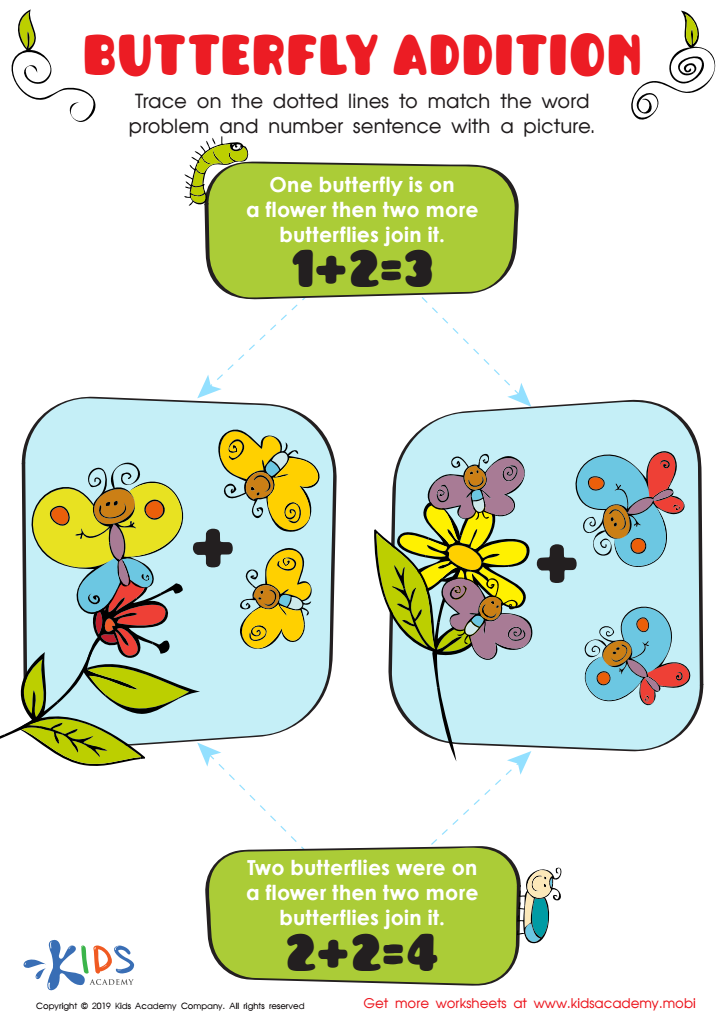
Butterfly Addition Worksheet
 Assign to My Students
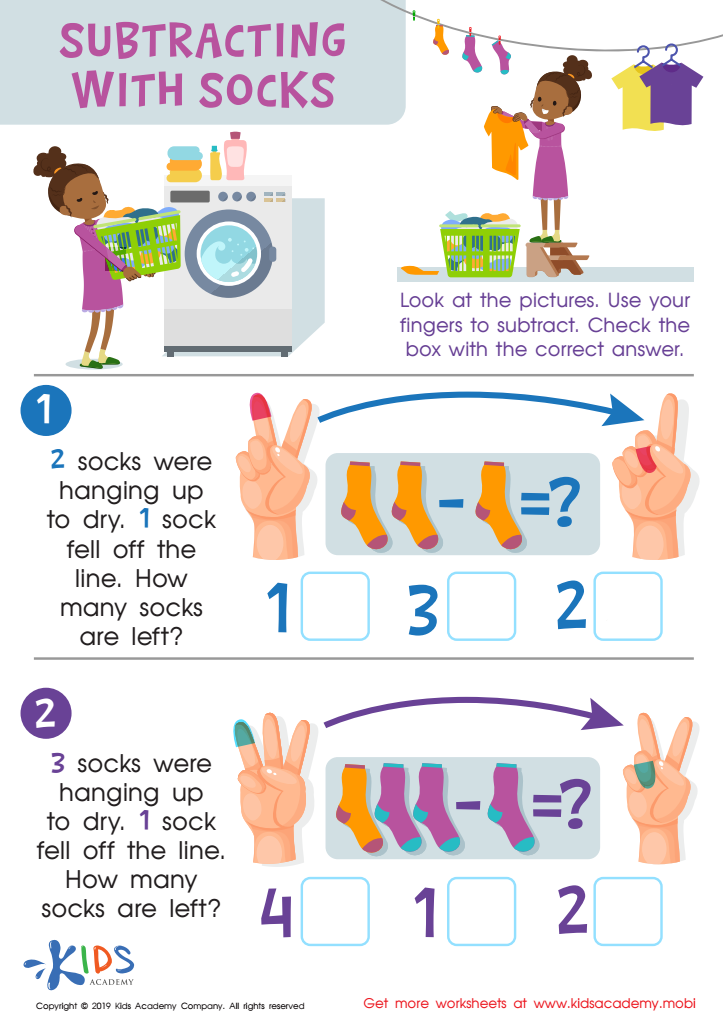
Subtracting Socks Worksheet
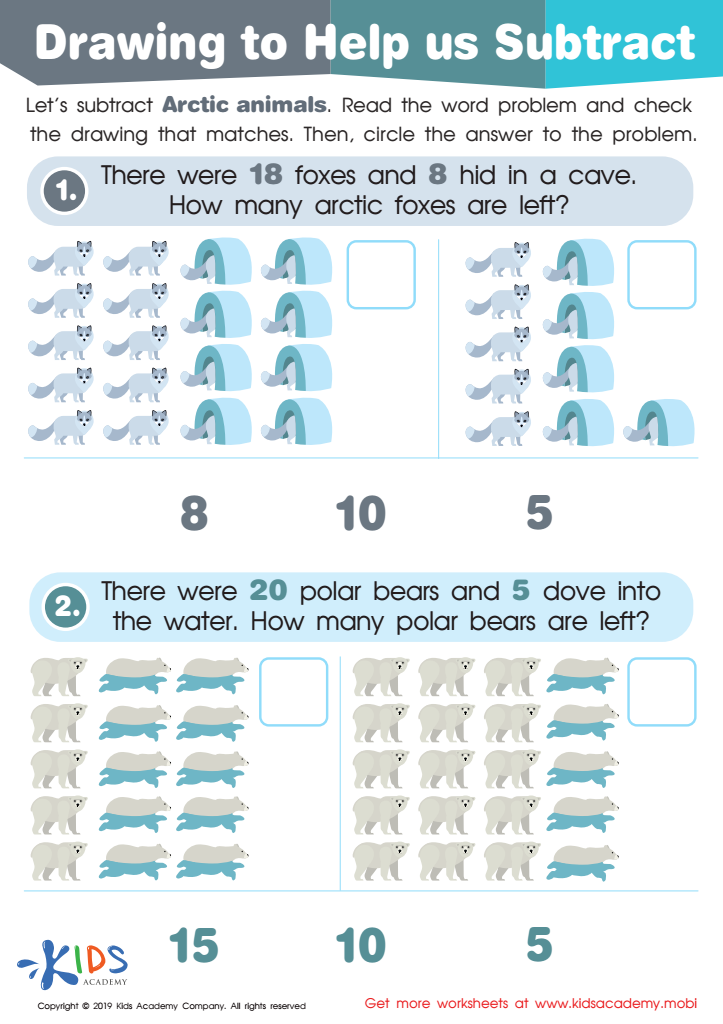
Drawing to Help Us Subtract Worksheet
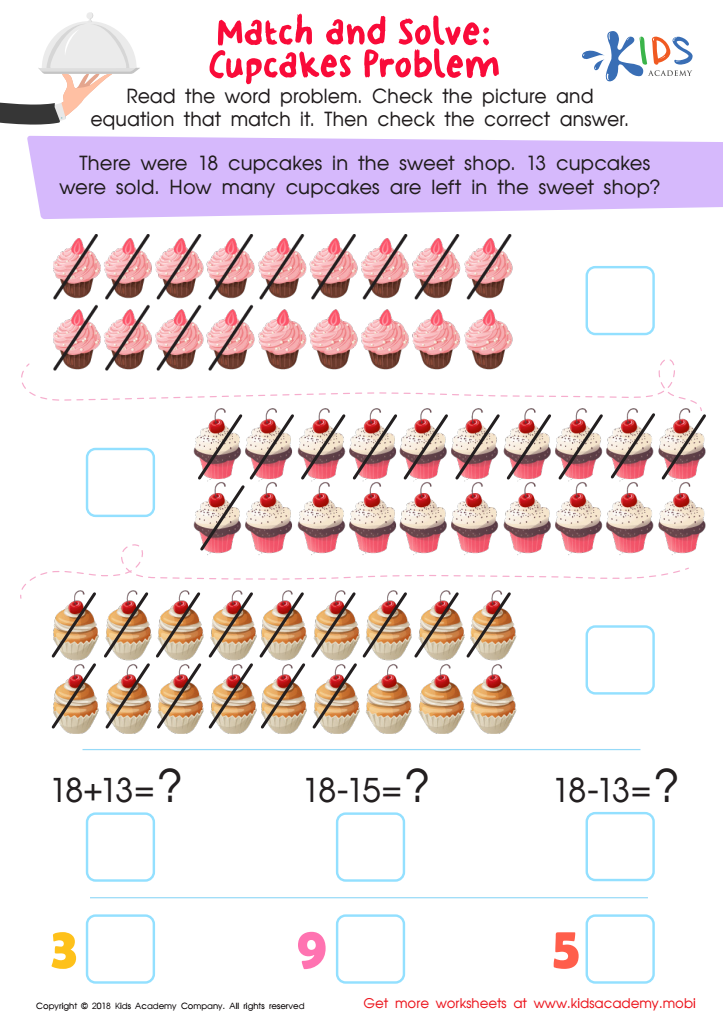
Match and Solve: Cupcakes Problem Worksheet
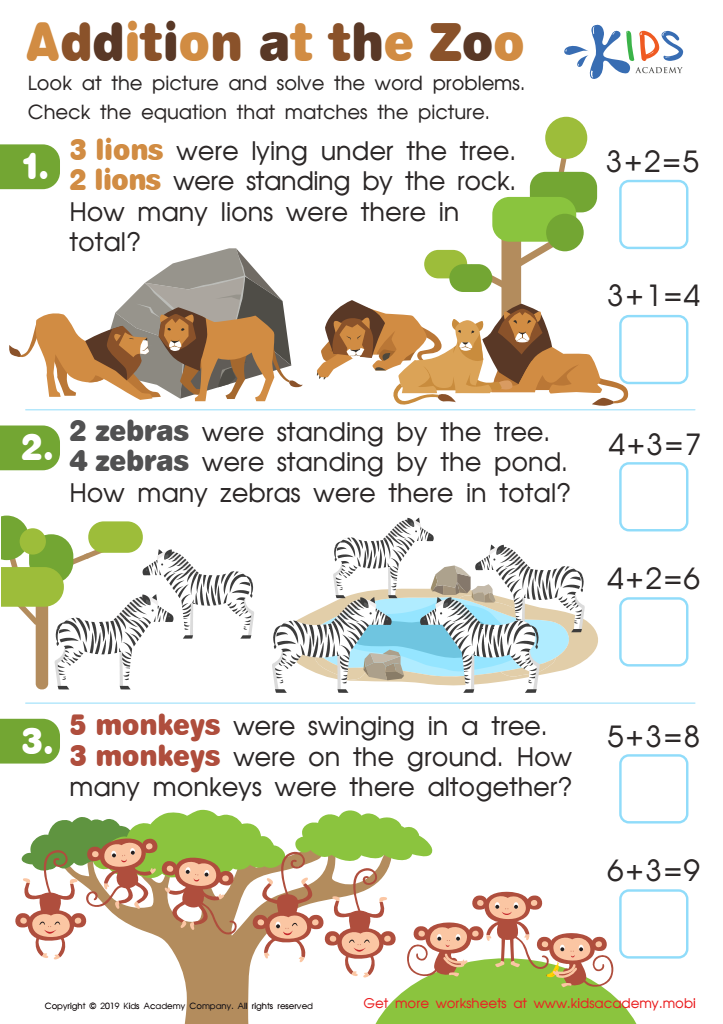
Addition at the Zoo Worksheet








Visual learning word problems are crucial for 9-year-olds because they bridge the gap between abstract concepts and tangible understanding. At this age, children encounter increasingly complex mathematical ideas. Using visual aids like diagrams, pictures, number lines, or graphs helps them concretize these abstract concepts. Visual learning capitalizes on the natural way children process information—many young learners are visual thinkers, and illustrations can simplify difficult ideas, making them more accessible and less intimidating.
Moreover, using visual word problems enhances problem-solving skills, encouraging critical thinking and fostering independence in learning. Children not only learn to recognize patterns and relationships but also develop spatial-temporal reasoning skills—essential for understanding geometry, measuring, and data representation. This multi-sensory approach caters to different learning styles, ensuring that students who might struggle with traditional numerical problems can also succeed.
Parents and teachers should care because visual word problems promote deeper comprehension rather than rote learning. They advance both conceptual understanding and practical application, essential for day-to-day problem-solving and future academic success. Furthermore, integrating visual elements makes learning more engaging, fostering a positive attitude towards mathematics and instilling a sense of achievement in young learners. Ultimately, invested attention in such learning strategies cultivates a solid mathematical foundation and a lifelong ability to view challenges from diverse perspectives.








