Coloring skills Reading Worksheets for 9-Year-Olds
3 filtered results
-
From - To
Welcome to our Coloring Skills Reading Worksheets for 9-year-olds! Our engaging worksheets blend creativity and literacy, allowing young learners to enhance their reading comprehension while expressing their artistic talents. These interactive activities are designed to improve color recognition, contextual understanding, and fine motor skills. As children color their way through fun themes and stories, they will practice key vocabulary and develop important reading strategies. Ideal for classroom use or at-home learning, our worksheets cater to diverse learning styles, ensuring every child can thrive. Download and watch your child’s confidence blossom as they bring stories to life with color!
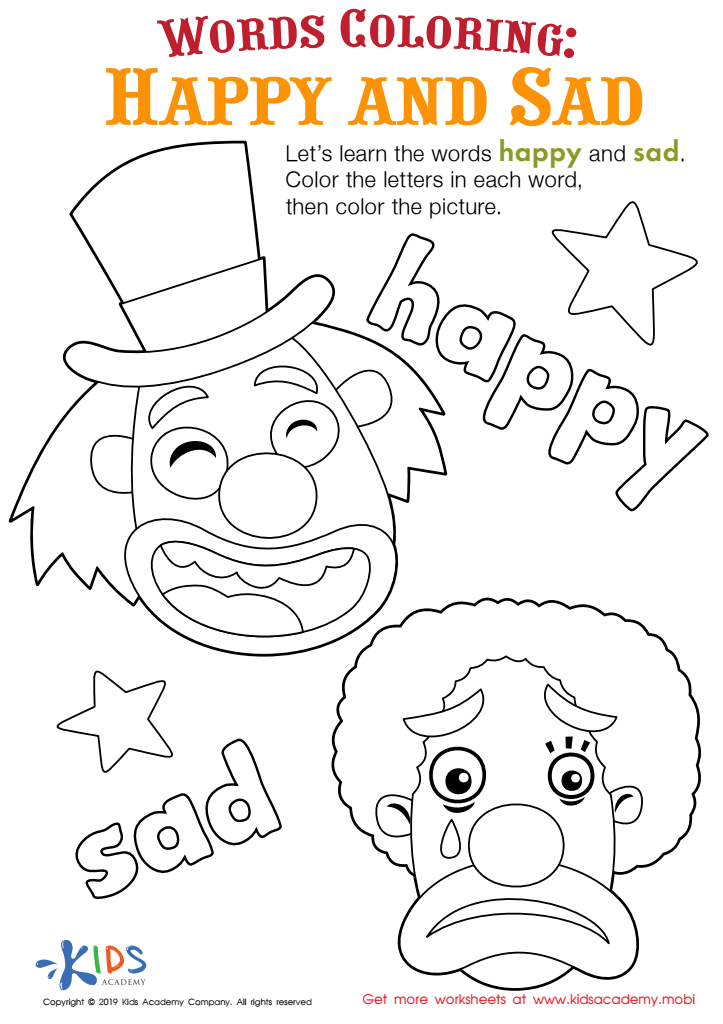
Happy and Sad Words Coloring Worksheet
 Assign to My Students
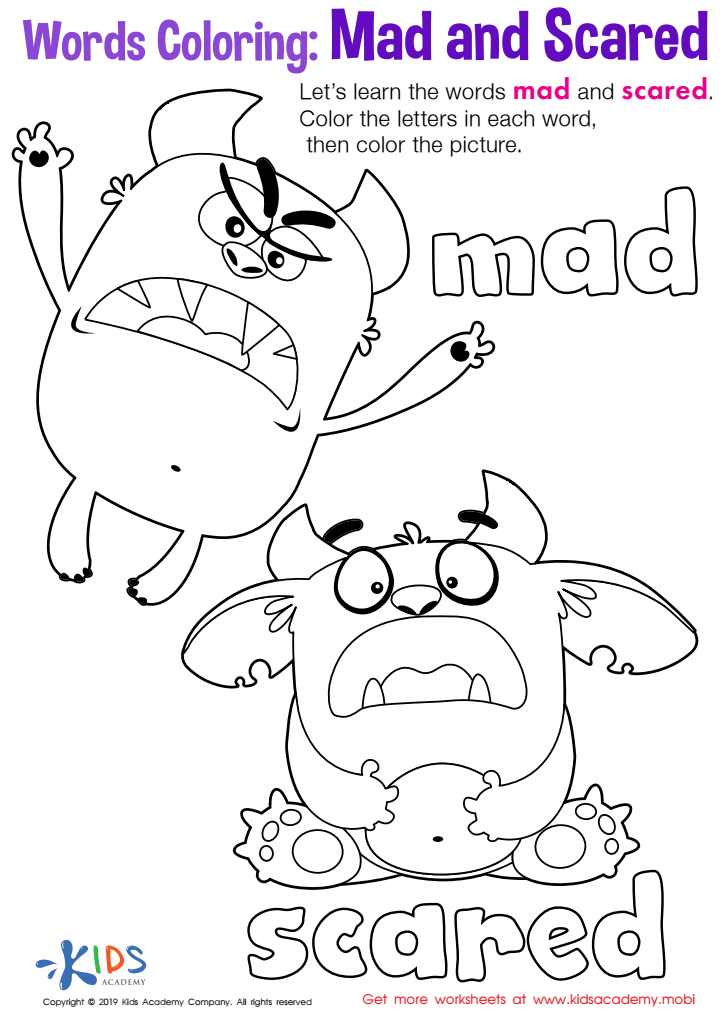
Mad and Scared Words Coloring Worksheet
Assign to My Students
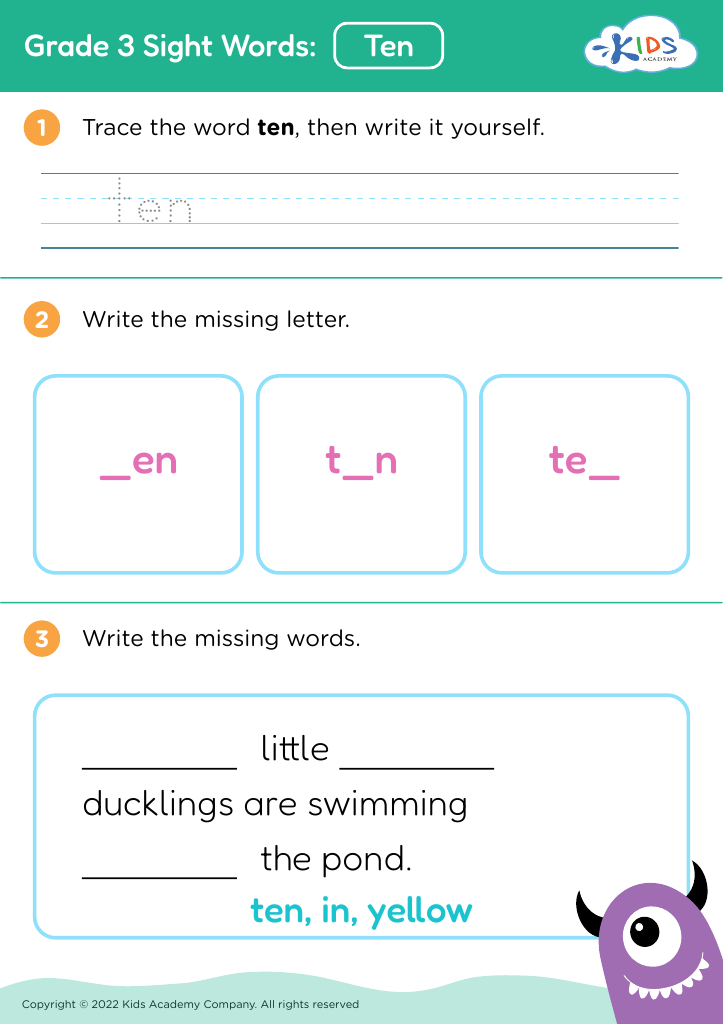





.jpg)

Coloring skills may seem like a simple childhood activity, but they play a significant role in a 9-year-old's literacy development. When children color, they enhance their fine motor skills, which are vital for writing and manipulating objects. Improved dexterity leads to better handwriting and the ability to engage with various written materials.
Furthermore, coloring involves decision-making—selecting colors and planning how to fill spaces—which boosts creativity and critical thinking. These skills are essential not only for art but also for understanding and interpreting written text. Engaging in coloring can foster a deeper connection to the stories they read, encouraging them to visualize scenes and characters.
In addition, coloring often requires patience and attention to detail, traits that are beneficial for reading comprehension. Children who practice these skills are more likely to remain focused while reading, leading to enhanced understanding and retention of information.
Moreover, coloring can be a relaxing activity that reduces stress, allowing children to approach reading with a positive mindset. Thus, parents and teachers should recognize the interconnectedness of coloring skills and literacy, promoting activities that enhance both for holistic child development.








