Critical thinking skills Science Worksheets for 9-Year-Olds
4 filtered results
-
From - To
Boost your 9-year-old's critical thinking skills with our engaging science worksheets! Designed to stimulate curiosity and enhance problem-solving abilities, these worksheets challenge young learners to think analytically. Each activity encourages them to observe, hypothesize, and infer while exploring essential scientific concepts. From investigating ecosystems to understanding basic physics principles, our thoughtfully crafted exercises promote exploration and creativity. Perfect for classroom or home fun, these worksheets help children connect ideas and develop logical reasoning. Equip your child with the skills they need to excel in science and beyond. Start your journey to foster critical thinking today!

Protecting Our Homes Worksheet
 Assign to My Students
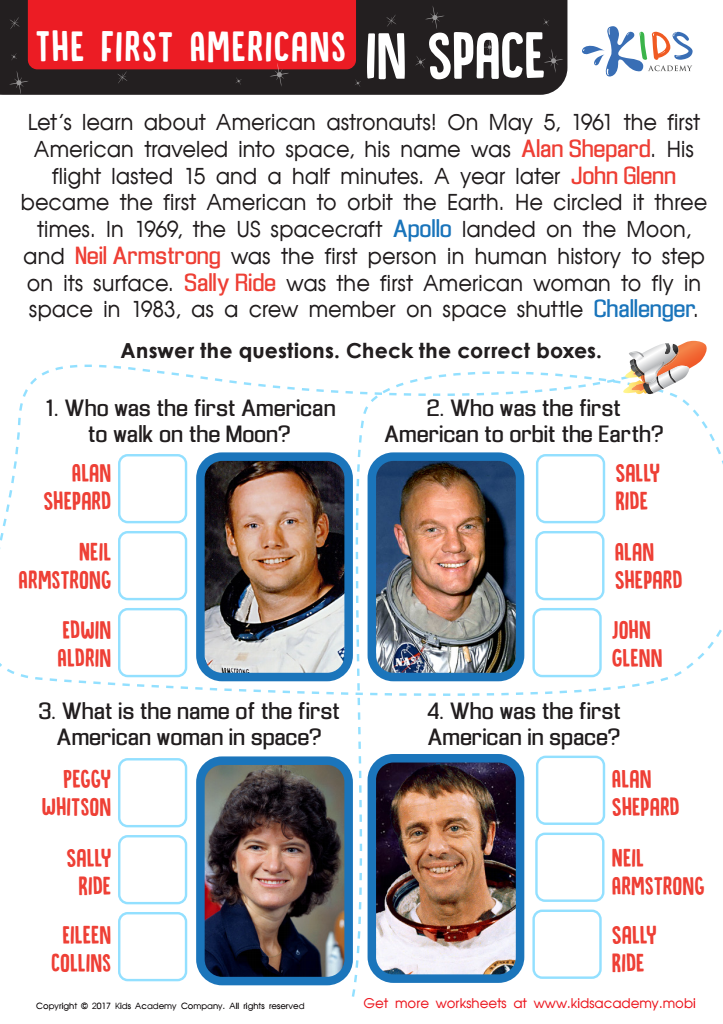
First Americans in Space Worksheet
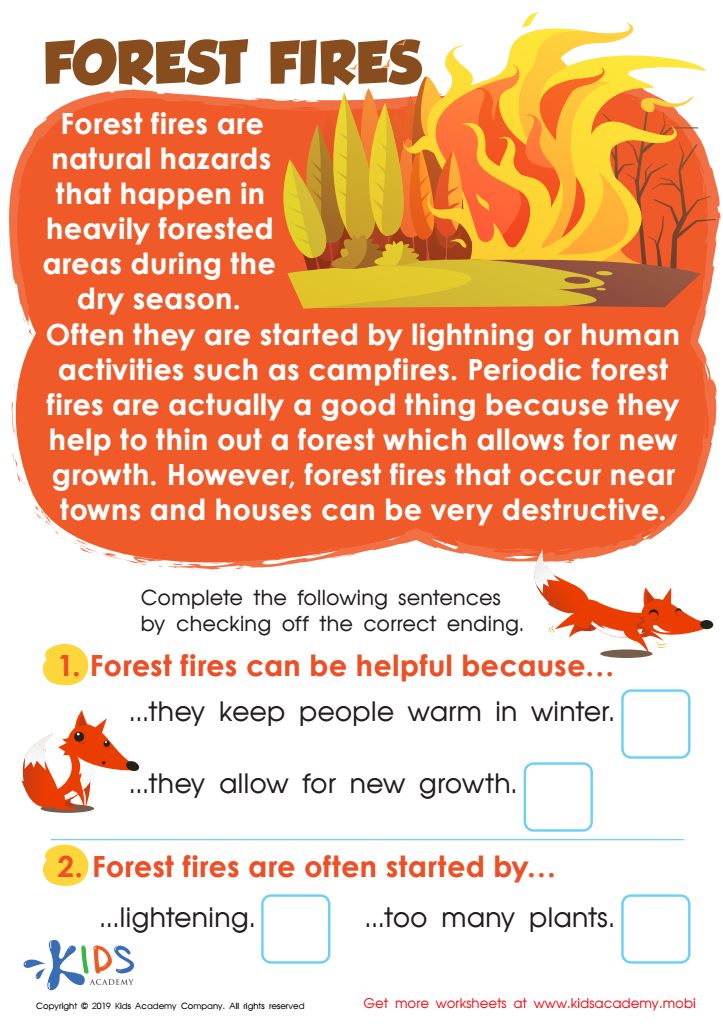
Forest Fires Worksheet
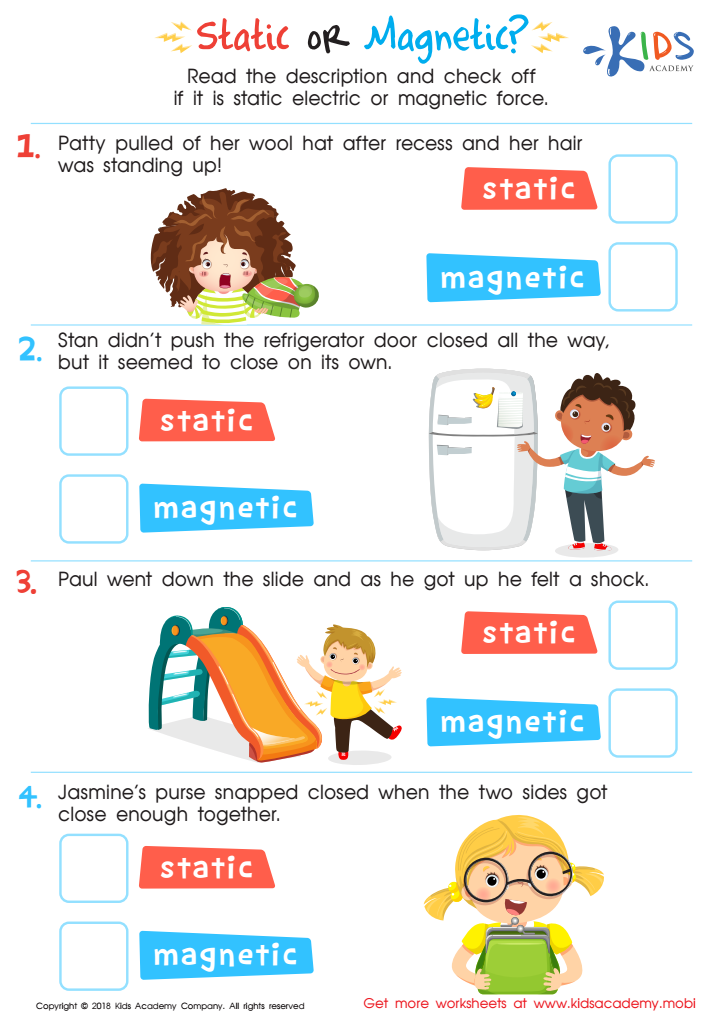
Static or Magnetic Printable Worksheet








Parents and teachers should prioritize critical thinking skills in science for 9-year-olds because these skills are fundamental to a child's overall cognitive development and future success. At this age, children are naturally curious, eager to explore how the world works. Encouraging critical thinking fosters their ability to analyze information, ask relevant questions, and connect concepts, which deepens their understanding of scientific principles.
Critical thinking in science cultivates creativity and problem-solving abilities. Children learn to approach challenges methodically, evaluate evidence, and draw conclusions based on observation rather than assumption. These skills are not only vital in scientific contexts but are also transferable to everyday situations and other academic subjects.
Moreover, nurturing critical thinkers encourages independence and resilience. As children grapple with complex concepts, they learn to embrace uncertainty and are better prepared to navigate future academic challenges. This enhances their confidence and prepares them for a rapidly changing world where the ability to think critically is more important than rote memorization.
Ultimately, fostering critical thinking skills in science empowers children to become informed decision-makers and responsible citizens, ready to tackle real-world problems with enthusiasm and creativity. Parents and teachers play a crucial role in shaping these essential skills at such a formative age.







