Phonics practice ABC Letters Worksheets
3 filtered results
-
From - To
Explore our engaging Phonics Practice ABC Letters Worksheets, designed to enhance early literacy skills for young learners! Perfect for preschool and kindergarten students, these worksheets focus on letter recognition, sound associations, and phonemic awareness. Each worksheet is colorful and interactive, making learning fun and effective. Students will practice tracing letters, identifying images that begin with each letter, and developing essential reading skills. Our resources cater to different learning styles and help children build a strong foundation for reading success. Download these printable worksheets today to foster a love for learning in your classroom or at home!
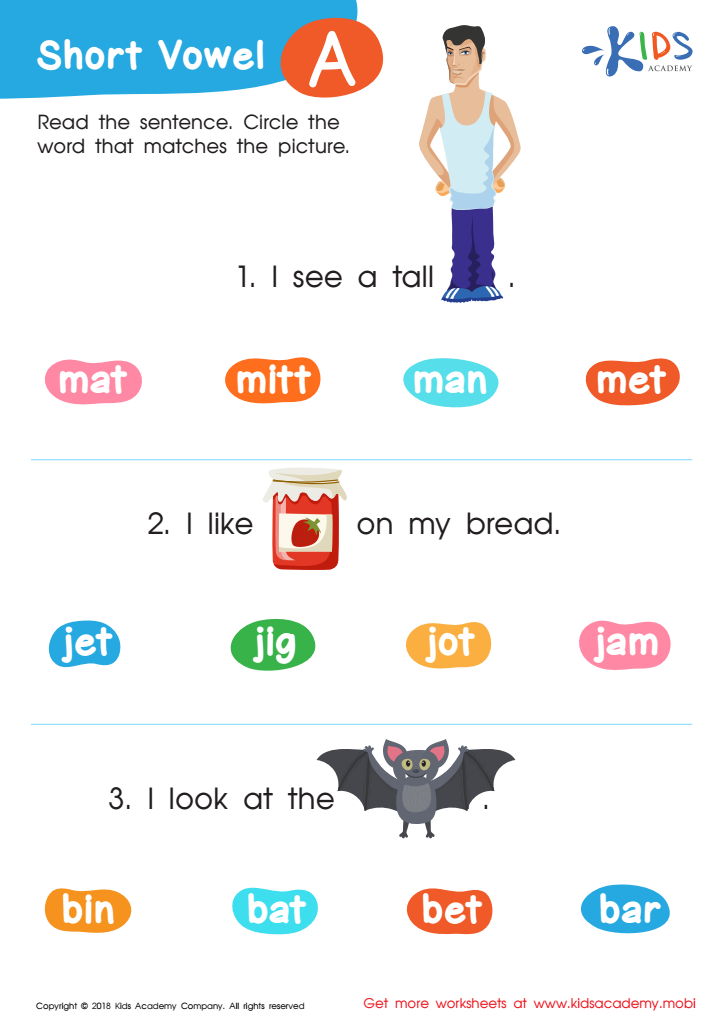
Short Vowel /a/ Worksheet





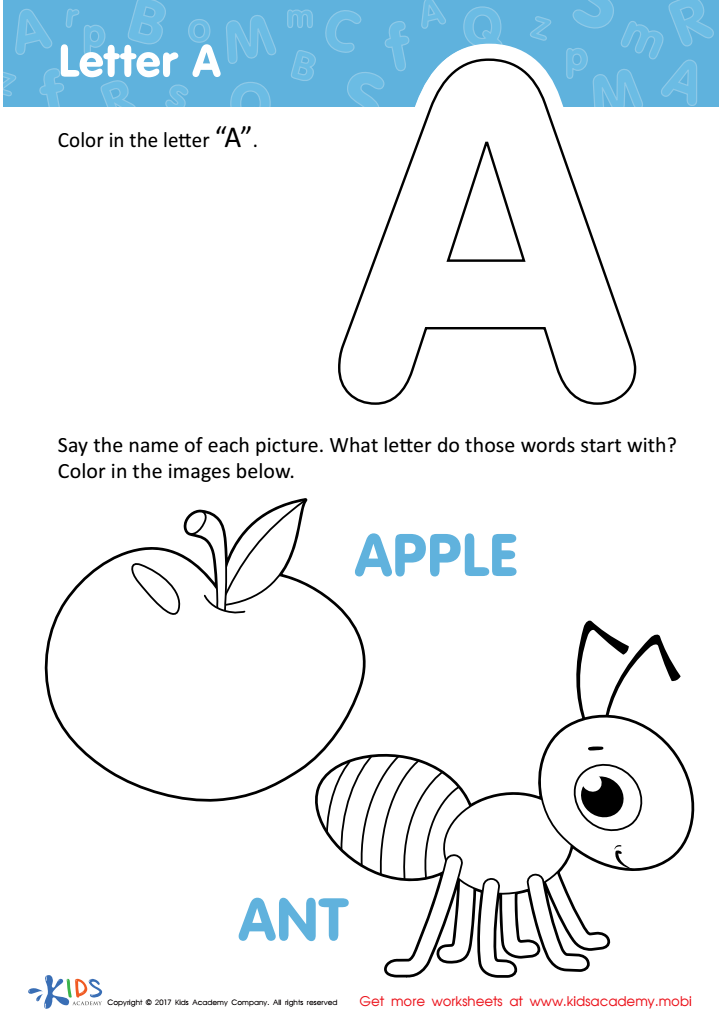
Letter A Coloring Sheet
 Assign to My Students
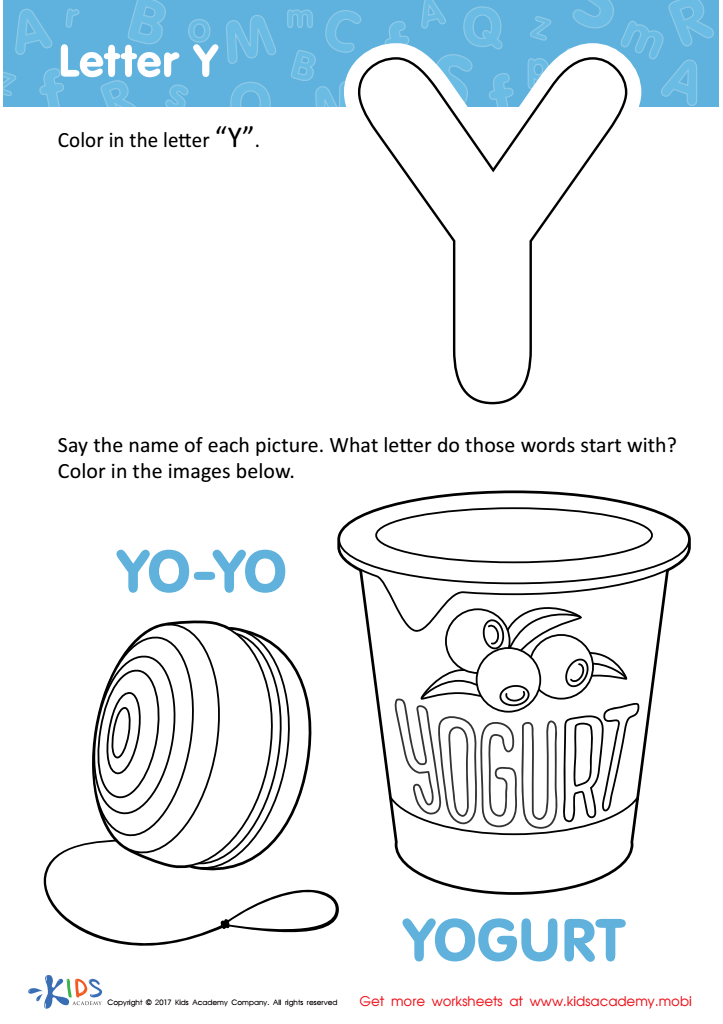
Letter Y Coloring Sheet
Assign to My Students







Phonics practice, particularly focusing on the ABC letters, is foundational for children's reading and writing development. Understanding phonics enables children to decode words, which is essential for literacy. When parents and teachers prioritize phonics practice, they equip children with the skills needed to link letters to their corresponding sounds, facilitating word pronunciation and spelling.
Engaging with phonics also helps nurture a love for reading. As children enhance their decoding skills, they become more confident readers, boosting their enthusiasm for books and learning. Furthermore, early phonics instruction can significantly impact a child's future academic success, as strong reading skills are essential for grasping content across all subjects.
Moreover, phonics practice promotes cognitive development. It requires children to recognize patterns and make connections, improving critical thinking and problem-solving abilities. Fostering a solid phonics foundation supports literacy development throughout their educational journey, leading to greater achievement in later grades.
In summary, caring about phonics practice ensures that children are not just learning letters, but are also building the critical skills needed for effective communication and academic success. This investment in early literacy pays off in children's overall development, shaping their future as confident, capable learners.







