
Sound recognition Consonants Worksheets
5 filtered results
Difficulty Level
Grade
Age
-
From - To
Subject
Activity
Standards
Boost your child's phonetic skills with our engaging Sound Recognition Consonants Worksheets! Designed for early learners, these interactive resources help children identify and differentiate consonant sounds, enhancing their reading and writing abilities. Each worksheet features colorful illustrations and fun activities that make learning enjoyable while promoting auditory discrimination and vocabulary development. Our comprehensive materials cater to various learning styles, ensuring every child can succeed. Perfect for use in the classroom or at home, these worksheets provide parents and teachers with a valuable tool to support literacy skills. Start your child's journey to confident communication today with our captivating consonants worksheets!
Favorites
With answer key
Interactive
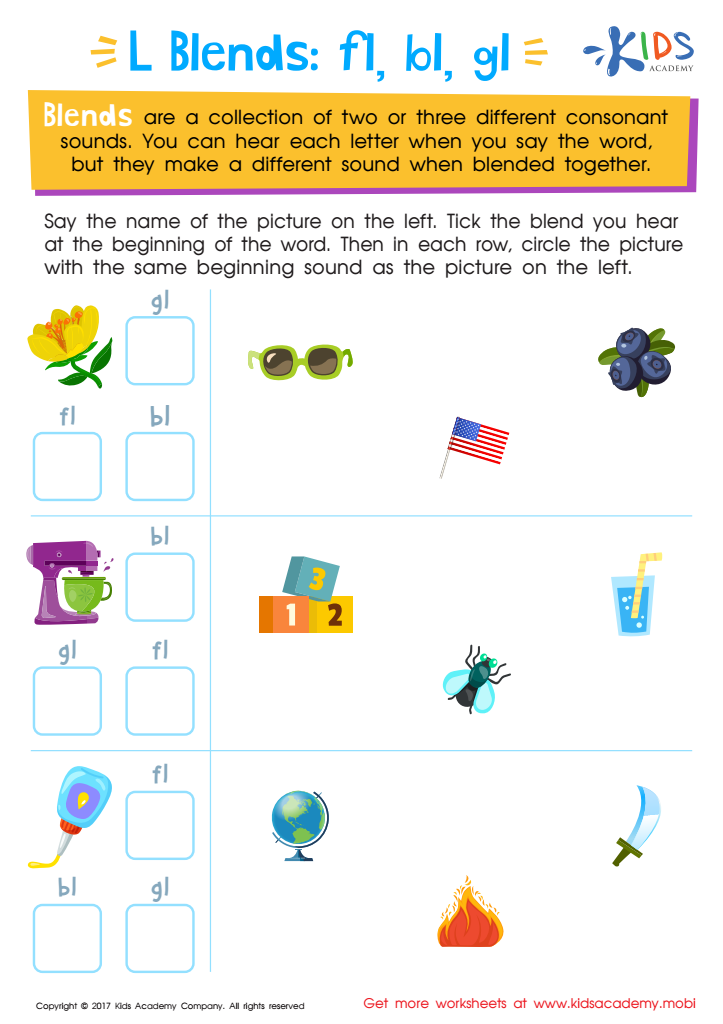
Blending Consonants: "Fl", "Bl" and "Gl" Printable
Help your child master consonant blends Fl, Bl, and Gl with this printable worksheet. Find words associated with the pictures and learn to better understand the difference between consonant blends. Vibrant images motivate and aid in learning. Download now for improved phonics success!
 Assign to My Students
Blending Consonants: "Fl", "Bl" and "Gl" Printable
Worksheet
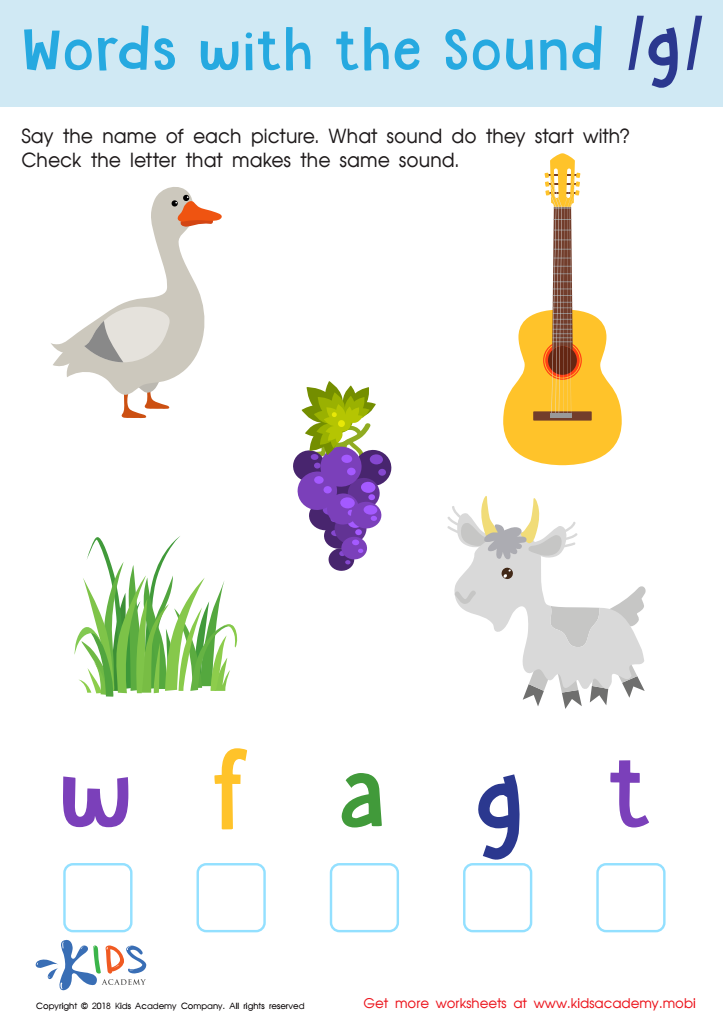
Words with sound g Reading Worksheet
Help your child learn the soft "g" sound with this phonics worksheet. Ask them to name each picture, then identify the letter sound it begins with. If it's "g", they can check the box. Have them repeat each word, listening for the soft "g" sound before moving on to the next page.
Words with sound g Reading Worksheet
Worksheet
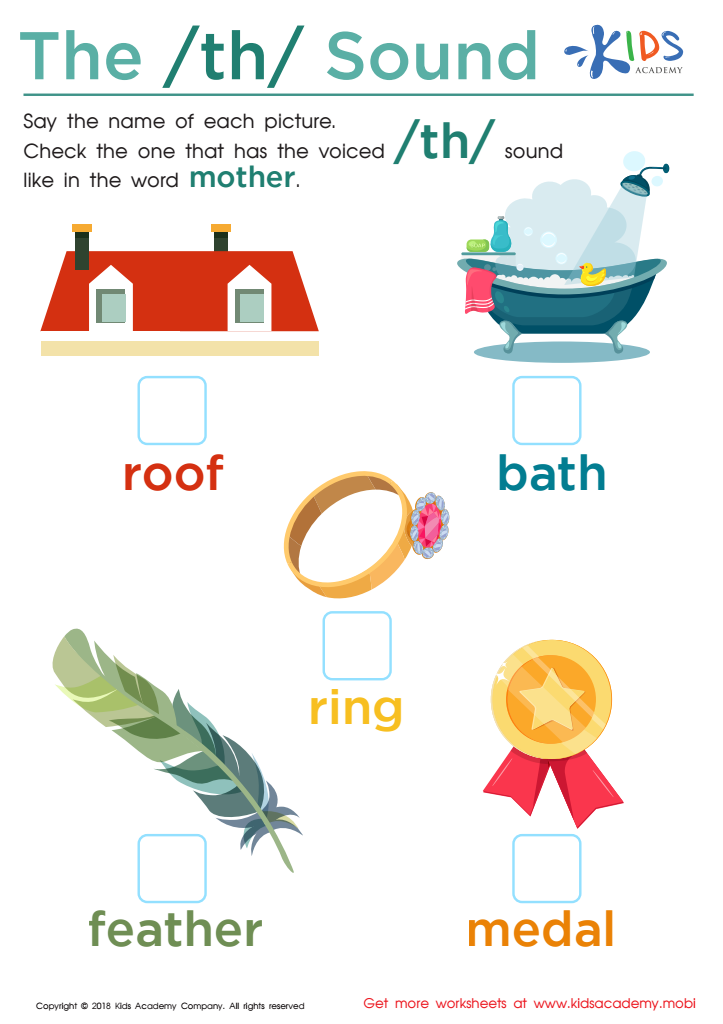
The /th/ Sound Worksheet
Confuse your students no more: have them use this worksheet to understand the /th/ sound and its two variants. With pictures, ask them to say the name of each one. Help them identify the voiced /th/ sound, like in 'mother', by having them say it aloud. Download the pdf to get started.
The /th/ Sound Worksheet
Worksheet
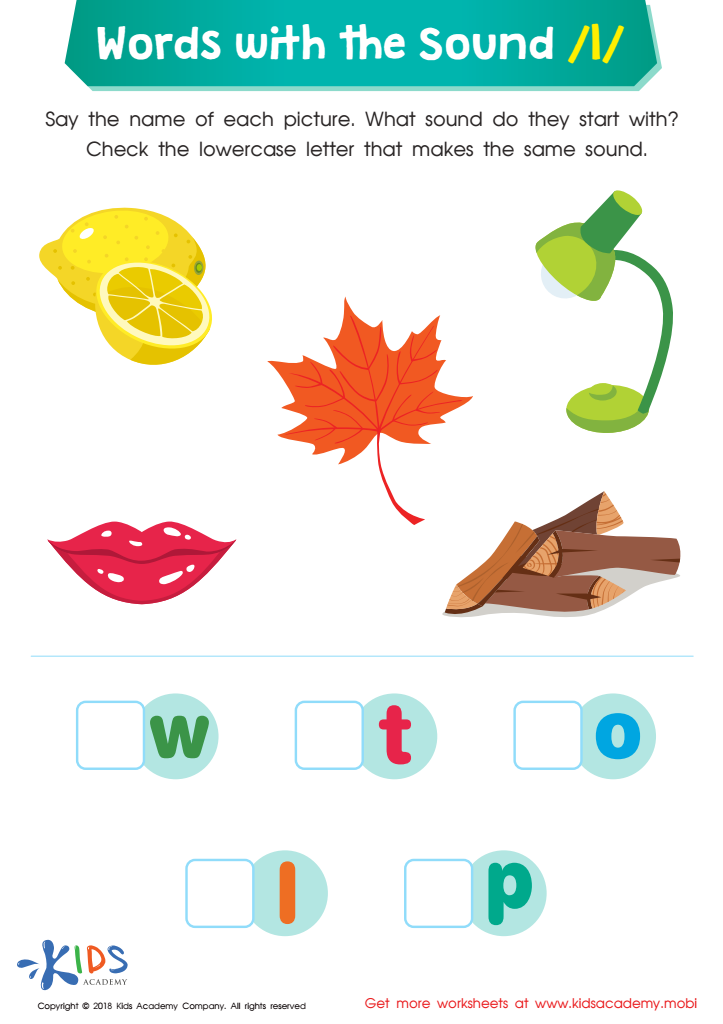
Words with Sound L Reading Worksheet
This PDF worksheet is great for helping emerging readers isolate initial sounds. Kids name familiar pictures, then identify the correct letter for the "l" sound. This worksheet strengthens fine motor skills, plus builds visual discernment. It's fun and colorful too!
Words with Sound L Reading Worksheet
Worksheet
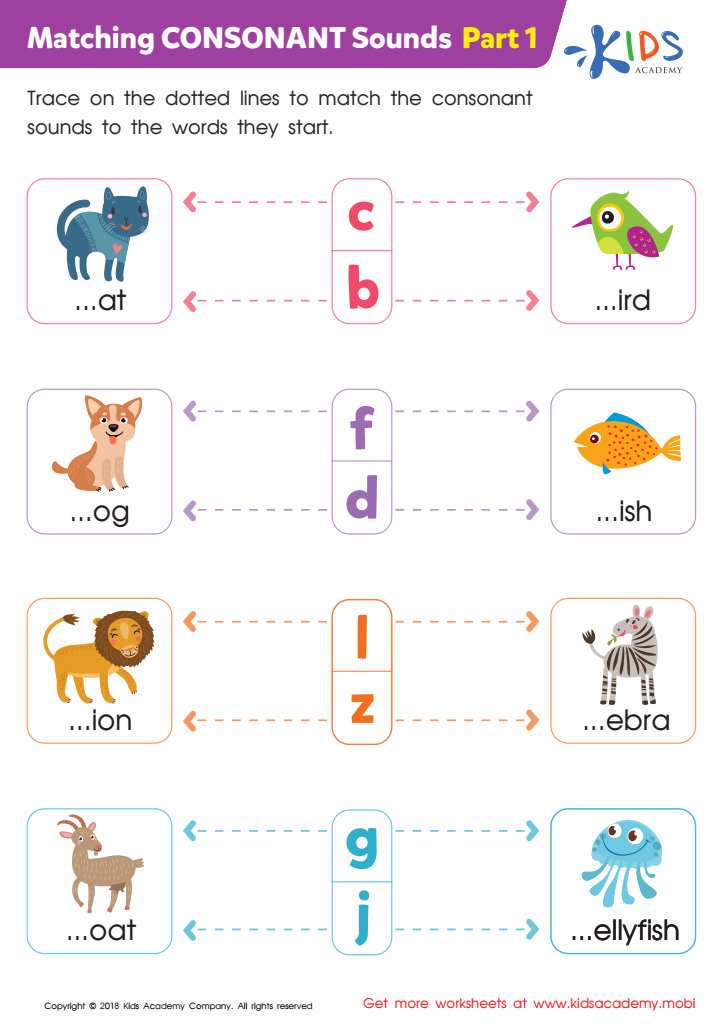
Matching Consonant Sounds: Part 1 Worksheet
Decide which letter matches each word and picture in this fun phonics worksheet. Slide your finger over each word, trying out each letter to check for matches. Once each pair is solved, trace the dotted lines with pencil to complete the printable. Who knew learning could be so enjoyable?
Matching Consonant Sounds: Part 1 Worksheet
Worksheet
Join Kids Academy for Free
Who is primarily going to use this learning content?



Sound recognition, particularly consonants, plays a pivotal role in early literacy development. Parents and teachers should care about this aspect for several reasons. First and foremost, recognizing consonants is crucial for phonemic awareness, which is a foundational skill for reading. When children can identify consonant sounds, they can decode words more effectively, aiding in their overall reading fluency and comprehension.
Additionally, understanding consonant sounds helps children in spelling. By recognizing how consonants fit into different words, kids learn to spell phonetically, thereby enhancing their writing skills. This phonetic understanding not only benefits literacy but also boosts confidence in their language abilities.
Moreover, effective sound recognition promotes better communication skills. When children master consonant sounds, they begin to articulate words clearly, developing their speaking and listening skills. This is vital for effective interaction in classrooms and social situations.
Furthermore, engaging with consonant sounds through games and activities fosters a positive and enjoyable learning environment. Such interactions can strengthen the bond between parents, teachers, and children, making literacy a shared journey. Therefore, prioritizing sound recognition in consonants is essential for holistic development in language arts.







