Filters

6 filtered results

Clear all filters
Favorites
With answer key
Interactive

6 filtered results

Difficulty Level

Grade


Enhance your child's handwriting and motor skills with our Hand-eye Coordination Cursive Alphabet Worksheets! These engaging worksheets are designed to help young learners master cursive writing while improving coordination between their hands and eyes. Each sheet features beautifully crafted cursive letters for tracing and practice, encouraging children to develop their fine motor skills in a fun and interactive way. Ideal for preschool and early elementary students, these worksheets provide a creative approach to learning the alphabet, promoting confidence in writing. Download our worksheets today and watch your child's handwriting flourish as they enjoy the benefits of hand-eye coordination development!

Check out this FREE Trial Lesson on Cursive Alphabet!

A

Favorites
With answer key
Interactive
  • Hand-eye Coordination
  • Cursive Alphabet
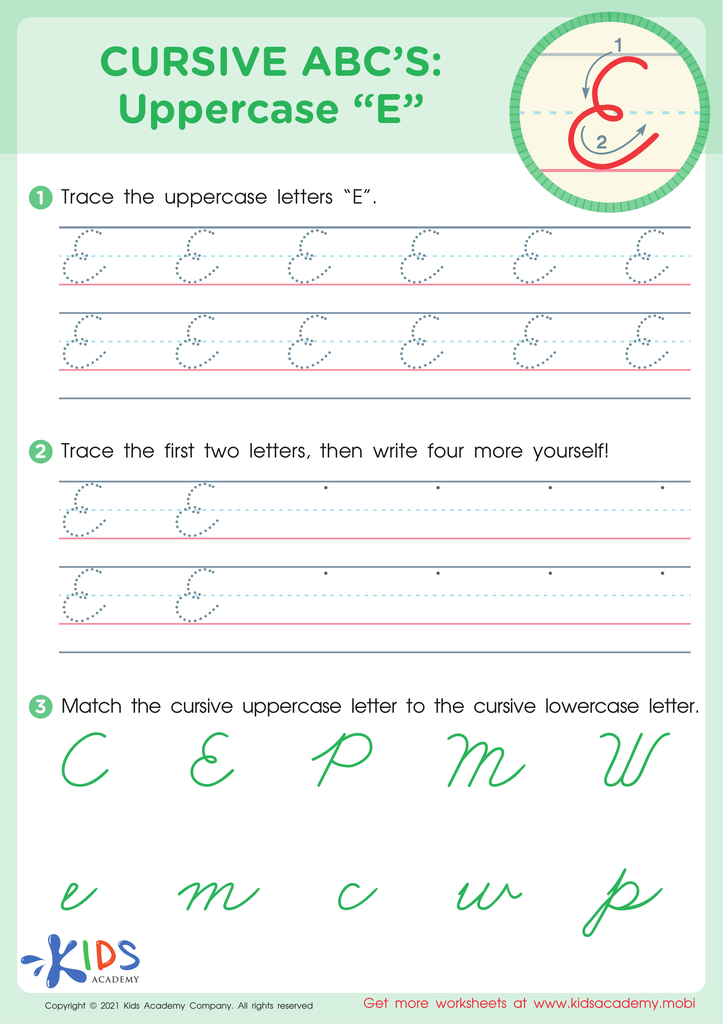
Cursive ABCs: Uppercase E

Cursive ABCs: Uppercase E

Ask your child if they can identify the letter 'E' and give examples. Each letter is unique, so provide coaching. Have them trace cursive 'E' to become familiar and boost confidence. Then, ask them to write it on their own.
Cursive ABCs: Uppercase E
Worksheet
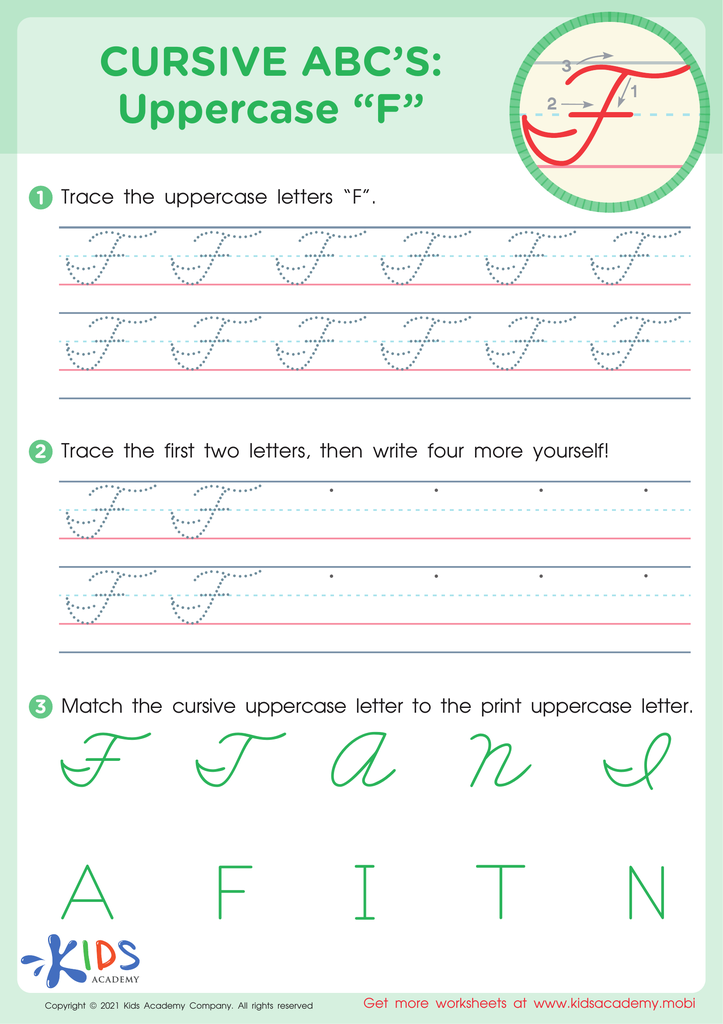
Cursive ABCs: Uppercase F

Cursive ABCs: Uppercase F

Help your kids trace the letters in these worksheets and watch their confidence grow as they learn to write cursive uppercase and lowercase letters. Ask them to identify the letters in words and give examples of words that start with an uppercase 'F', then have them write some letters on their own and assess their progress.
Cursive ABCs: Uppercase F
Worksheet
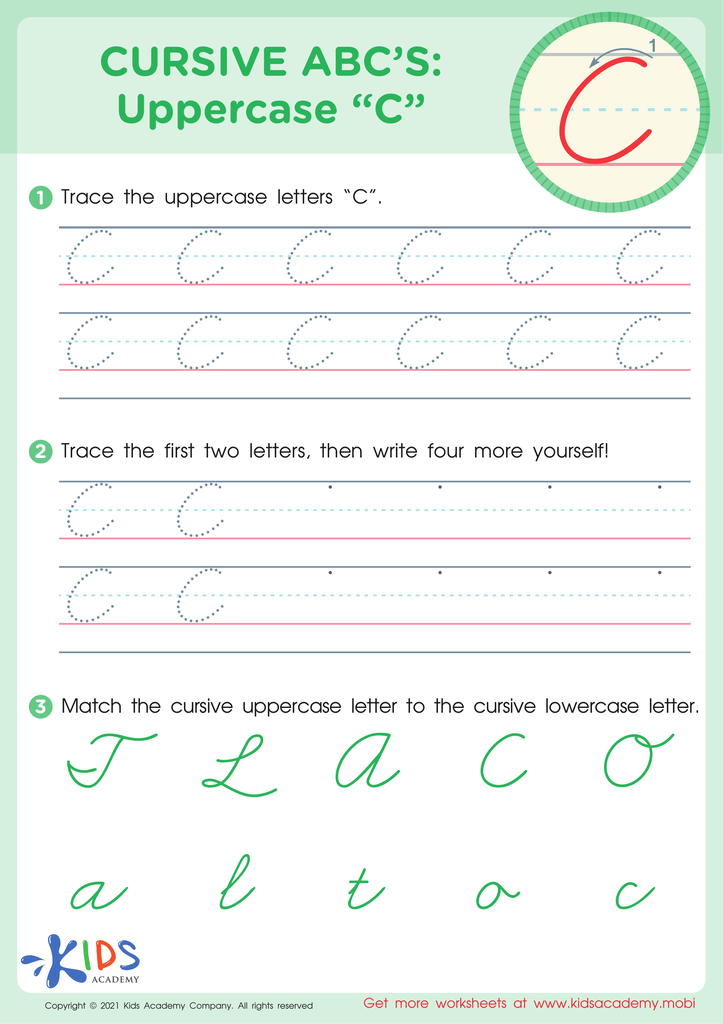
Cursive ABCs: Uppercase C

Cursive ABCs: Uppercase C

These worksheets are perfect for those wanting to improve their handwriting or learn letter recognition. The tracing exercises help younger students sharpen their writing skills and teach how to write the 'C' in cursive. First, they trace the given examples and then practice writing it solo. A letter recognition test is at the bottom of the page to check progress.
Cursive ABCs: Uppercase C
Worksheet
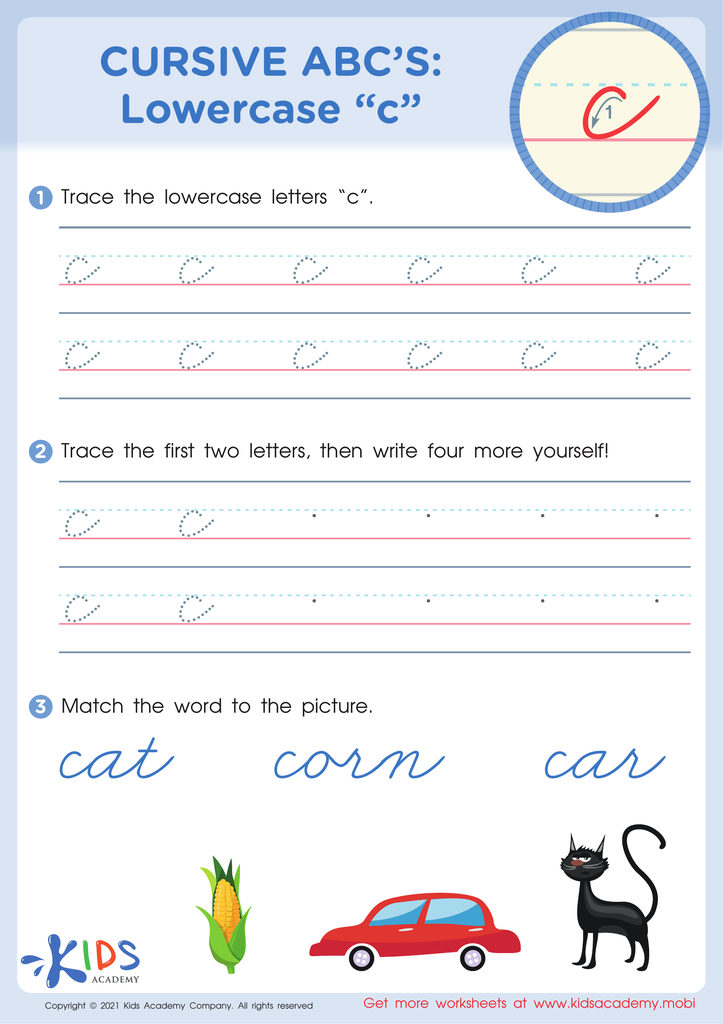
Cursive ABCs: Lowercase c

Cursive ABCs: Lowercase c

Once your child has successfully printed their letters, help them learn to recognize and write the alphabet in cursive. Struggling? This worksheet is perfect to assist them. Writing is an essential skill for kids to learn, so do all you can to help them. Use these tracing worksheets and guide them as they write the lowercase letter 'c' in cursive.
Cursive ABCs: Lowercase c
Worksheet
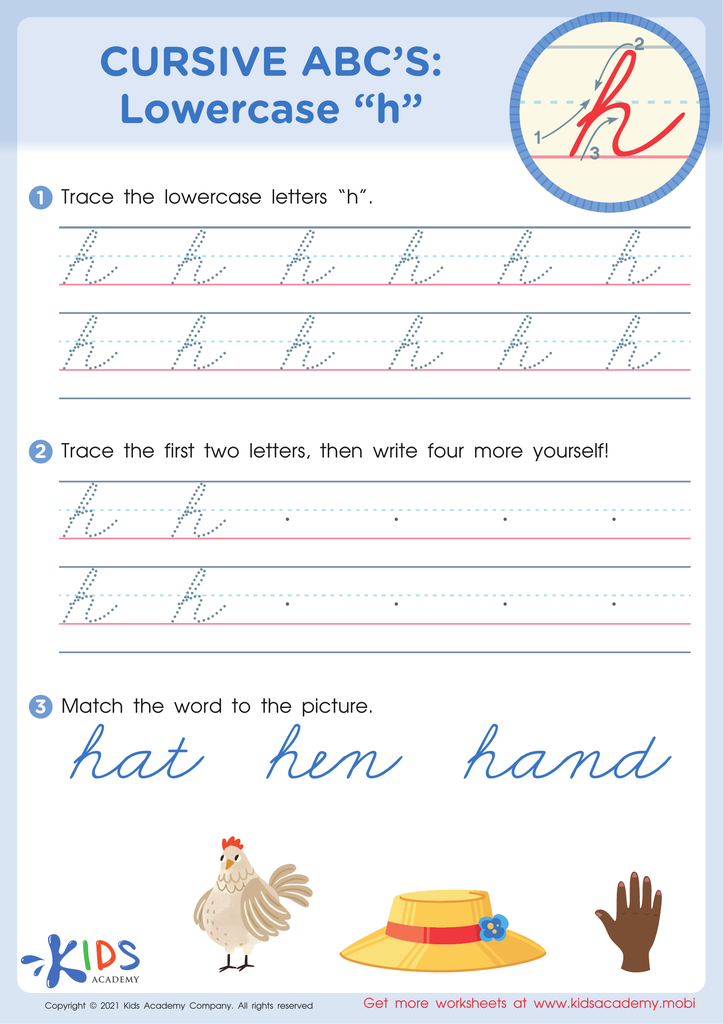
Cursive ABCs: Lowercase h

Cursive ABCs: Lowercase h

Your children will need more than just reciting the alphabet; they need to learn how to identify and write it. Cursive writing helps with neatness, and these tracing worksheets are great learning aids and offer exercises to practice writing lowercase 'h'. With these, your children get better writing skills and learn new words.
Cursive ABCs: Lowercase h
Worksheet
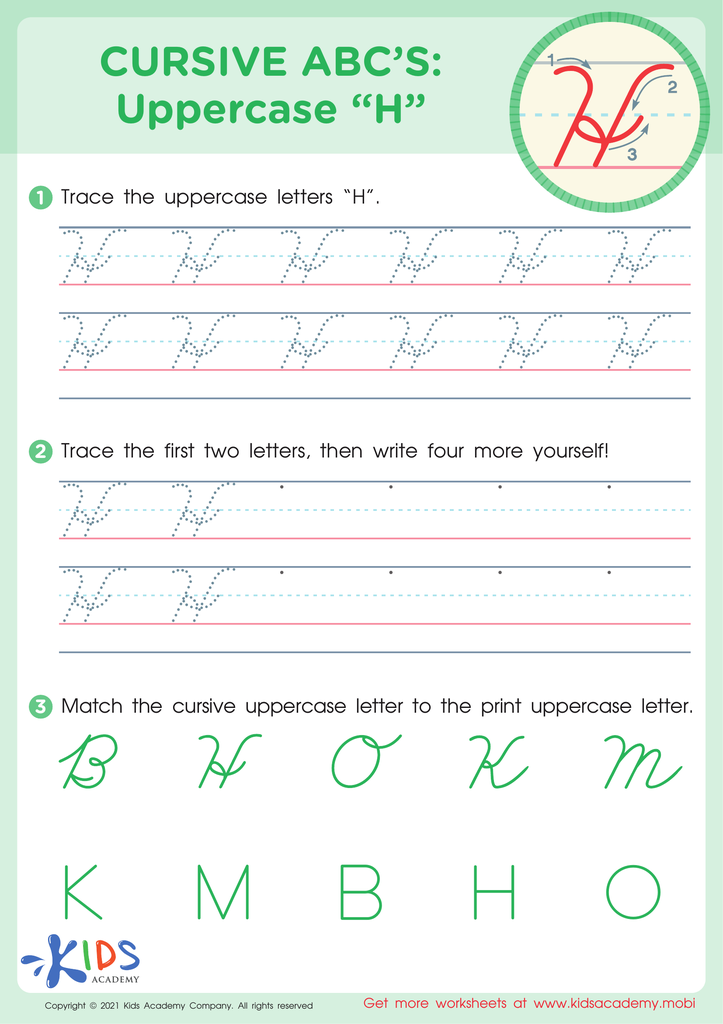
Cursive ABCs: Uppercase H

Cursive ABCs: Uppercase H

Have your child recite the alphabet and give you words beginning with H. This tracing sheet is perfect to help them improve their handwriting. Guide their hands as they trace the uppercase H, then have them practise writing it alone. At the bottom is an exercise to check their letter recognition.
Cursive ABCs: Uppercase H
Worksheet


Hand-eye coordination is a vital skill for young learners, significantly influencing their ability to master cursive writing. Cursive writing requires the seamless integration of visual and motor functions, where the eyes guide the hand in forming letters fluidly. By fostering hand-eye coordination through cursive alphabet practice, educators and parents can help children develop fine motor skills, which are essential for various everyday tasks and academic activities.

When children learn to write in cursive, they engage in continuous motion, connecting letters, which enhances their ability to process information visually and physically. This holistic skill strengthens their overall handwriting, improves focus, and bolsters confidence in writing tasks. Additionally, strong hand-eye coordination can positively impact other subjects, including art, math, and even sports, where such skills are foundational to success.

Moreover, cursive writing has cognitive benefits, promoting memory retention and comprehension. In today's digital world, where typing often prevails, maintaining the art of cursive allows children to connect more personally with their learning materials.

In summary, by prioritizing hand-eye coordination with cursive alphabet practice, parents and teachers can equip children with critical skills that extend beyond writing, fostering both academic and personal growth.