Listening skills Elementary Phonics Worksheets
4 filtered results
-
From - To
Boost your child's reading proficiency with our engaging collection of Listening Skills Elementary Phonics Worksheets! Designed for young learners, these printable activities focus on enhancing listening and phonetic skills through fun, interactive exercises. Each worksheet introduces essential phonics concepts, helping kids to connect sounds with letters and words effectively. Integrating vibrant illustrations, these worksheets captivate children's attention, encouraging them to practice and improve their listening abilities. Ideal for classroom or home use, our worksheets offer a valuable tool for parents and teachers aiming to build a strong foundation in early literacy skills. Unlock your child's potential today!
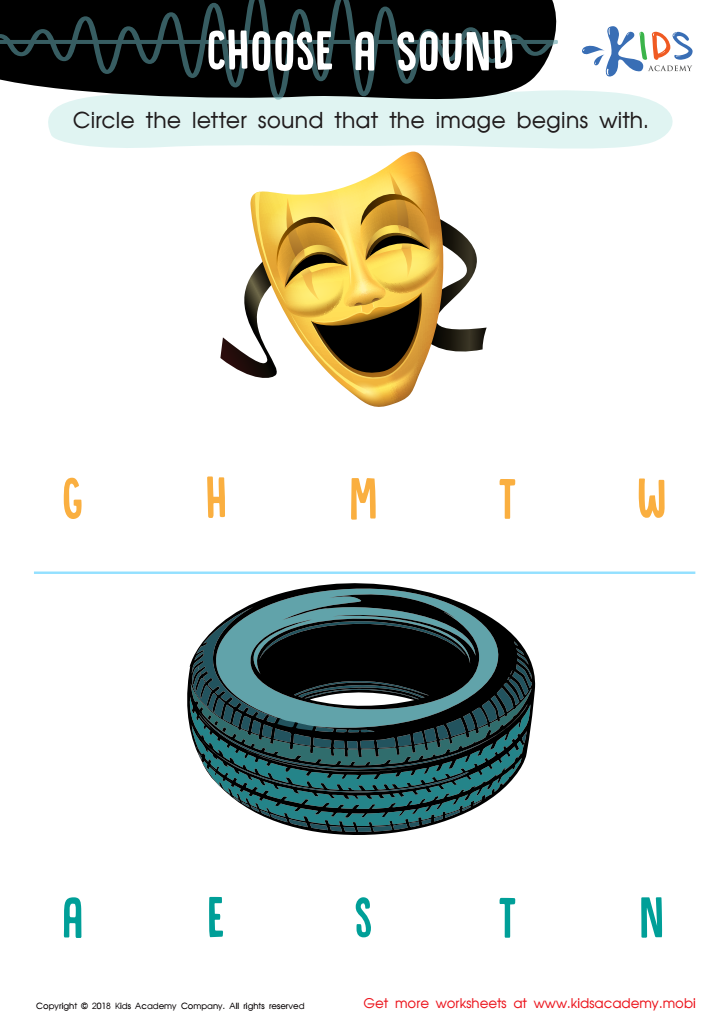
Choose a Sound Worksheet
 Assign to My Students
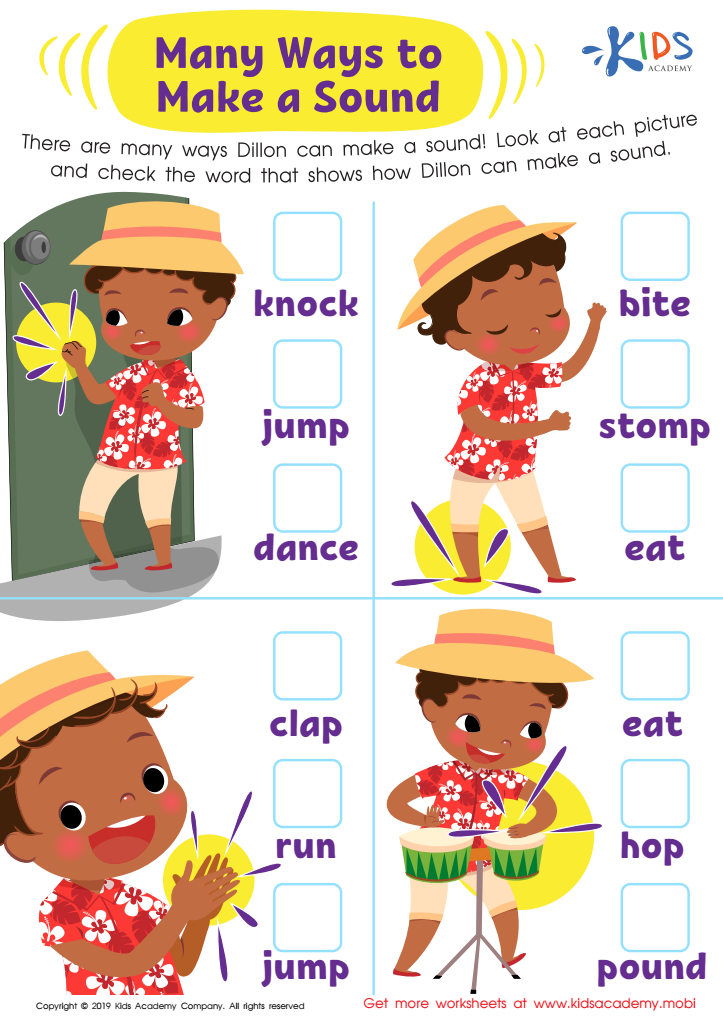
Many Ways to Make a Sound Worksheet
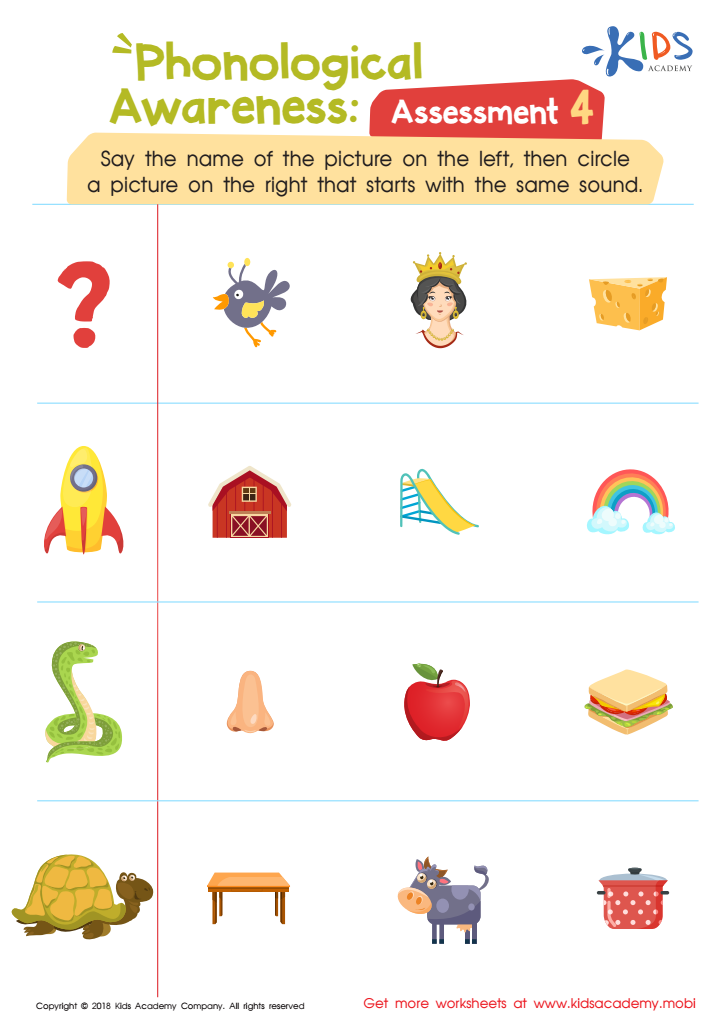
Phonological Awareness: Assessment 4 Worksheet
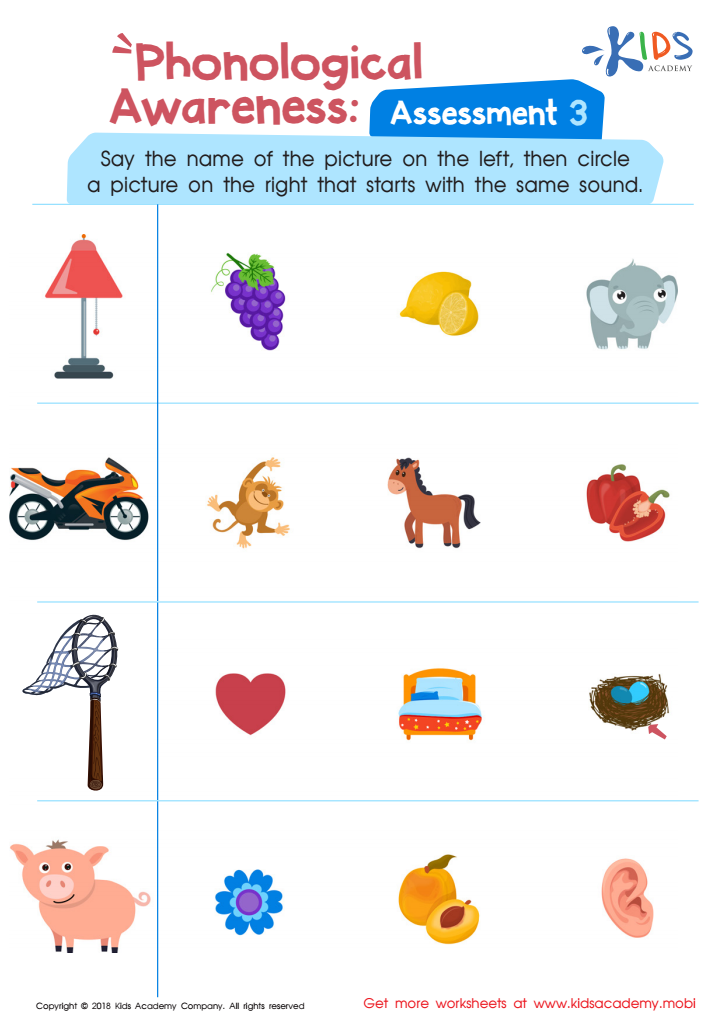
Phonological Awareness: Assessment 3 Worksheet




Developing listening skills in elementary phonics is crucial for young learners as it forms the cornerstone of their language acquisition and literacy development. For parents and teachers, attention to these skills is essential for several reasons.
Firstly, listening skills are foundational for phonemic awareness, which is the ability to identify and manipulate sounds in spoken words. Strong phonemic awareness is directly linked to reading success because it helps children decode words by understanding sound structures, making reading smoother and more intuitive.
Secondly, good listening skills enhance comprehension and vocabulary acquisition. When children can effectively listen, they better understand instructions, narratives, and explanations, enriching their knowledge base and expanding their vocabulary, both critical for academic progression and everyday communication.
Additionally, developing attentive listening fosters better social and cognitive skills. Children learn to follow directions, take turns in conversations, and respond appropriately, all of which are vital for classroom dynamics and personal relationships.
Lastly, early mastery of these skills instills confidence and motivation in young learners. As they recognize their growing competency in mastering sounds and words, they are more likely to engage actively in learning activities, developing a lifelong love for reading and learning.
In summary, prioritizing listening skills in elementary phonics lays a robust foundation for a child's overall educational journey, making it a shared responsibility of both parents and teachers.







