Sound identification Elementary Phonics Worksheets
4 filtered results
-
From - To
Discover our engaging "Sound Identification Elementary Phonics Worksheets" designed to enhance early literacy skills! These printable resources help young learners master the sounds associated with letters and words, a vital component of phonics education. With fun activities and exercises, students will practice sound recognition, improve listening skills, and boost their reading readiness. Ideal for classroom use or at-home practice, these worksheets cater to various learning styles and promote interactive learning. Foster a solid foundation in phonics and empower your child’s literacy journey with our easy-to-use, colorful worksheets that make sound identification enjoyable and effective. Start exploring today!
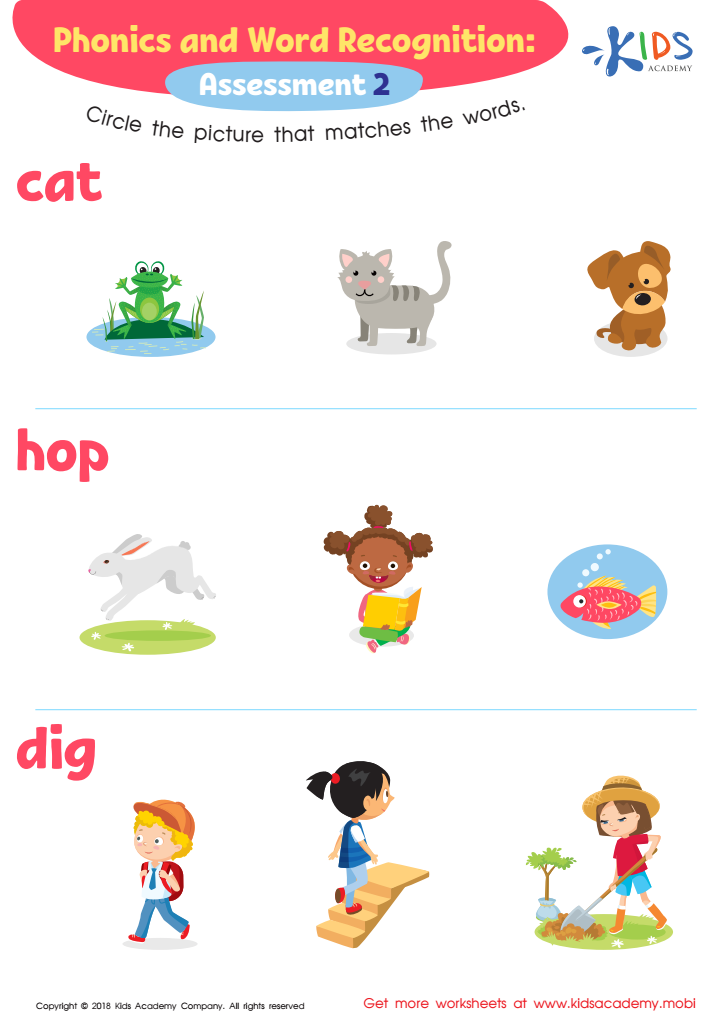
Phonological Awareness: Assessment 2 ELA Worksheet
 Assign to My Students
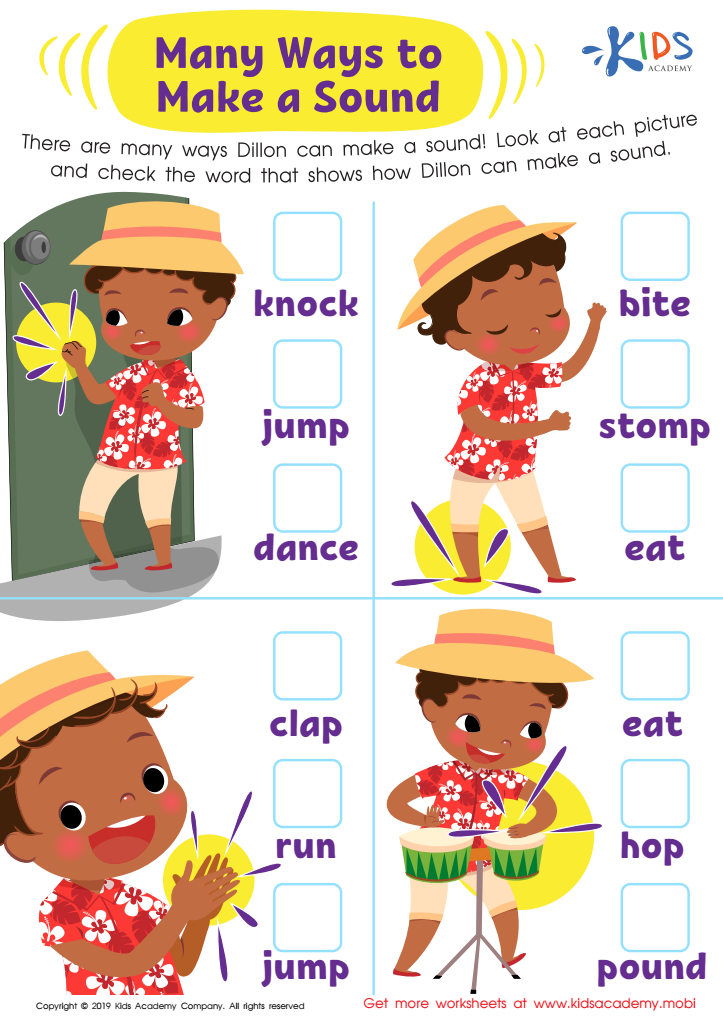
Many Ways to Make a Sound Worksheet
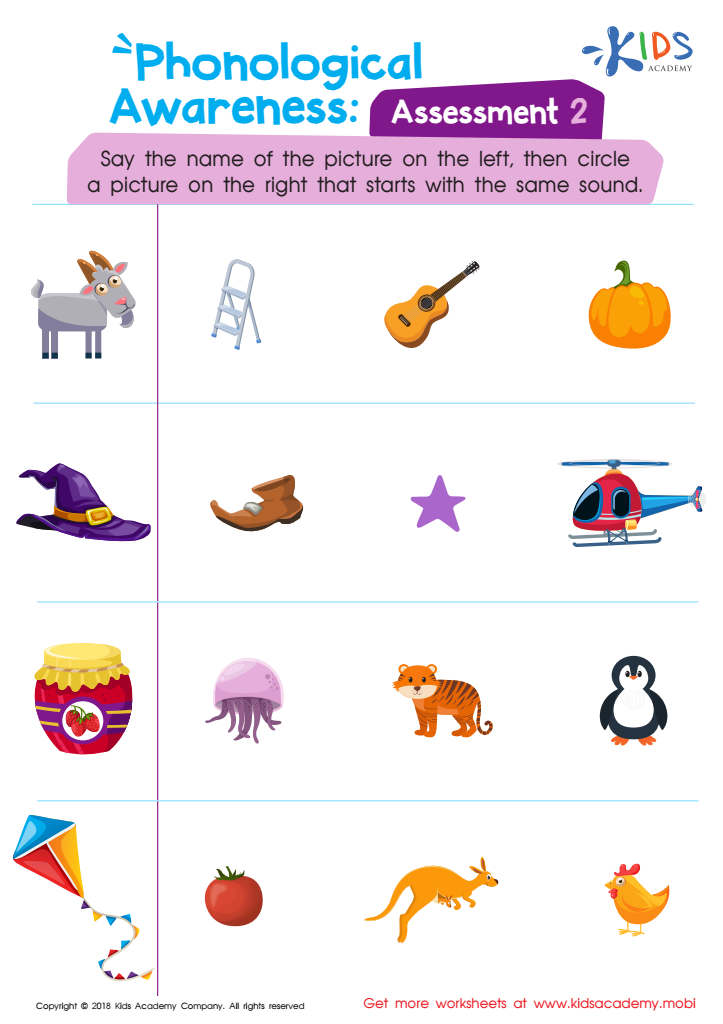
Phonological Awareness: Assessment 2 Worksheet
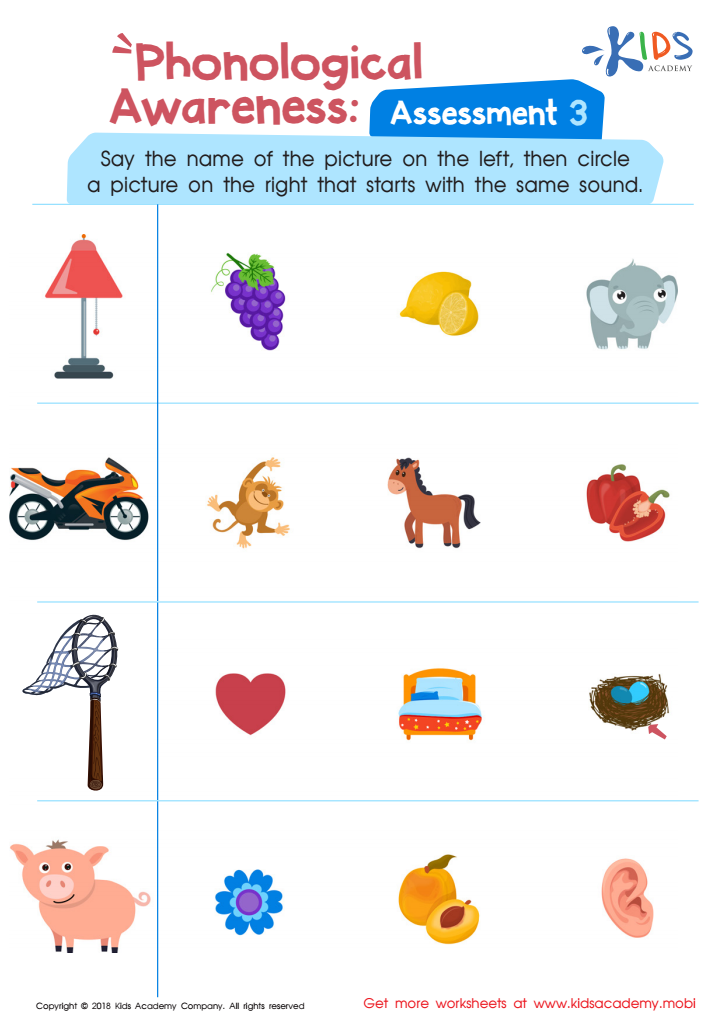
Phonological Awareness: Assessment 3 Worksheet




Sound identification in elementary phonics is vital for students as it lays the foundation for effective reading and writing skills. When parents and teachers prioritize sound identification, they help children develop phonemic awareness, the ability to hear, identify, and manipulate individual sounds in spoken words. This skill is crucial because it directly correlates with a child's reading proficiency and ability to decode unfamiliar words.
Understanding sounds helps children connect letters to their corresponding sounds, which enhances their spelling capabilities. It fosters confidence as they learn to sound out words, enabling them to become more independent readers. Furthermore, strong phonics skills contribute to better comprehension, allowing students to engage with texts more deeply and make meaning from what they read.
Engaging parents in this process reinforces learning outside the classroom. When families practice sound identification together, it strengthens the child's abilities and emotional support in their educational journey. For teachers, effective phonics instruction in early grades is essential for forming a solid literacy foundation. By caring about sound identification, parents and teachers alike empower students to succeed academically and cultivate a lifelong love for reading.







