
Vocabulary development Elementary Phonics Worksheets
4 filtered results
Difficulty Level
Grade
Age
-
From - To
Subject
Activity
Standards
Enhance your child’s reading skills with our engaging Vocabulary Development Elementary Phonics Worksheets! Designed for early learners, these worksheets provide fun, interactive activities that build essential vocabulary and phonics skills. Each worksheet focuses on phonetic sounds, word recognition, and context clues, helping kids develop their language abilities in a playful way. With colorful illustrations and simple instructions, students are encouraged to practice letter recognition, sound blending, and word deciphering. Perfect for both classroom and at-home learning, our phonics worksheets foster a love for reading while ensuring that your child builds a strong foundation for their literacy journey. Explore our resources today!
Favorites
With answer key
Interactive
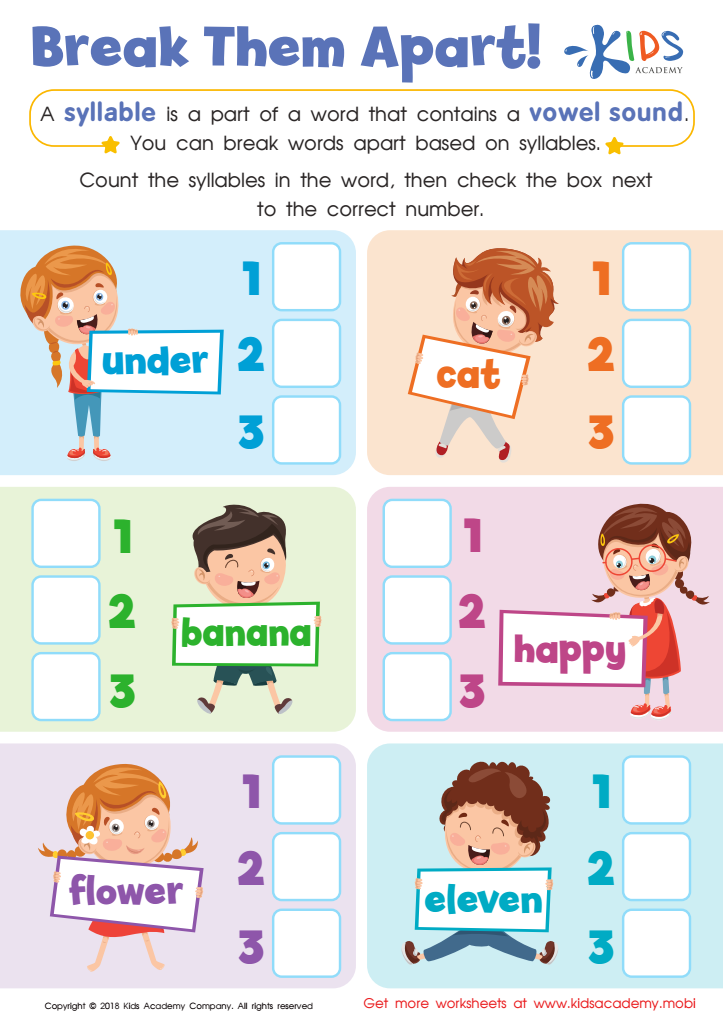
Reading: Break Them Apart Worksheet
See if students understand syllables with this fun worksheet. It teaches them that a syllable is a word part with a vowel sound. Kids read each word and choose how many parts it has. Doing this often helps them decode new words and gain confidence.
 Assign to My Students
Reading: Break Them Apart Worksheet
Worksheet
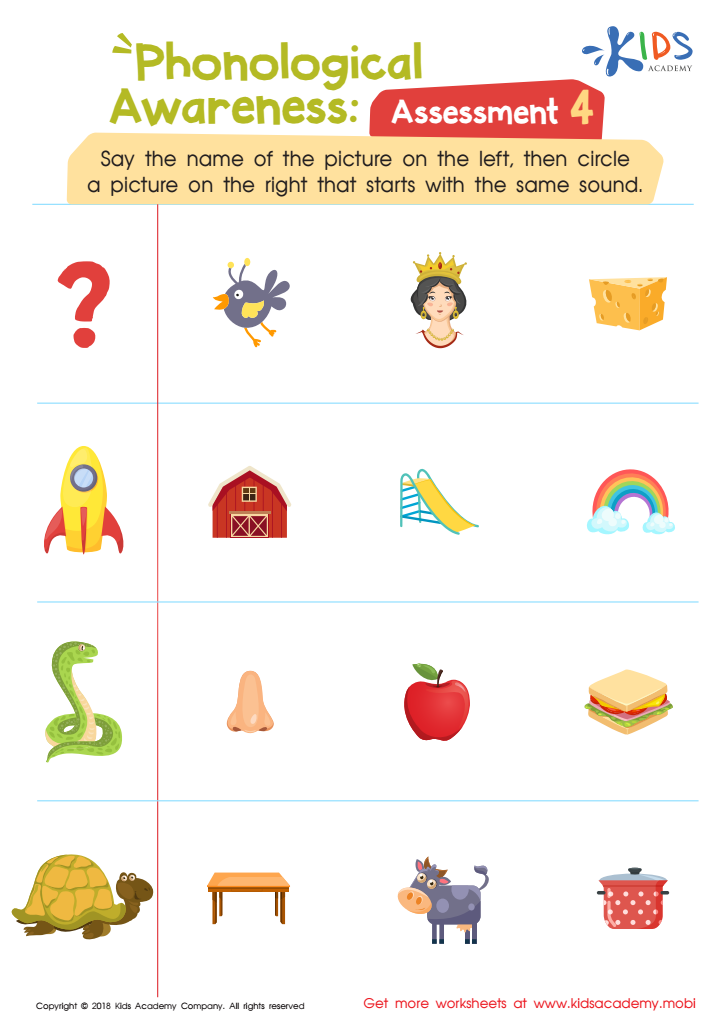
Phonological Awareness: Assessment 4 Worksheet
It can be tricky for young readers to differentiate between sounds in words. Make it fun with this downloadable worksheet! Ask your child to name each picture on the left and match the starting sound with an image on the right. This helps assess their phonics skills and make learning enjoyable.
Phonological Awareness: Assessment 4 Worksheet
Worksheet
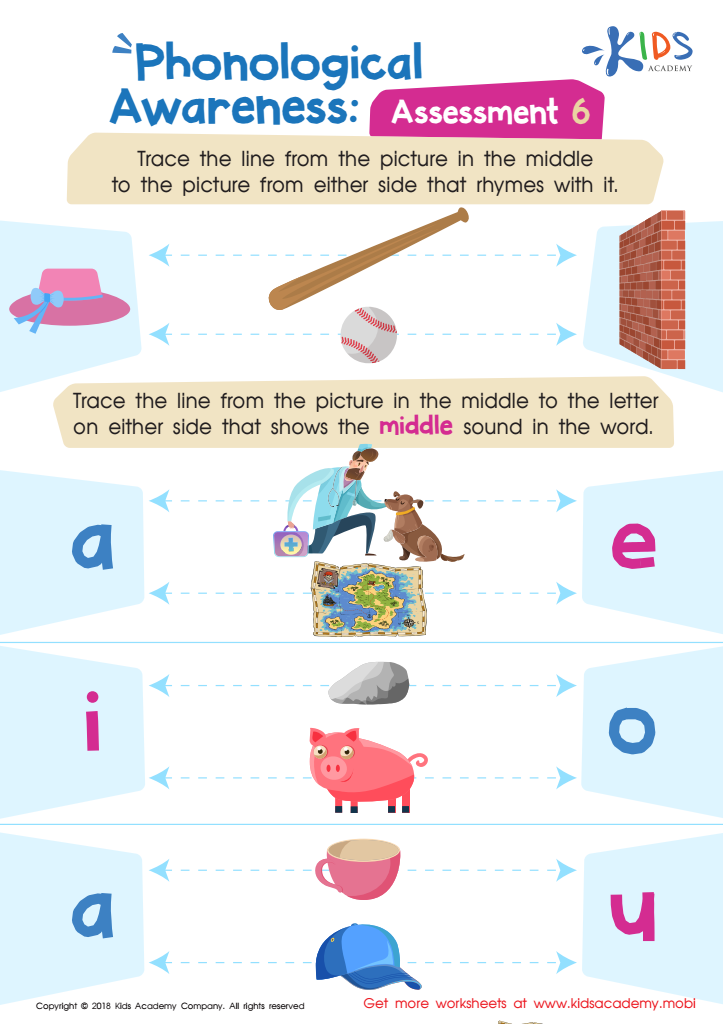
Phonological Awareness: Assessment 6 Worksheet
Check your child's ability to recognize middle word sounds using this free worksheet. Help them learn phonics by practicing with rhyming. Trace the line from the image to its rhyming match then encourage them to name each image aloud to identify which letter matches the sound. It's a great way to assess letter and sound recognition.
Phonological Awareness: Assessment 6 Worksheet
Worksheet
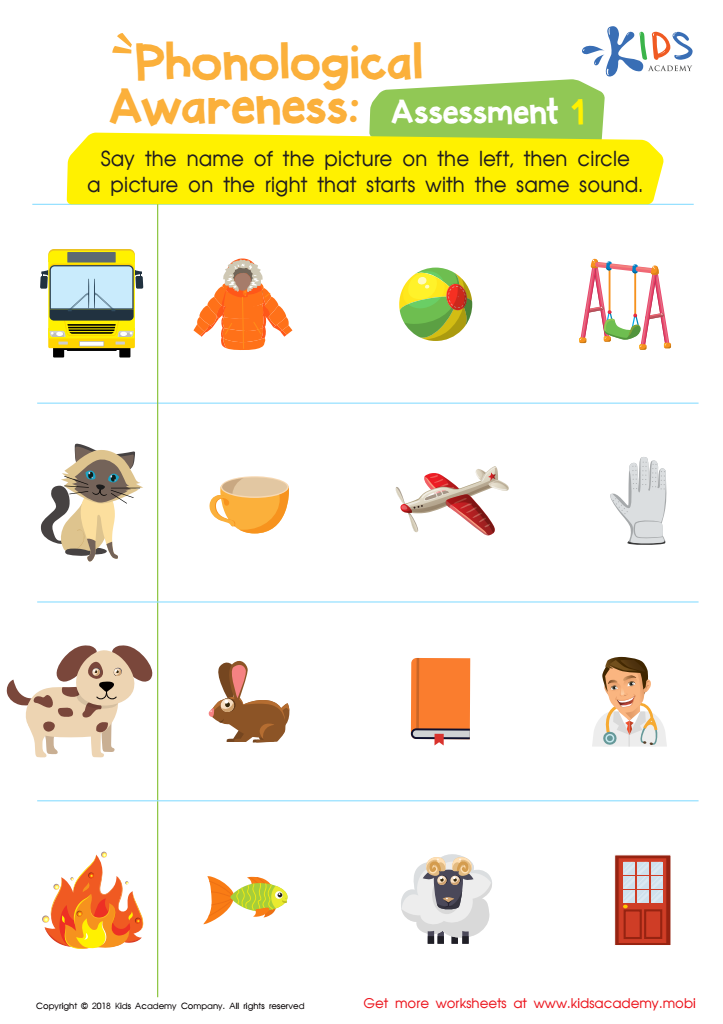
Phonological Awareness: Assessment 1 Worksheet
This worksheet helps kids build key phonics skills for pre-reading. They say each picture name aloud, focusing on the starting sound. Then, they match the sound with an image in the same row. Use as a checkpoint for kindergarten or grade 1 phonics readiness.
Phonological Awareness: Assessment 1 Worksheet
Worksheet
Join Kids Academy for Free
Who is primarily going to use this learning content?




Parents and teachers should prioritize vocabulary development and phonics in elementary education because these skills are foundational to literacy and overall academic success. A robust vocabulary equips children with the language needed to express their thoughts and understand the world around them. This is crucial for reading comprehension, as a strong vocabulary allows students to make connections and grasp the meanings of texts they encounter. Additionally, a well-developed vocabulary enhances communication skills, which are vital for effective interaction within their social environment.
Phonics, the relationship between sounds and their corresponding letters, helps children decode words and improve word recognition. Mastering phonics is essential for reading fluency, as it enables students to read confidently and independently. When children understand how sounds form words, they develop the ability to tackle unfamiliar vocabulary, which further enriches their language skills.
Moreover, early intervention in vocabulary and phonics development fosters a love for reading. Engaged readers are more likely to pursue knowledge and achieve higher academic outcomes in all areas, setting them up for future success. Therefore, investing time and resources into vocabulary and phonics at the elementary level lays the groundwork for lifelong learning and critical thinking.







