
Alphabetical order Alphabet Worksheets
3 filtered results
Difficulty Level
Grade
Age
-
From - To
Subject
Activity
Standards
Discover the joy of learning with our Alphabetical Order Alphabet Worksheets! Designed for young learners, these engaging worksheets help children master alphabet sequencing while enhancing their cognitive skills. Each activity invites kids to arrange letters in the correct alphabetical order, promoting critical thinking and foundational language skills. Perfect for classroom use or at-home practice, our printables support reading readiness in a fun and interactive way. With vibrant illustrations and clear instructions, children will stay motivated and excited to learn. Visit our website to access a variety of free, printable worksheets that make alphabet learning a delightful adventure!
Favorites
With answer key
Interactive
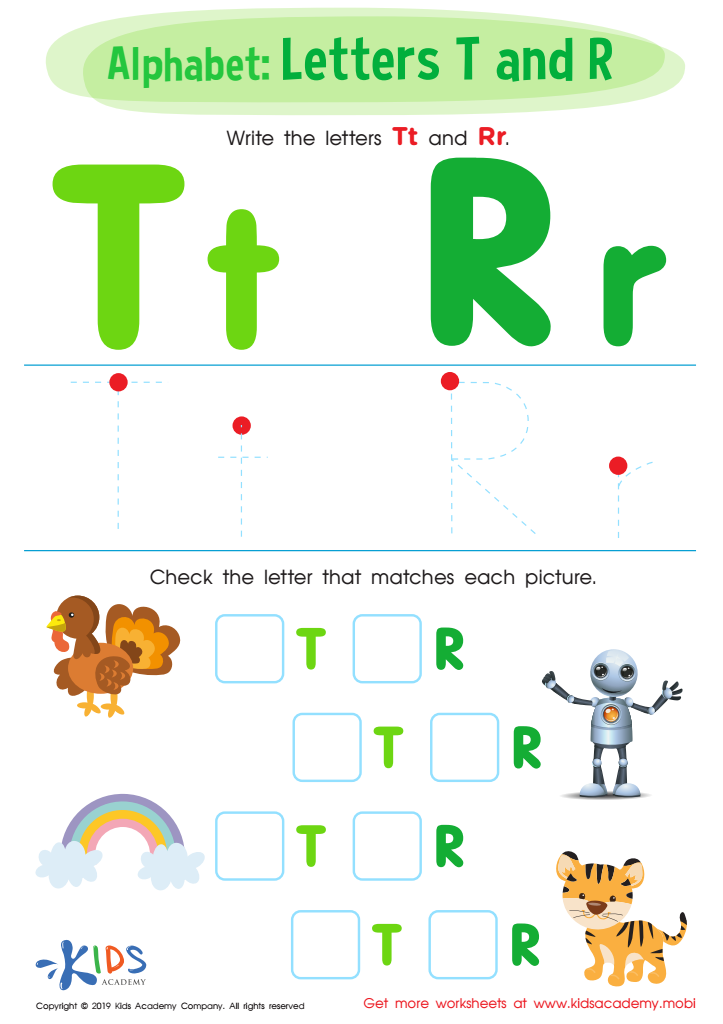
Letters T and R Worksheet
Is your kid bored with basic letter learning? Try this Letters T & R traceable sheet! It combines tracing and picture matching to help solidify fundamental skills. Your child will gain a better understanding and have fun at the same time.
 Assign to My Students
Letters T and R Worksheet
Worksheet
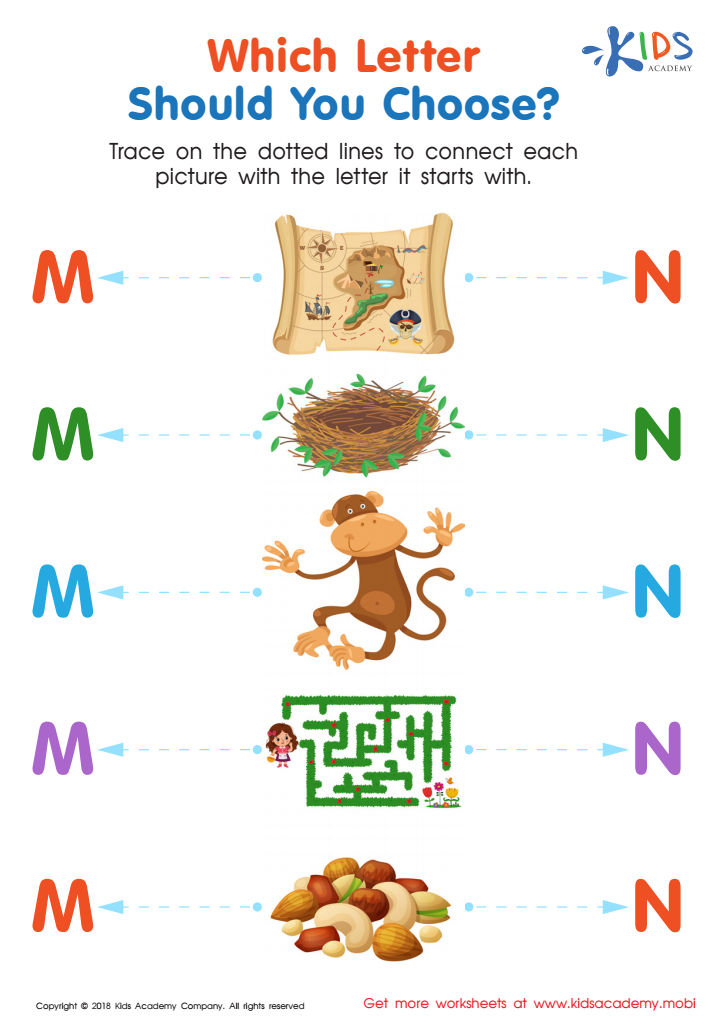
Which Letter Should you Choose? Worksheet
Trace the dotted lines to connect images with their first letter: "n" or "m." Challenge your child to name each picture, then identify the first letter and trace to the right letter! Five images in total.
Which Letter Should you Choose? Worksheet
Worksheet
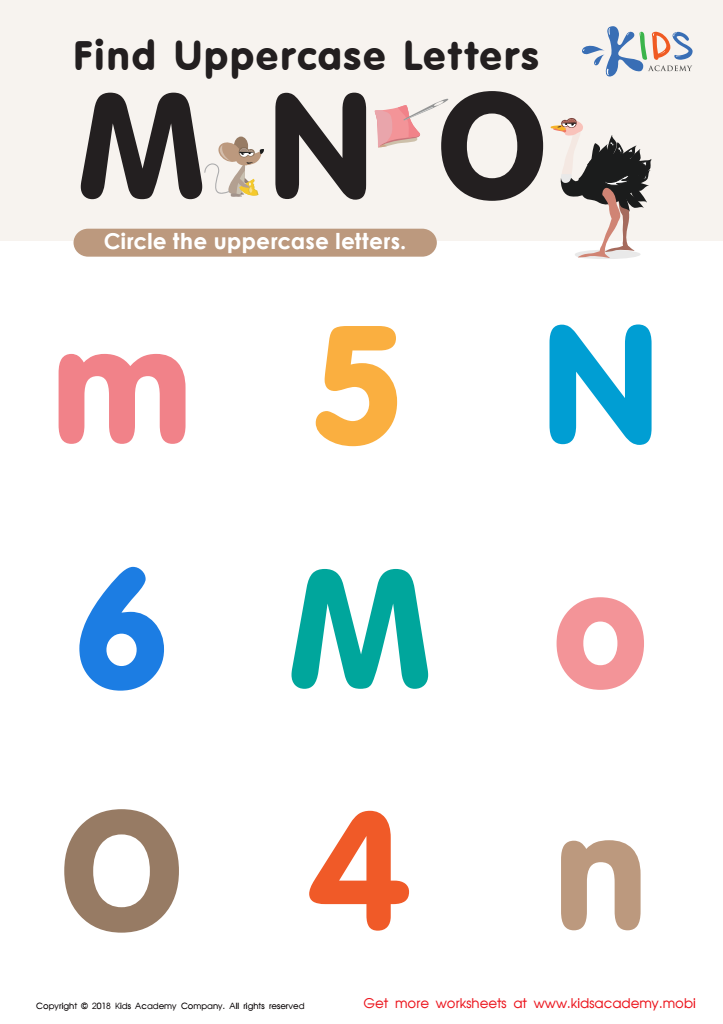
Find Uppercase Letters M, N, and O Worksheet
Kids love puzzles! This one scrambles up letters and numbers. Help your learner spot the capital letters, then search for the uppercase M, N, and O. For an extra challenge, cover the large letters and have kids circle the capitals using only beginning letter sounds.
Find Uppercase Letters M, N, and O Worksheet
Worksheet
Join Kids Academy for Free
Who is primarily going to use this learning content?








Teaching children the importance of alphabetical order is essential because it provides fundamental skills that aid in their overall education and everyday life. First and foremost, knowing alphabetical order improves literacy. It helps kids recognize and memorize letters more effectively, speeding up their ability to read and spell correctly.
For parents or teachers, focusing on alphabetical order also enhances a child's organizational skills. From sorting through books and accessing information quickly in a library to looking up words in a dictionary, these skills are essential for efficient learning and research. It establishes a sense of orderly thinking, which can translate to better time management and problem-solving abilities.
Another critical aspect is the ease it brings in navigating various common environments such as using search engines, participating in group activities where lists or queues are involved, or even interacting with technology where menus and options are often alphabetically ordered. Alphabetical order forms the basis of many systems in our daily lives.
Lastly, learning alphabetical order fosters independence. Children gain confidence and efficiency in finding resources and information on their own without needing constant assistance. This autonomy can boost self-esteem and prepare them for more complex tasks in their future education levels and beyond.







