
Capitalization rules Alphabet Worksheets
4 filtered results
Difficulty Level
Grade
Age
-
From - To
Subject
Activity
Standards
Mastering capitalization is crucial for early literacy, and our "Capitalization Rules Alphabet Worksheets" make learning fun and effective. Designed for young learners, these worksheets introduce fundamental capitalization rules through engaging activities and colorful illustrations. Children will practice capitalizing names, the beginning of sentences, and the pronoun "I," reinforcing these essential skills. With our structured approach, kids develop strong writing foundations, setting them up for academic success. Parents and educators can easily download these printable worksheets to enhance learning at home or in the classroom. Visit our website to start your child's journey to capitalized excellence!
Favorites
With answer key
Interactive
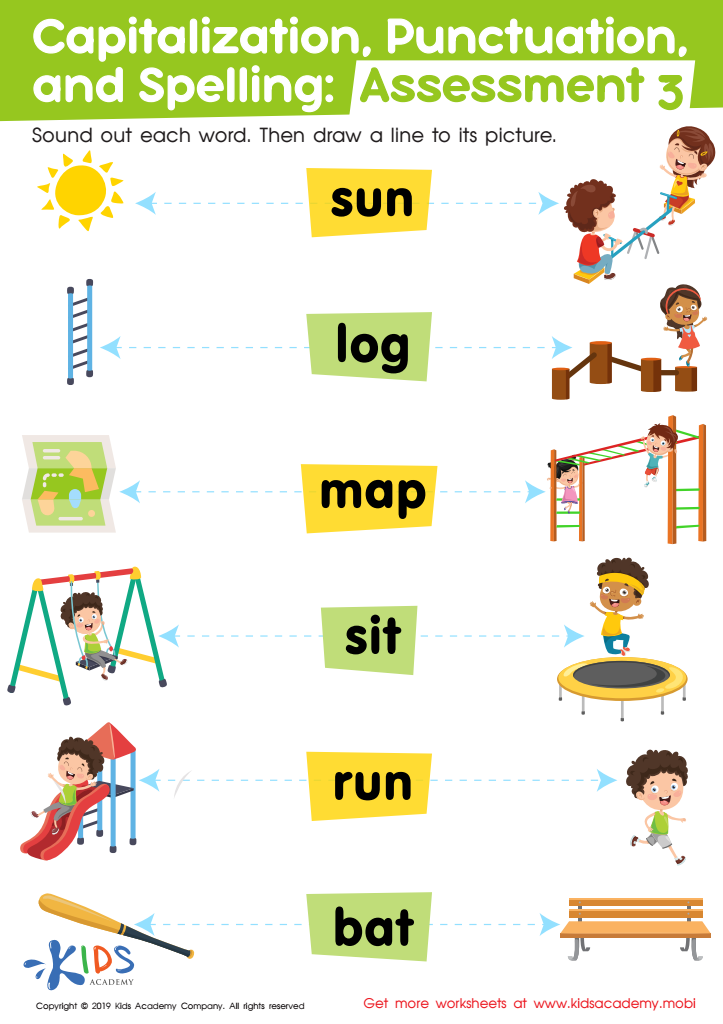
Capitalization. Punctuation. Spelling. Assessment 3 Worksheet
Before starting this worksheet, have your kids spell some simple words. Correct if wrong and show the right spellings. Then, ask them to link the pictures to the words you read out. Spelling is key for a good writer, and kids need to know how to spell to read texts easily.
 Assign to My Students
Capitalization. Punctuation. Spelling. Assessment 3 Worksheet
Worksheet
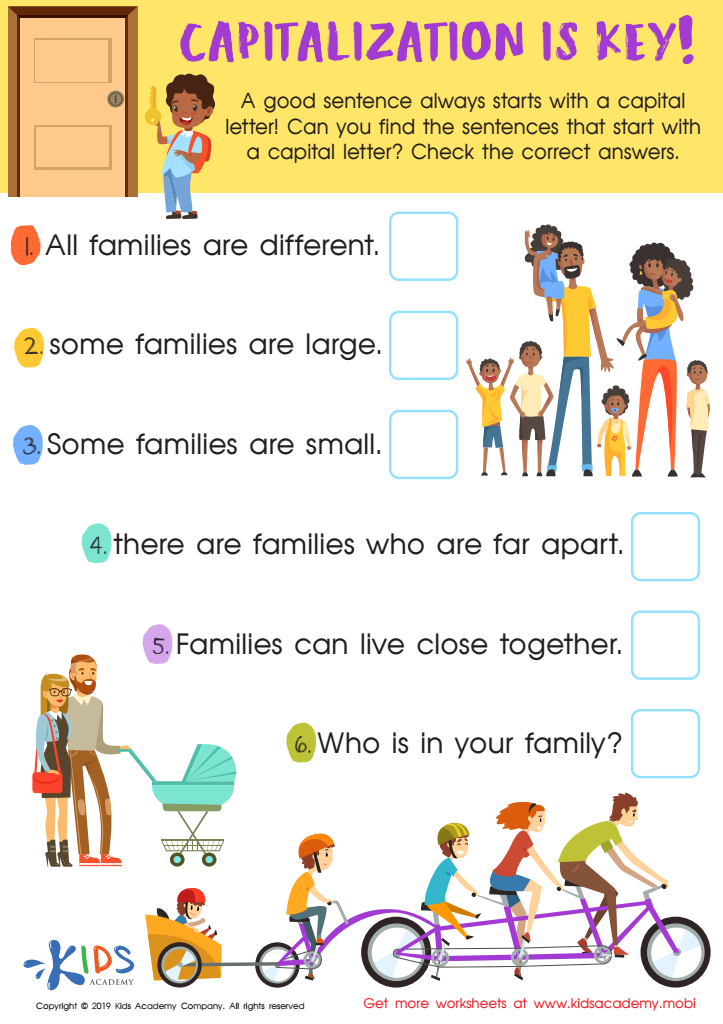
Capitalization Key Worksheet
Help your kids learn the importance of capitalizing at the start of sentences with this fun PDF! It features 6 family-themed sentences, with pictures, that your students have to find the correctly capitalized versions of. Perfect for young learners, this worksheet adds a fun twist to learning.
Capitalization Key Worksheet
Worksheet
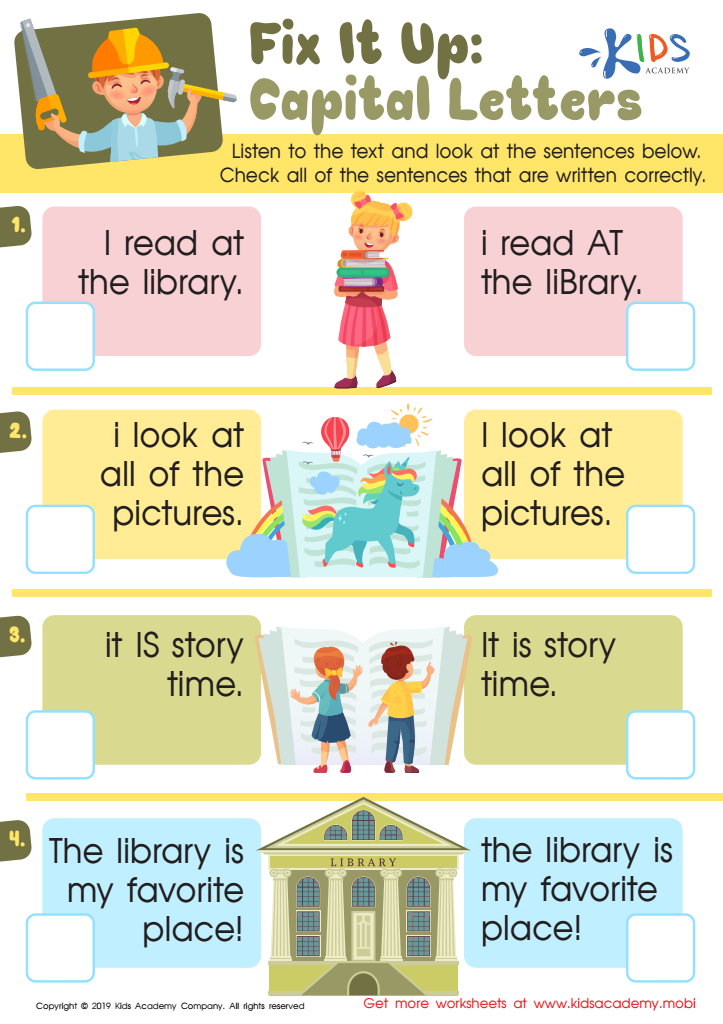
Fix Capital Letters Worksheet
Put on your hardhats and get out the tools - it's time to do some repair work! Have your child identify sentences written with proper capitalization on this fun and colorful worksheet. Ask more advanced students to rewrite incorrect sentences correctly - it'll help them understand letter case better.
Fix Capital Letters Worksheet
Worksheet
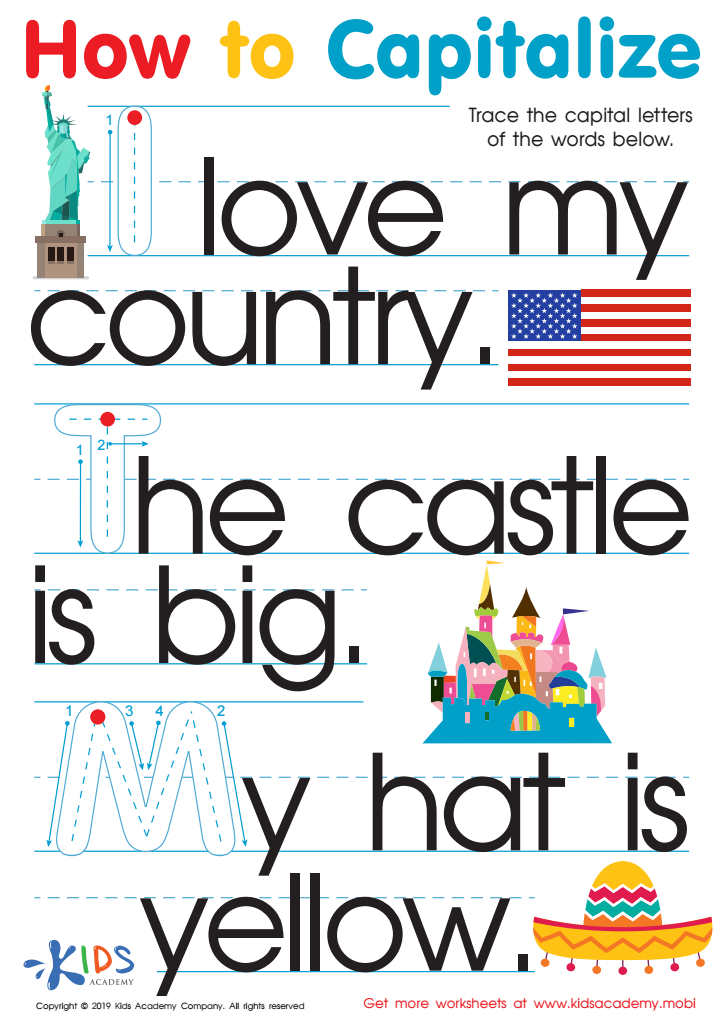
How to Capitalize Worksheet
Capitalizing letters is important in English. This worksheet will help your child learn how to write them. Words such as "the" and "I" will be covered, with visuals such as the Statue of Liberty, the American Flag, a castle, and a sombrero. The "How to Capitalize" PDF is a great way to sharpen your child's writing and aid their success!
How to Capitalize Worksheet
Worksheet
Join Kids Academy for Free
Who is primarily going to use this learning content?








Understanding and teaching capitalization rules is crucial as it sets the foundation for effective communication and academic success. For young learners, these rules serve as the building blocks for writing correctly and clearly. Consistently using capital letters correctly—in names, the beginning of sentences, and in specific titles—is a skill that enhances readability and helps convey the intended message accurately.
For teachers, enforcing capitalization rules ensures that students learn the norms of writing, which is important for their future academic endeavors. It fosters attention to detail, an attribute that benefits children beyond writing. Well-written documents that follow standard capitalization rules appear more polished and professional, aiding students as they advance through educational levels and eventually in their careers.
Parents can also support this learning at home by reinforcing practices related to capitalization. Encouraging children to start sentences with capital letters or acknowledge proper nouns helps build a habit of correct writing. This mitigates confusion and common mistakes that can hinder understanding in both reading and writing.
In essence, knowing when to use capital letters enhances a child’s literacy, promoting clear communication and reducing misunderstandings. This fundamental skill lays the groundwork for future learning and success, making it a priority for both parents and teachers.







