Fine motor development Alphabet Worksheets
3 filtered results
-
From - To
Enhance your child’s handwriting skills and alphabet knowledge with our Fine Motor Development Alphabet Worksheets! Designed for young learners, these printable activities encourage children to trace letters, color shapes, and complete fun tasks that boost their fine motor skills. Our expertly crafted worksheets not only support alphabet recognition but also provide a solid foundation for future writing abilities. Engaging and educational, they are perfect for use at home or in the classroom. Empower your child’s learning journey with our well-rounded approach, ensuring they enjoy every moment of mastering the alphabet!
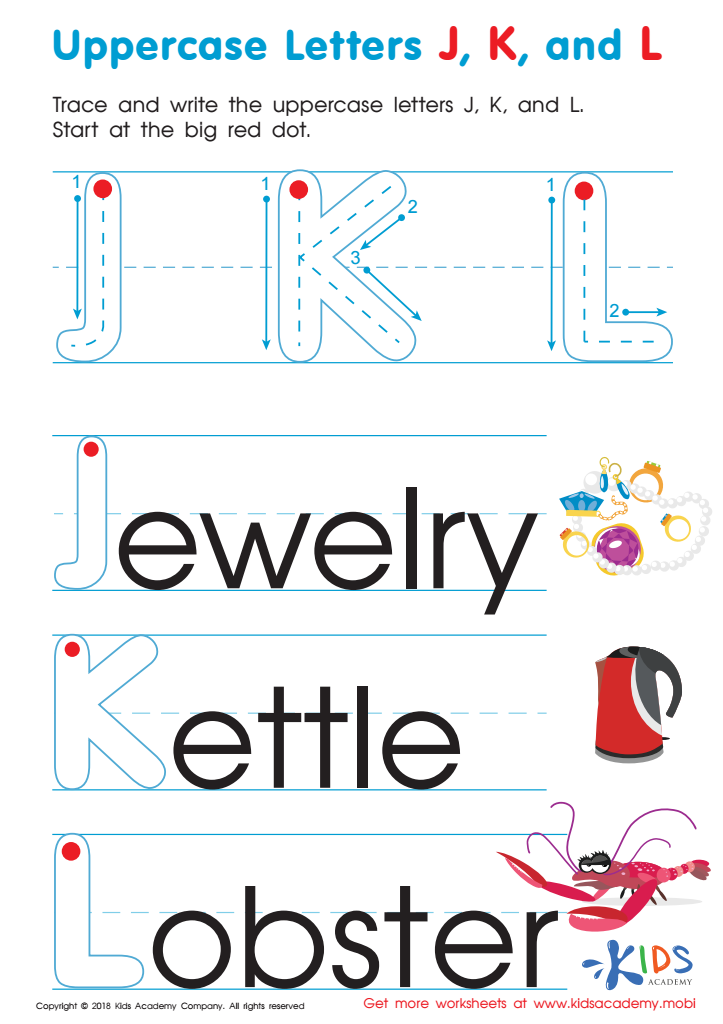
Uppercase Letters J, K, and L Worksheet
 Assign to My Students
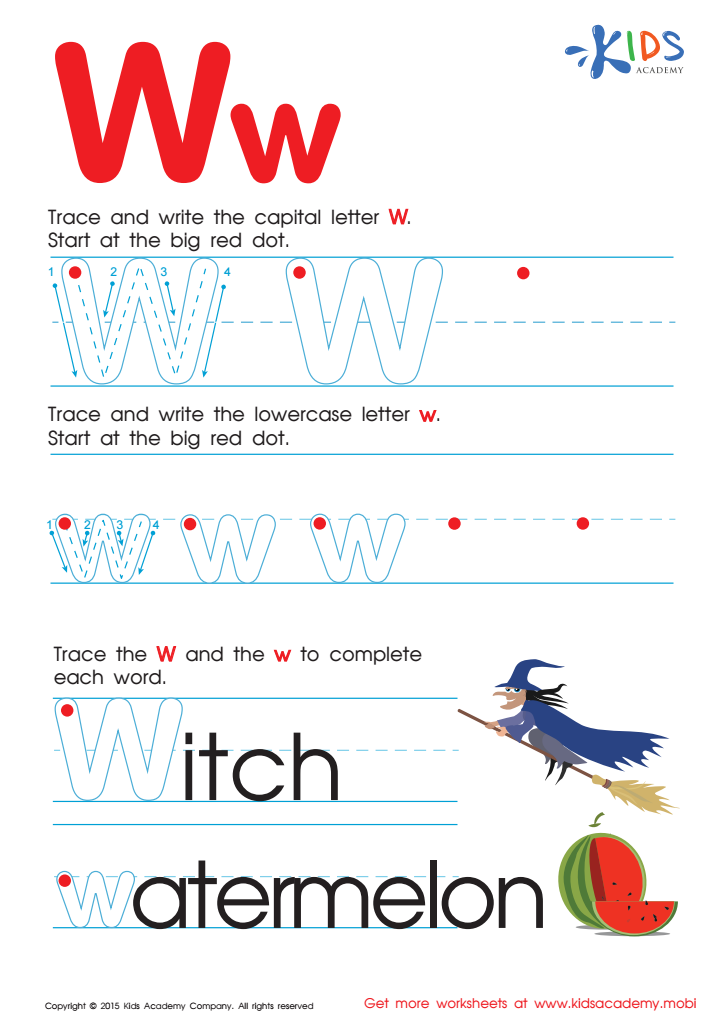
Letter W Tracing Page
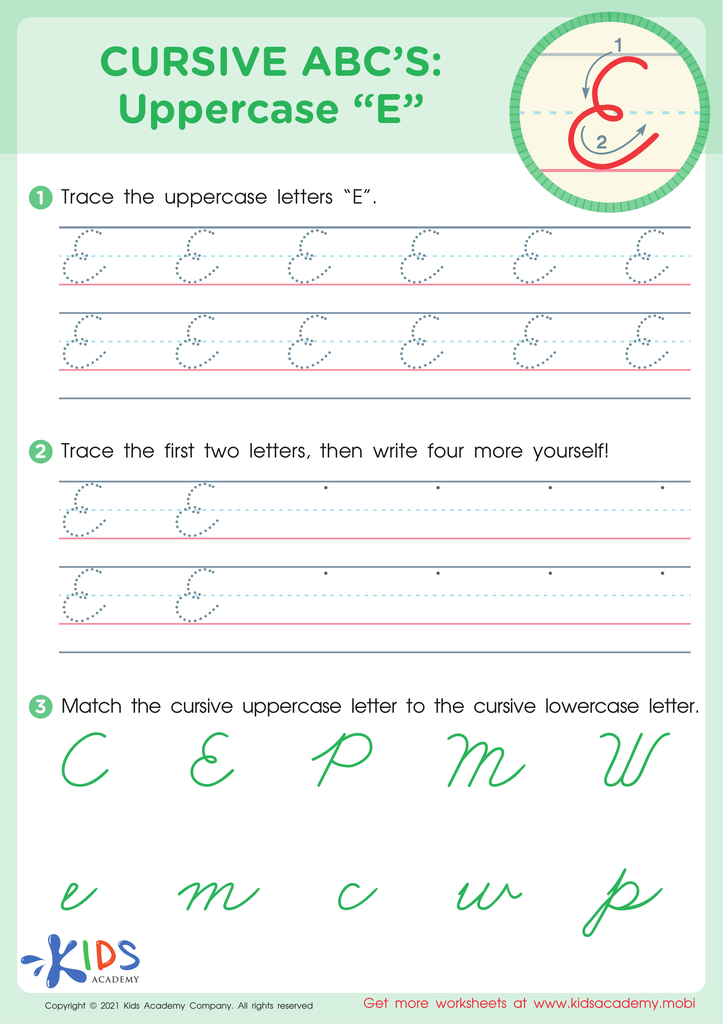
Cursive ABCs: Uppercase E








Parents and teachers should care about fine motor development because it lays the foundation for many essential life skills, especially during the early years of a child. Fine motor skills involve the coordination of small muscles in the hands and fingers and are crucial for tasks like writing, buttoning clothes, and using utensils. When it comes to the alphabet, fine motor development is particularly important. Learning to correctly hold a pencil and form letters requires precise hand movements and control.
Good fine motor skills facilitate easier, more legible handwriting, which affects a child's ability to communicate effectively through writing. Mastery of these skills impacts overall academic performance, as writing is integral in many school activities and assessments. Moreover, these skills contribute to a child’s independence and confidence. For teachers, promoting fine motor skills helps ensure that all students can participate fully in class activities, minimizing frustration and maximizing learning potential.
At home, parents can cultivate fine motor skills through various activities like drawing, cutting with scissors, or playing with small objects like beads or building blocks. Attention to fine motor development provides lifelong benefits, making both learning and daily tasks easier and more enjoyable for children.







