Sound identification Alphabet Worksheets
5 filtered results
-
From - To
Enhance your child's phonetic awareness with our engaging Sound Identification Alphabet Worksheets! These printable resources are designed to help young learners connect letters with their corresponding sounds through interactive activities. Perfect for preschool and early elementary ages, each worksheet encourages children to identify, match, and practice sounds associated with the alphabet in a fun and approachable way. Incorporating vibrant illustrations and simple instructions, our worksheets make learning enjoyable while fostering essential literacy skills. Download today to support your child’s reading readiness and make sound recognition an exciting part of their education journey! Perfect for home and classroom use.
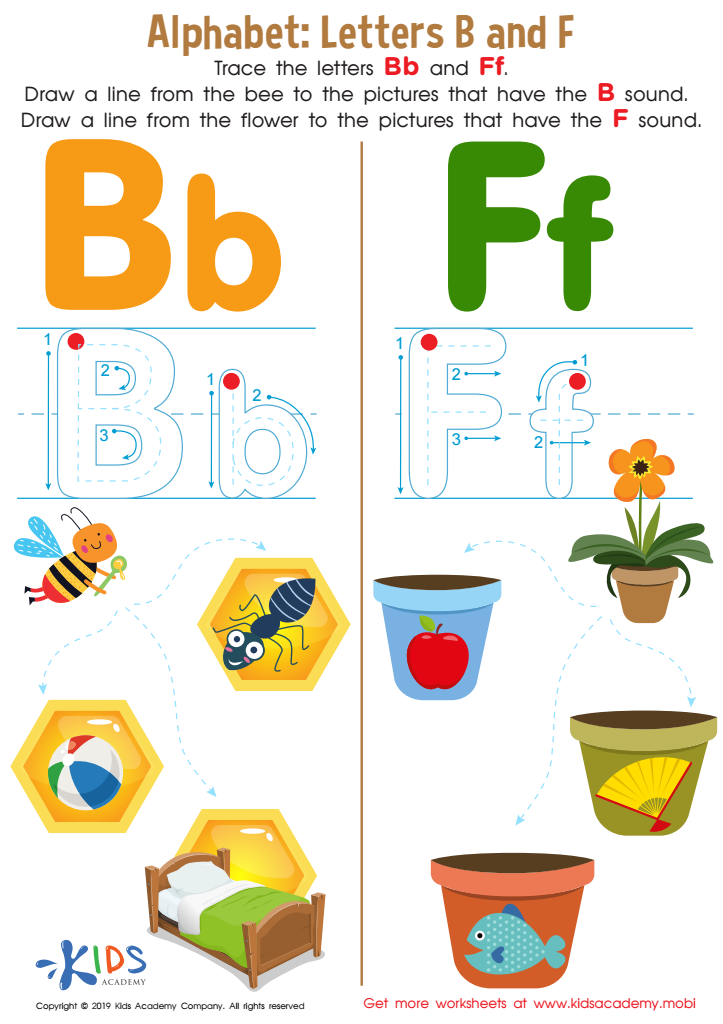
Letters B and F Tracing Worksheet
 Assign to My Students
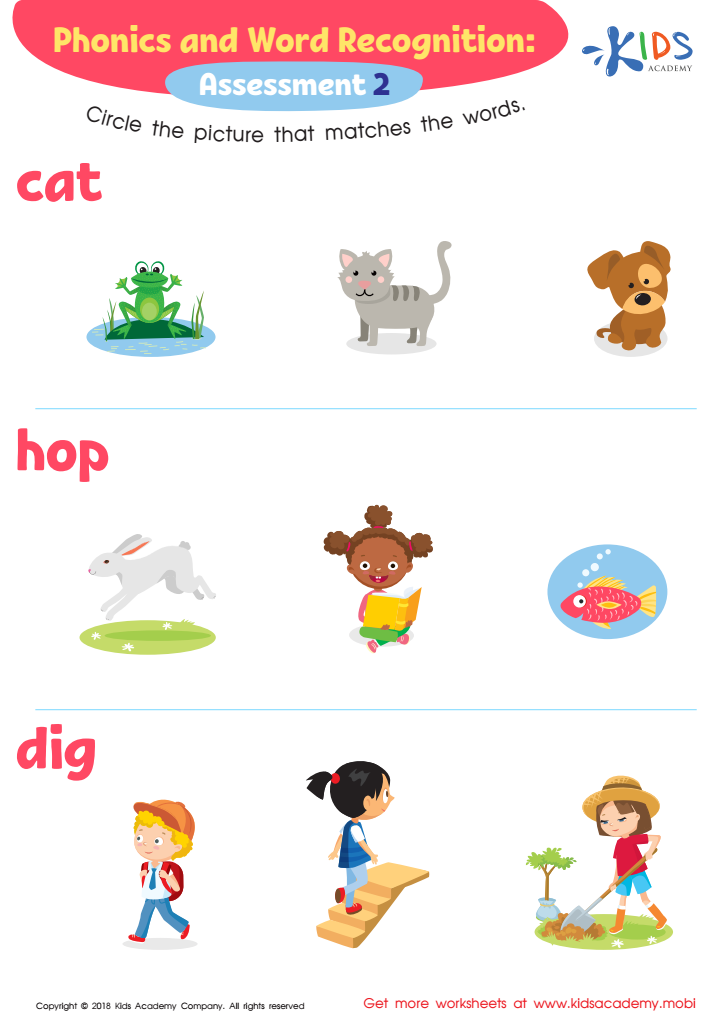
Phonological Awareness: Assessment 2 ELA Worksheet
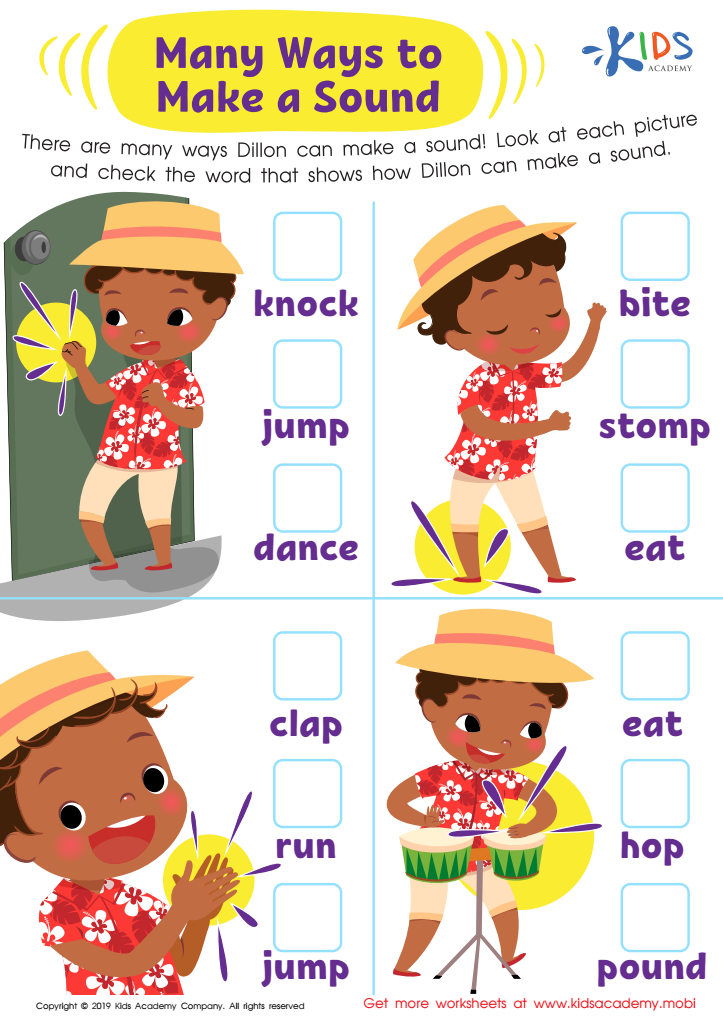
Many Ways to Make a Sound Worksheet
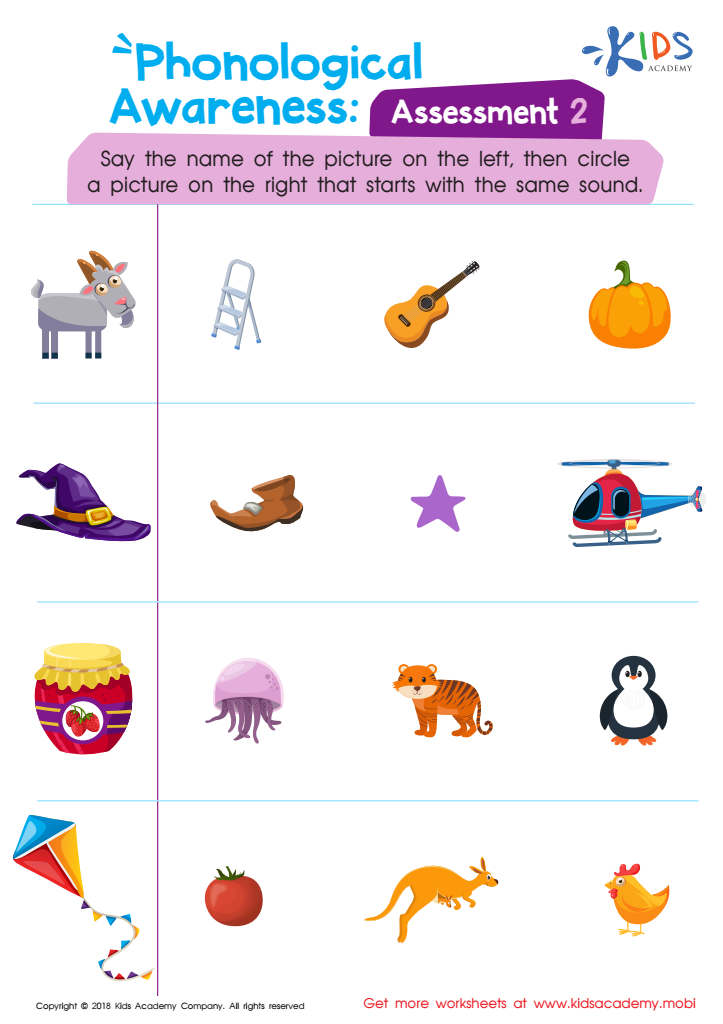
Phonological Awareness: Assessment 2 Worksheet
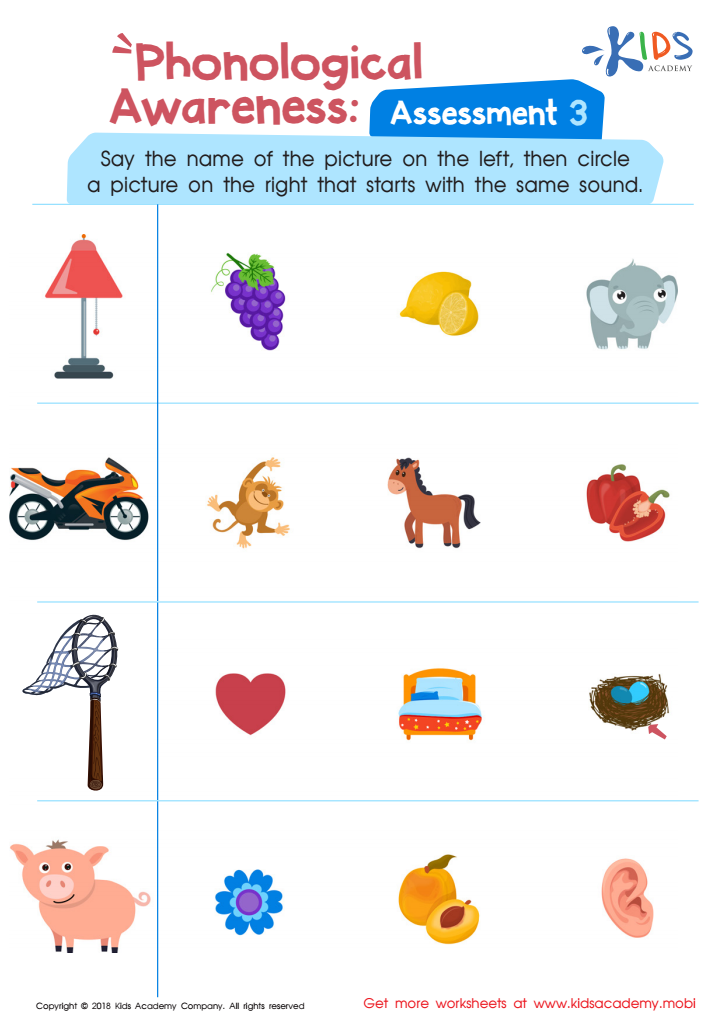
Phonological Awareness: Assessment 3 Worksheet






Sound identification is a crucial aspect of early literacy development that parents and teachers should prioritize. Understanding the sounds that letters make lays the foundation for reading and writing skills. When children can identify and differentiate sounds associated with each letter of the alphabet, they develop phonemic awareness, which is essential for decoding words while reading.
Moreover, sound identification contributes to vocabulary expansion and enhances language development. Children who can recognize sounds quickly progress in their ability to combine sounds to form words, fostering their confidence in expressing themselves verbally and through writing. This foundational skill also aids in spelling, as children begin to grasp the relationship between letters and their corresponding sounds.
Teachers and parents play a critical role in facilitating this learning process. By incorporating fun and engaging phonics activities—such as songs, games, and interactive reading sessions—they can help children navigate and apply sound identification skills. Early mastery of sound identification not only supports literacy success but also nurtures a lifelong love for reading. Ultimately, investing time in teaching sound identification equips children with essential tools for academic achievement and effective communication, making it a vital focus for both educators and families.







