
Visual discrimination Alphabet Worksheets
5 filtered results
Difficulty Level
Grade
Age
-
From - To
Subject
Activity
Standards
Enhance your child's early literacy skills with our Visual Discrimination Alphabet Worksheets! Designed for young learners, these engaging exercises help children differentiate between letters, fostering essential visual skills. Each worksheet features fun, colorful activities that challenge kids to identify, sort, and match letters, improving their ability to recognize shapes and phonetics. Our user-friendly format encourages independent learning while making practice enjoyable. Perfect for classrooms or home use, these worksheets cater to a variety of learning styles, supporting children in their journey to become confident readers and writers. Download now to give your child a head start in mastering the alphabet!
Favorites
With answer key
Interactive
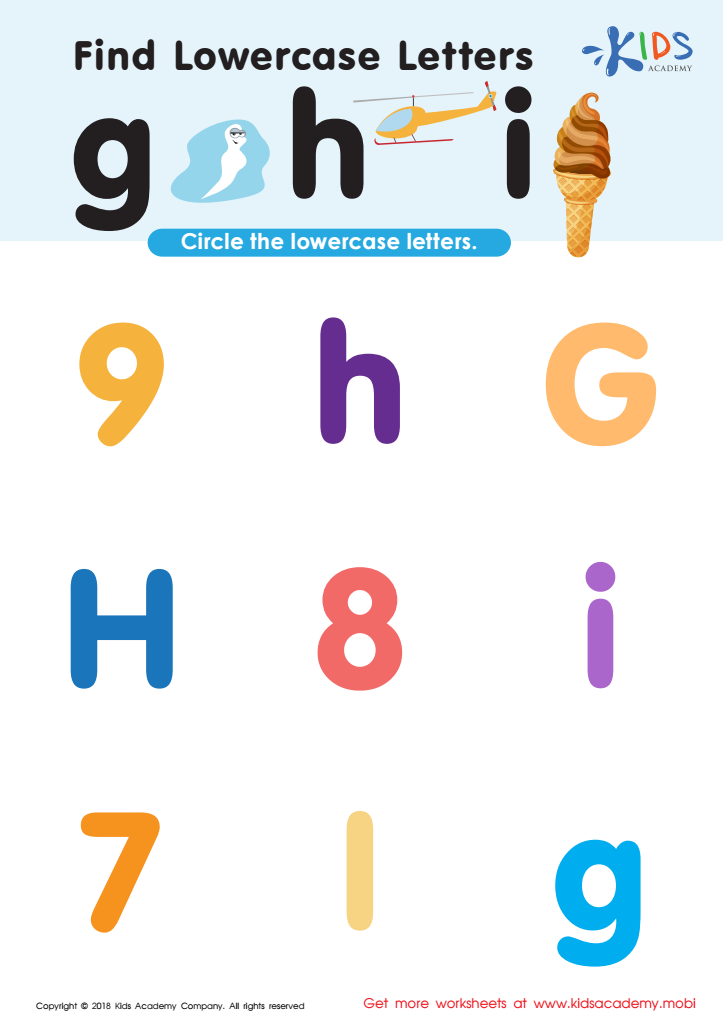
Find Lowercase Letters g h i Worksheet
Turn learning into a fun journey with your child! Use this free worksheet to find and circle the lowercase letters hidden amongst uppercase letters and numbers. Your child will understand what you're teaching them as they enjoy the search.
 Assign to My Students
Find Lowercase Letters g h i Worksheet
Worksheet
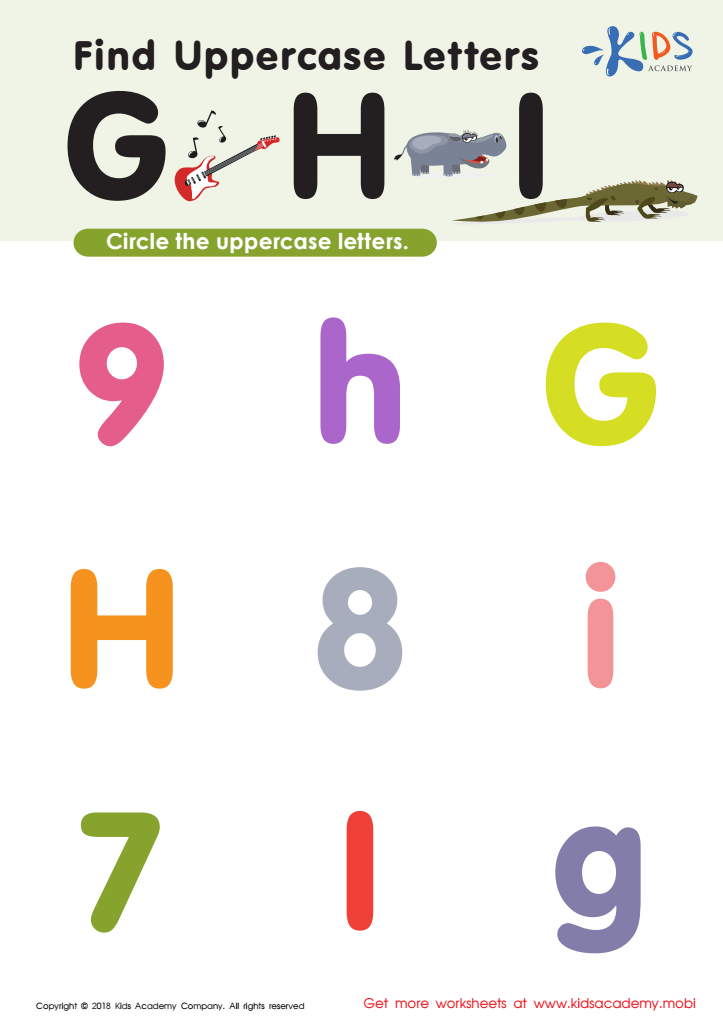
Find Uppercase Letters G, H, and I Worksheet
Find G, H, and I in uppercase with this downloadable worksheet! Numbers are included to challenge your kindergartener's letter recognition skills. Plus, practice G, H, and I sounds using the cute graphics. Perfect for learning letter case recognition!
Find Uppercase Letters G, H, and I Worksheet
Worksheet
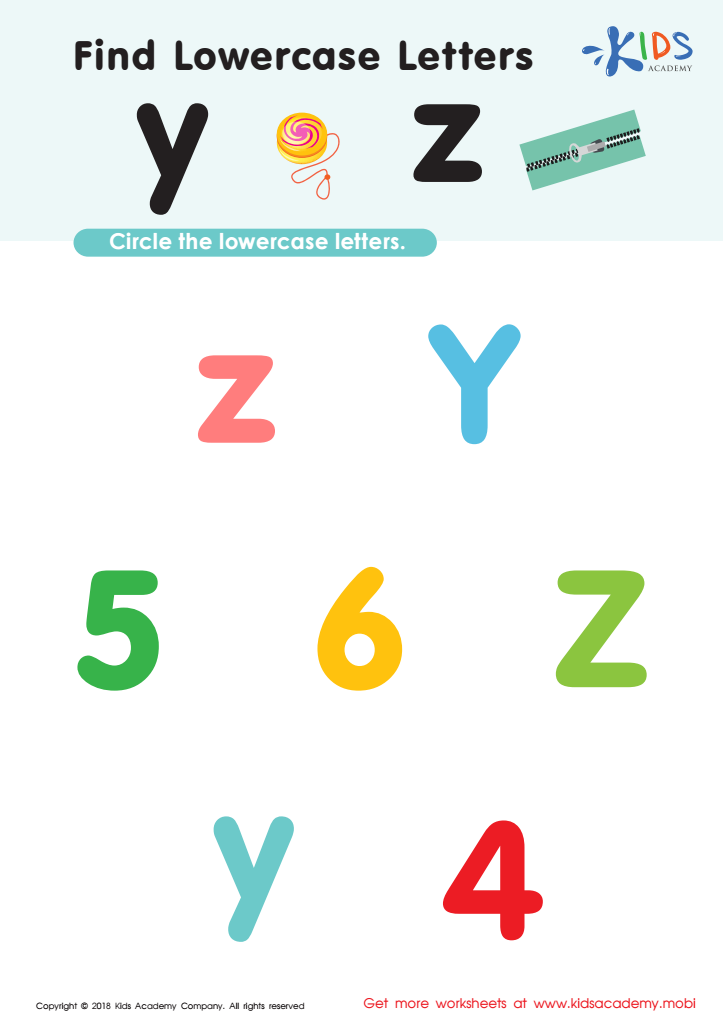
Find Lowercase Letters y z Worksheet
Help your kid learn the alphabet. Before they can move on to words and reading, they must first know the lower and uppercase letters. Show them how to find the letters y and z in this worksheet, which is filled with uppercase letters and numbers. Together, find and circle them.
Find Lowercase Letters y z Worksheet
Worksheet
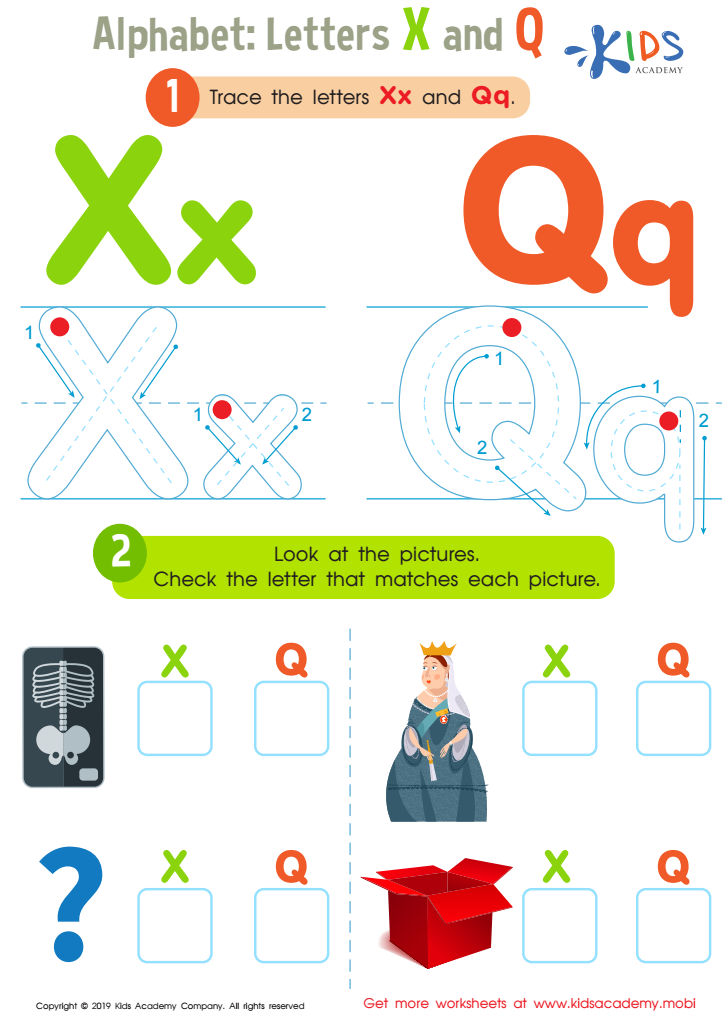
Letters X and Q Tracing Worksheet
Do you want your students to improve writing and letter recognition? This worksheet is a great place to start! Kids can trace the letters «X» and «Q» and identify pictures that match each letter. With a little encouragement, they'll do a great job!
Letters X and Q Tracing Worksheet
Worksheet
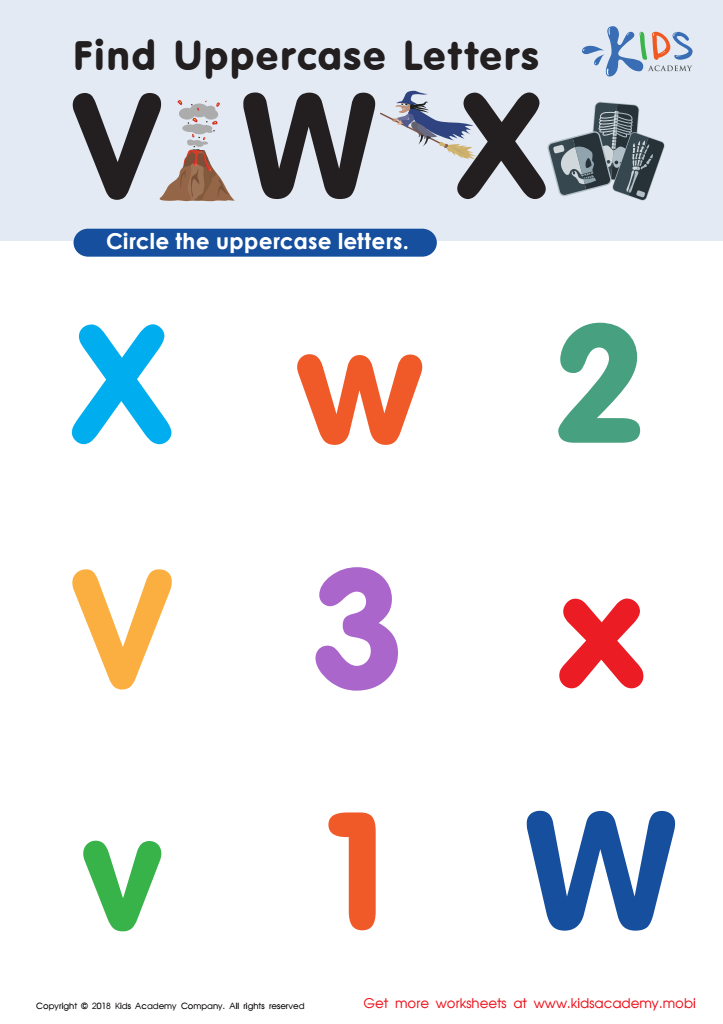
Find Uppercase Letters V, W, X Worksheet
Ask your kids if they can spot the uppercase letters V, W and X hidden in the lowercase letters and numbers, then have them circle them. After that, ask them to give you examples of words beginning with those letters. This worksheet will help them get started.
Find Uppercase Letters V, W, X Worksheet
Worksheet
Join Kids Academy for Free
Who is primarily going to use this learning content?







Visual discrimination refers to the ability to identify differences and similarities in visual stimuli, which is crucial for early literacy development. Parents and teachers should prioritize visual discrimination skills, particularly for the alphabet, as these skills lay the foundation for reading and writing success. When children can discern between different letters, recognize each letter’s unique features, and distinguish them from one another, they are better equipped to decode words.
Enhancing visual discrimination skills aids in preventing letter reversals, a common challenge for early learners. For instance, confusing "b" with "d" can lead to significant setbacks in a child’s reading journey. Engaging activities that bolster these skills, like matching games or letter sorting exercises, can make learning interactive and enjoyable.
Furthermore, fostering visual discrimination skills promotes confidence in young learners. When kids can easily recognize and differentiate letters, they feel more empowered in their reading abilities, leading to a positive attitude towards learning. Ultimately, by emphasizing visual discrimination of the alphabet, parents and teachers not only support literacy growth but also cultivate critical cognitive skills that contribute to overall academic success. Investing in this foundational skill is essential for nurturing independent, capable readers.







