Visual discrimination skills Alphabet Worksheets
5 filtered results
-
From - To
Enhance your child's reading and writing success with our Visual Discrimination Skills Alphabet Worksheets! Designed for early learners, these engaging activities help kids differentiate between letters and recognize letter shapes, improving their attention to detail. Perfect for kindergarten and preschool learners, these printable worksheets support early literacy by focusing on tasks that sharpen their visual discrimination abilities. Children will compare and contrast letters, identify similarities and differences, and build a solid foundation for future learning. Give your child a head start in literacy with our expertly crafted, fun, and interactive alphabet worksheets.
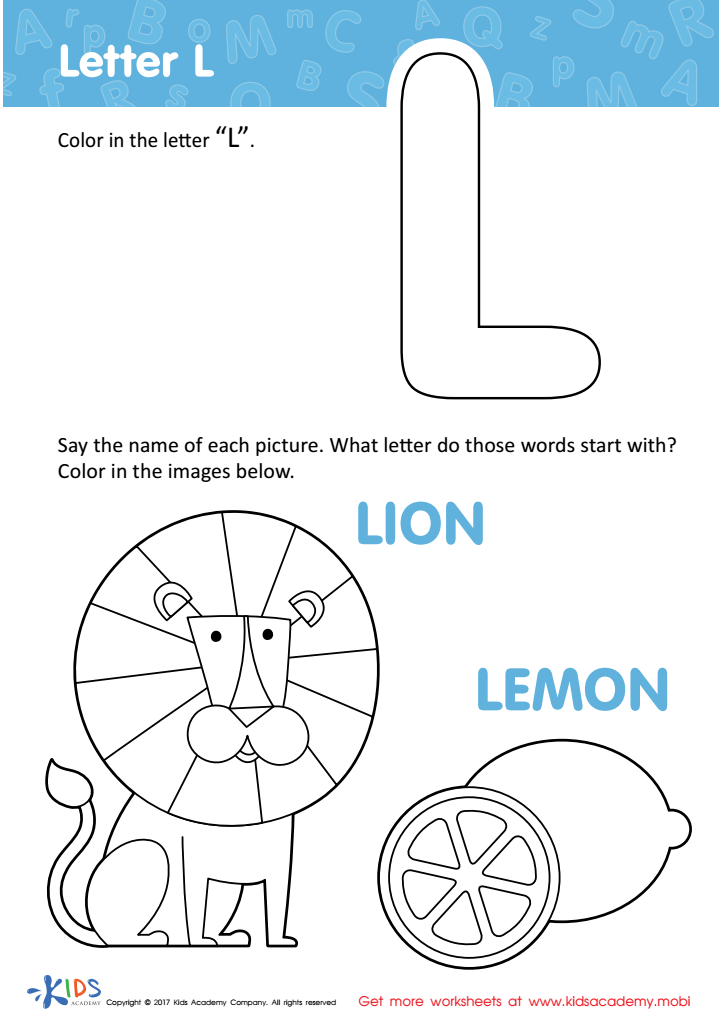
Letter L Coloring Sheet
 Assign to My Students

Find Uppercase Letters A, B, and C Worksheet
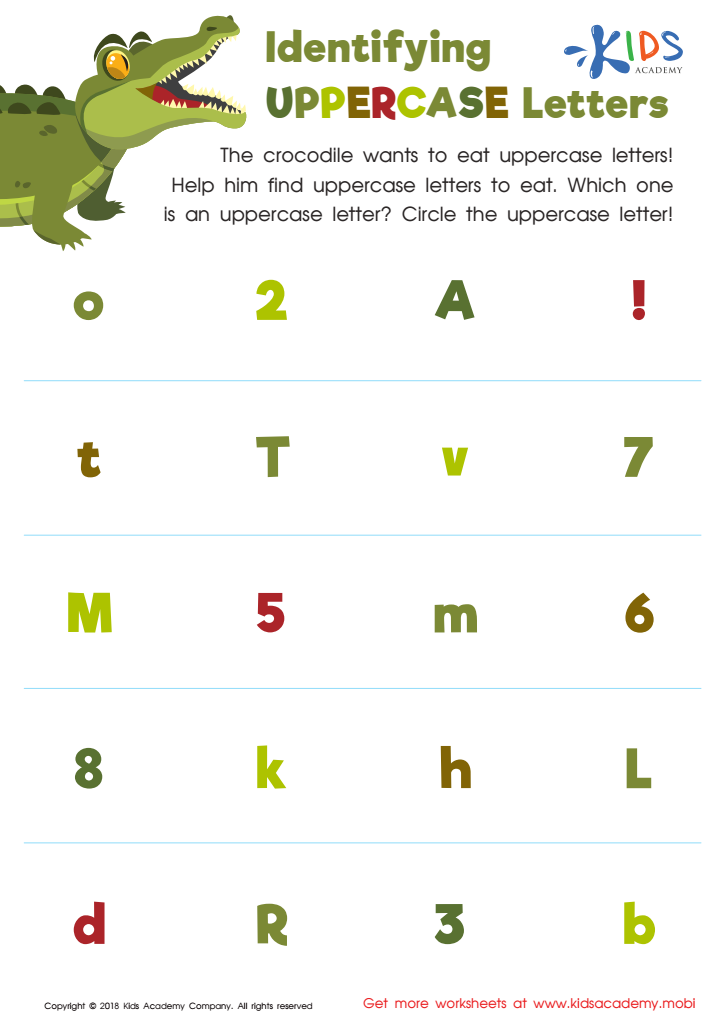
Identifying Uppercase Letters Worksheet
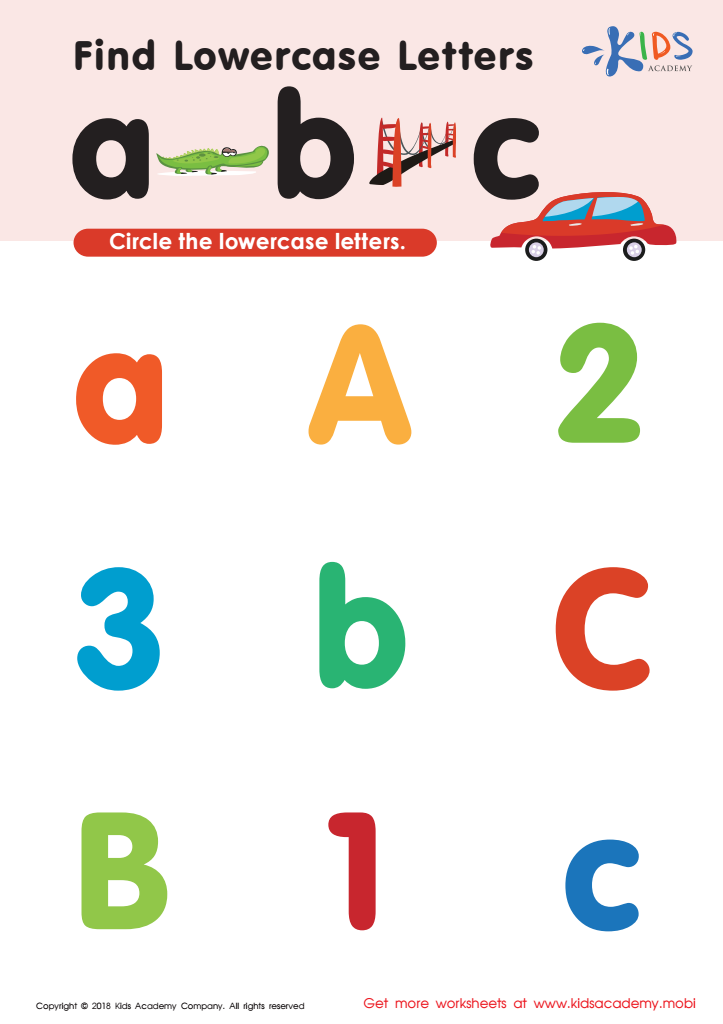
Find lowercase letters a b c Worksheet

Find Lowercase Letters v w x Worksheet







Visual discrimination skills are foundational abilities that allow children to notice differences and similarities in shapes, orientation, and patterns, which are crucial for alphabet recognition and literacy development. Parents and teachers should prioritize these skills because they support a child's ability to distinguish between letters, which can look very similar—for instance, 'b' and 'd' or 'p' and 'q.'
When children develop strong visual discrimination, they are more likely to read and write effectively. These skills enhance their ability to decode words, understand written instructions, and follow narratives in stories, fostering both their educational progression and overall confidence. Furthermore, these skills contribute to better handwriting as children learn to reproduce the letters correctly by distinguishing their shapes.
In a broader context, visual discrimination is not limited to alphabet identification; it also affects a child’s ability to interpret mathematical symbols, understand visual presentations in subjects like science and geography, and even engage confidently in everyday activities requiring navigation or pattern recognition.
By investing in activities and instructional strategies that enhance visual discrimination skills, parents and teachers set the stage for successful educational journeys, ensuring children are equipped with the essential tools for academic success and lifelong learning.







