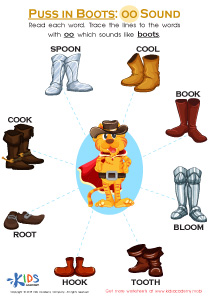
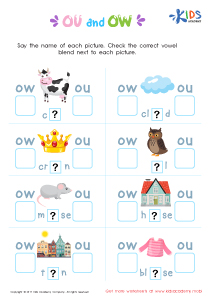
Long vowel recognition Long Vowels Worksheets
3 filtered results
-
From - To
Enhance your child's reading skills with our Long Vowel Recognition Worksheets! Designed for early learners, these engaging activities focus on identifying and understanding long vowels in a fun and interactive way. Our worksheets feature colorful illustrations and easy-to-follow instructions that make learning enjoyable. By practicing with a variety of exercises, children will improve their phonetic awareness and become confident readers. Suitable for home or classroom use, these resources are ideal for reinforcing long vowel sounds. Unlock your child's potential with our comprehensive and user-friendly worksheets that foster a love for reading. Start their journey to literacy today!
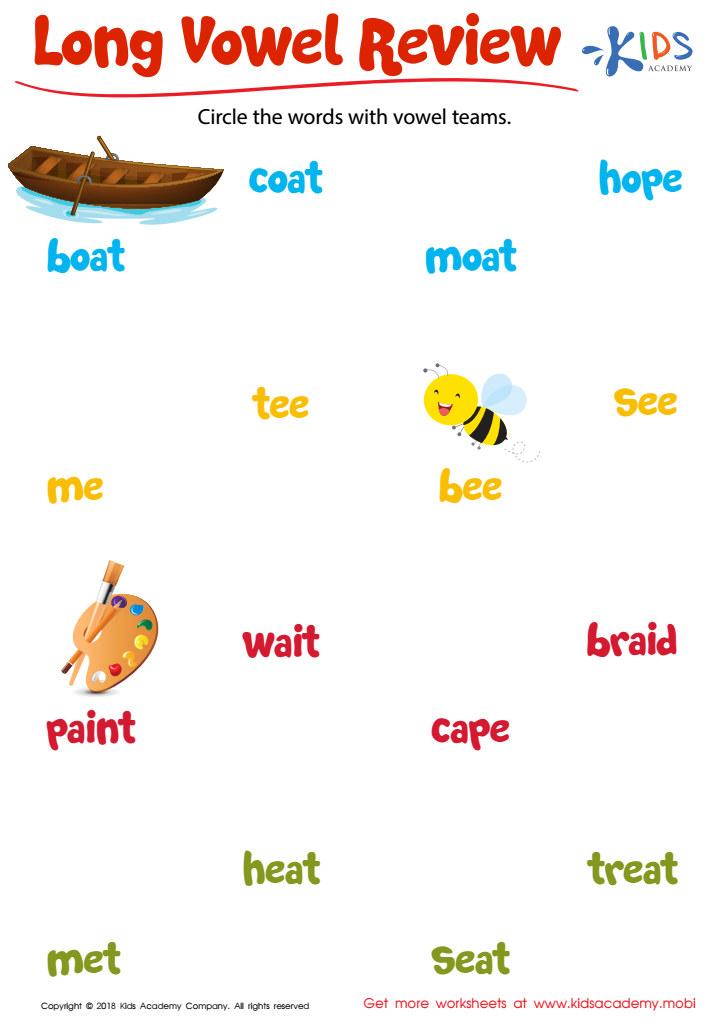
Long Vowel Review Worksheet
 Assign to My Students
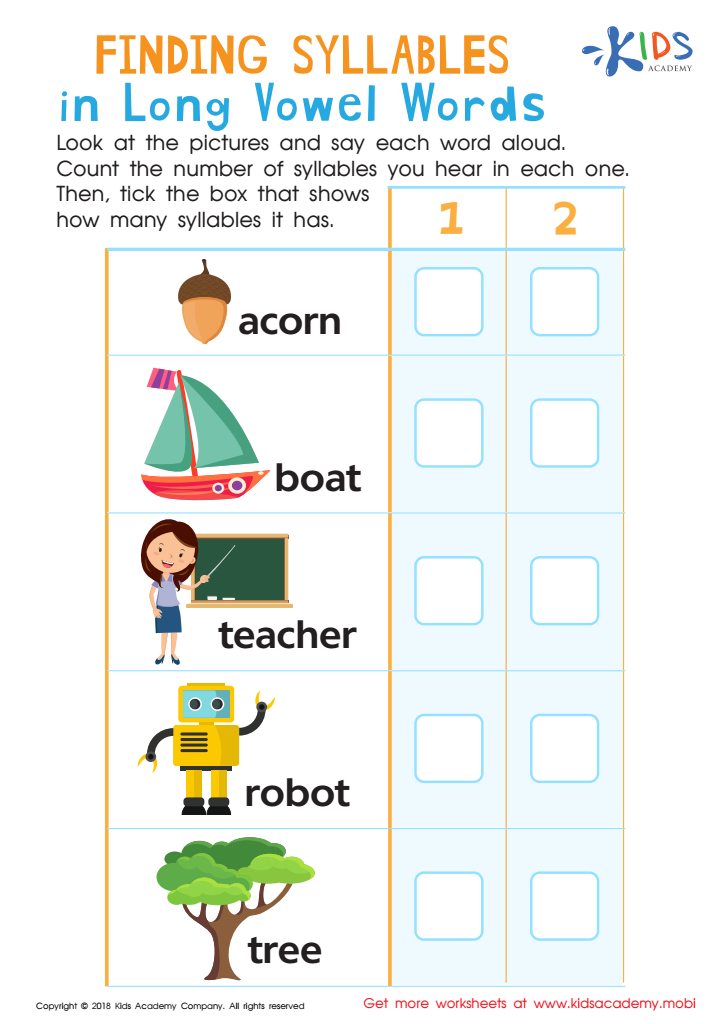
Finding Syllables in Long Vowel Words Worksheet
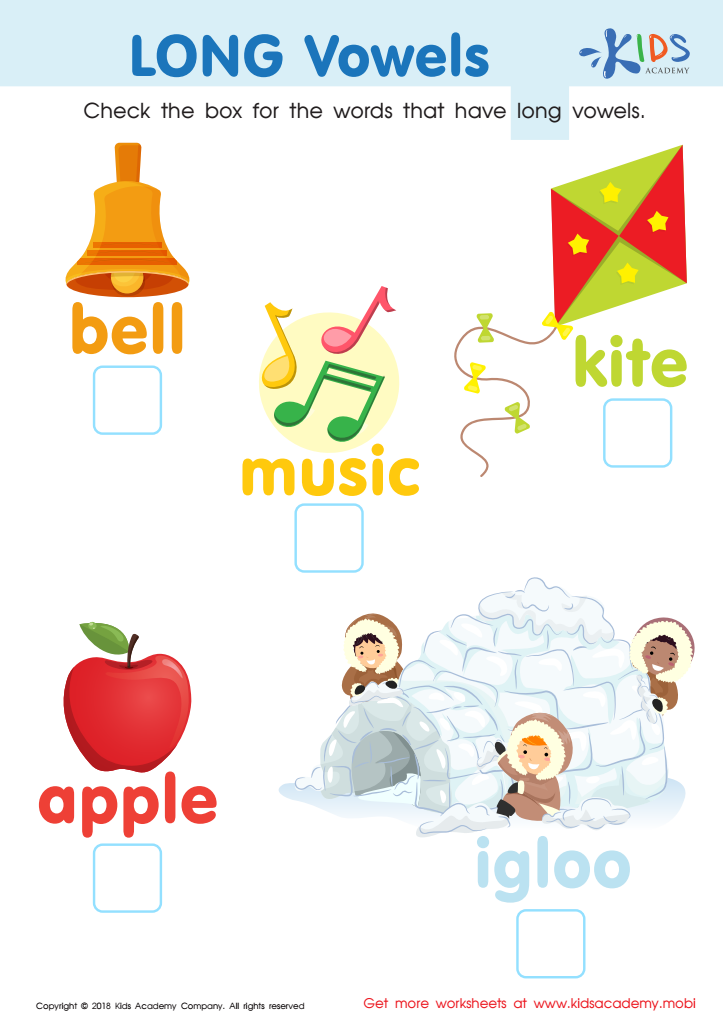
long vowels Worksheet



Long vowel recognition is a foundational aspect of early literacy that significantly influences a child's reading and writing development. Parents and teachers should care about this for several reasons.
Firstly, mastering long vowels helps children differentiate between short and long vowel sounds, which is crucial in understanding phonics—the relationship between sounds and their corresponding letters. This skill enables them to decode words effectively, enhancing their ability to read fluently.
Furthermore, long vowel recognition supports spelling proficiency. As children learn to identify long vowel patterns, they become better equipped to spell words accurately and recognize them in their reading material.
Additionally, a solid grasp of long vowels fosters overall language comprehension. It allows children to engage with more complex reading materials sooner, promoting a love for reading and storytelling.
Finally, early recognition of long vowels contributes to building confidence in young learners. As they master this skill, children are more likely to participate in classroom activities, which can lead to improved social skills and academic performance.
In summary, understanding long vowels is vital for fostering essential literacy skills, which aid in developing fundamentally proficient readers and confident learners. Parents and teachers play a crucial role in facilitating this important learning milestone.