Rhyming skills Phonics Worksheets
5 filtered results
-
From - To
Boost your child's reading journey with our comprehensive Rhyming Skills Phonics Worksheets from Kids Academy! Specially designed for early learners, these engaging exercises help children recognize rhyme patterns, enhance phonemic awareness, and develop critical pre-reading skills. Each worksheet combines fun illustrations with interactive activities to make learning enjoyable and effective. Ideal for preschoolers and kindergarteners, our resources provide a solid foundation in phonics and rhyme, paving the way for fluent and confident reading. Discover a world of rhyming fun and give your child the tools they need for successful literacy development. Explore our worksheets today!
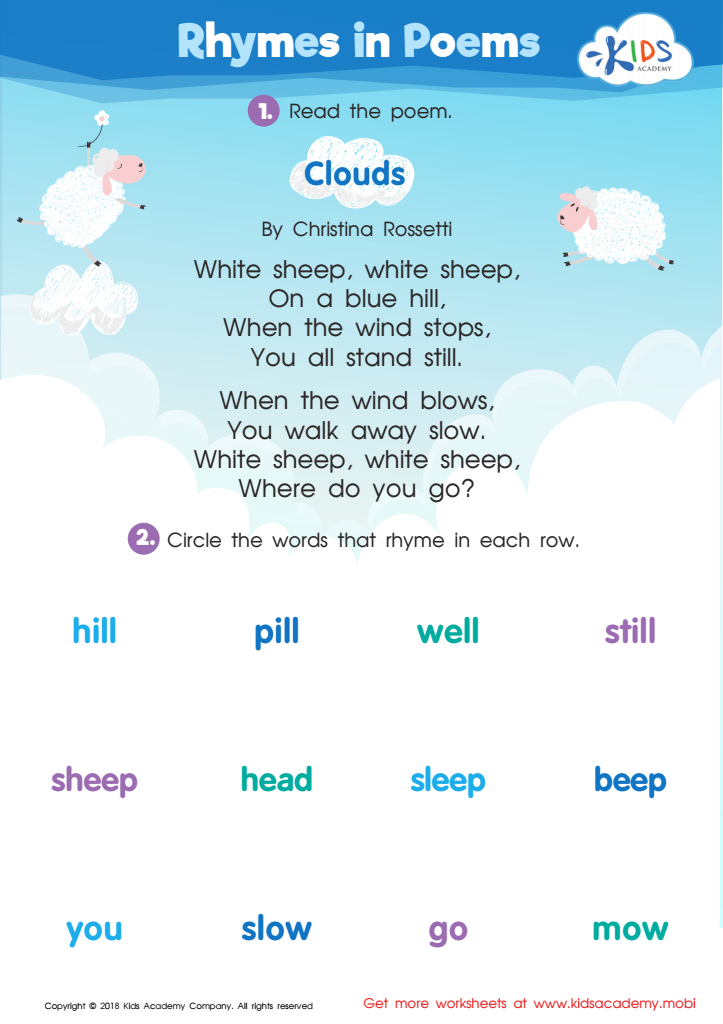
Rhymes in Poems Worksheet
 Assign to My Students
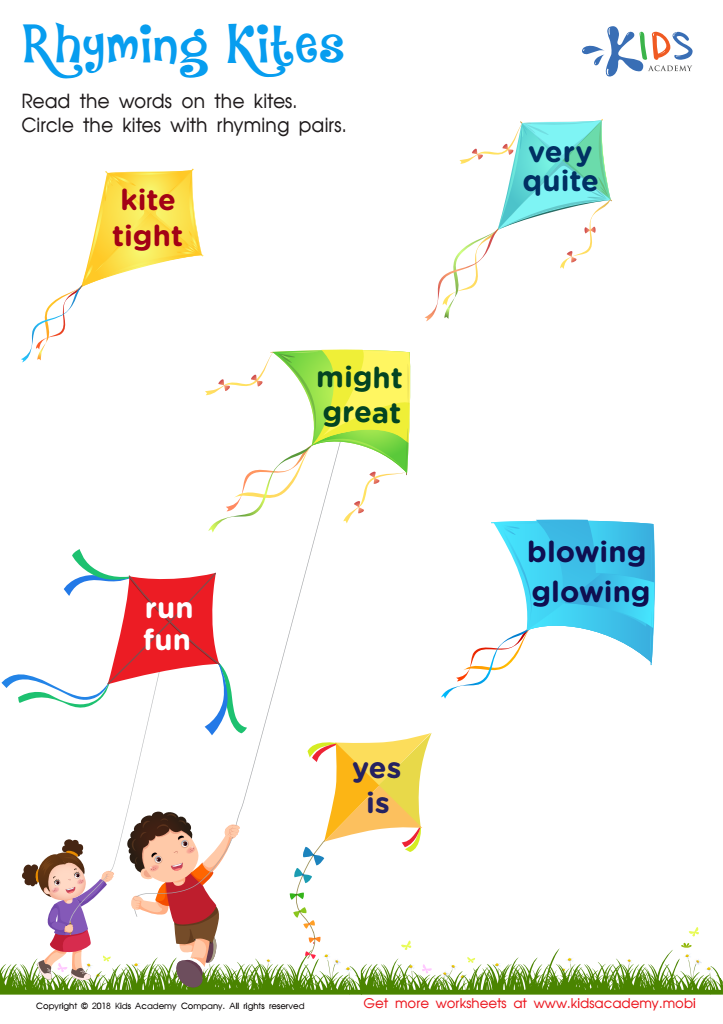
Rhyming Kites Worksheet
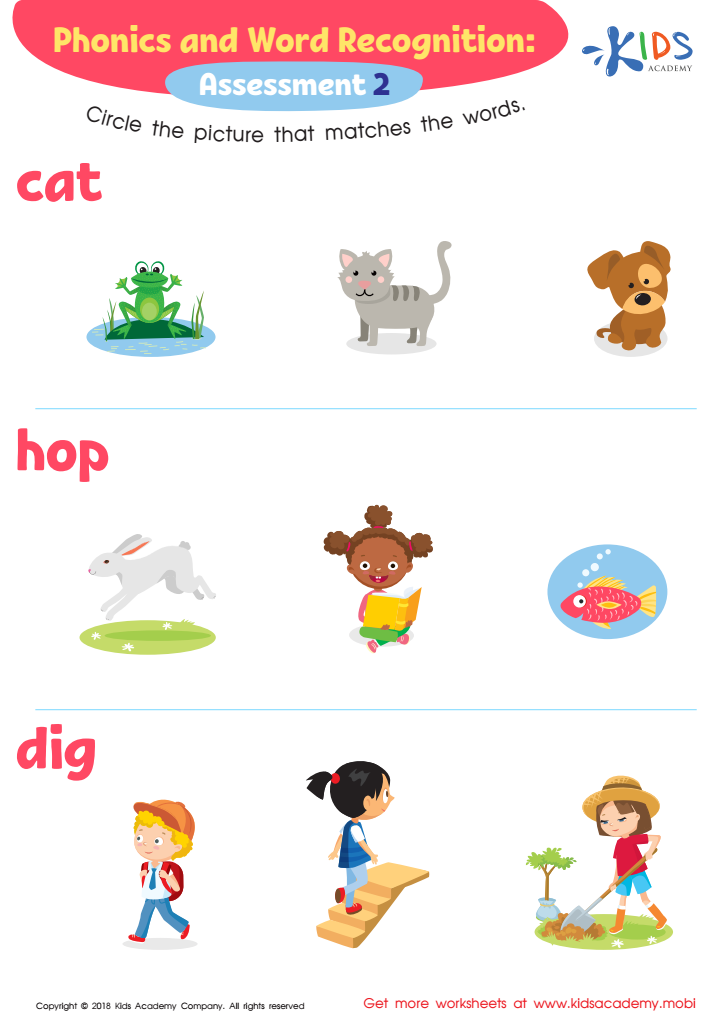
Phonological Awareness: Assessment 2 ELA Worksheet
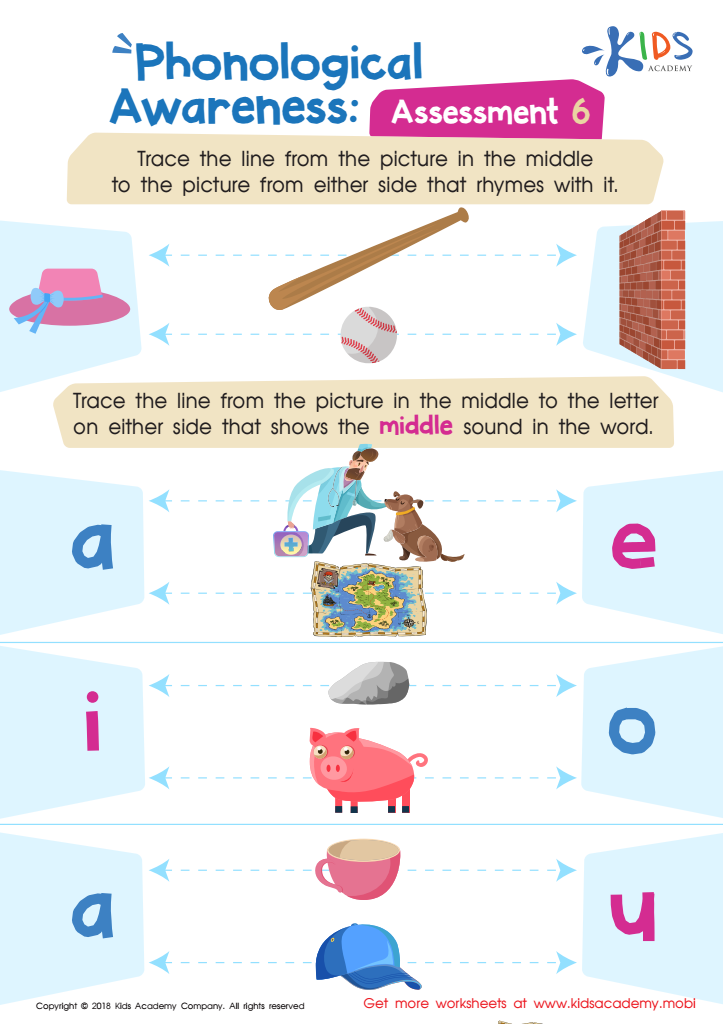
Phonological Awareness: Assessment 6 Worksheet
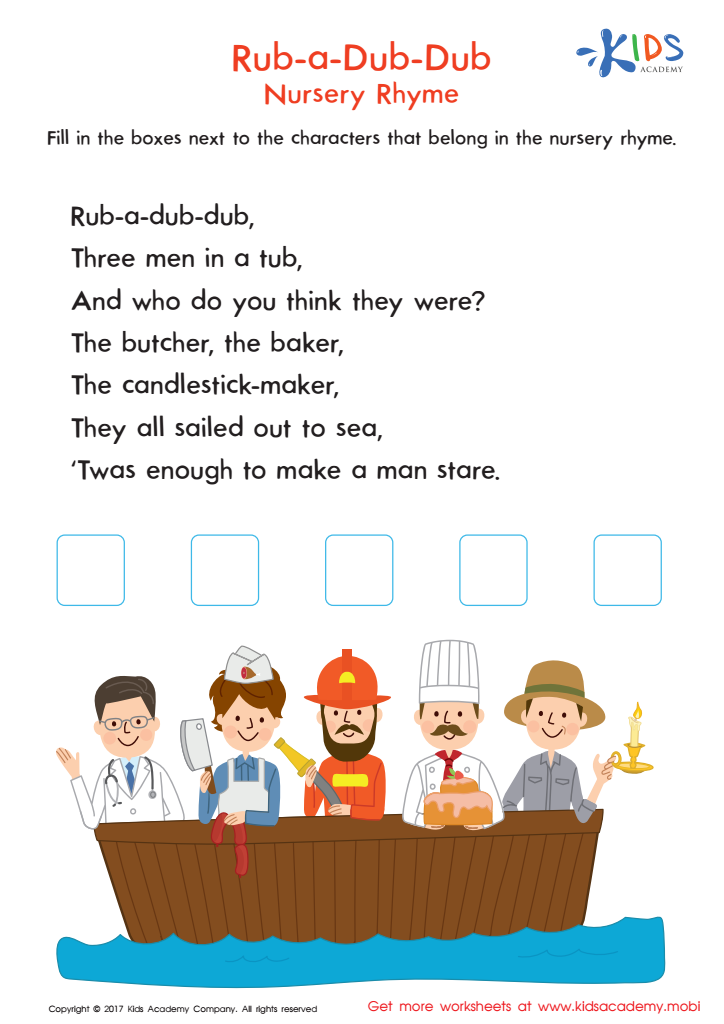
Rub a Dub Dub Printable








Rhyming skills play a crucial role in a child’s early literacy development, and both parents and teachers should be attentive to this. Firstly, rhyming enhances phonemic awareness, which is the ability to recognize and manipulate sounds in words—an essential skill for reading proficiency. When children identify rhyming words, they become adept at hearing common sounds, helping them decode unfamiliar words with more ease.
Moreover, rhyming activities such as listening to songs or poems make learning to read both enjoyable and engaging. They stimulate a child’s interest in language and phonics, laying a foundation for lifelong reading and writing enjoyment. Rhyming also helps expand a child's vocabulary, as they are exposed to new words and learn their meanings in a playful context.
Cognitively, recognizing rhymes aids in memory improvement. Rhyming sequences provide children with patterns that make it easier to remember and recall words. Skills developed through rhyming also encourage better verbal expression, as children mimic the rhythmic patterns and sounds they encounter.
Ultimately, fostering these skills creates a smoother transition to formal reading instruction. Both parents and teachers benefit from incorporating rhyming into daily routines, ensuring that children have a solid groundwork for literacy, cognitive development, and academic success.







