Phonics practice Short Vowels Worksheets
4 filtered results
Difficulty Level
Grade
Age
-
From - To
Subject
Activity
Standards
Boost your child's reading skills with our engaging Phonics Practice Short Vowels Worksheets! Designed for early learners, these interactive worksheets help reinforce the understanding of short vowel sounds through fun activities and exercises. Students will enjoy a variety of tasks, including fill-in-the-blank, sound recognition, and matching games that make learning enjoyable. Perfect for classroom use or homeschooling, our resources cater to diverse learning styles, promoting phonemic awareness and foundational reading skills. With our carefully crafted materials, children will gain confidence in their ability to read and spell, paving the way for future literacy success. Explore our collection and spark a love for learning today!
Favorites
With answer key
Interactive
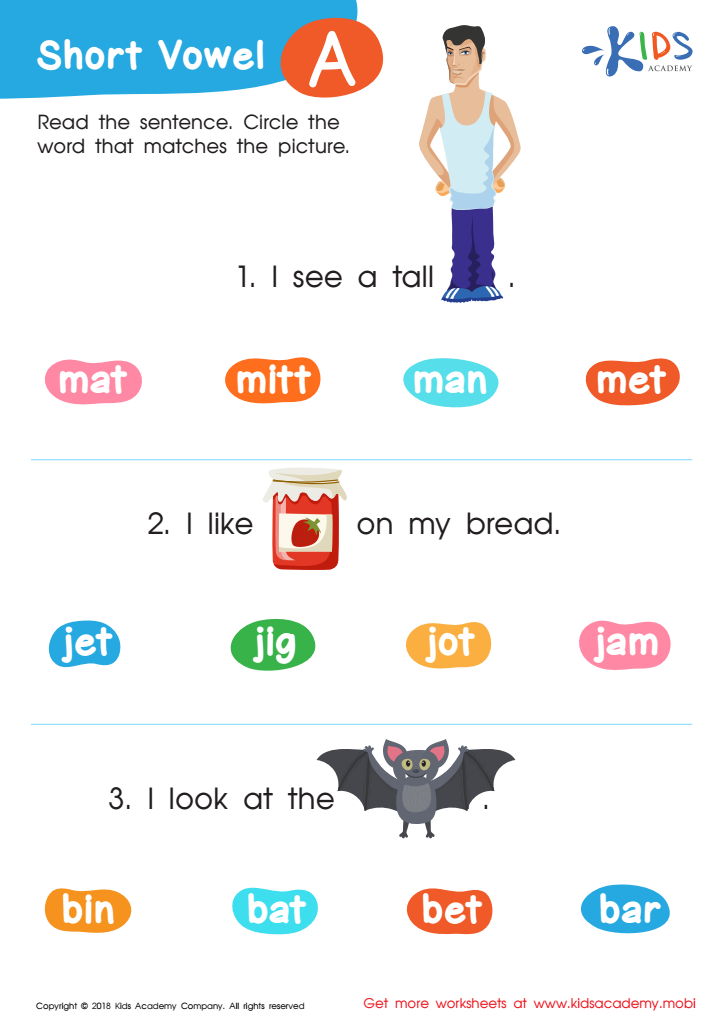
Short Vowel /a/ Worksheet
This free PDF helps new readers use sight words and pictures to read basic sentences. Then, they use accompanying word choices to find the correct word with the short a vowel sound. A key early reading skill, discriminating between short vowel sounds can be tricky in monosyllabic words, so use this PDF to help your reader reinforce it.
 Assign to My Students
Short Vowel /a/ Worksheet
Worksheet
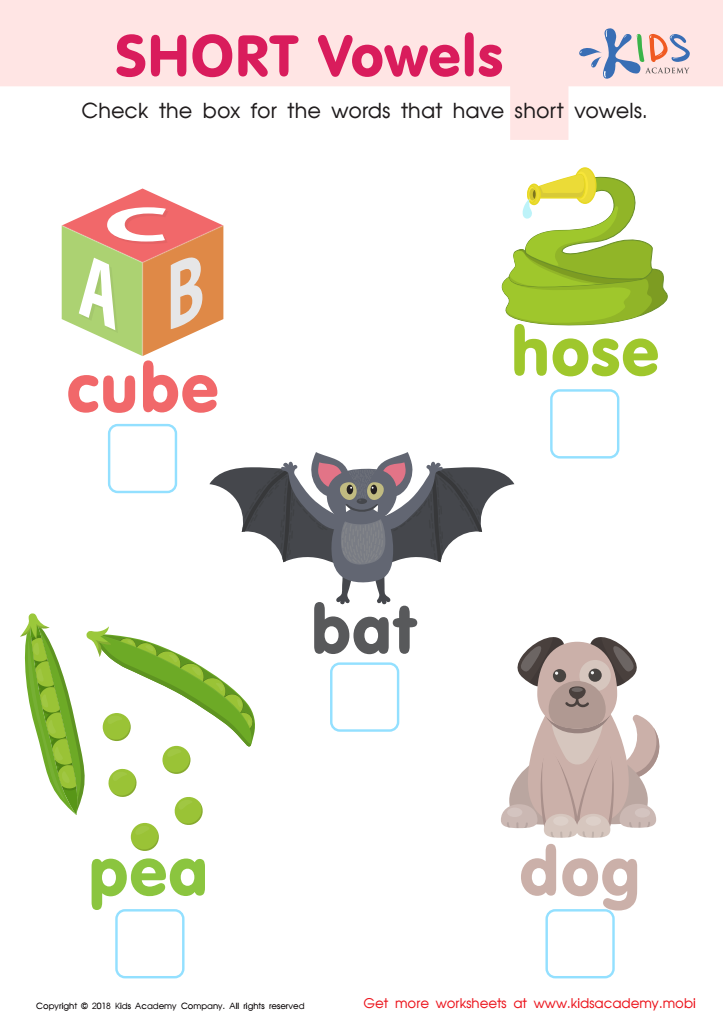
short vowels Worksheet
Say "dog" and notice how long it takes to pronounce the vowel. Is it short or long? Compare it to "pea" and use this worksheet to quickly assess your child's mastery. Have them name each picture and listen for the vowel sounds. Only check the boxes for words with short vowel sounds.
short vowels Worksheet
Worksheet
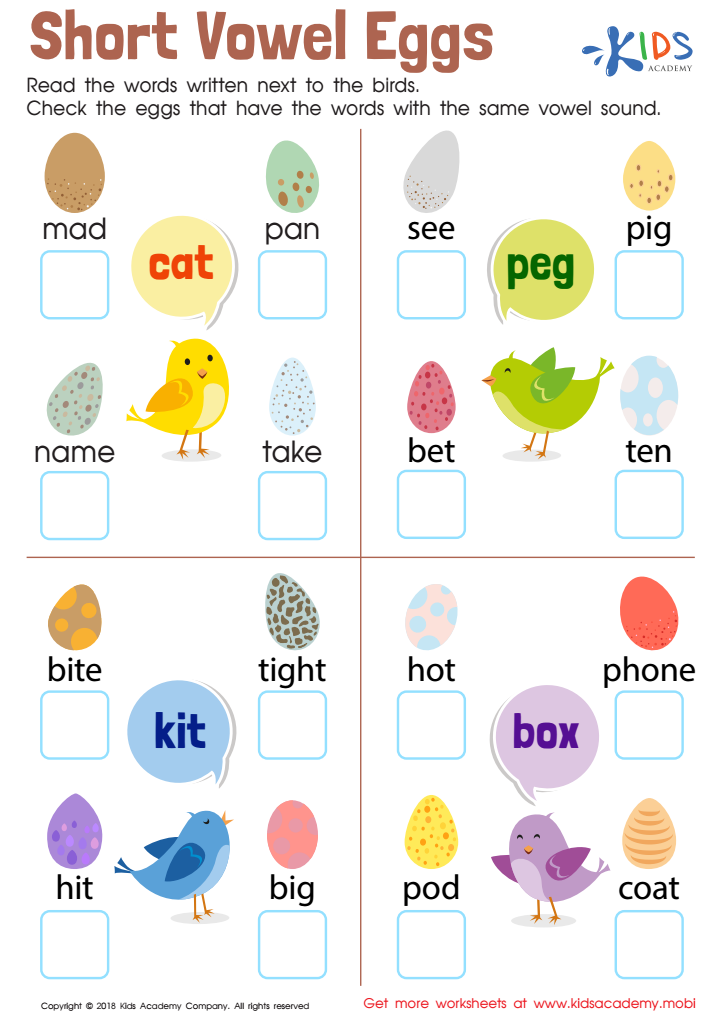
Short Vowel Eggs Worksheet
Your students will love helping these birdies pick the short vowel eggs! Have them read the words in the thought bubbles, then check off the boxes with the same short vowel sounds. The bright colors of this free Worksheet will draw them in and get them practicing their vowels!
Short Vowel Eggs Worksheet
Worksheet
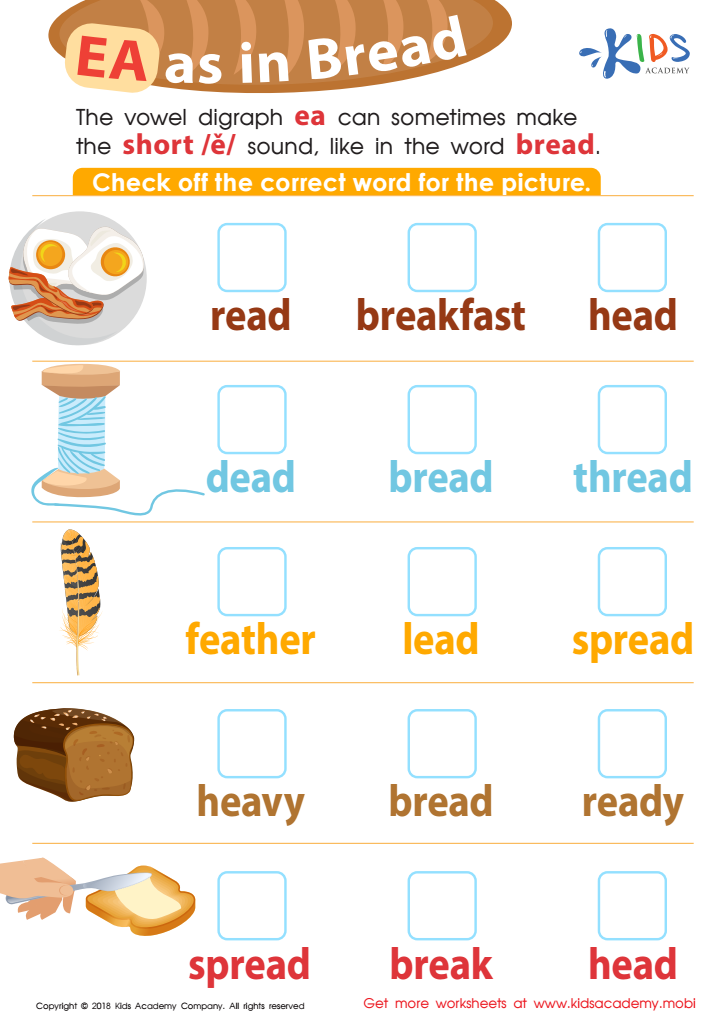
Reading: EA as in Bread Worksheet
The vowel digraph ea can be read in two ways. Examples of the long sound are "read" and "lead"; examples of the short sound are "bread" and "head". Ask your kids to give you more examples and then have them check off the correct word for the pictures on this worksheet. This will help them understand the ea sound.
Reading: EA as in Bread Worksheet
Worksheet
Join Kids Academy for Free
Who is primarily going to use this learning content?



Phonics practice, particularly with short vowels, is crucial for young learners' literacy development. Short vowels form the foundation of reading and writing, providing essential coding for decoding words. Mastering these sounds allows children to recognize and manipulate letters effectively, paving the way for greater fluency and comprehension.
When parents and teachers focus on short vowel phonics, they empower students with vital skills applicable across their literacy journey. Short vowels frequently appear in many common words, making their mastery essential for both reading and spelling. Furthermore, understanding these vowel sounds helps children differentiate words that may seem similar, enhancing their overall reading accuracy.
Additionally, reinforcing short vowel sounds in practice activities can create a strong sense of achievement and motivation. Children often thrive with hands-on learning, and engaging songs, games, and activities involving short vowels can make phonics enjoyable.
Teachers and parents working together can provide consistency in phonics instruction, creating a supportive environment that encourages practicing reading at home and school. Ultimately, an emphasis on short vowels fosters a love for reading and lays a strong foundation for lifelong literacy skills, ensuring that students are prepared for more complex concepts in language arts as they progress in their education.