Letter recognition Tracing Letters Worksheets - Page 2
26 filtered results
-
From - To
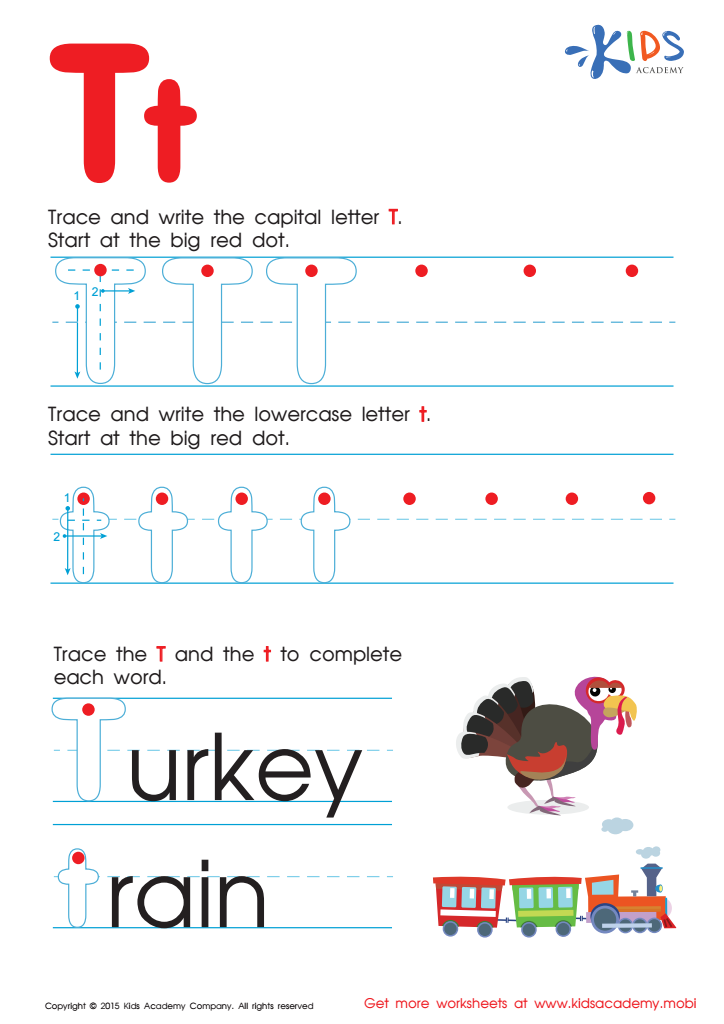
Letter T Tracing Page
 Assign to My Students

Letter D Tracing Page








Letter recognition and tracing letters are critical components of early literacy development. For parents and teachers, fostering these skills offers a foundation for a child's reading and writing abilities. Recognizing letters ensures that children can identify the symbols that make up words, enabling them to decode written language. This skill is essential for reading fluency and comprehension.
Tracing letters helps with fine motor development, improving hand-eye coordination and grip strength, which are vital for writing. As children trace, they also reinforce their memory of letter shapes, further aiding retention and recall. This multisensory approach, combining visual, auditory, and tactile elements, heightens engagement and promotes greater understanding.
Moreover, mastering letter recognition early on can boost a child’s confidence. When they see their progress in reading and writing, they develop a positive attitude toward learning. This enthusiasm can lead to lifelong reading habits, essential for academic success.
In summary, parents and teachers should emphasize letter recognition and tracing as crucial stepping stones in a child’s literacy journey. These practices not only support academic skills but also foster a love for reading and writing, laying a strong foundation for future educational experiences.








