Letter-sound association Tracing Letters Worksheets
5 filtered results
-
From - To
Develop your child's phonics skills with our Letter-Sound Association Tracing Letters Worksheets! These worksheets combine tracing practice with letter recognition and sound knowledge, fostering early literacy. Each sheet is dedicated to a specific letter, allowing children to trace uppercase and lowercase letters and connect them with their corresponding sounds through engaging illustrations. Perfect for preschool and kindergarten learners, these activities promote fine motor skills and phonemic awareness, laying a solid foundation for reading success. Dive into a world of fun and interactive learning to help your child master the essentials of letter-sound associations.
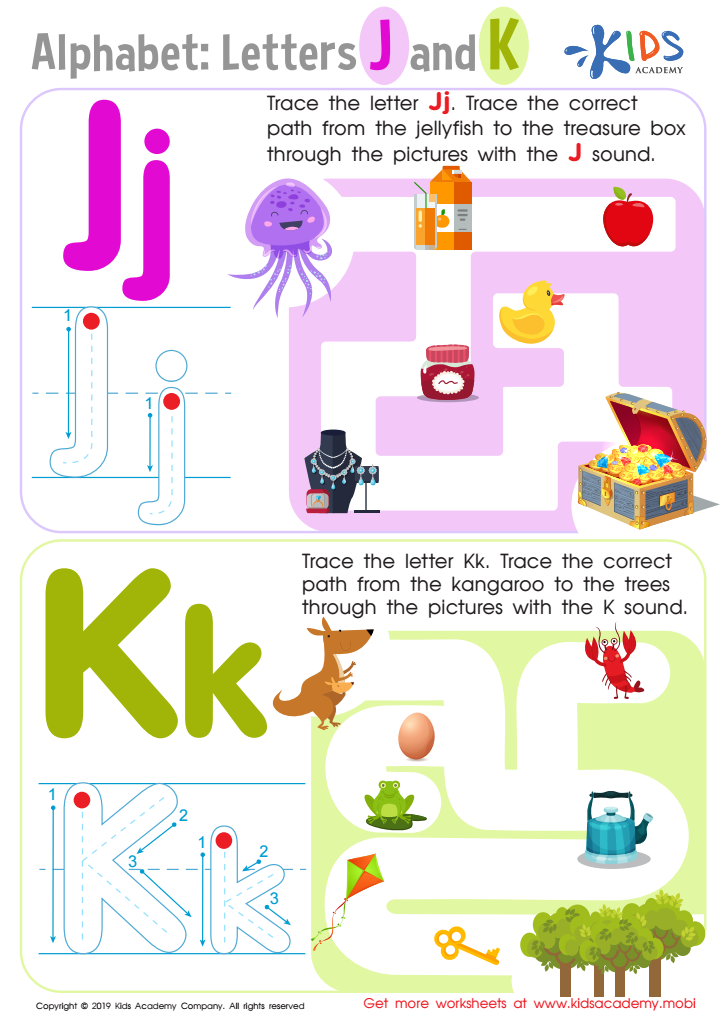
Letters J and K Tracing Worksheet
 Assign to My Students
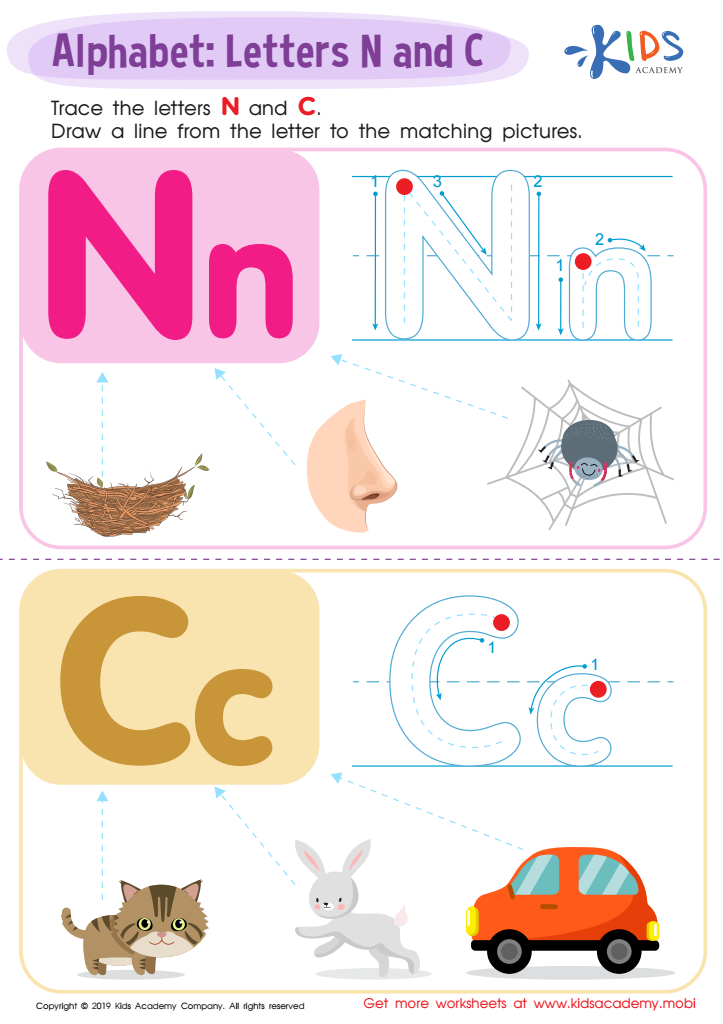
Letter N and C Tracing Worksheet
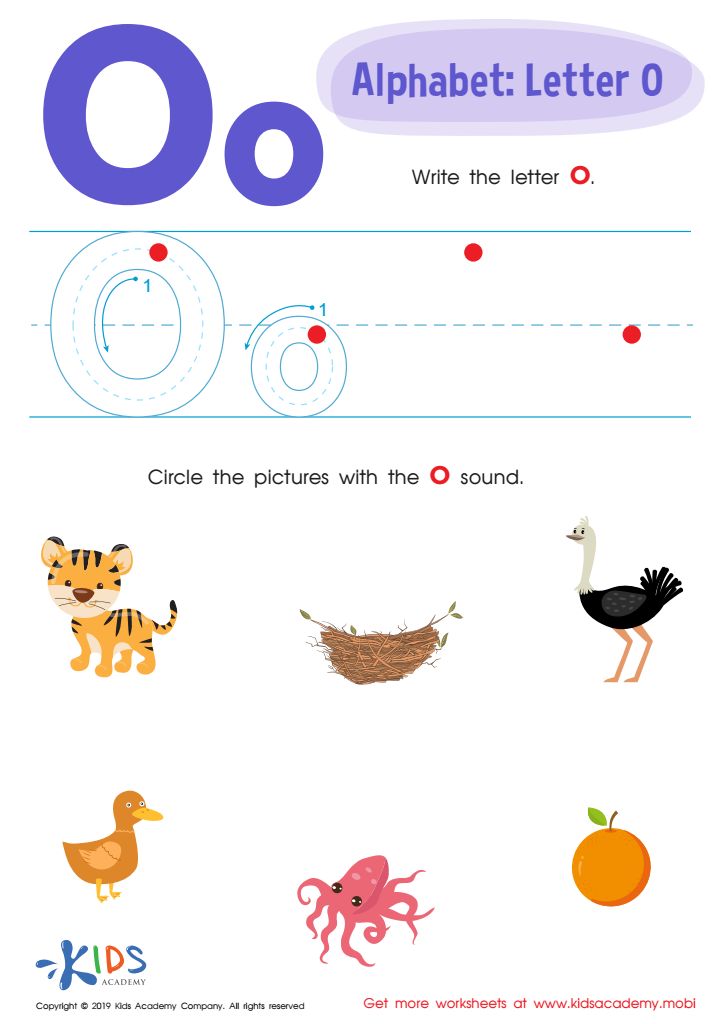
Letter O Tracing Worksheet

Lowercase Letters m n o Worksheet
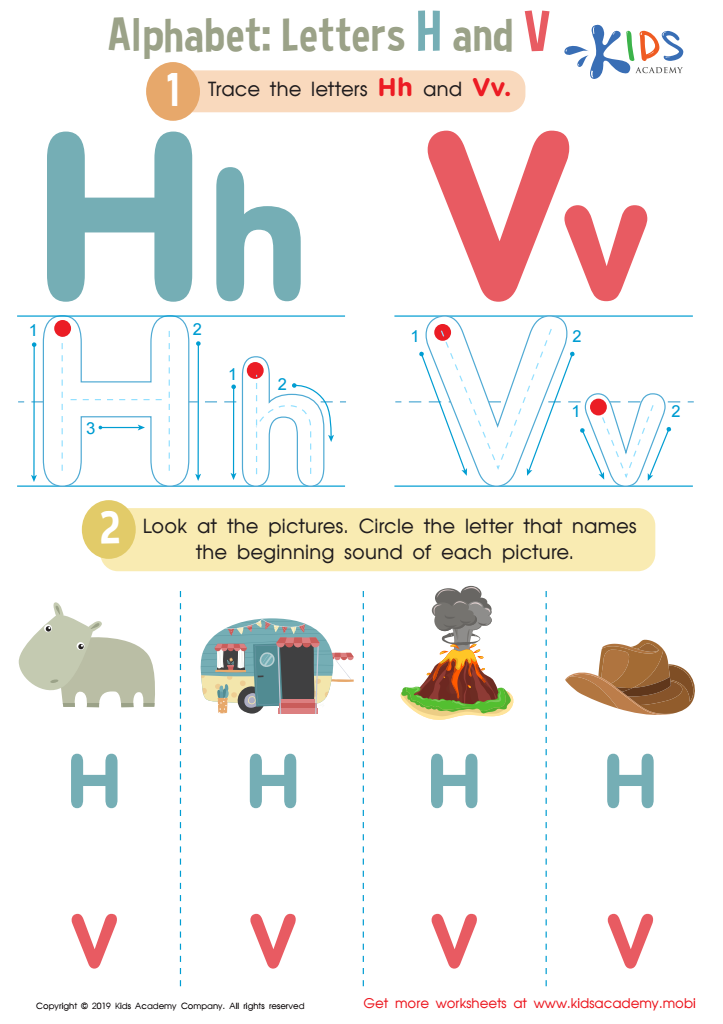
Letters H and V Tracing Worksheet








Letter-sound association and tracing letters are fundamental activities that set the groundwork for early literacy skills. When children make connections between letters and their corresponding sounds, they develop phonemic awareness, a crucial component of reading and spelling. This skill enables them to decode words by blending the individual sounds that letters represent, which is an essential step towards fluent reading and comprehensive understanding.
Tracing letters, on the other hand, reinforces fine motor skills and hand-eye coordination. It helps children learn the correct form and structure of each letter, which is critical for legible handwriting. More importantly, when tracing and sounding out letters are combined, it provides a multisensory learning experience. This multisensory approach—incorporating visual, auditory, and kinesthetic-learning modes—significantly enhances memory and retention.
For parents and teachers, cultivating these skills early ensures that children are well-prepared for more complex literacy tasks. It fosters not only academic success but also instills a sense of confidence and enthusiasm about learning to read and write. Neglecting these early practices can result in difficulties later on, making elementary education more challenging both for the child and the teacher. Therefore, emphasis on letter-sound association and tracing from an early age builds a strong foundation for lifelong literacy and effective communication skills.








