Visual discrimination skills Upper & Lowercase Letters Worksheets
4 filtered results
-
From - To
Enhance your child's visual discrimination skills with our engaging Upper & Lowercase Letters Worksheets! Designed for early learners, these worksheets provide fun activities that help distinguish between similar letters and improve recognition of uppercase and lowercase forms. With a variety of exercises, including matching, tracing, and coloring, your child will develop essential reading and writing skills while boosting their confidence. Each worksheet encourages hands-on learning and promotes cognitive development. Perfect for preschool and kindergarten students, our resources seamlessly blend fun with education. Help your child master the alphabet with these essential visual discrimination worksheets today!
Explore our collection now!

Find Uppercase Letters A, B, and C Worksheet
 Assign to My Students










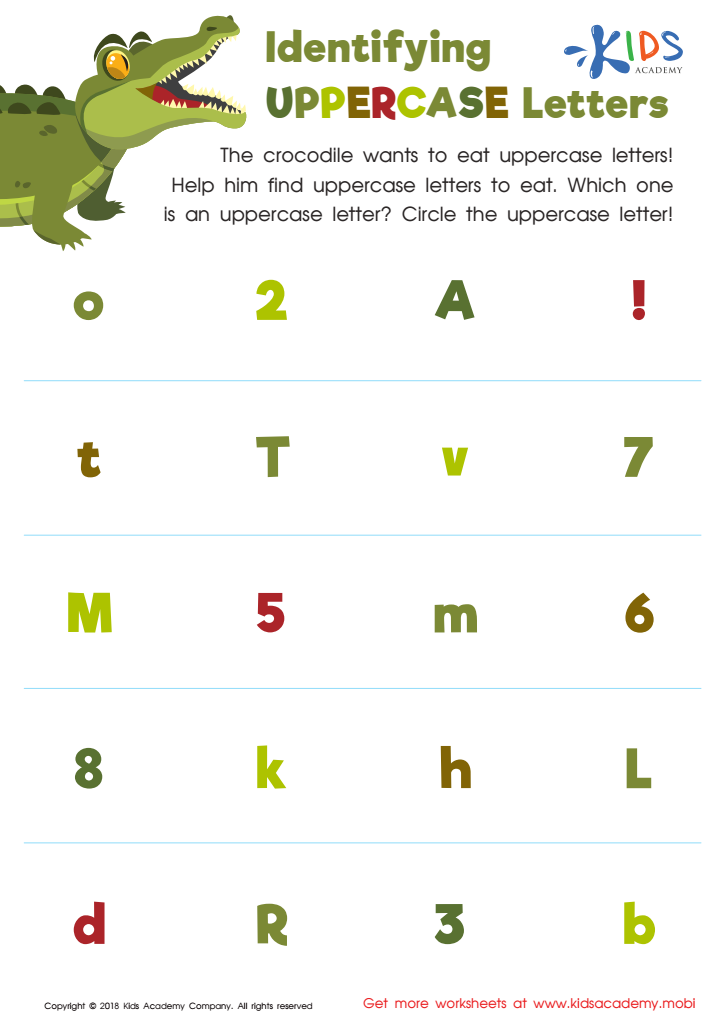
Identifying Uppercase Letters Worksheet
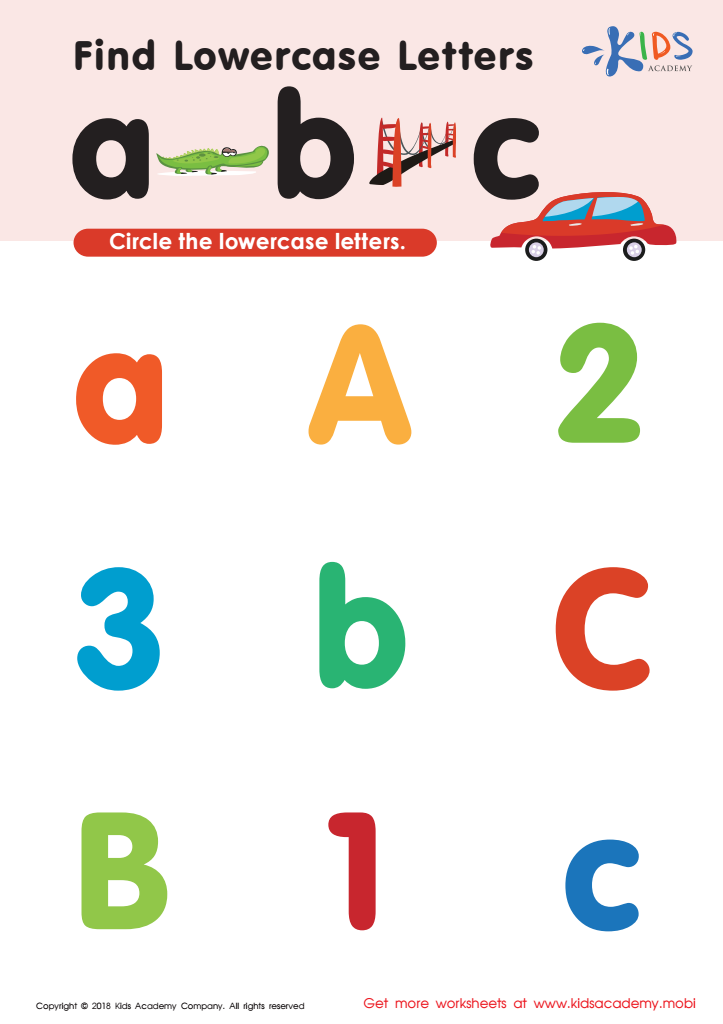
Find lowercase letters a b c Worksheet
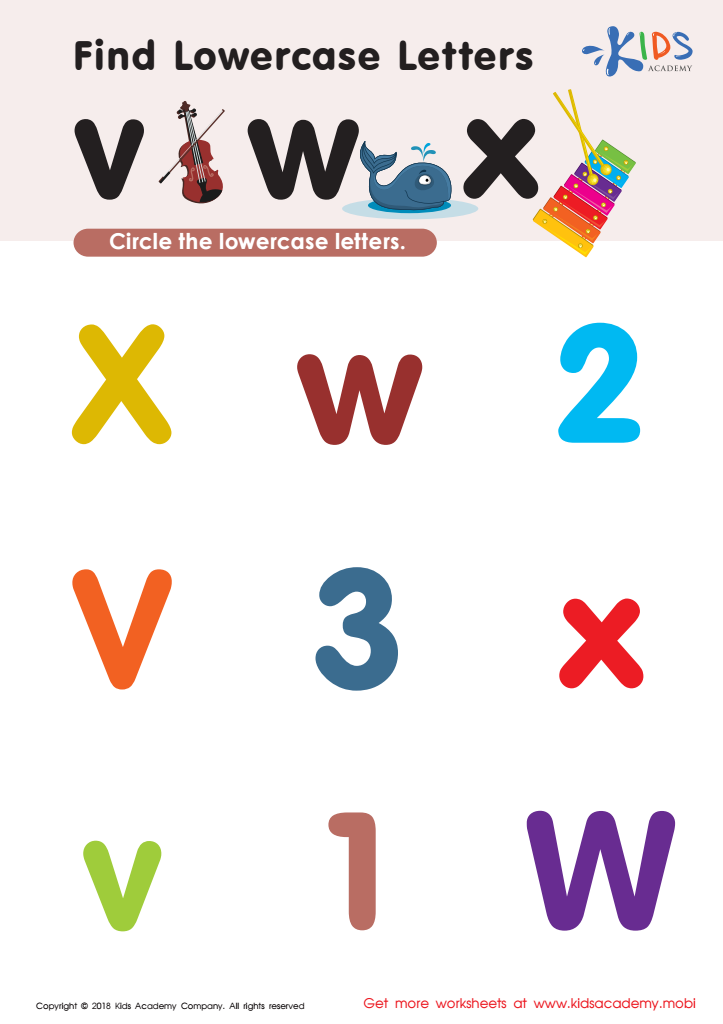
Find Lowercase Letters v w x Worksheet






Visual discrimination skills, especially regarding uppercase and lowercase letters, are critical for early literacy development. These skills enable children to differentiate between similar-looking letters, which is crucial for reading and writing fluency. When children can swiftly recognize differences between "b" and "d," or between "P" and "p," they are more likely to decode words accurately and with confidence.
Parents and teachers should care about fostering visual discrimination skills because they directly impact a child's academic success. Children who struggle to differentiate letters may encounter difficulties in spelling and reading, leading to frustration and lower self-esteem. Early identification and support in developing these skills can prevent long-term literacy challenges. Furthermore, building visual discrimination leads to enhanced attention to detail, better problem-solving abilities, and improved cognitive development.
Engaging activities such as letter matching games, sorting exercises, and multi-sensory approaches can be instrumental in helping young learners master these skills. By actively promoting visual discrimination, parents and teachers create a strong foundation for not only literacy but overall academic progress, fostering a love for learning that lasts a lifetime. Encouraging this skill set ensures that children are well-prepared for the rigors of reading and writing as they advance in their education.







