Vowel Recognition Vowel Diphthongs Worksheets
3 filtered results
Difficulty Level
Grade
Age
-
From - To
Subject
Activity
Standards
Enhance your students' understanding of vowel diphthongs with our engaging Vowel Recognition Vowel Diphthongs Worksheets! Designed for early learners, these worksheets introduce essential vowel sounds, helping children differentiate between single vowels and diphthongs. Through fun activities and exercises, students will reinforce their phonemic awareness, improve reading skills, and build confidence in their ability to recognize and pronounce vowel combinations. With visually appealing graphics and a user-friendly layout, these worksheets provide an enjoyable learning experience. Perfect for classroom use or at-home practice, our resources are ideal for teachers and parents aiming to foster a strong foundation in literacy. Explore our collection today!
Favorites
With answer key
Interactive
Vowel match Worksheet
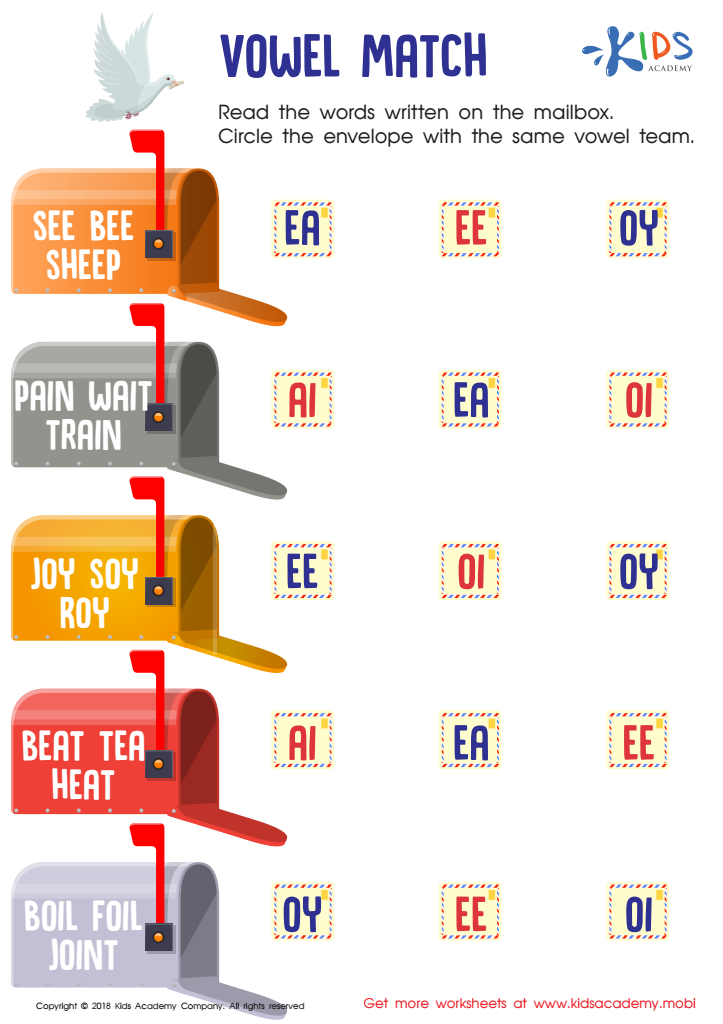
Early readers can find vowel teams (digraphs) tricky. This simple worksheet helps kids match words with the right digraphs and learn to read! They'll practice reading words from different families, and linking the letters to their sounds. It's a fun way to get kids sending letters to the right addresses!
 Assign to My Students
Vowel match Worksheet
Worksheet
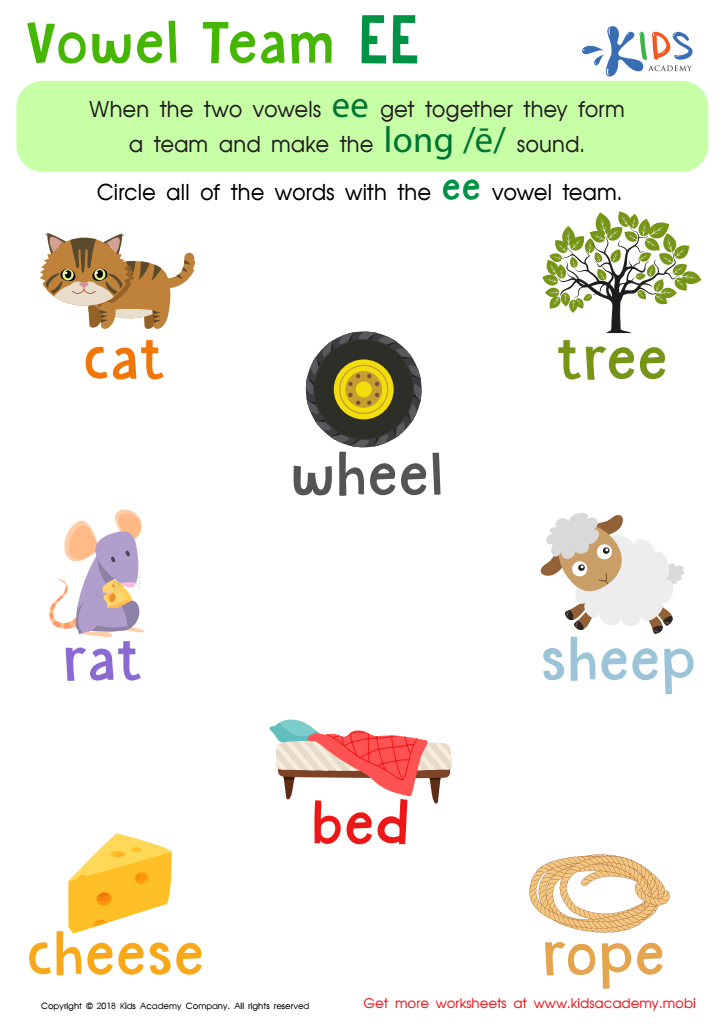
Reading: Vowel Team EE Worksheet
This worksheet is perfect for helping young learners master the /ee/ vowel team. It shows the first vowel with a long sound and the second vowel silent. It also provides pictures for unfamiliar words for readers of all levels. It's an ideal resource for teaching phonics skills.
Reading: Vowel Team EE Worksheet
Worksheet
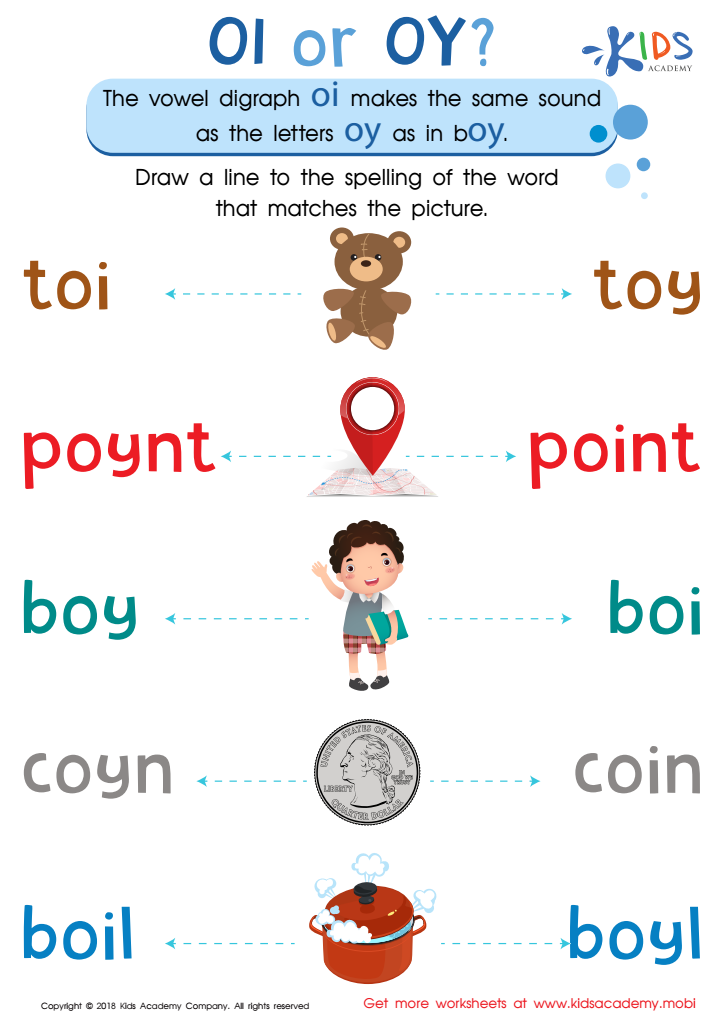
Reading: OI and OY Worksheet
Ask your students if they know the rule for words with /oi/ or /oy/ sound. If not, it's easy to learn! Rule: If /oy/ at end of word, spell with 'oy'; if /oi/ in middle of word, spell with 'oi'. Use this worksheet to help them master these digraphs and improve their ability to decode.
Reading: OI and OY Worksheet
Worksheet
Join Kids Academy for Free
Who is primarily going to use this learning content?


Vowel recognition and understanding vowel diphthongs are crucial for early language development in children. Parents and teachers should prioritize these aspects of phonics since they lay the foundation for reading, writing, and overall literacy skills. Recognizing vowels enables children to decode words more effectively, improving their reading fluency. Vowels are the backbone of syllables and play a key role in the structure of the English language.
Vowel diphthongs, which are combinations of two vowel sounds within the same syllable (like in "coin" or "loud"), add an additional layer of complexity. Mastery of diphthongs enhances children's phonemic awareness, allowing them to understand more intricate spelling patterns and variations in pronunciation. This, in turn, helps them become more proficient readers and spellers.
Moreover, a solid grasp of vowel sounds supports children's writing skills by empowering them to represent sounds accurately. As they develop their phonetic skills, children gain confidence in their abilities, fostering a love for learning and literature. Ultimately, when parents and teachers actively engage in teaching vowel recognition and diphthongs, they set children up for academic success, helping them navigate the ways language is used in reading and communication throughout their lives.