Word identification Vowels Worksheets
6 filtered results
-
From - To
Enhance your child's reading skills with our engaging Word Identification Vowels Worksheets! Designed for early learners, these worksheets focus on vowel recognition and sound. Each activity encourages kids to identify words containing specific vowels, boosting their understanding of phonics and improving their literacy skills. With fun, colorful illustrations and a variety of exercises, children will enjoy practicing their reading while building confidence. Our worksheets are perfect for classroom settings or at-home learning, making them an essential resource for teachers and parents alike. Unlock the power of vowels and watch your child thrive in their journey towards reading success!
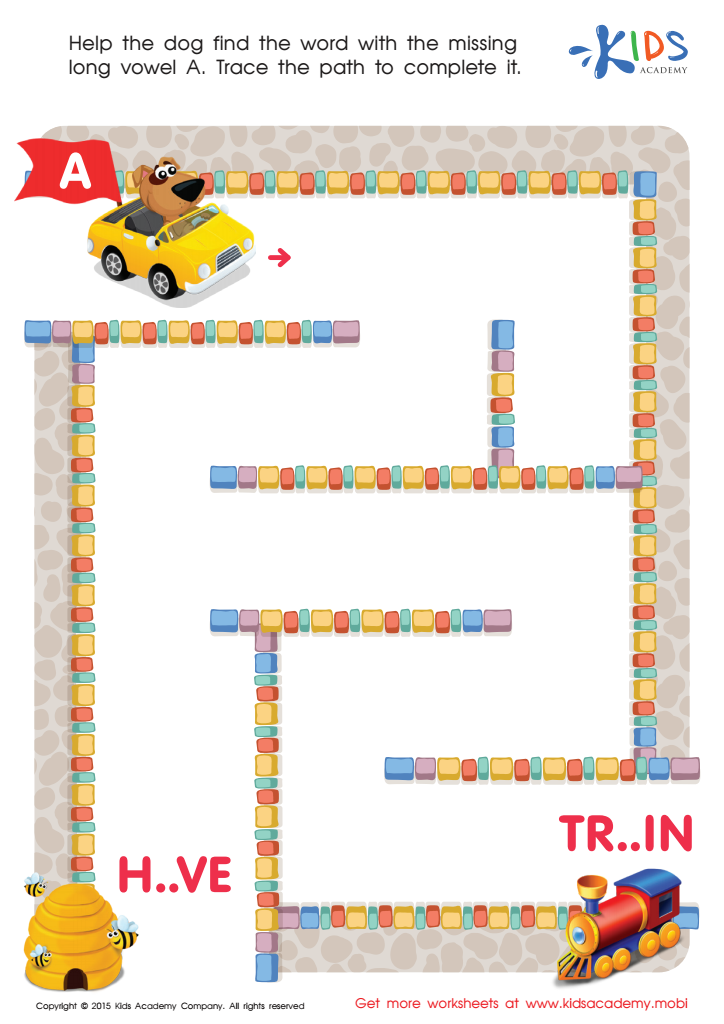
Long Vowel Sound A Worksheet
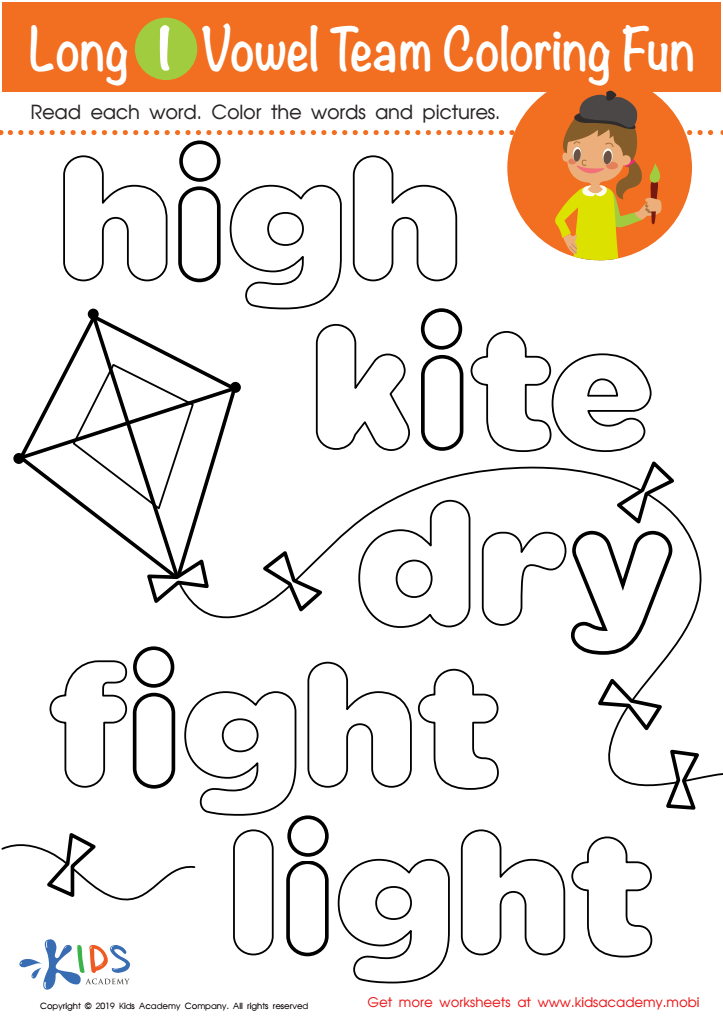
Long I Vowel Team Coloring Worksheet
 Assign to My Students
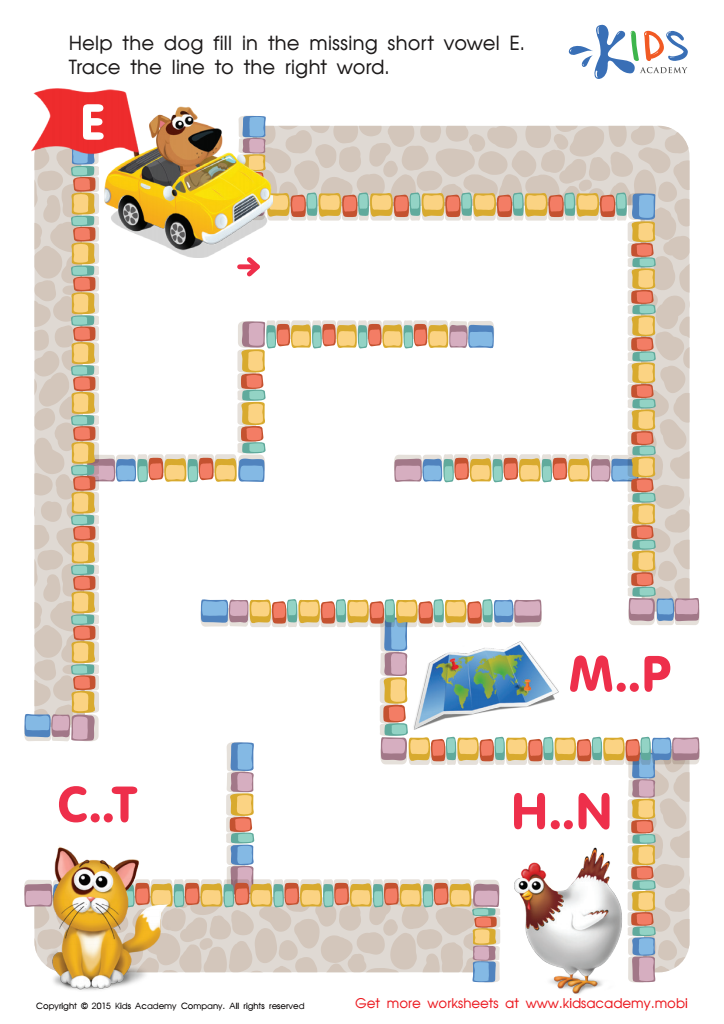
Short Vowel Sound E Worksheet
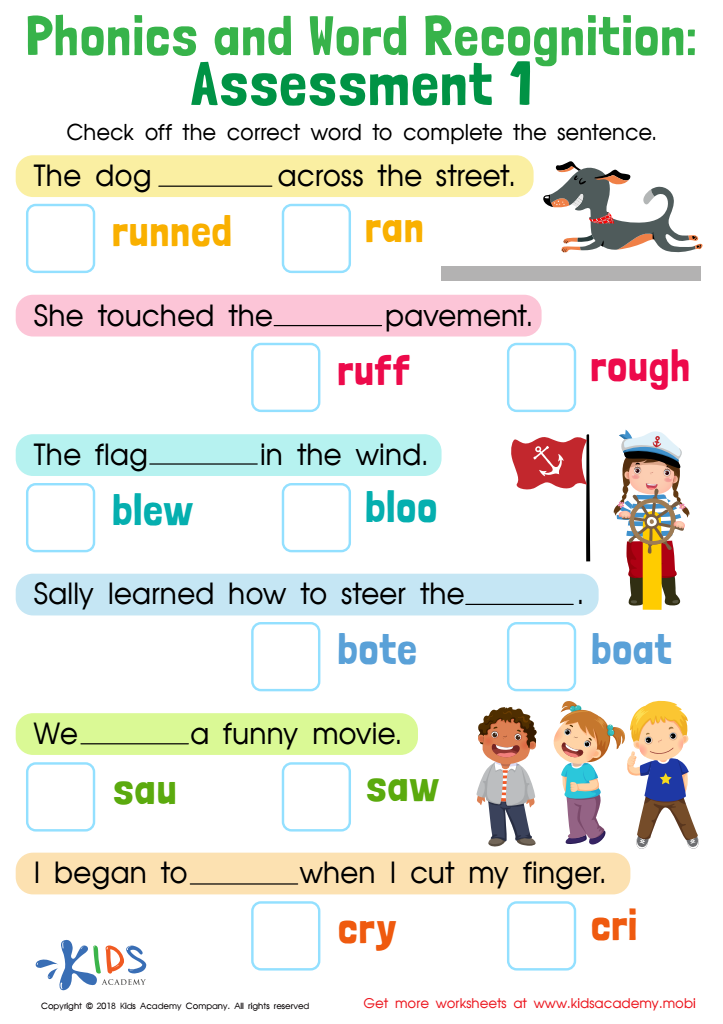
Phonics and Word Recognition: Assessment 1 Worksheet
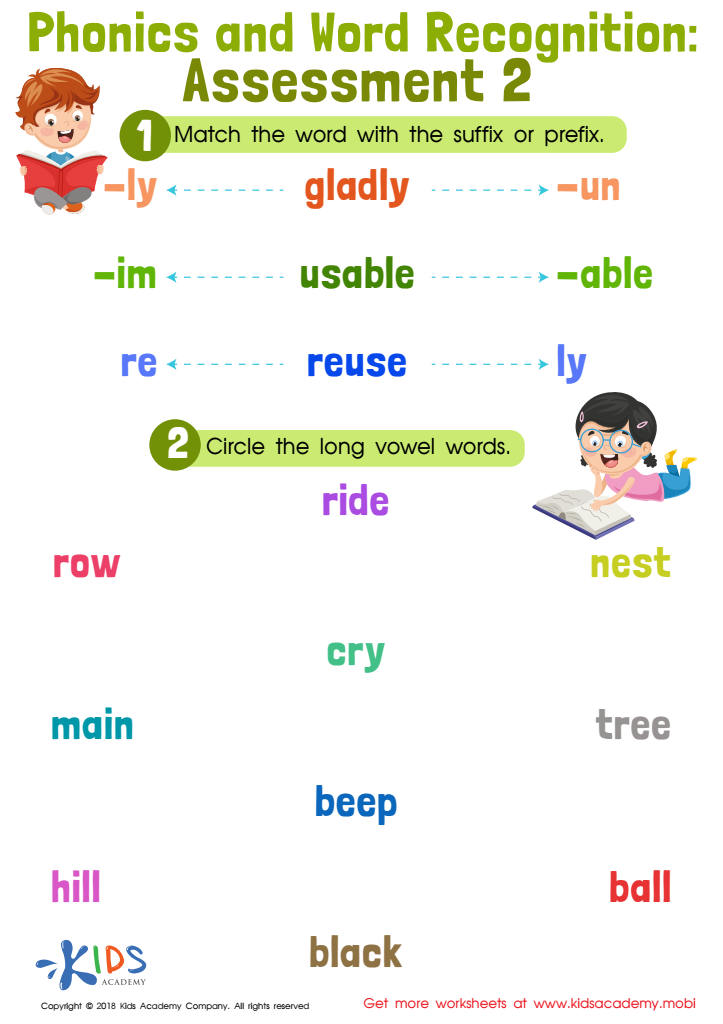
Phonics and Word Recognition: Assessment 2
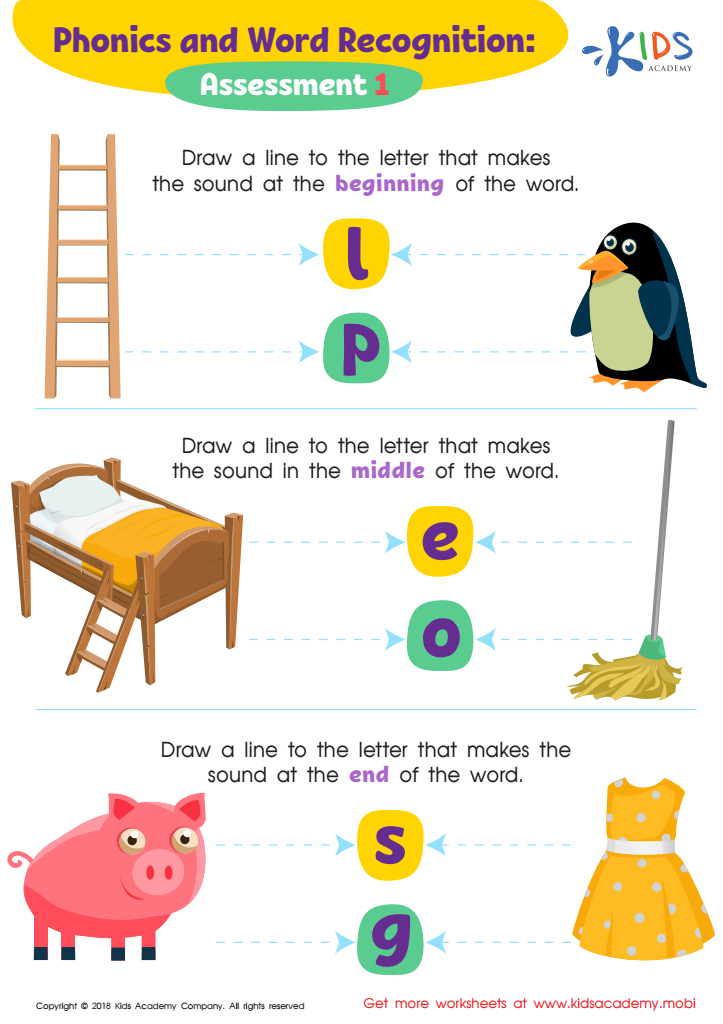
Phonics and Word Recognition: Assessment 1 ELA Worksheet





Parents and teachers should prioritize word identification and vowels in early literacy education because they are foundational to reading and writing proficiency. Vowels are the building blocks of most English words, forming essential syllables that enhance pronunciation, comprehension, and fluency. When children learn to identify vowels, they can decode unfamiliar words, which boosts their confidence and encourages a love for reading.
Understanding word identification through vowels enables students to develop critical phonemic awareness—the ability to hear, identify, and manipulate phonemes in words. This skill is vital for spelling and reading accuracy. Additionally, a strong grasp of vowels helps children recognize patterns in language, enhancing their vocabulary and overall communication abilities.
Furthermore, early mastery of word identification, particularly with vowels, leads to better academic performance. It equips children with the tools they need to tackle complex texts in higher grades. For parents, supporting their child's vowel recognition at home through games, reading, and writing activities creates a positive learning environment and fosters strong bonds.
In short, focusing on vowels and word identification lays a necessary foundation for literacy, which is critical for lifelong learning and success. Therefore, it's essential for both parents and teachers to actively engage in this key aspect of literacy education.







