Our Planet and Environment Worksheets Activities With Answers for Ages 3-8
5 filtered results
-
From - To
Discover an engaging collection of "Our Planet and Environment Worksheets Activities With Answers for Ages 3-8." Tailored for young learners, these educational resources inspire curiosity about nature while enhancing critical thinking skills. Each worksheet features fun activities that explore topics such as wildlife, ecosystems, and sustainability. Designed to make learning enjoyable, our worksheets come with answer keys to facilitate effective teaching and promote independent learning. Ideal for home or classroom use, these resources nurture a sense of environmental responsibility in children as they develop essential foundational knowledge about our planet. Explore now and empower your child's love for the environment!
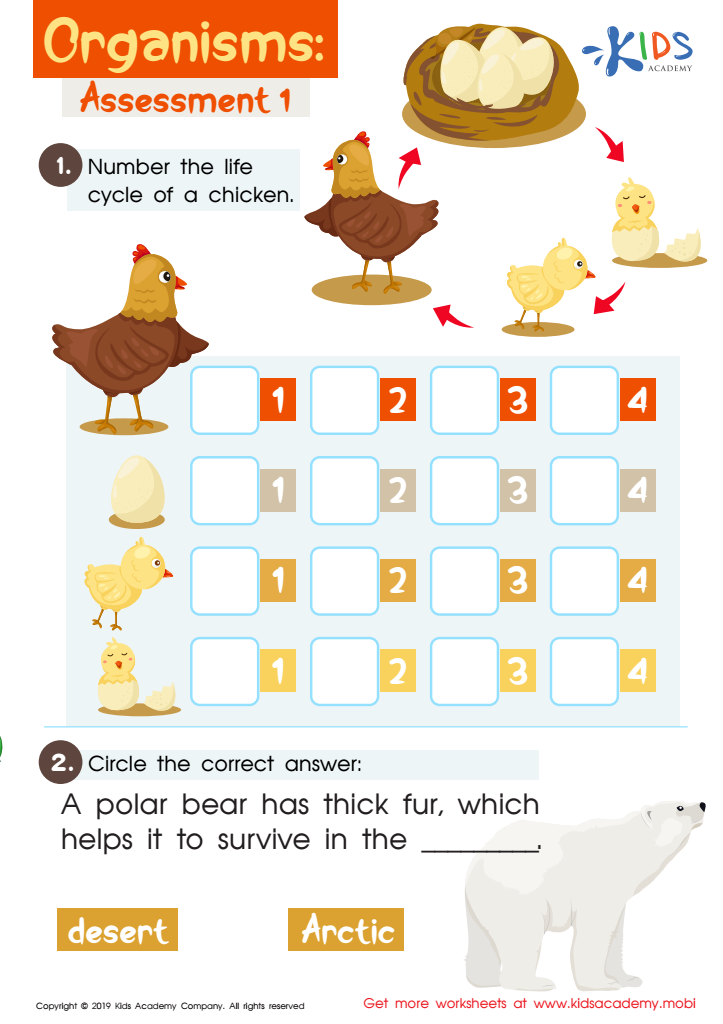
Organisms: Assessment 1 Worksheet
 Assign to My Students
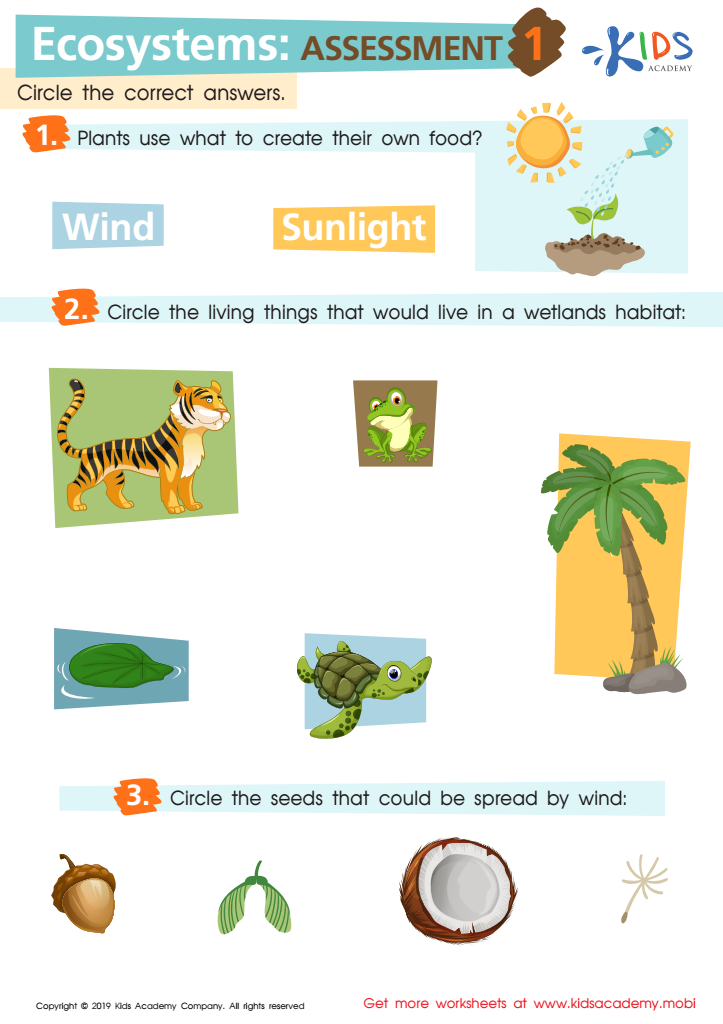
Ecosystems: Assessment 1 Worksheet
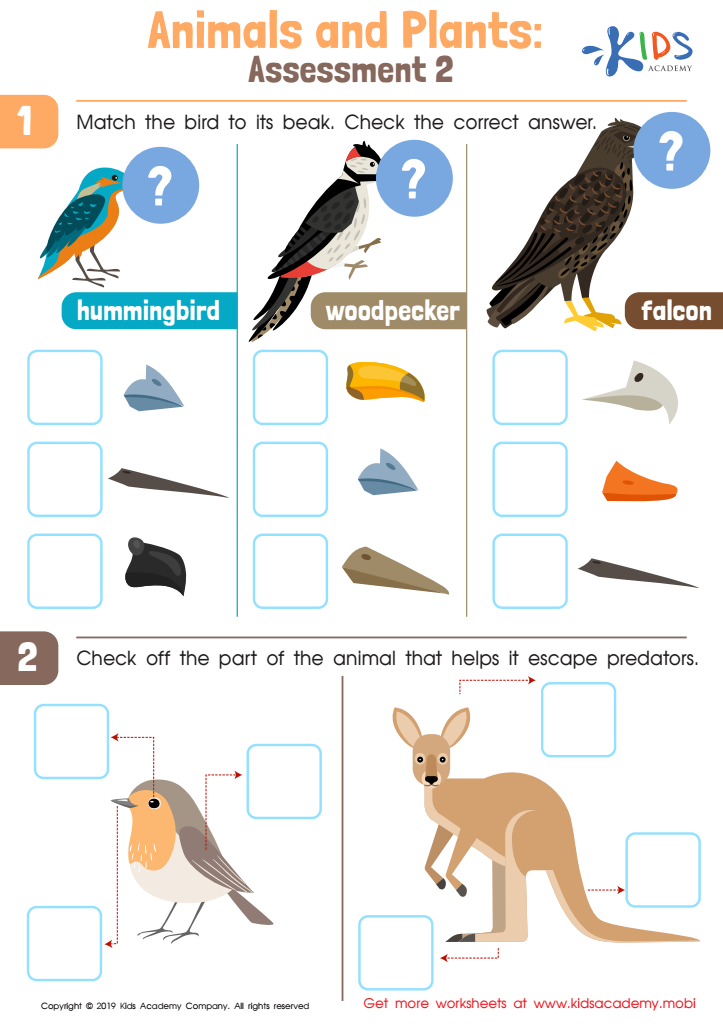
Animals and Plants: Assessment 2 Worksheet
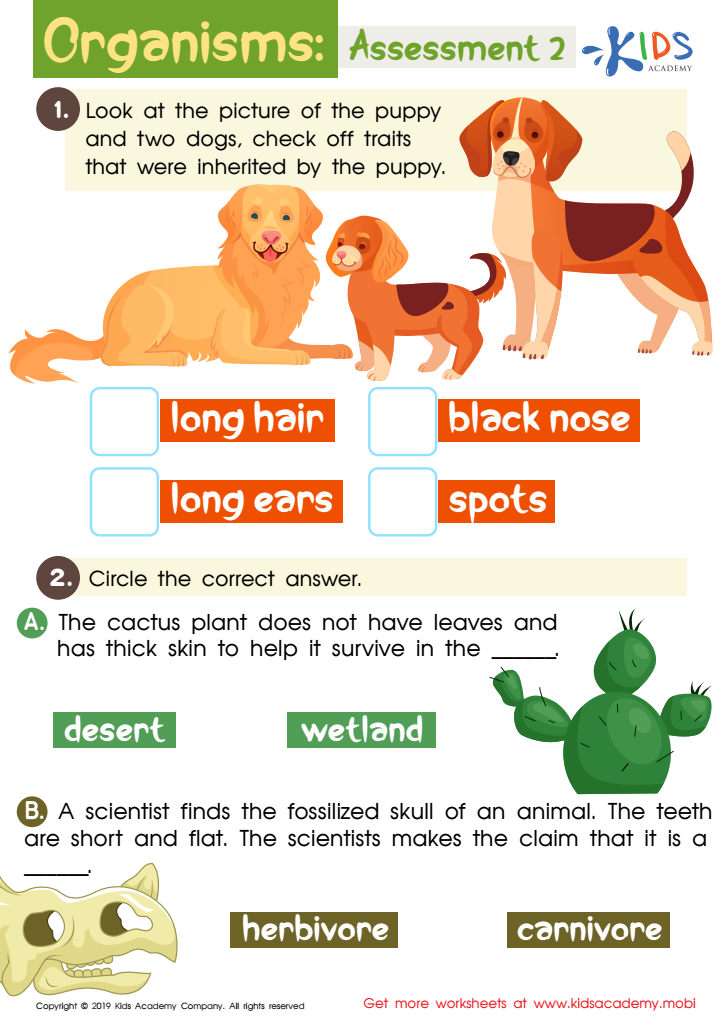
Organisms: Assessment 2 Worksheet
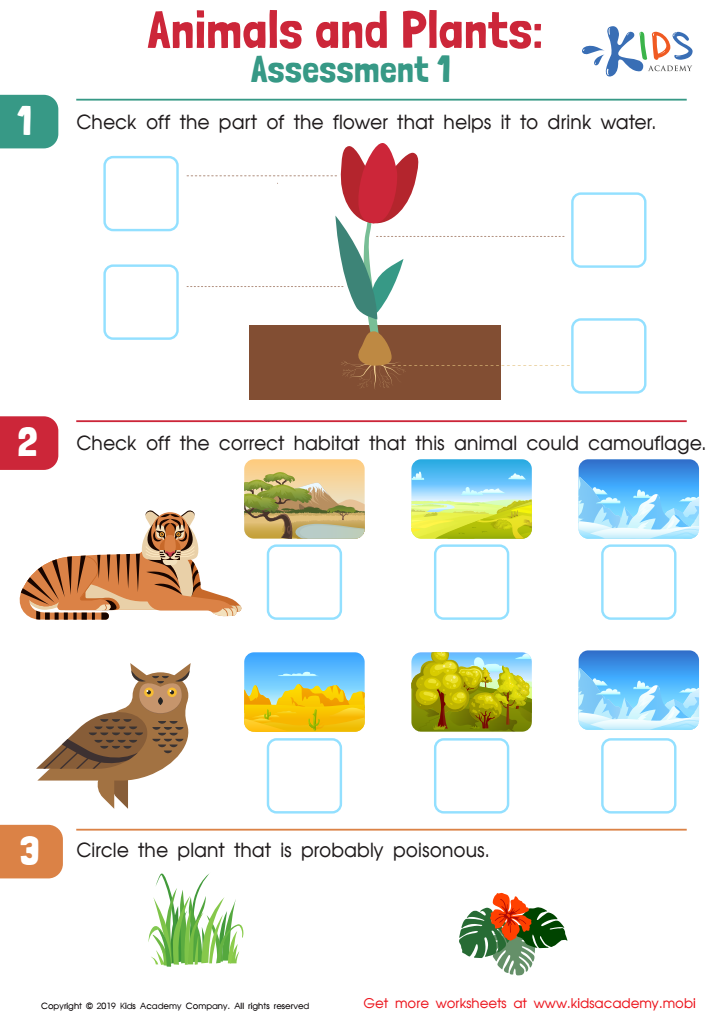
Animals and Plants: Assessment 1 Worksheet




.jpg)

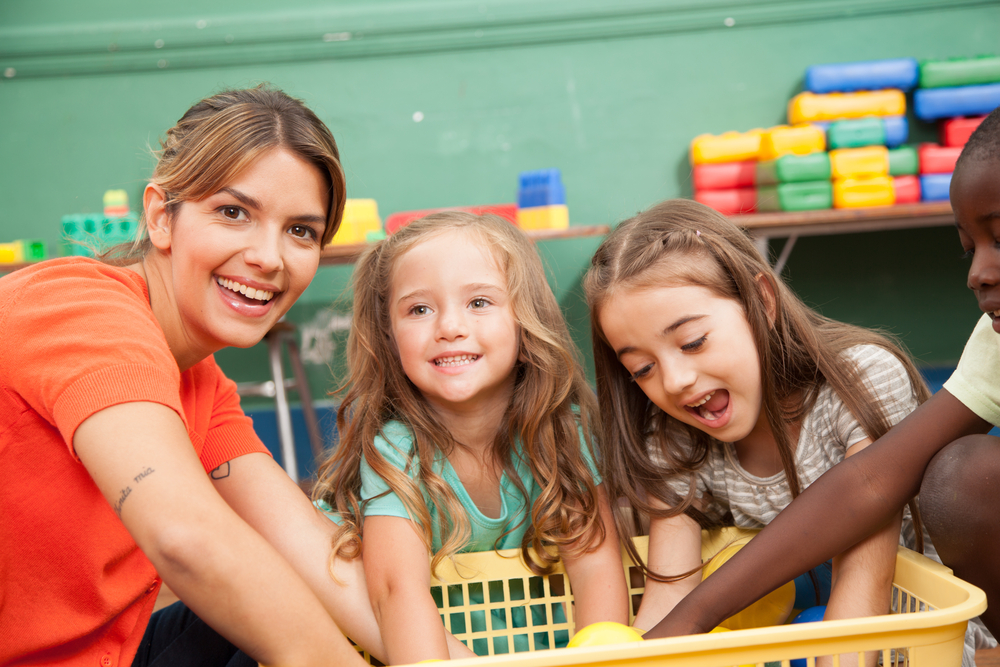
Parents and teachers should care about engaging young children in activities related to our planet and environment for several vital reasons. First, these early interventions nurture an appreciation for nature and help children develop a sense of responsibility for the world around them. By incorporating hands-on activities like nature walks, gardening, or recycling projects, kids become aware of environmental issues at an age when they are particularly impressionable.
Second, environmental education promotes critical thinking and creativity. Activities such as crafting with recycled materials or storytelling about wildlife instill problem-solving skills and encourage imaginative thinking. Moreover, introducing concepts of sustainability early fosters long-lasting habits that can translate into environmentally conscious choices in adulthood.
Finally, collective action begins at a young age. Activities that involve families or classrooms working together on environmental initiatives create a sense of community and teamwork. This teamwork reinforces social skills and teaches children the importance of collaboration for a common cause.
Incorporating planet-friendly activities promotes both knowledge and empathy for our environment. By investing time in these explorations, parents and teachers are inspiring the next generation of environmentally conscious citizens who will advocate for the well-being of our planet.








