Physical Science Worksheets Activities With Answers for Ages 3-8
6 filtered results
-
From - To
Discover a vibrant collection of Physical Science worksheets and activities designed for children ages 3-8. Our engaging resources help young learners explore fundamental concepts through fun and interactive tasks. Each worksheet features age-appropriate themes, promoting curiosity about the world around them. From simple experiments to matching games, children will gain valuable insights into core scientific principles. Teachers and parents will appreciate the provided answer keys, ensuring easy tracking of progress and understanding. Foster a love for science in young minds with these essential tools that encourage exploration, critical thinking, and creativity. Start learning today and spark a passion for discovery!
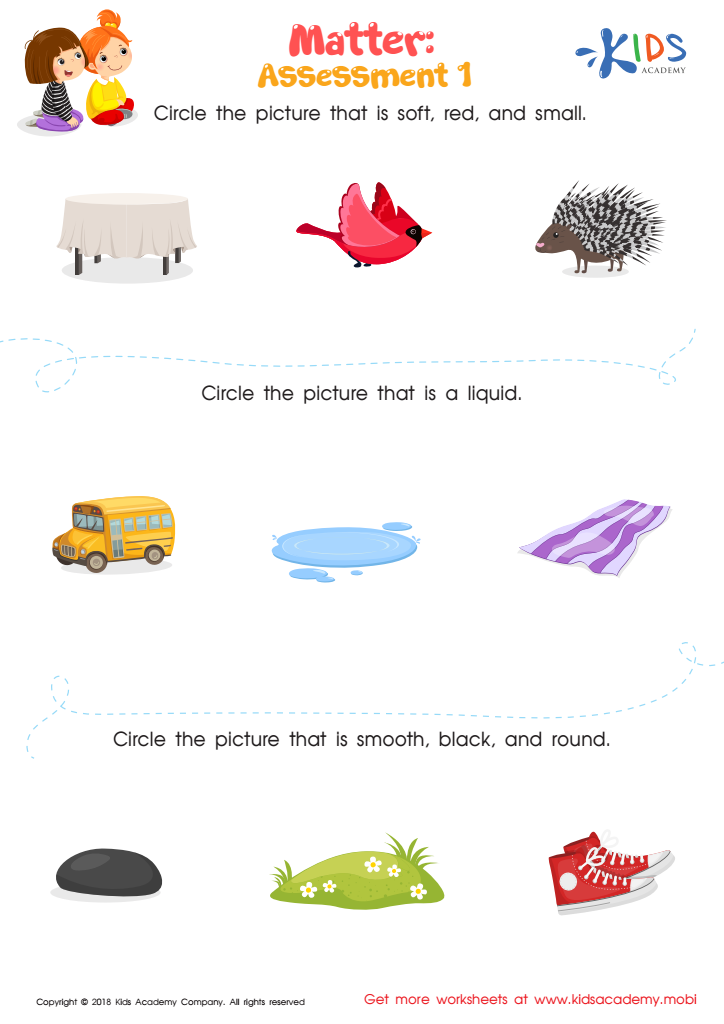
Matter: Assessment 1 Worksheet
 Assign to My Students
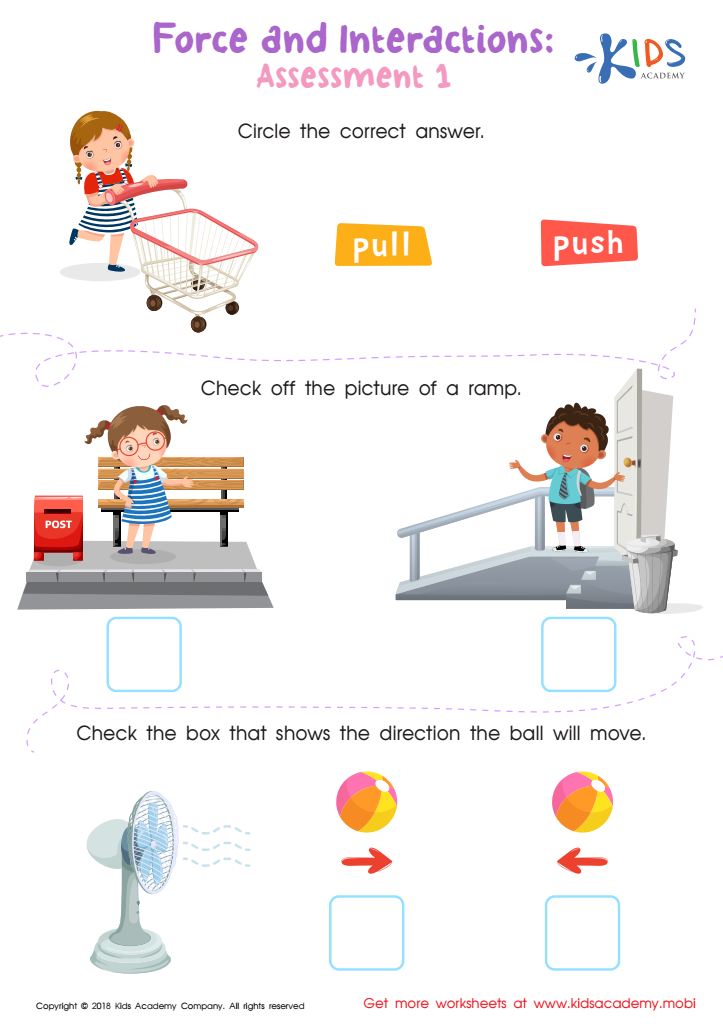
Force and Interactions: Assessment 1 Worksheet
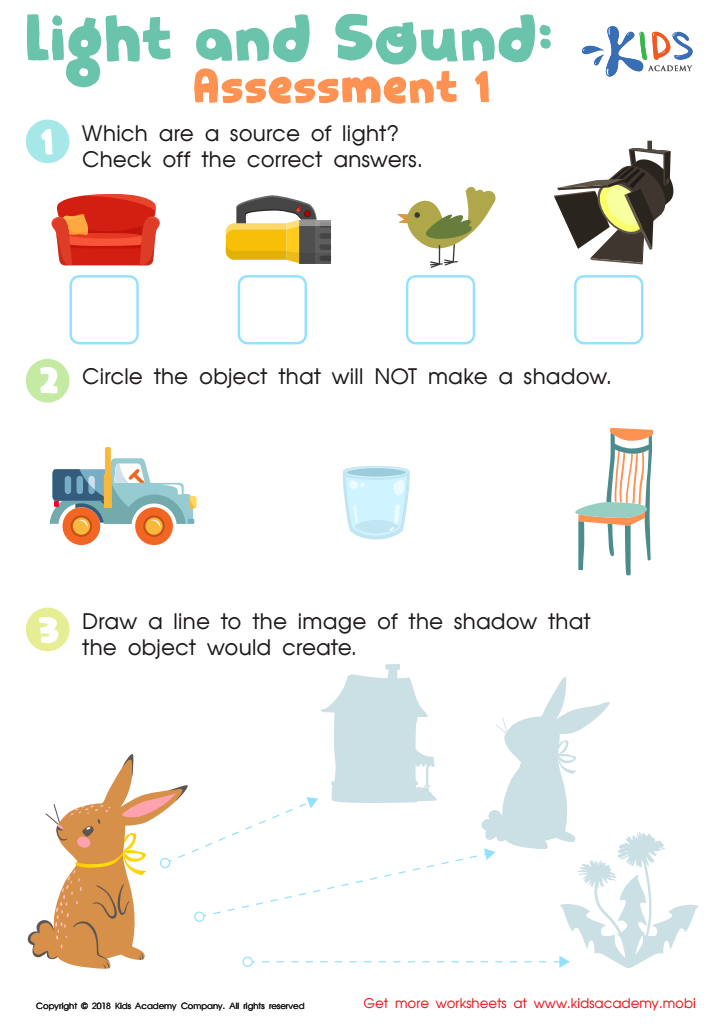
Light and Sound: Assessment 1 Worksheet
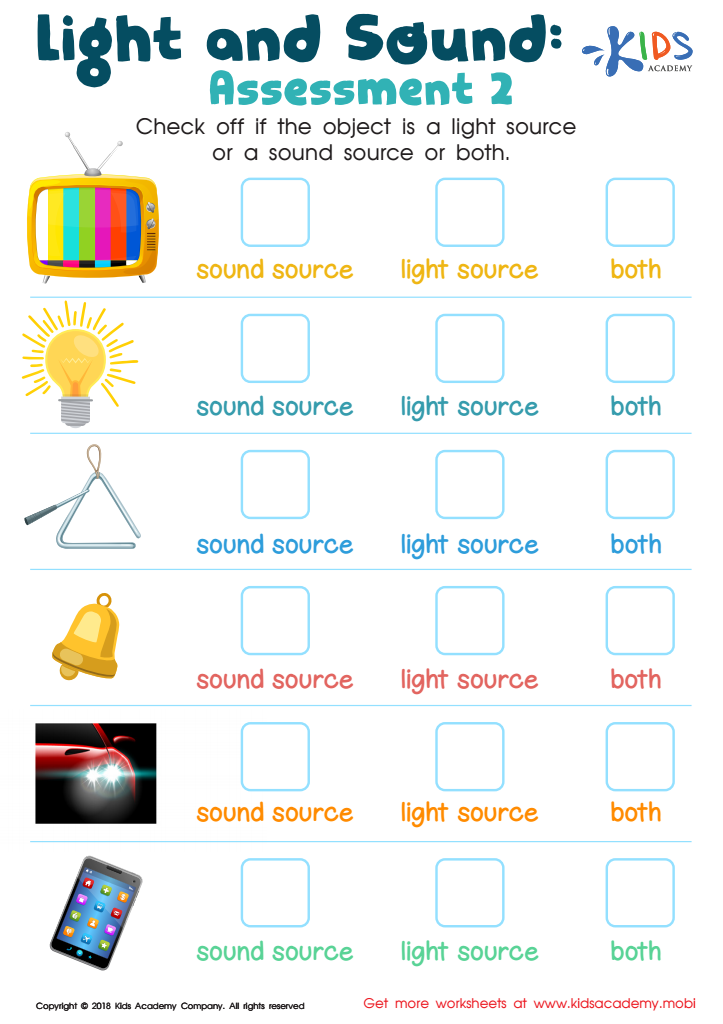
Light and Sound: Assessment 2 Worksheet
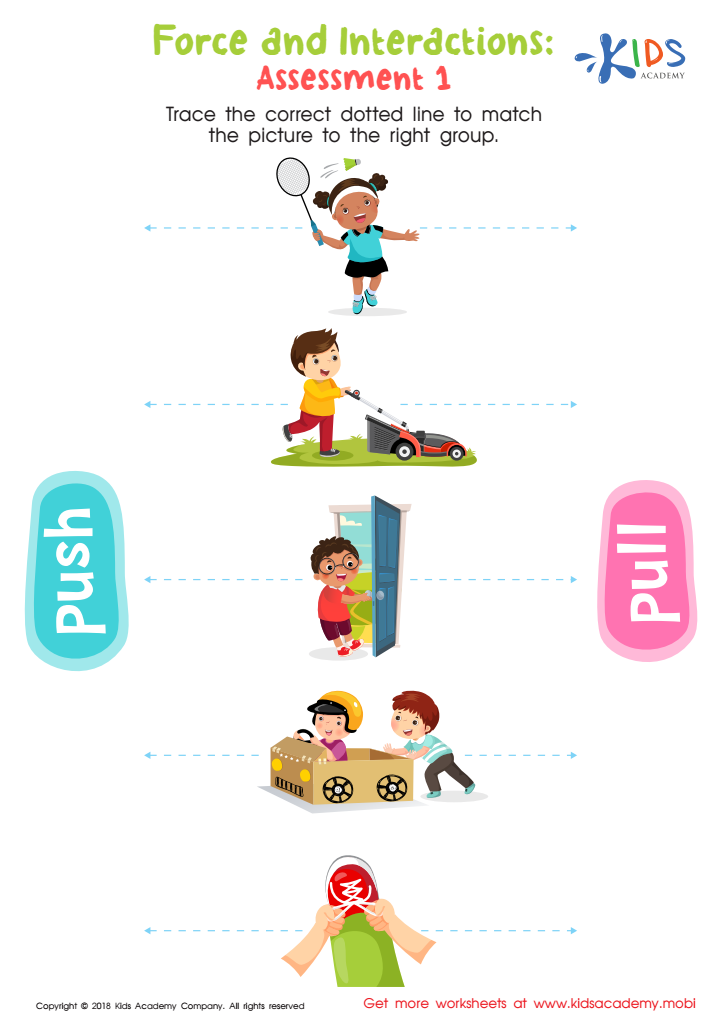
Force and Interactions: Assessment 2 Worksheet
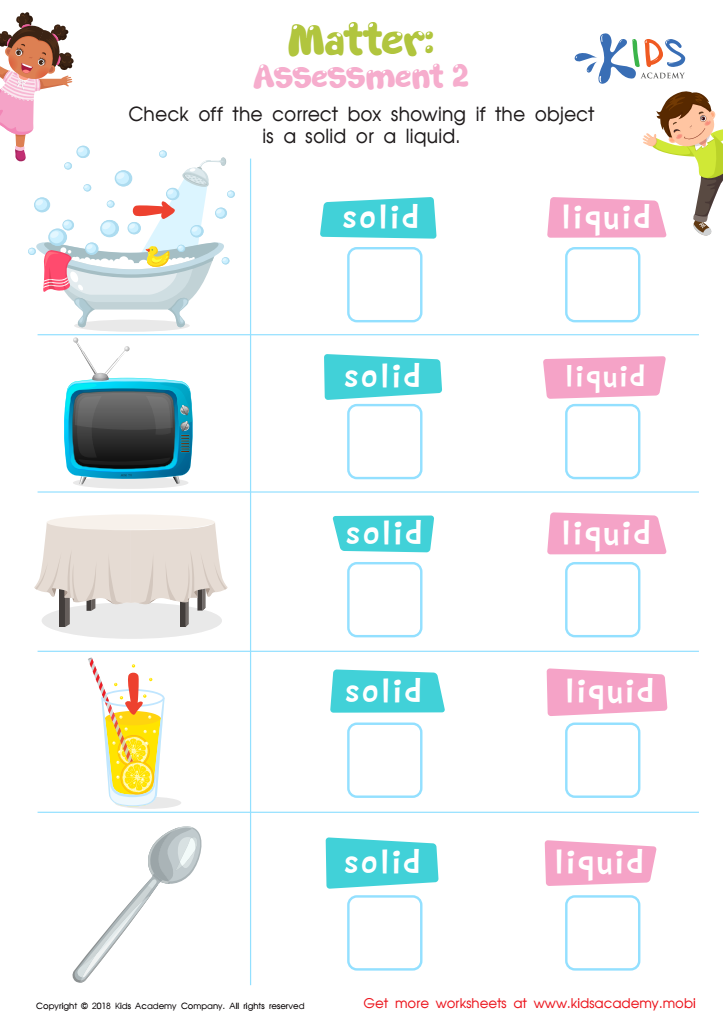
Matter: Assessment 2 Worksheet



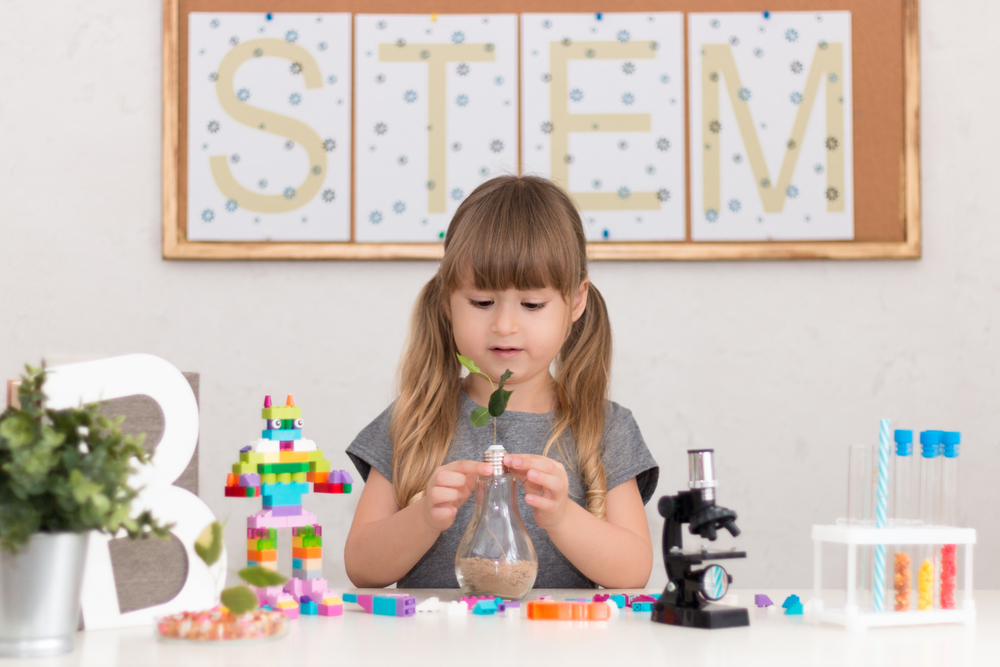




Parents and teachers should care about physical science activities for children aged 3-8 because these foundational experiences significantly impact a child's development and ignite their curiosity about the world. Engaging in physical science activities helps young learners observe, experiment, and understand essential concepts such as matter, energy, and the principles of motion. These hands-on experiences foster critical thinking and problem-solving skills, essential for academic success.
Additionally, early exposure to science promotes a lifelong interest in STEM (science, technology, engineering, and mathematics) fields. By making science fun and accessible through age-appropriate activities, children are more likely to maintain enthusiasm and motivation for learning.
Moreover, these activities often involve collaboration and communication skills as children work in groups, promoting social development. Encouraging exploration and questioning enables them to develop confidence in their abilities. Teachers and parents can guide discussions during these activities, helping children articulate their thoughts, predictions, and observations, further enhancing their cognitive skills.
In summary, engaging in physical science activities enriches children's understanding of the world, cultivates essential skills, and nurtures a love for learning, making it imperative for parents and teachers to prioritize these experiences.








