Reading Non-Fiction Worksheets Activities With Answers for Ages 5-8
4 filtered results
-
From - To
Discover engaging "Reading Non-Fiction Worksheets Activities with Answers" designed for ages 5-8. Our collection of printable worksheets helps young learners develop essential reading skills while exploring fascinating nonfiction topics. Each activity focuses on comprehension, vocabulary, and critical thinking, encouraging kids to ask questions and make connections. With an easy-to-use answer key, educators and parents can effortlessly assess progress and understanding. These fun and educational resources foster a love for reading while expanding knowledge about the world. Perfect for classroom use or at-home learning, our worksheets offer an interactive way to inspire curiosity in young minds. Get started today and watch your child thrive!
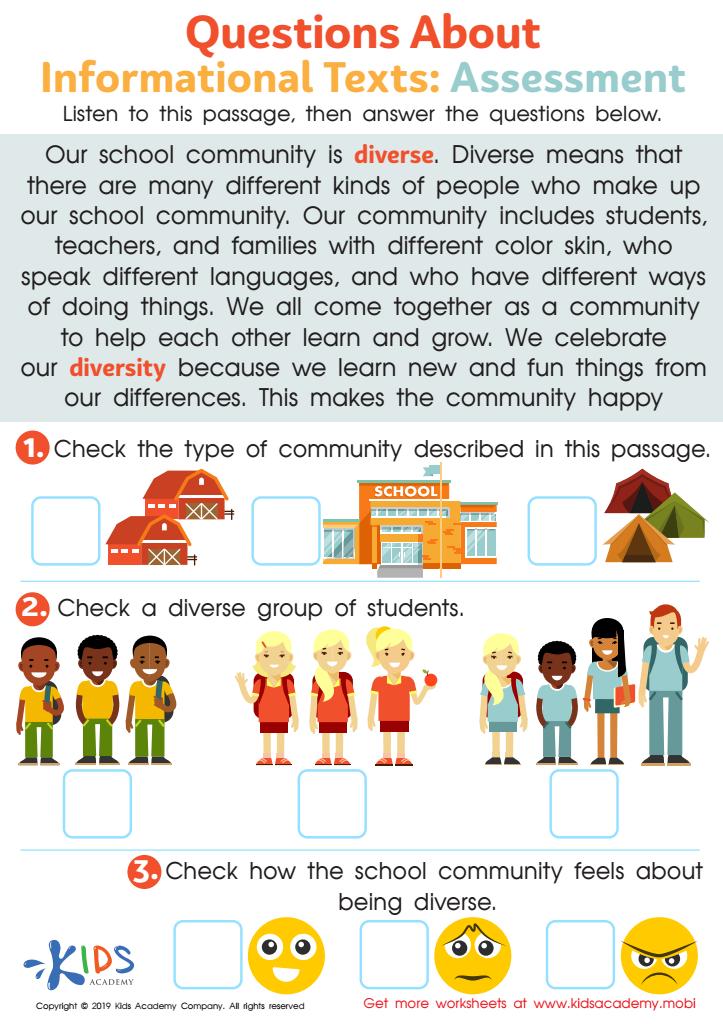
Questions About Informational Texts: Assessment 1 Worksheet
 Assign to My Students
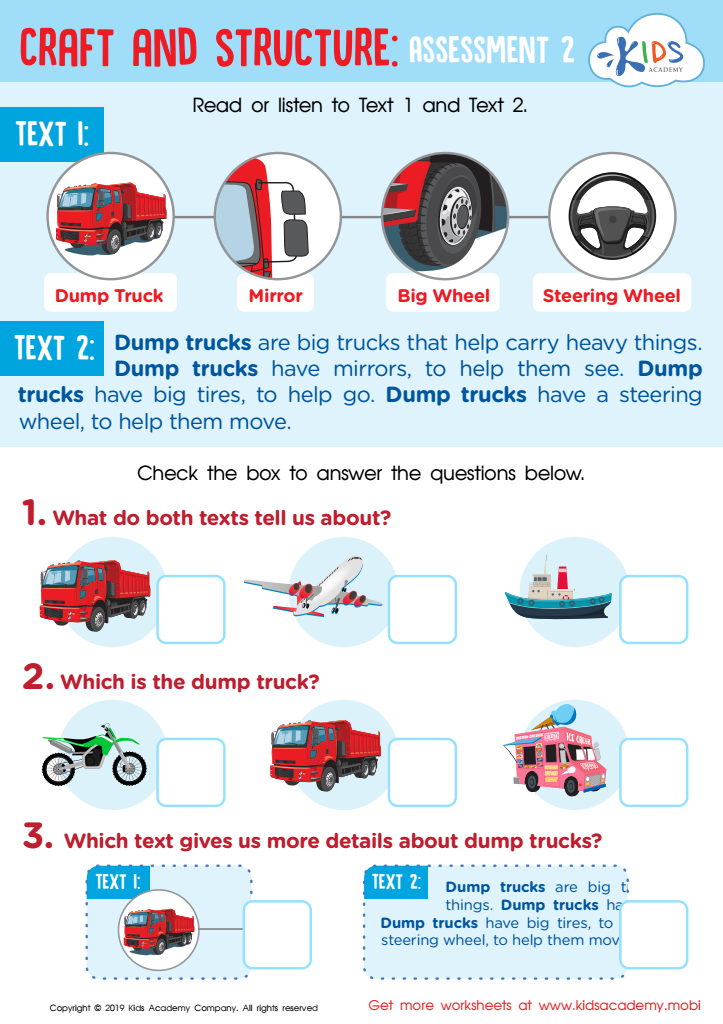
Craft and Structure: Assessment 2 Worksheet
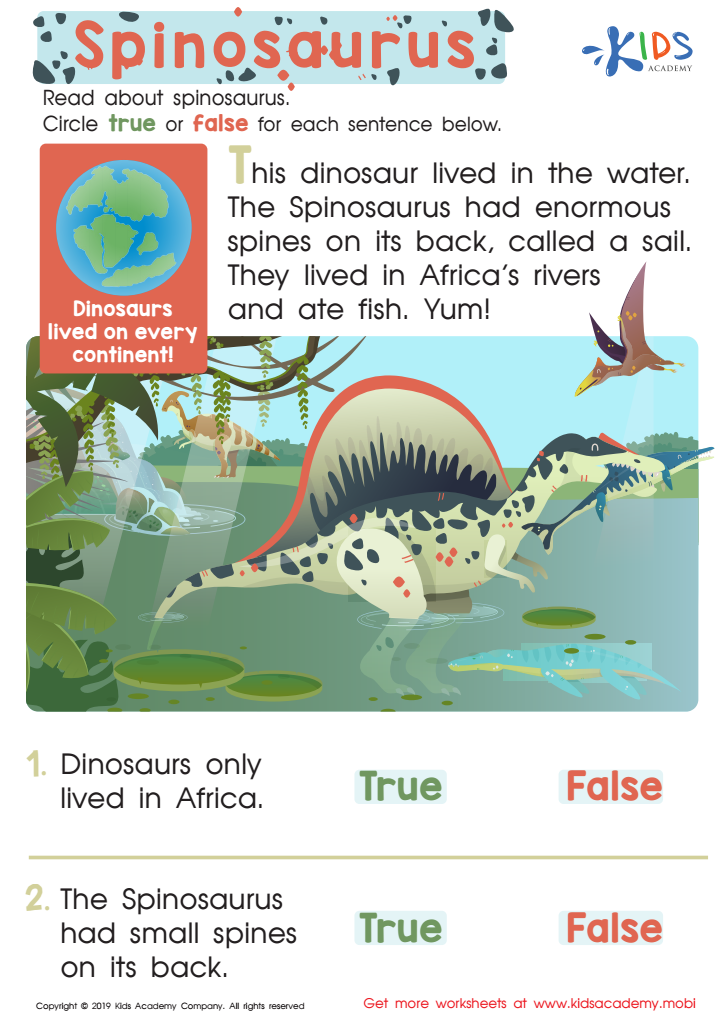
Spinosaurus Assessment Worksheet
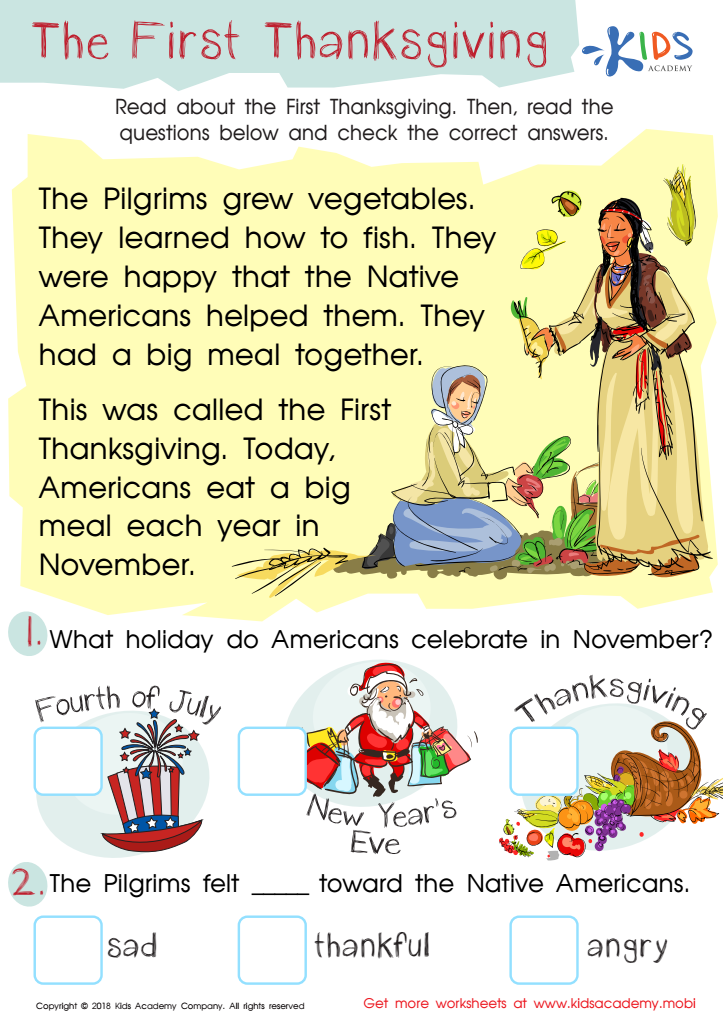
Assessment: First Thanksgiving Worksheet








Parents and teachers should recognize the importance of reading non-fiction activities for ages 5-8 as these resources play a crucial role in developing children's literacy and critical thinking skills. Non-fiction texts introduce young learners to real-world concepts, broaden their knowledge base, and cultivate curiosity about their environment. Engaging with facts, figures, and various topics encourages children to ask questions, fostering a love for learning.
Moreover, structured activities with answers enhance comprehension and retention, allowing kids to actively engage with the material. Through these activities, children can practice summarizing, identifying key ideas, and making connections—all essential literacy skills. It also provides opportunities for parents and teachers to assess children's understanding and discuss the content, reinforcing learning.
As children grow, the ability to read and understand non-fiction becomes increasingly vital, as it forms the foundation for academic success across subjects like science, history, and math. Supporting these activities nurtures a sense of independence in learning and reinforces critical thinking. Ultimately, non-fiction reading activities are invaluable tools that empower children, equipping them with the knowledge and skills they need to navigate and understand the world around them. This early exposure shapes confident and informed learners.








