Easy Phonics Worksheets Activities With Answers for Ages 4-7
4 filtered results
-
From - To
Welcome to our collection of Easy Phonics Worksheets Activities designed specifically for children aged 4-7! Our engaging, user-friendly worksheets focus on essential phonics skills, helping young learners develop crucial reading and writing abilities. With a variety of fun activities, students will enjoy practicing letter sounds, blending, and word recognition. Each worksheet includes answer keys, making it easy for parents and educators to monitor progress and provide support. These resources are perfect for enhancing classroom learning or supplementing at-home education. Encourage your child's literacy journey today with our thoughtfully designed activities that inspire confidence and foster a love for reading!
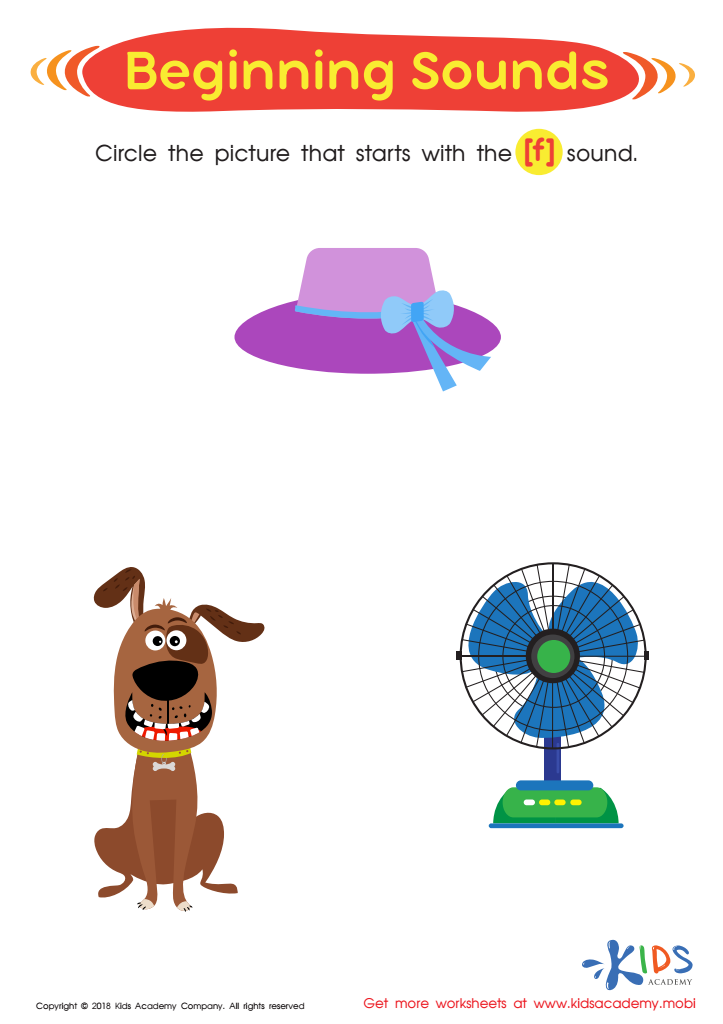
Beginning Sounds Assessment Printable
 Assign to My Students
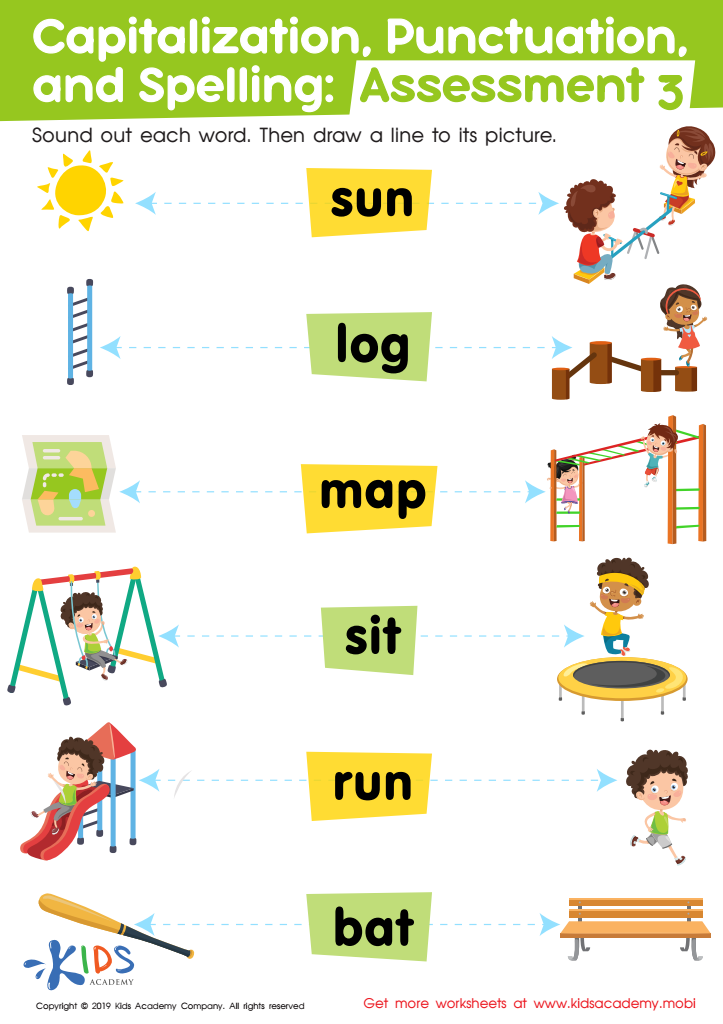
Capitalization. Punctuation. Spelling. Assessment 3 Worksheet
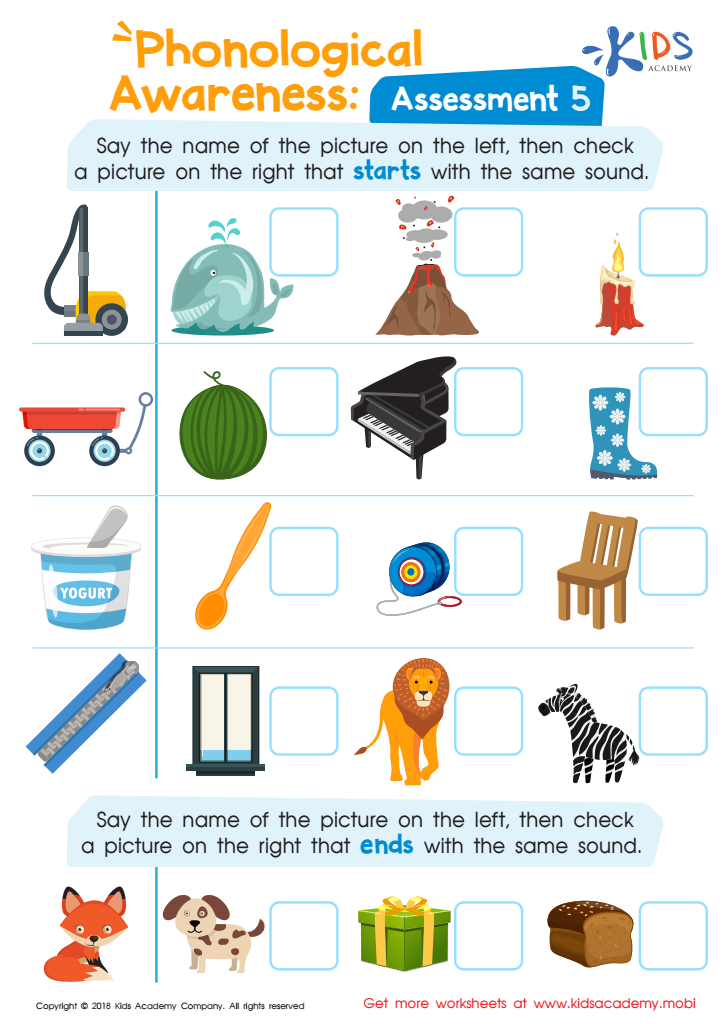
Phonological Awareness: Assessment 5 Worksheet
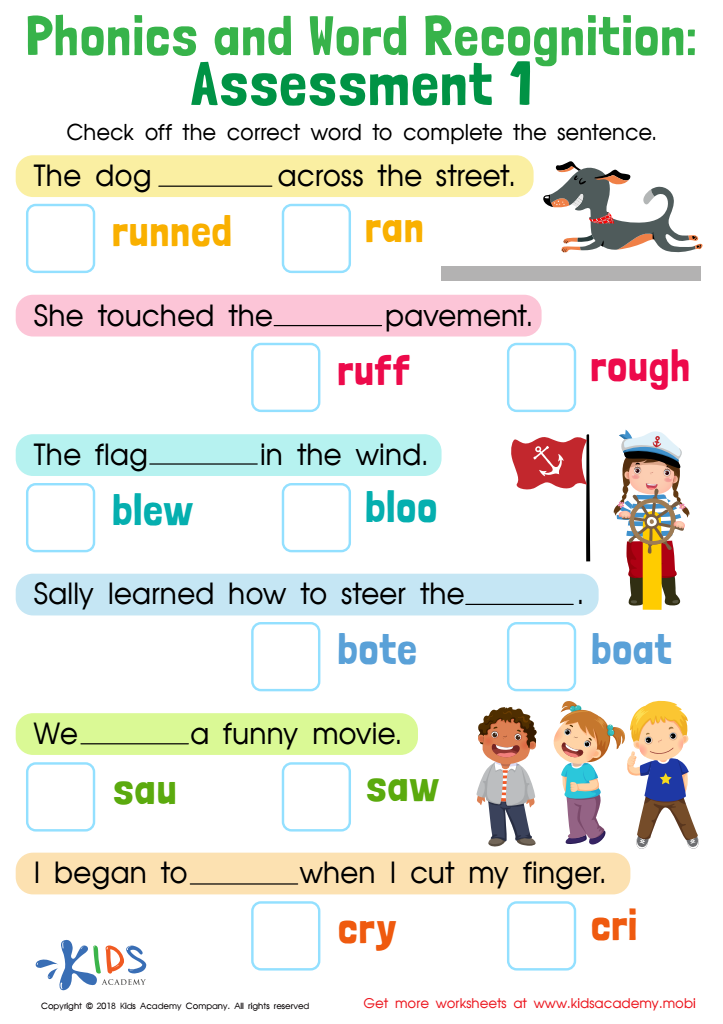
Phonics and Word Recognition: Assessment 1 Worksheet








Easy Phonics Activities With Answers for Ages 4-7 are crucial tools for parents and teachers who want to support early literacy development in young learners. Phonics is foundational for reading, enabling children to decode words and comprehend text more effectively. By engaging with structured phonics activities, children build essential skills in letter-sound relationships that aid in reading fluency.
Activities designed specifically for this age group are not only age-appropriate but also engaging and enjoyable, making learning fun. Incorporating games, songs, and hands-on activities can capture children's attention, fostering a positive association with reading and learning.
Furthermore, having answers provides immediate feedback, allowing both parents and teachers to monitor progress and identify areas of difficulty. This can lead to tailored instruction, ensuring each child's individual needs are met.
Investing time in Easy Phonics Activities helps promote a love for reading from an early age, empowering children with the skills they need to succeed academically. Early phonics proficiency correlates to long-term literacy success, making these activities vital for every child’s educational journey. By nurturing these skills now, parents and teachers pave the way for lifelong readers and learners.








