Middle Vowel Worksheets for Ages 3-8
4 filtered results
-
From - To
Discover our engaging Middle Vowel Worksheets designed specifically for children aged 3-8! These interactive and colorful resources help young learners identify and master middle vowel sounds, a crucial building block for developing reading and writing skills. Each worksheet features fun activities that stimulate creativity and keep kids motivated while learning. With various exercises such as fill-in-the-blanks, word matching, and vowel identification, your child will gain confidence in their literacy skills. These worksheets are perfect for both classroom settings and at-home learning. Explore our collection today and support your child's journey to becoming a proficient reader!
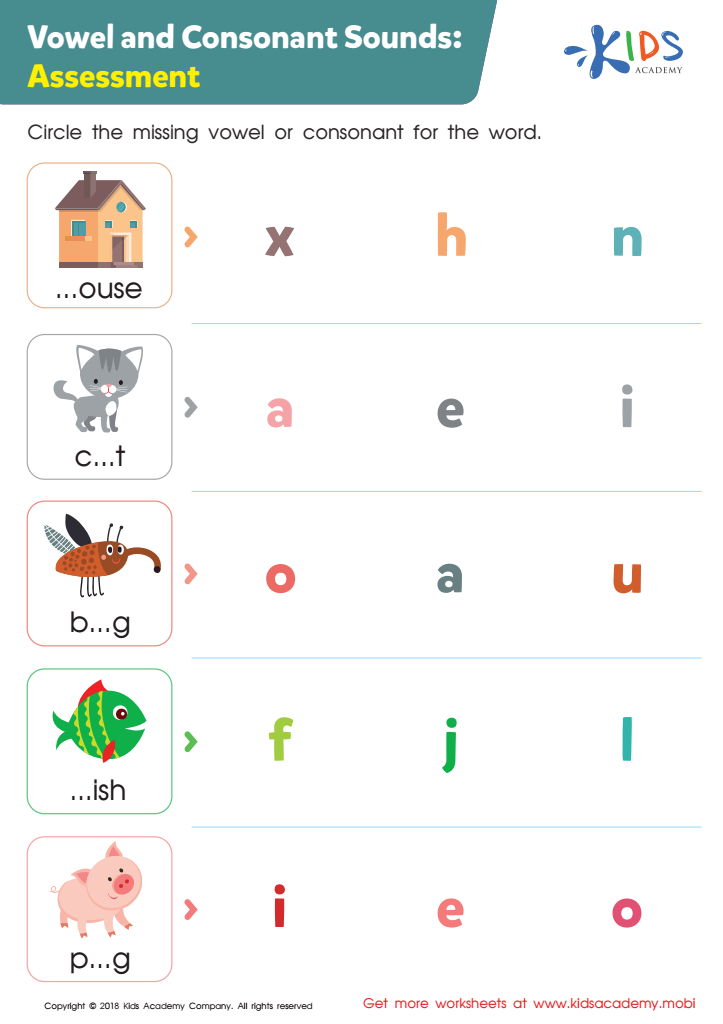
Vowel and Consonant Sounds: Assessment Worksheet
 Assign to My Students
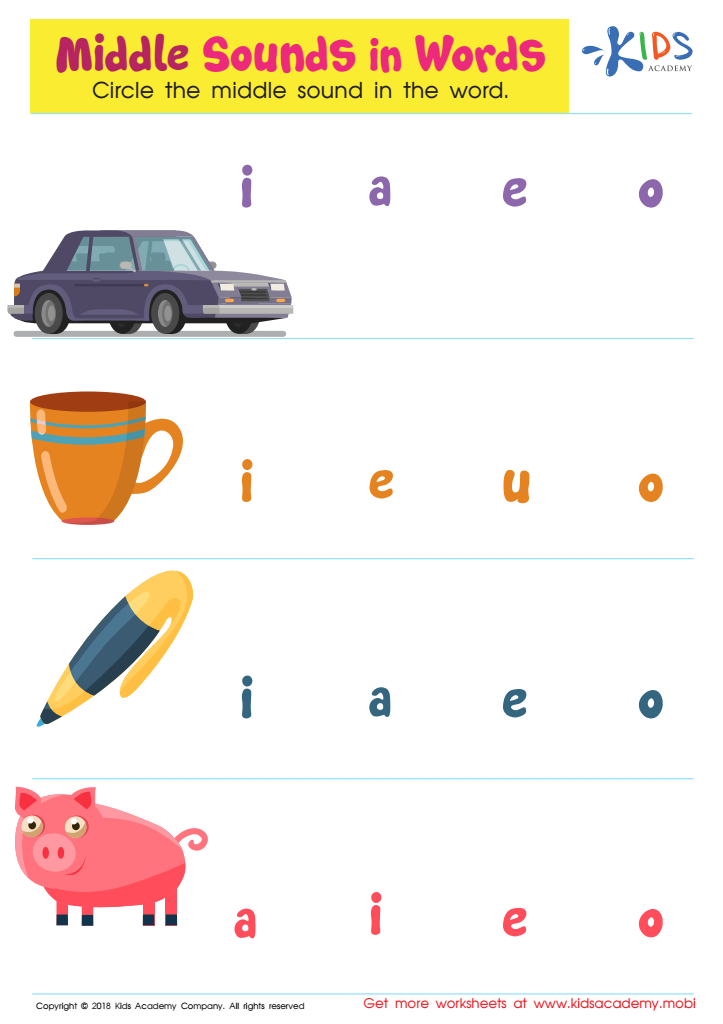
Middle Sounds in Words Worksheet
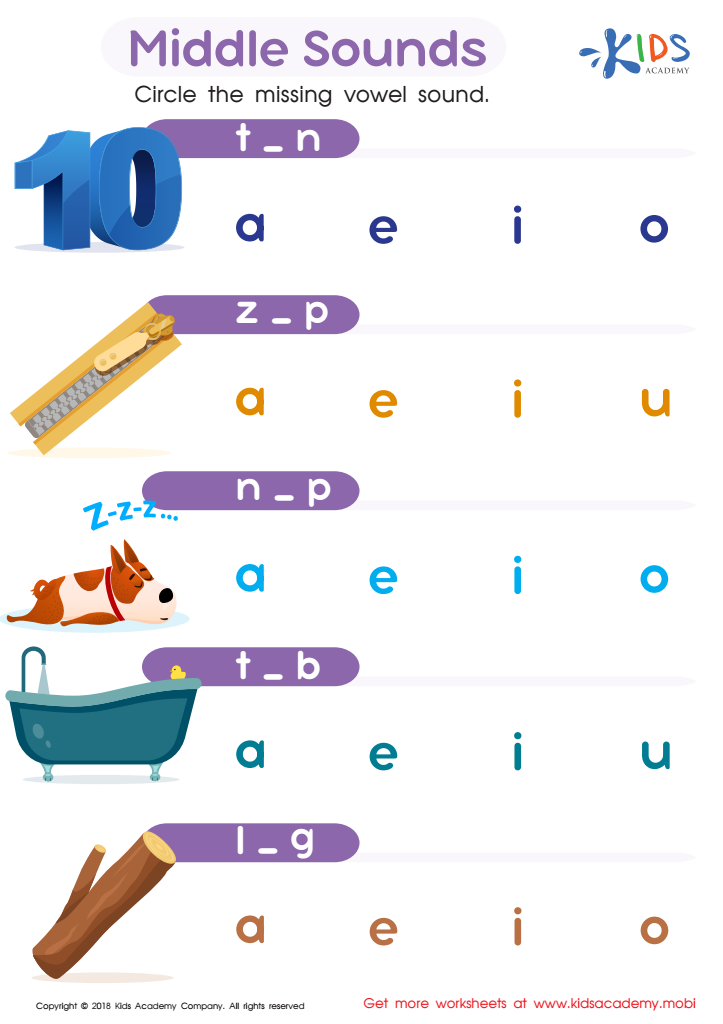
Middle Sounds Worksheet
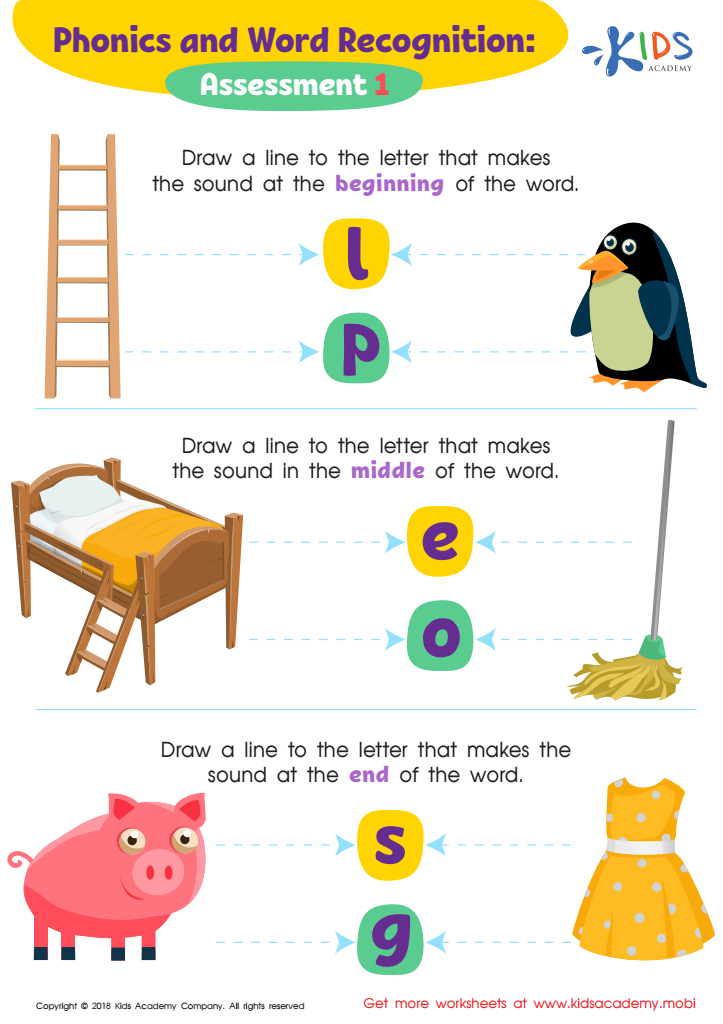
Phonics and Word Recognition: Assessment 1 ELA Worksheet



Understanding middle vowels is crucial for children ages 3-8 as they form the backbone of early reading and writing skills. The middle vowel sounds, such as those in words like "cat," "bed," and "wig," are pivotal components of phonemic awareness. This is the ability to hear, identify, and manipulate sounds in spoken words, allowing children to decode and spell effectively.
Adequate knowledge of middle vowels helps children recognize word patterns, enhancing their reading fluency and comprehension. For parents and teachers, fostering this understanding plays a significant role in creating a solid literacy foundation. Activities like rhyming games, phonics lessons, and interactive storytelling can make learning these sounds enjoyable.
Encouraging children to practice middle vowel sounds allows them to develop greater confidence in their reading abilities, which can lead to increased motivation and engagement in literacy activities. Moreover, understanding middle vowels helps in bridging the gap to more complex phonetic concepts as children advance, ensuring they are better prepared for their educational journey. Ultimately, prioritizing middle vowels can significantly impact a child's overall academic success and love for learning.