Numbers up to 100 Worksheets for Ages 3-8 - Page 3
50 filtered results
-
From - To
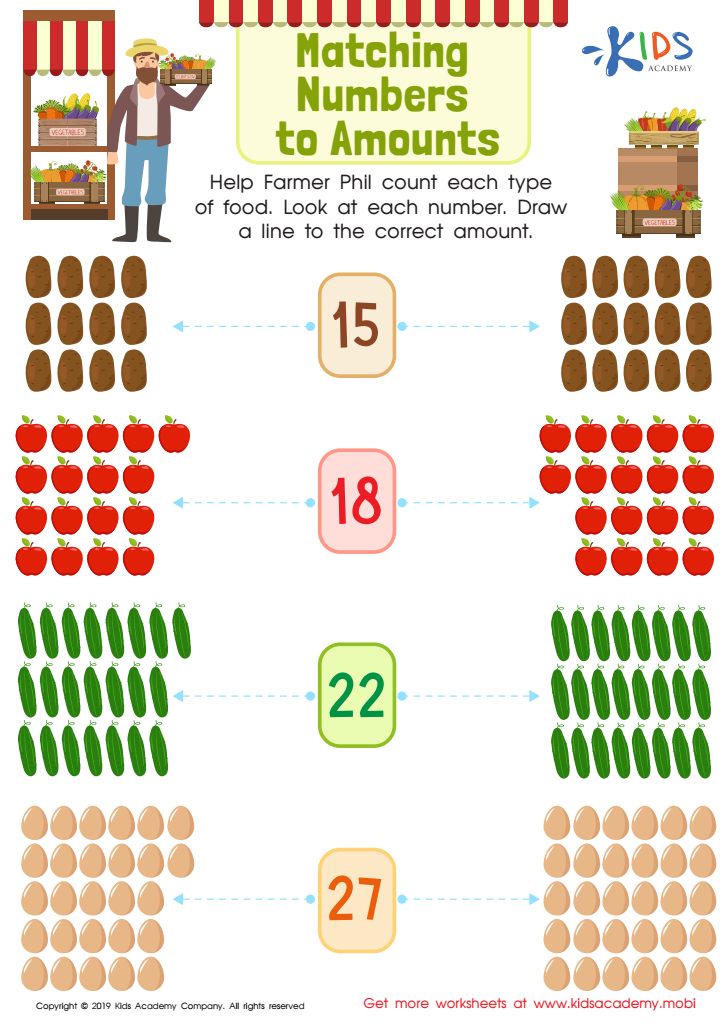
Matching Numbers to Amounts Worksheet
 Assign to My Students

Counting on the City Skyline: Dot-to-Dot Worksheet




%20(1).jpg)



Understanding numbers up to 100 is foundational for children ages 3-8, as it sets the stage for their future learning in mathematics and critical thinking. At this age, children develop cognitive skills that enable them to recognize patterns, quantities, and relationships, which are essential for everyday problem-solving and decision-making.
Parents and teachers should care about this critical period because early exposure to numbers enhances a child's ability to engage with math concepts in a meaningful way. Learning numbers promotes counting skills, which are vital for tasks such as measuring, sorting, and comparing objects. Mastery of numbers up to 100 builds confidence and creates a solid knowledge base for more complex mathematical ideas, such as addition, subtraction, and functionality in real-life situations.
Additionally, fostering a positive attitude towards mathematics during these formative years can help combat common anxieties associated with math later on. By integrating play, interactive activities, and engaging lessons focused on numbers, caregivers can nurture a child's curiosity and desire to explore math, leading to better performance in school and the development of a lifelong appreciation for the subject. Overall, caring about numbers in early education helps support a well-rounded and confident learner.