Reading Non-Fiction Worksheets for Ages 3-9 - Page 5
97 filtered results
-
From - To
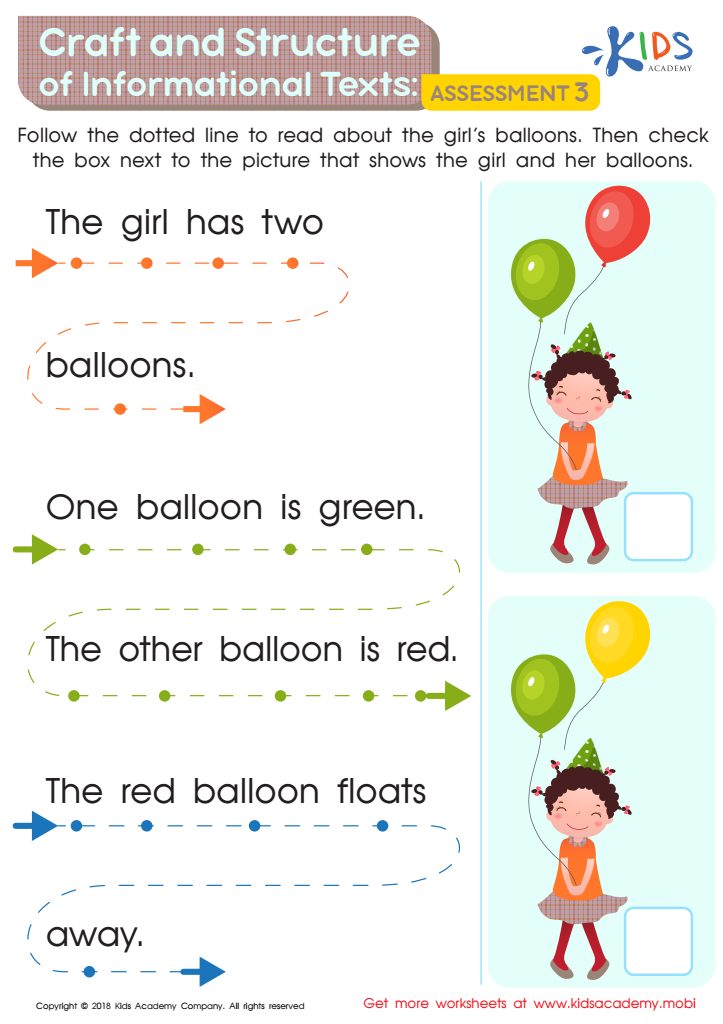
Craft and Structure of Informational Texts: Assessment 3 Worksheet
 Assign to My Students







Parents and teachers should care about reading non-fiction to children aged 3-9 because it builds critical foundational skills. Introducing non-fiction at an early age supports the development of vocabulary and comprehension by exposing children to specific terminology and varied sentence structures not often found in fiction. Through non-fiction, children learn about the vast world around them, sparking curiosity and expanding their knowledge.
Non-fiction presents facts and real-life concepts, promoting cognitive skills such as analytical thinking and understanding cause and effect. These books often have features like charts, diagrams, and photographs, which help children learn to extract information visually and textually. This type of reading nurtures a child's ability to process and understand informational text, a skill essential for success in academic settings and future careers.
By reading non-fiction, children also develop interests in various subjects such as science, history, and geography, which can foster lifelong learning and passion for knowledge. Introducing these texts early helps children see reading as a valuable tool for understanding the world, rather than just for entertainment.
Moreover, engaging with non-fiction helps build empathy and an informed perspective as children learn about different cultures, communities, and environments. Therefore, instilling an early appreciation for non-fiction nurtures well-rounded, knowledgeable, and curious learners.








