Middle Vowel Worksheets for Ages 4-7
4 filtered results
-
From - To
Discover our engaging Middle Vowel Worksheets designed specifically for children ages 4-7! These fun and interactive activities help young learners master middle vowel sounds through a variety of exercises, including fill-in-the-blank and word matching. Each worksheet encourages phonetic awareness and reinforces essential reading skills, ensuring students build a strong foundation in literacy. Bright illustrations and age-appropriate challenges keep kids motivated and excited about learning. Perfect for classroom or home use, our worksheets make practicing middle vowels enjoyable. Download now and watch your child's confidence soar as they excel in their reading journey! Ideal for parents and teachers alike.
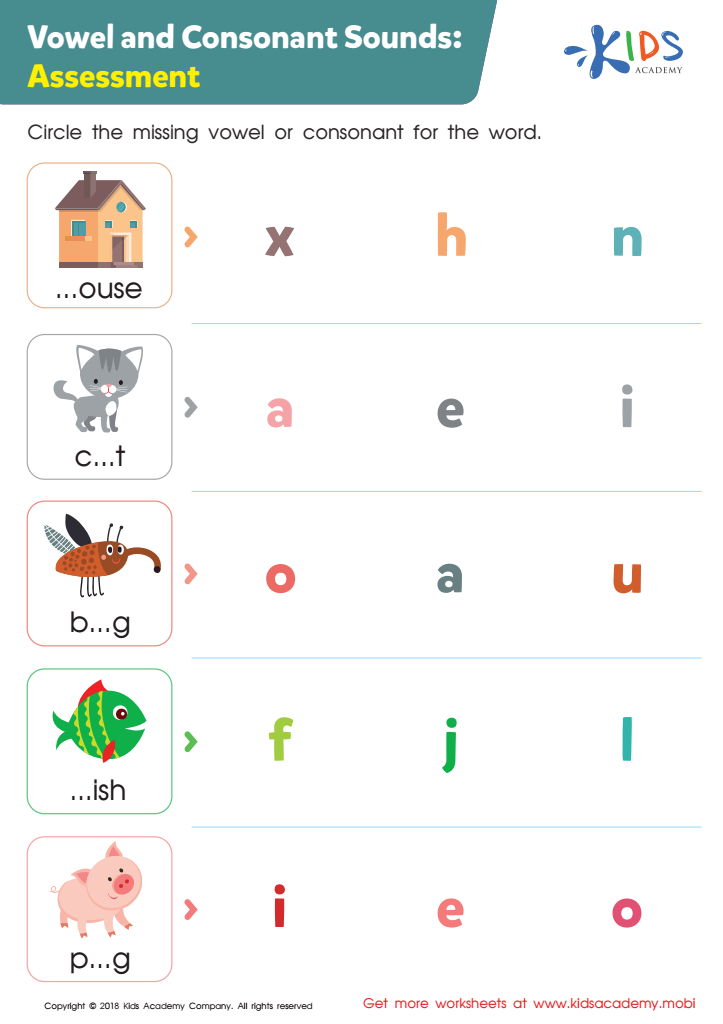
Vowel and Consonant Sounds: Assessment Worksheet
 Assign to My Students
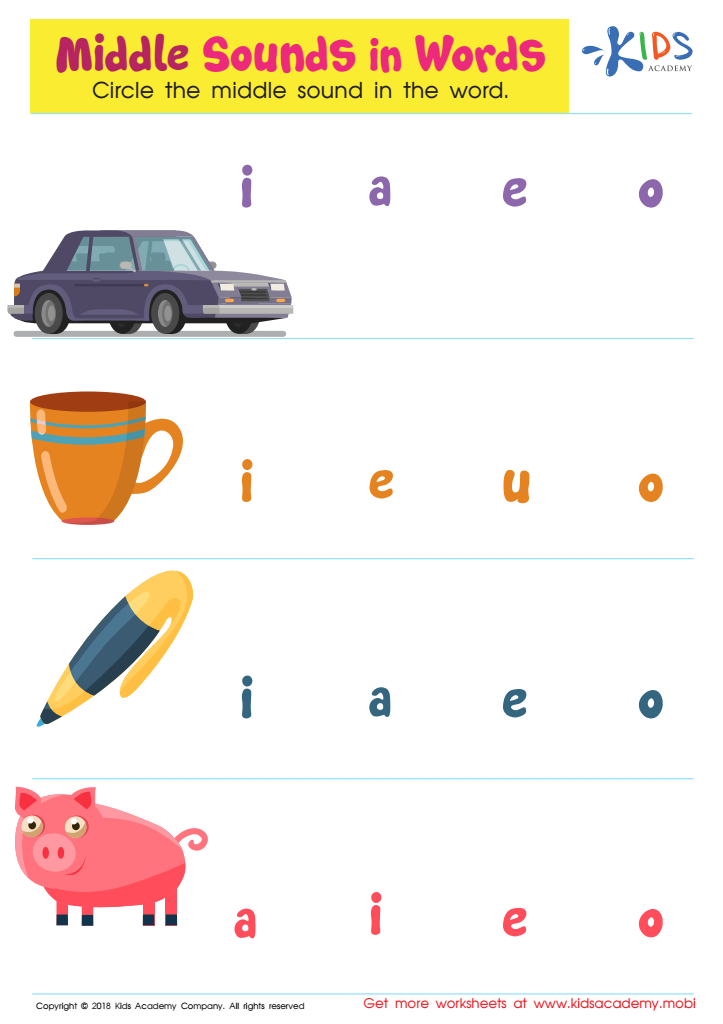
Middle Sounds in Words Worksheet
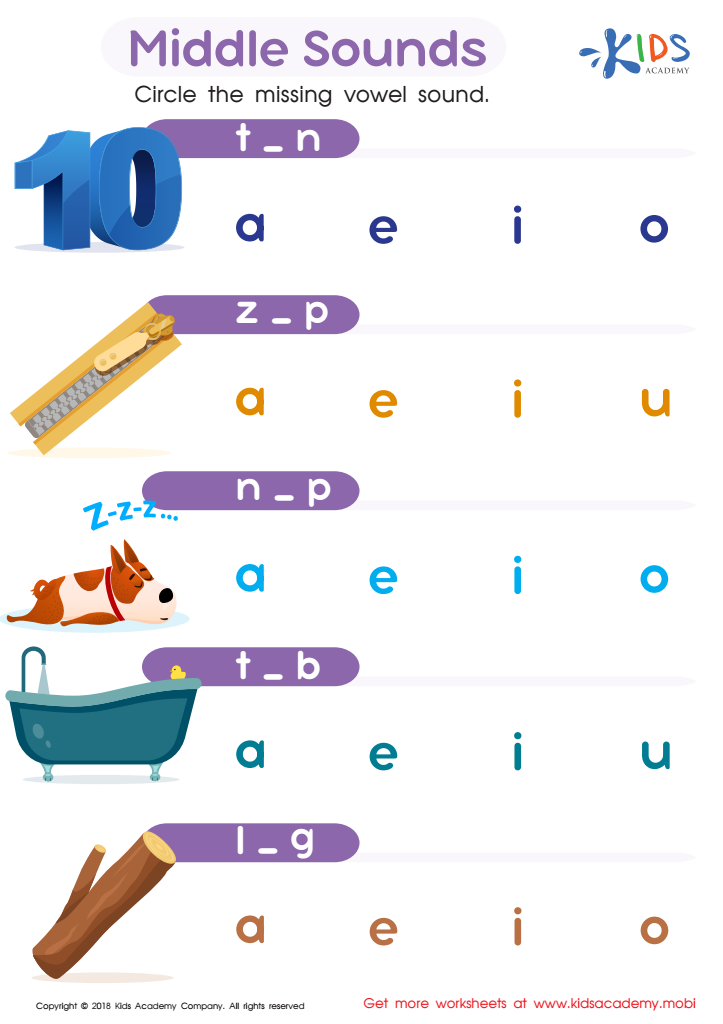
Middle Sounds Worksheet
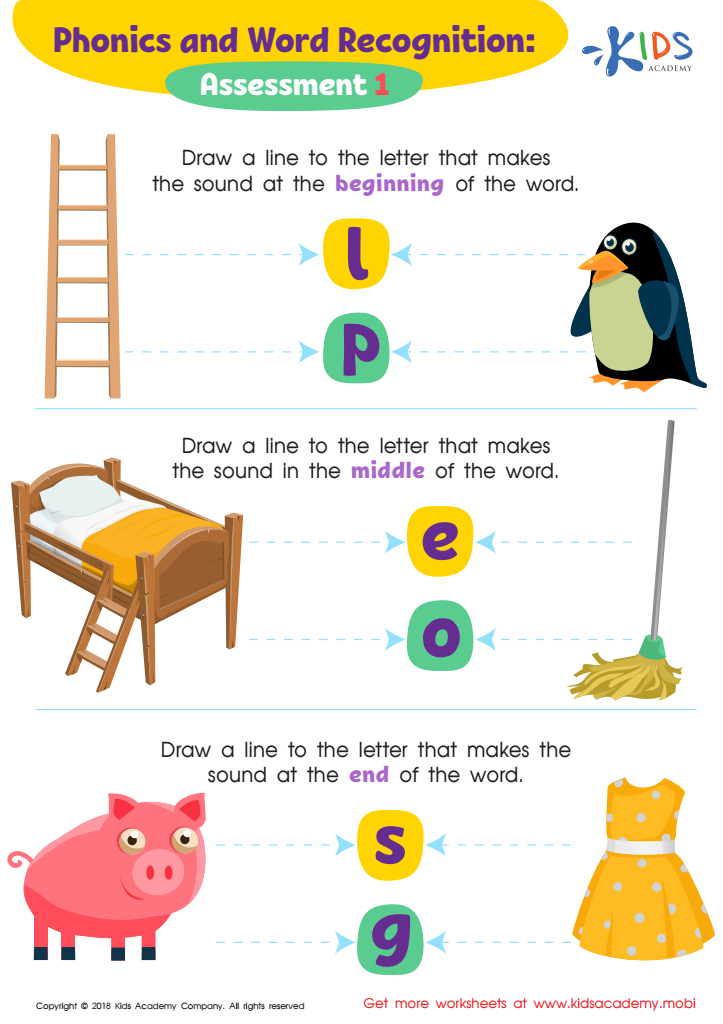
Phonics and Word Recognition: Assessment 1 ELA Worksheet



Middle vowels are crucial for the literacy development of children ages 4-7 because they form the backbone of phonics and word decoding. At this age, children are transitioning from recognizing letters and sounds to understanding how they work together to form words. Middle vowels, which represent the heart of many three-letter words and more complex vocabulary, are essential for building a solid reading foundation.
Parents and teachers should care about middle vowels because their mastery affects children’s ability to read fluently and spell correctly. As children start to blend sounds and recognize patterns, understanding middle vowels enables them to decode new words and improve their reading comprehension skills. Additionally, a strong grasp of middle vowels enhances verbal communication, helping children articulate thoughts more clearly.
Engaging in games, songs, and activities that focus on these sounds can make learning enjoyable and impactful. By prioritizing middle vowel instruction, parents and teachers can foster a love for reading, nurture critical thinking, and ultimately lay the groundwork for lifelong learning. Investing in this aspect of literacy can lead to confident readers who not only excel academically but also embrace literature and storytelling as vital components of their lives.