Upper & Lowercase Letters Worksheets for Ages 4-7 - Page 3
50 filtered results
-
From - To
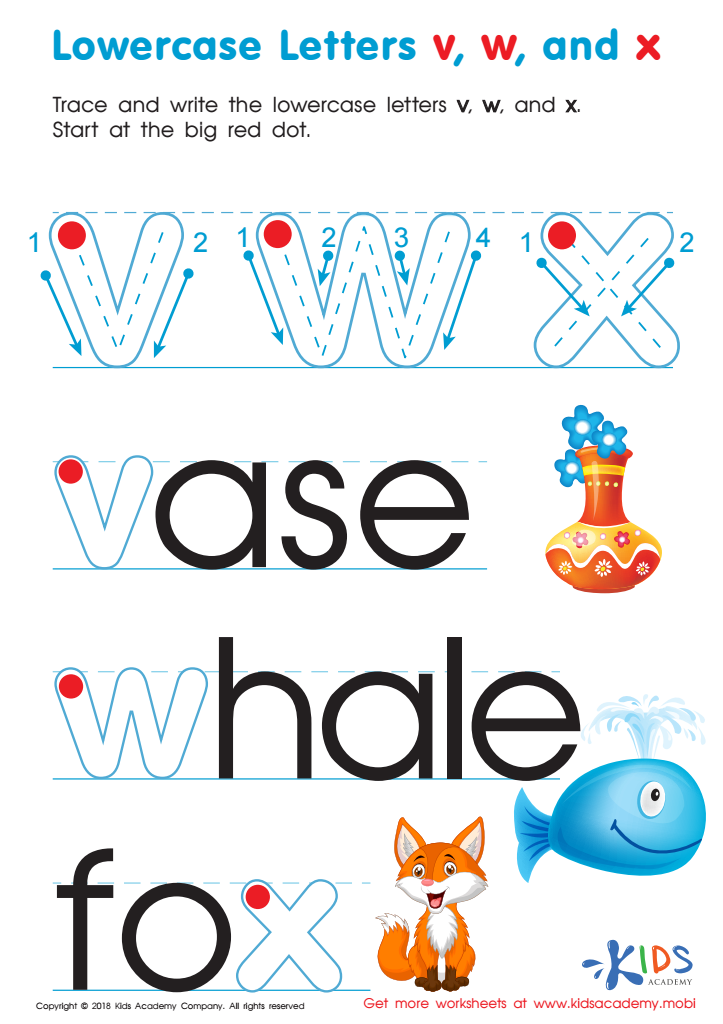
Lowercase Letters v w x Worksheet
 Assign to My Students

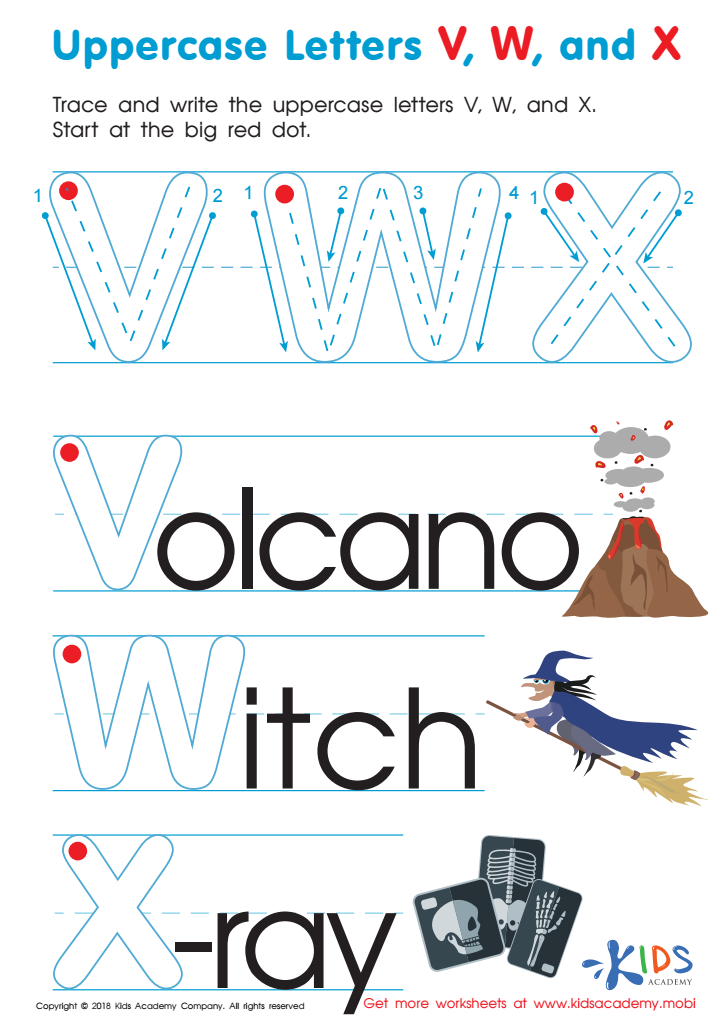
Uppercase Letters V, W, and X Worksheet






Parents and teachers should prioritize teaching uppercase and lowercase letters to children ages 4-7 because these are foundational skills for early literacy and future academic success. At this important developmental stage, children are typically becoming more aware of text and its functions. Teaching both letter forms helps them understand the full scope of the alphabet, which is crucial for reading and writing proficiency.
Uppercase letters are generally easier for young children to recognize and write due to their uniform height and straight lines. They serve as an entry point into the alphabet, simplifying the initial writing process. On the other hand, lowercase letters are abundant in written language. Mastering these helps children in reading because most printed and written text predominantly features lowercase letters.
Moreover, understanding that there are two forms of each letter enhances cognitive flexibility and phonological awareness. This dual knowledge aids in recognizing words, comprehending text more fluently, and correctly practicing grammar conventions, such as using proper nouns and the start of sentences.
By fostering this skill during ages 4-7, teachers and parents lay a solid foundation for their child's educational journey, promoting better language development, higher confidence, and a lifelong love for reading and writing.







