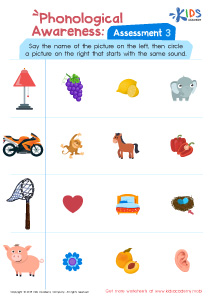
Middle Sounds Worksheets for Ages 4-8
4 filtered results
-
From - To
Enhance your child's phonemic awareness with our engaging Middle Sounds Worksheets for ages 4-8. Designed to support early literacy skills, these resources focus on identifying and practicing middle sounds in words, helping young learners improve their reading and writing capabilities. Featuring colorful illustrations and age-appropriate activities, our worksheets encourage active participation and make learning fun. Each printable includes a variety of exercises, from matching sounds to filling in the blanks, promoting critical thinking and sound recognition. Perfect for homeschoolers or classroom settings, our middle sounds worksheets are a valuable tool to boost confidence in budding readers and reinforce crucial phonetic concepts.
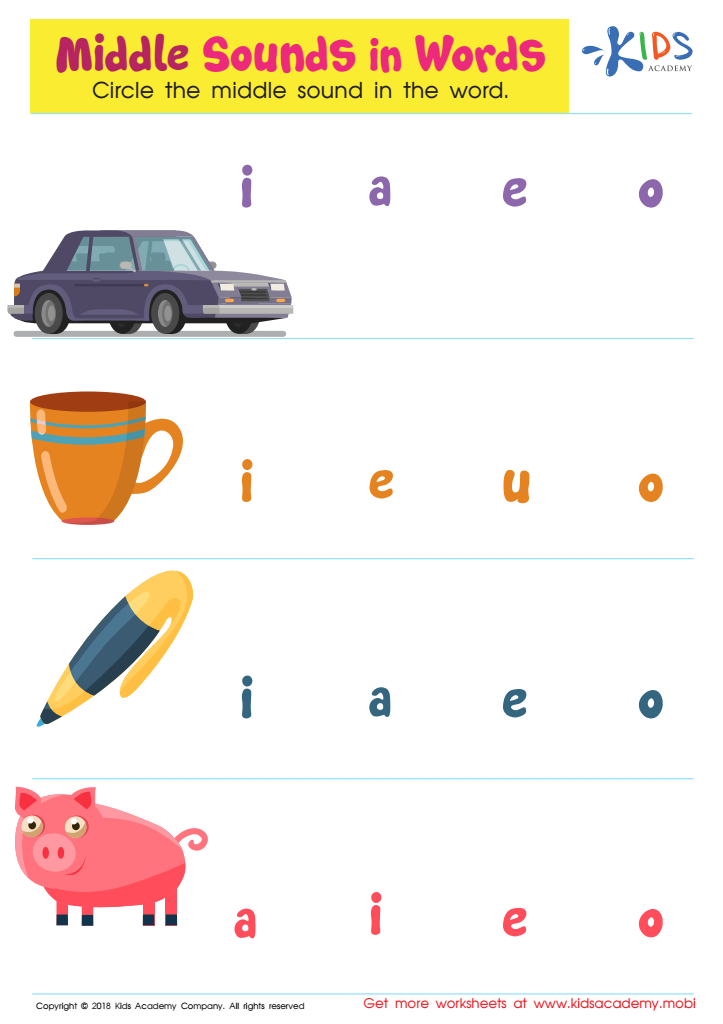
Middle Sounds in Words Worksheet
 Assign to My Students
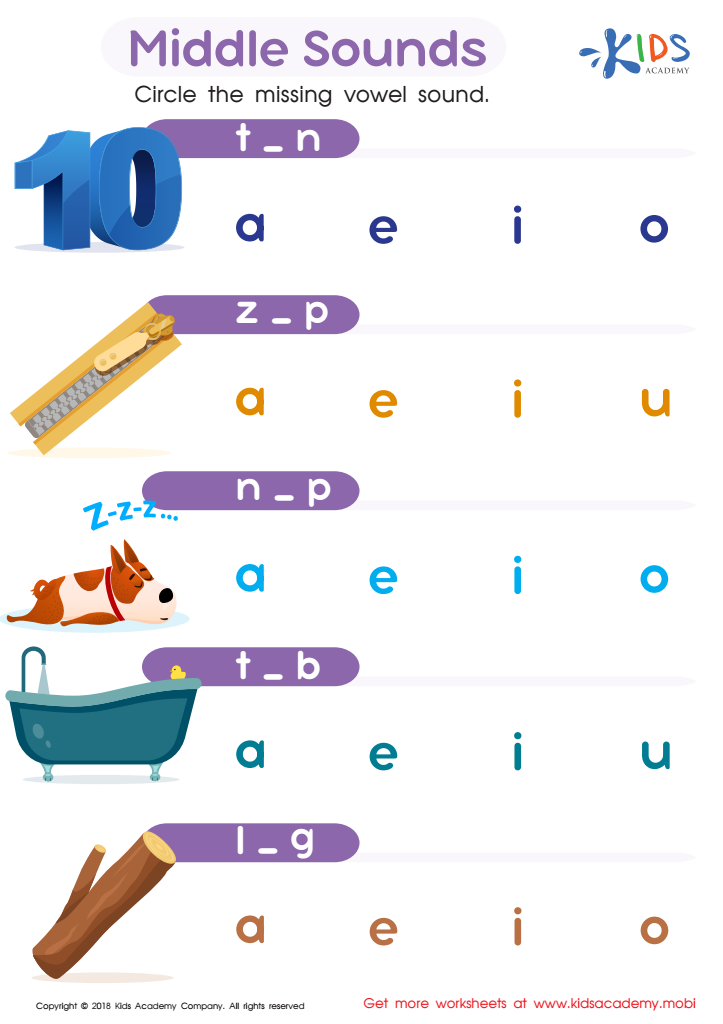
Middle Sounds Worksheet
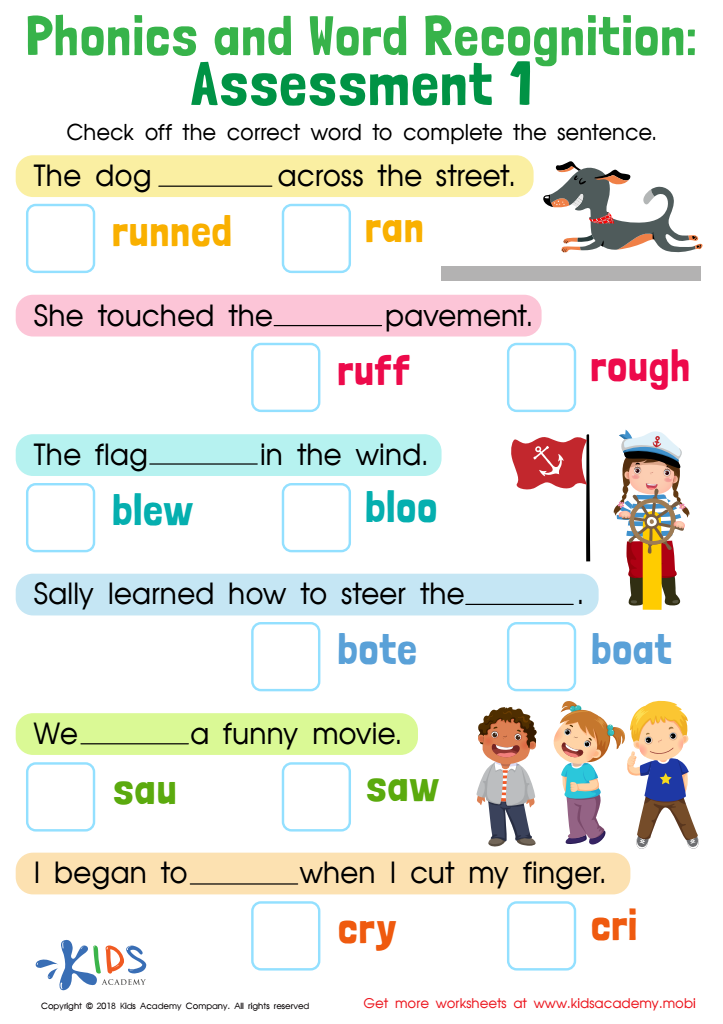
Phonics and Word Recognition: Assessment 1 Worksheet
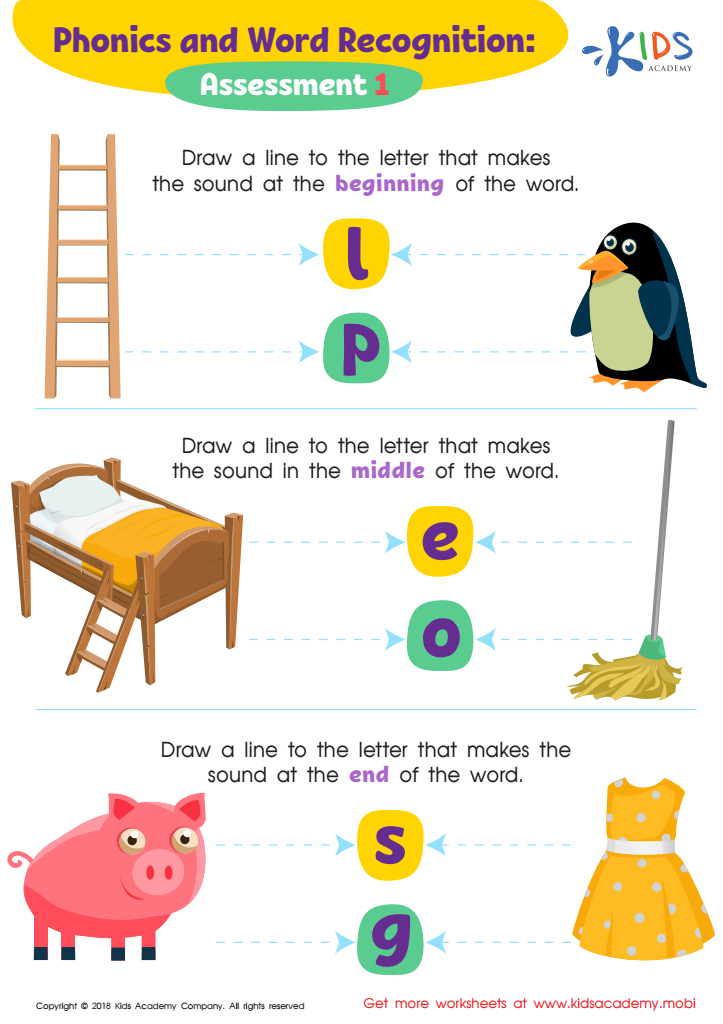
Phonics and Word Recognition: Assessment 1 ELA Worksheet





Middle sounds are crucial for early literacy development in children aged 4-8, as they form a vital component of phonemic awareness. When children can identify and manipulate the sounds within words, it sets a strong foundation for reading and writing skills. Understanding middle sounds helps young learners break down words into their constituent parts, leading to better decoding abilities when they encounter new vocabulary.
By focusing on middle sounds, parents and teachers can enhance children's ability to recognize patterns in words, which is particularly important as they progress to more complex reading materials. Furthermore, phonemic awareness activities that include middle sounds can be both engaging and beneficial, often incorporating songs, games, and playful rhymes that capture children's interests.
Encouraging this skill also improves spelling, as children begin to understand how sounds correspond to letters. As they explore middle sounds, they gain confidence in their reading abilities, which motivates them to explore literature further. Ultimately, prioritizing middle sounds fosters a love for language and literacy, equipping young learners with tools that will serve them throughout their educational journeys and beyond. Engaged parents and teachers can create a strong, supportive environment that nurtures these essential skills.