Time Worksheets for Ages 4-9 - Page 2
25 filtered results
-
From - To
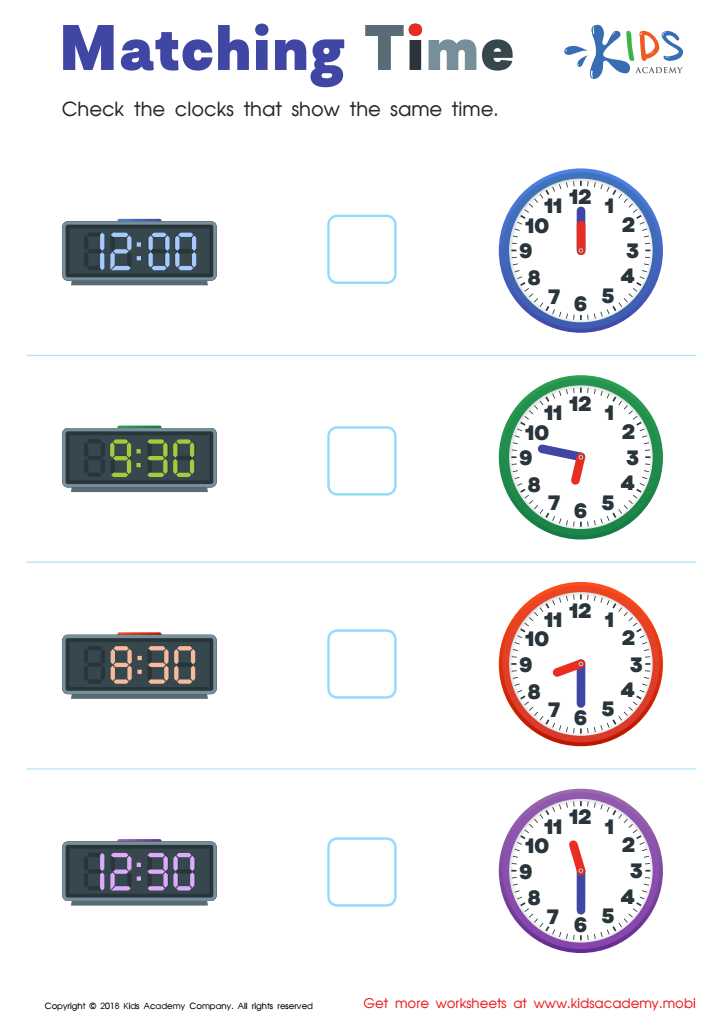
Matching Time Worksheet
 Assign to My Students



.jpg)




Time is a crucial concept for children aged 4-9, as it lays the foundation for their understanding of schedules, routines, and responsibility. At this developmental stage, children are eager to comprehend the world around them, and learning about time enhances their cognitive skills and critical thinking.
Understanding time helps children manage their daily activities, such as school schedules, playtime, and chores. Familiarity with clocks and calendars teaches them how to prioritize tasks and create a learning environment that promotes discipline and self-regulation.
Moreover, mastering time concepts fosters independence and self-confidence. When children learn to read clocks and understand intervals (like days, weeks, and months), they make sense of their daily lives and gain a sense of control over their routines.
For parents and teachers, prioritizing time education can prevent future confusion, anxiety, or frustration related to time management. Long-term benefits include better academic performance and improved social interactions, as children who understand the flow of time can better navigate various situations.
In summary, instilling a solid understanding of time in young children equips them with essential life skills, nurturing responsible, confident, and organized individuals—qualities that are invaluable throughout their lives.








