Chess Worksheets for Ages 5-7 - Page 4
86 filtered results
-
From - To
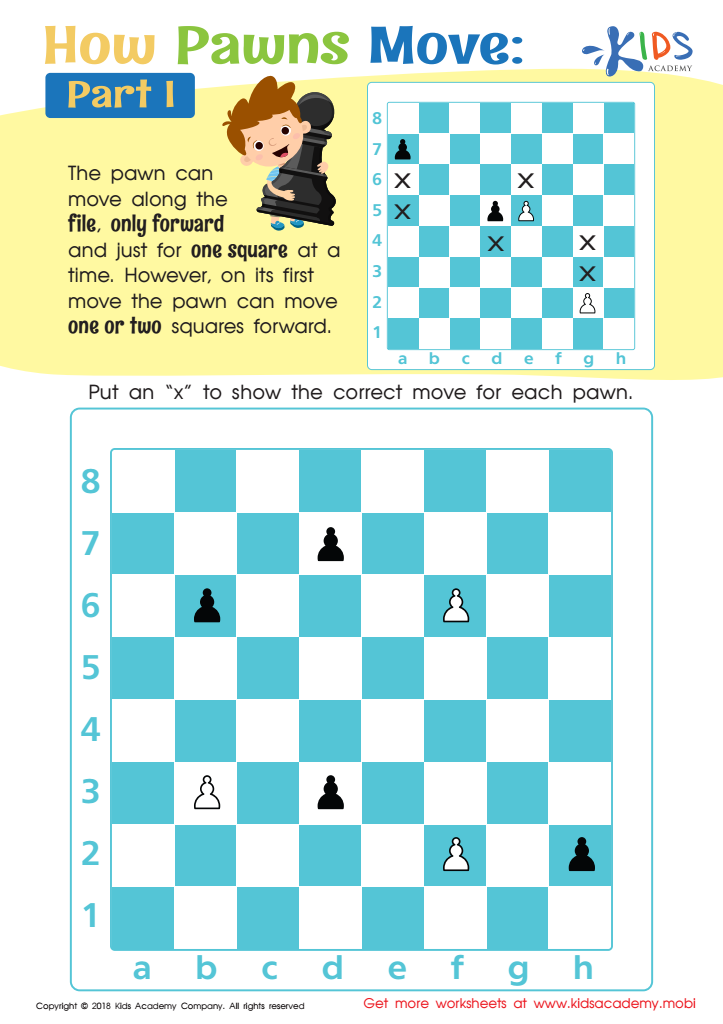
How Pawns Move: Part I Worksheet
 Assign to My Students
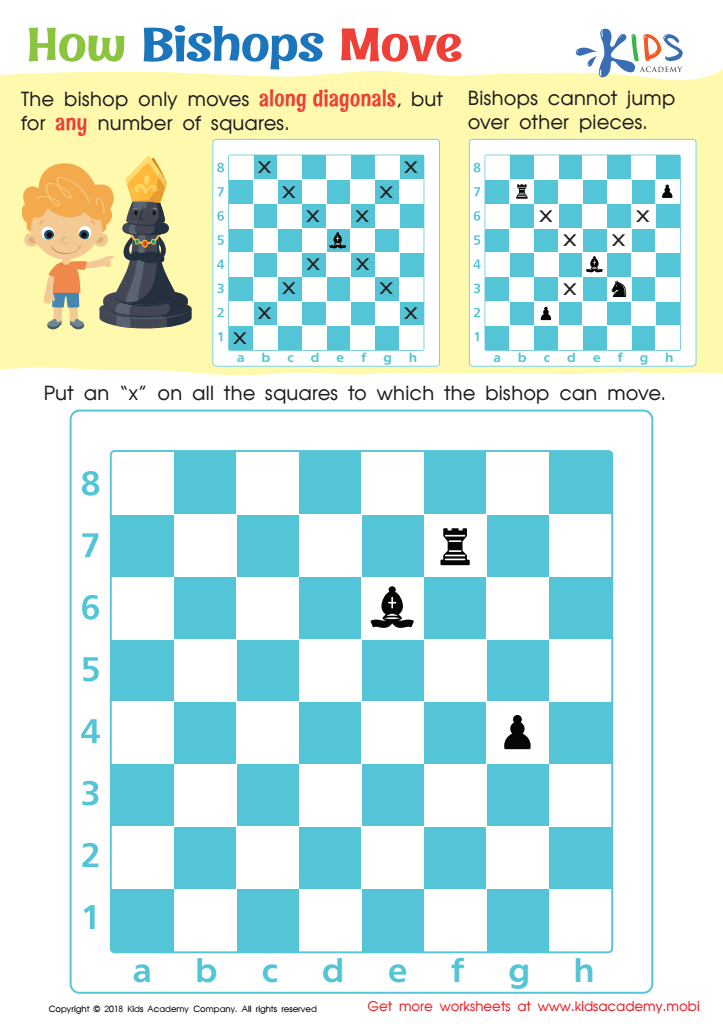
How Bishops Move Worksheet
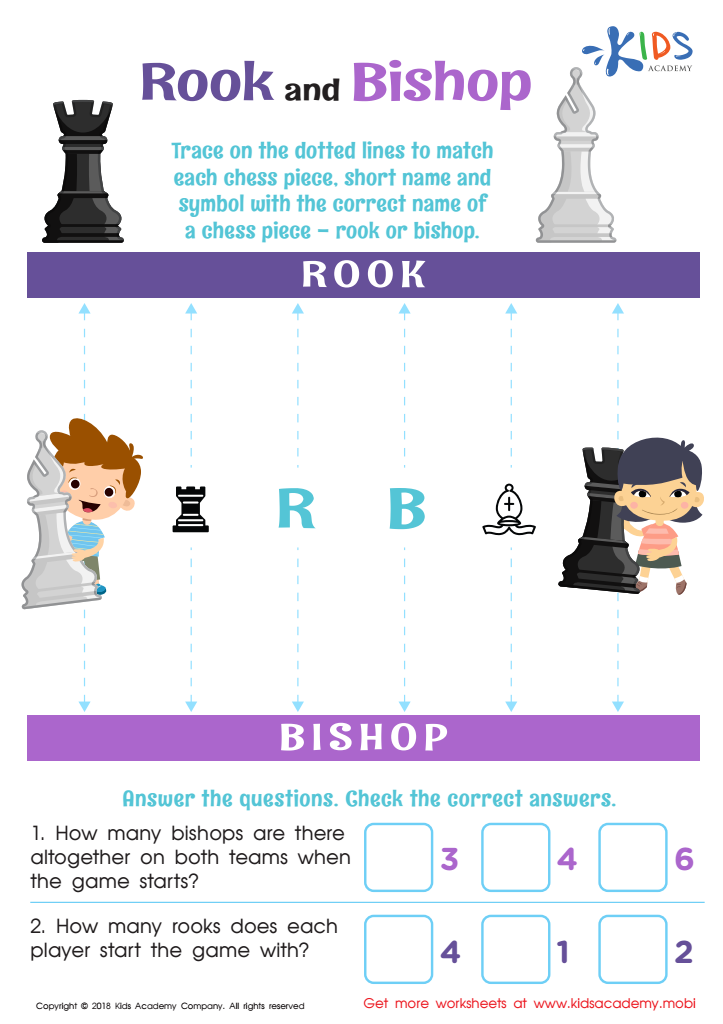
Rook and Bishop Worksheet
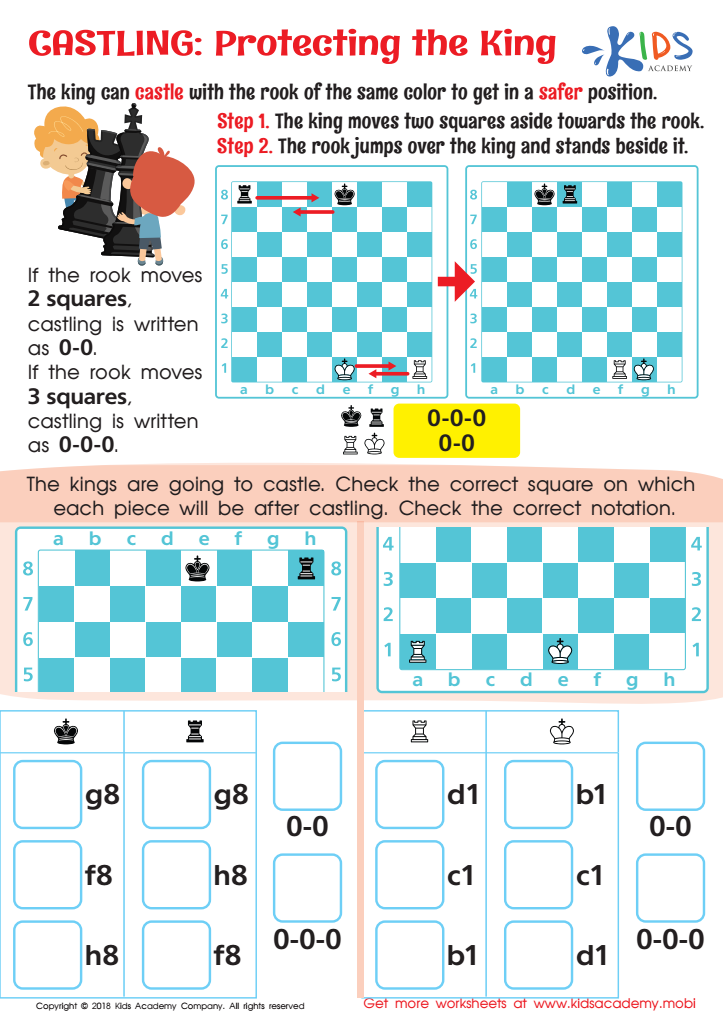
Castling: Protecting the King Worksheet
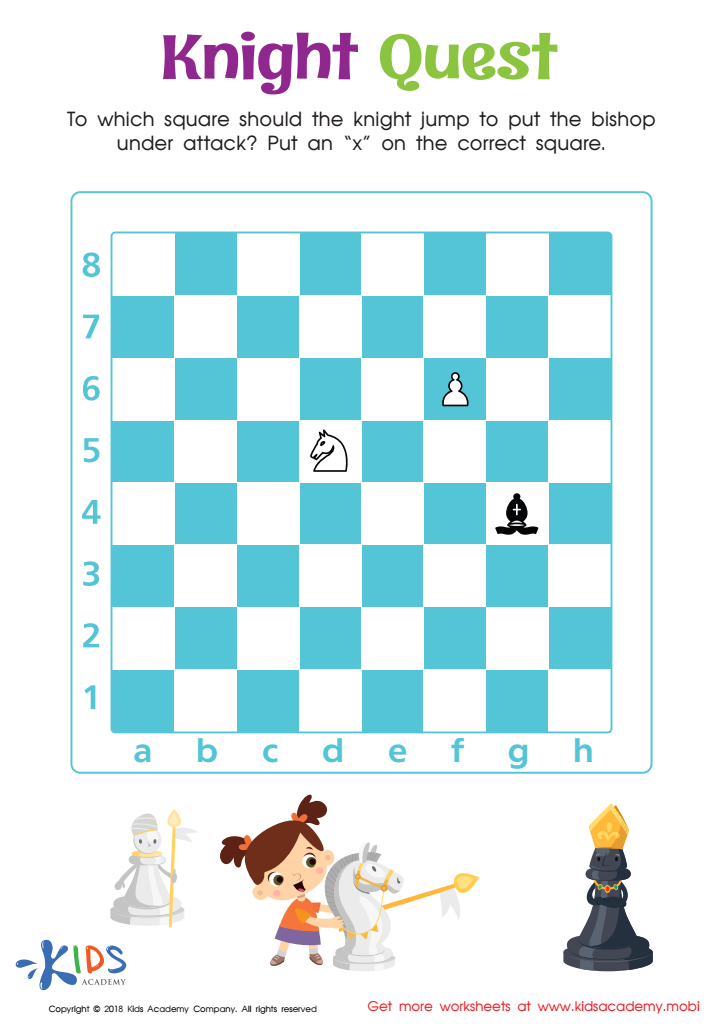
Knight Quest Worksheet
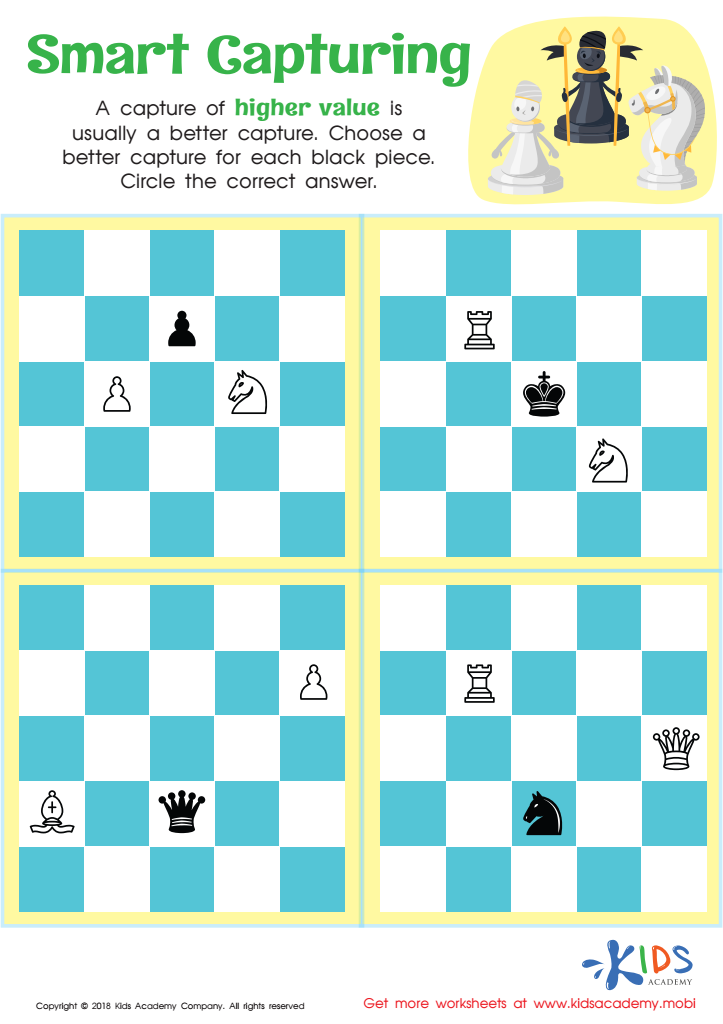
Smart Capturing Worksheet
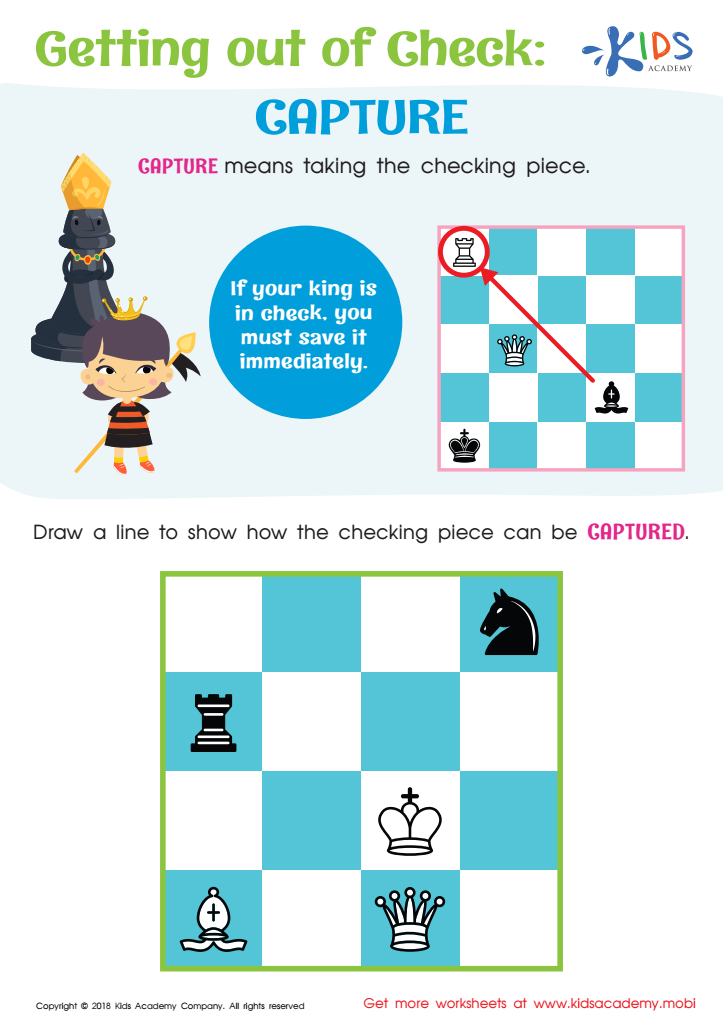
Getting out of Check: Capture
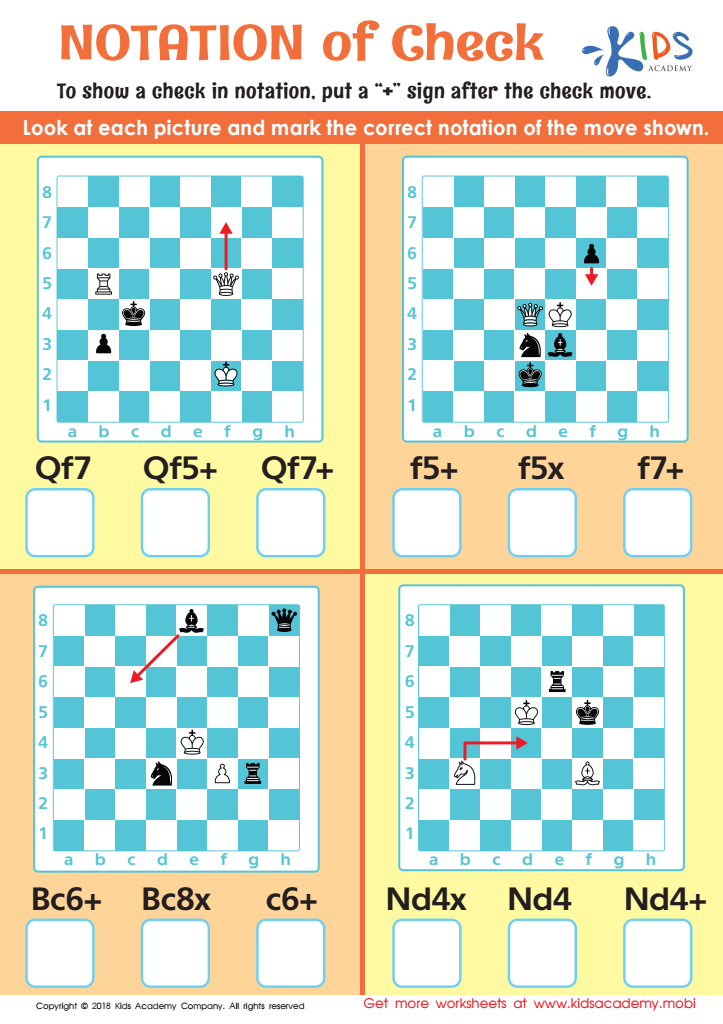
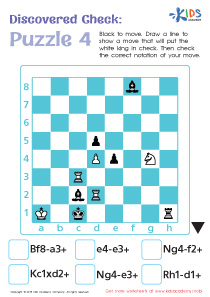
Notation of Check Worksheet
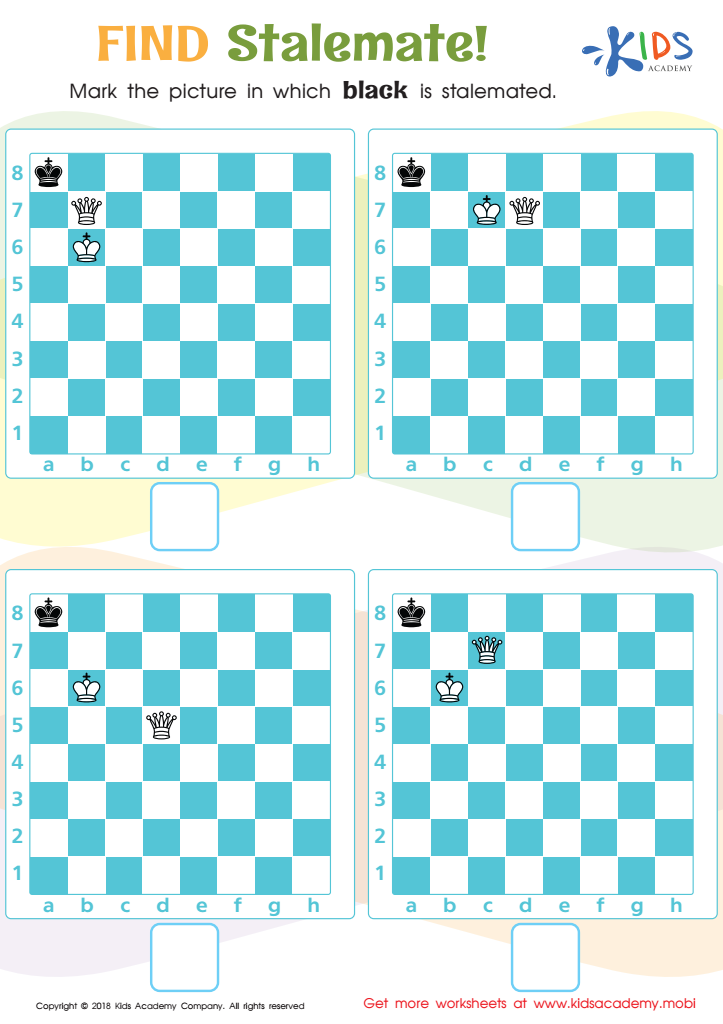
Find Stalemate! Worksheet
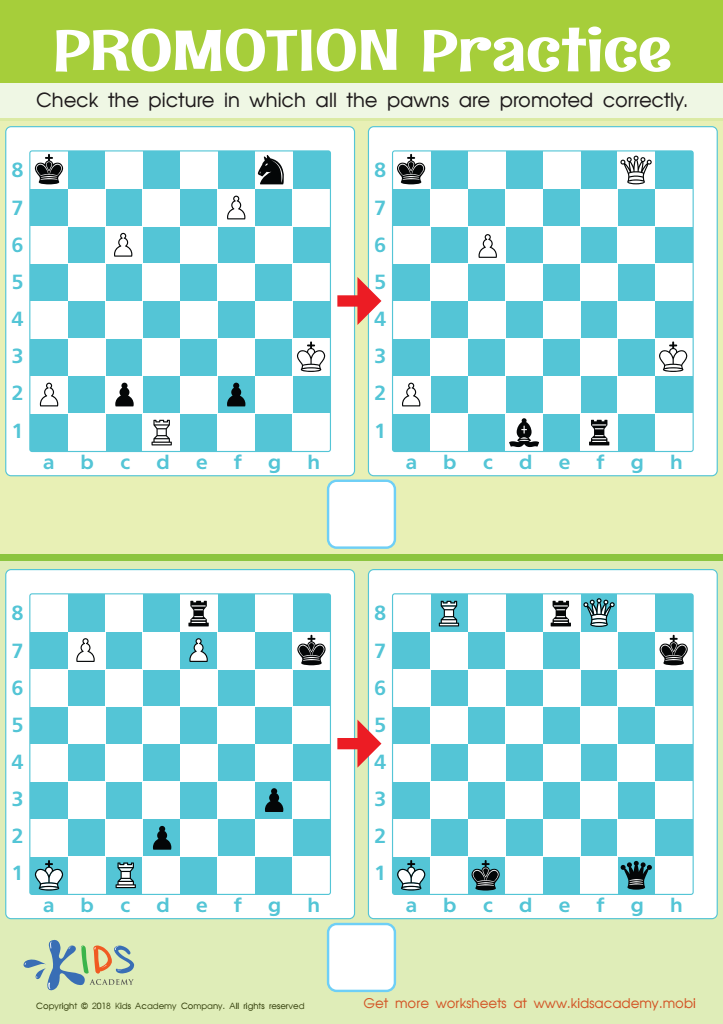
Promotion Practice Worksheet
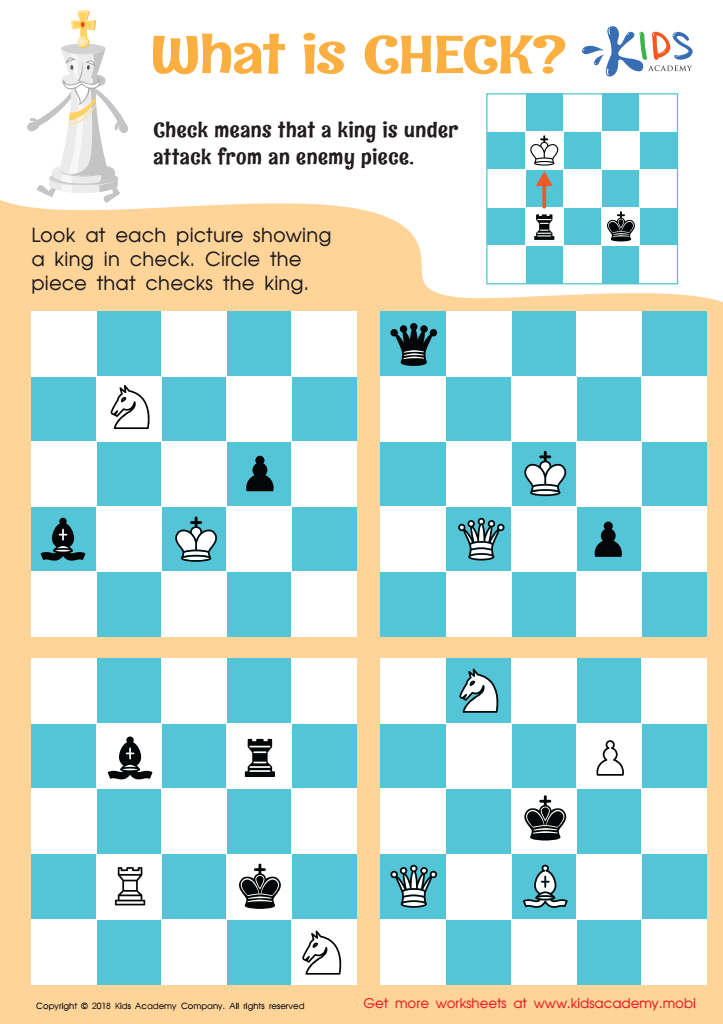
What is Check? Worksheet
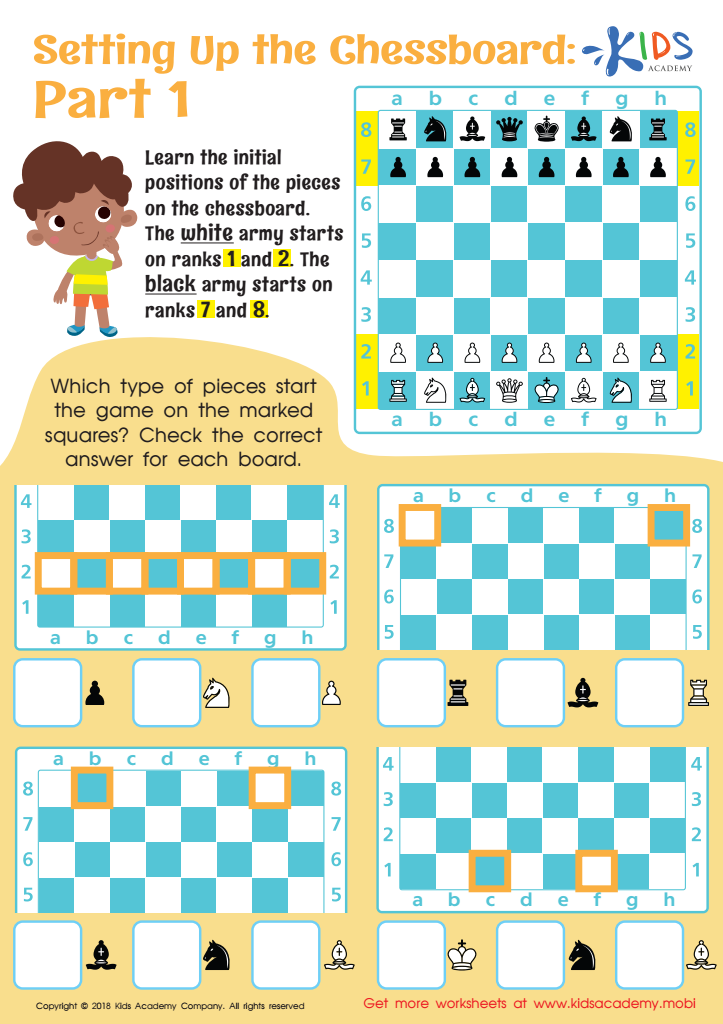
Setting up the Chessboard: Part 1 Worksheet
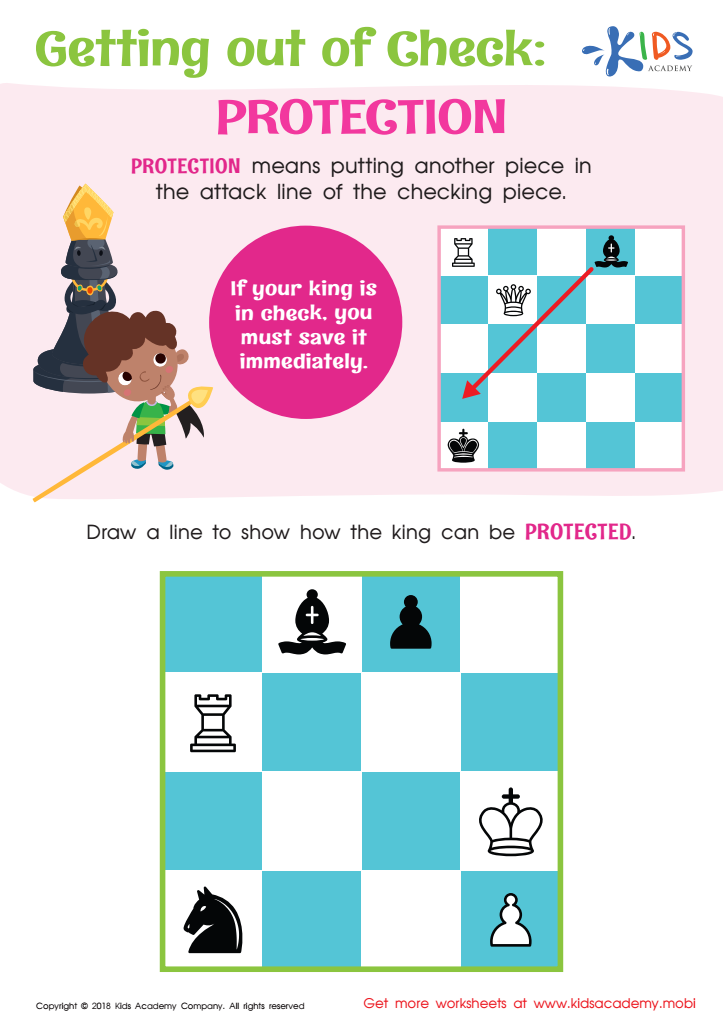
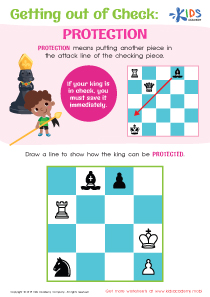
Getting out of Check: Protection
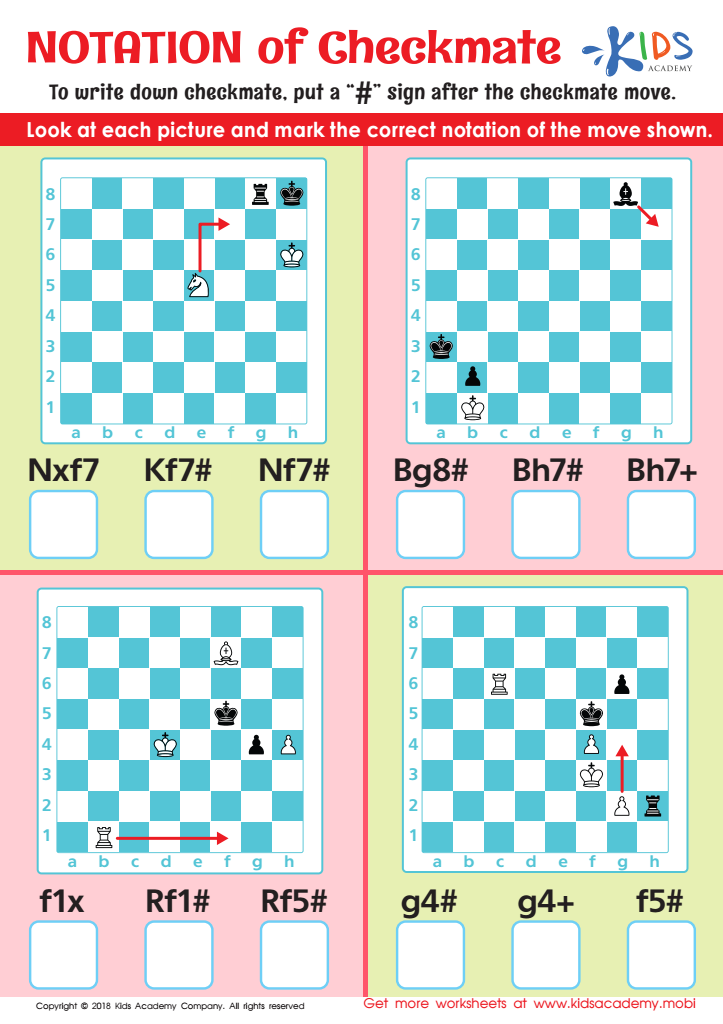
Notation of Checkmate Worksheet






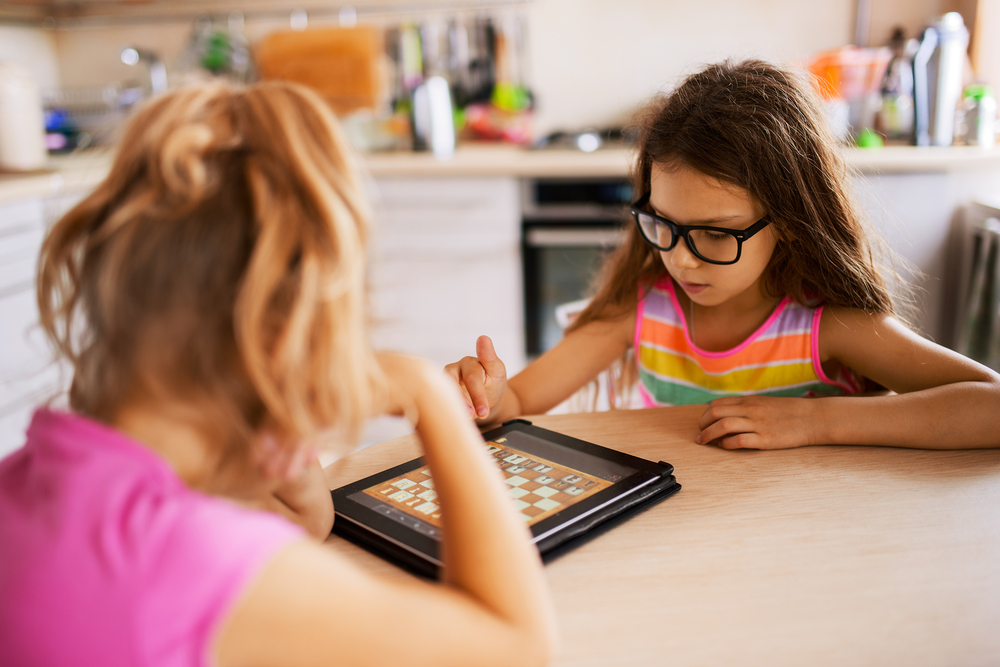

Introducing chess to children aged 5-7 serves as a powerful educational tool and promotes intellectual growth. At this impressionable age, their minds are like sponges, absorbing new concepts and skills rapidly. Chess, a game of strategy and critical thinking, offers myriad developmental benefits.
Firstly, learning chess enhances cognitive abilities such as memory, concentration, and problem-solving skills. The game requires players to remember the moves, recognize patterns, and plan several steps ahead. These skills translate seamlessly into academic performance, benefiting mathematics and literacy, where similar problem-solving and pattern recognition are key.
Secondly, chess teaches patience and discipline. Young children learn the importance of thinking before acting, a vital life skill. The game's nature encourages them to think critically about their decisions and foresee potential outcomes, fostering a reflective mindset rather than impulsive behavior.
Moreover, chess nurtures resilience and a healthy competitive spirit. In chess, losing is part of the learning process. It helps children cope with setbacks constructively, understanding that losing represents an opportunity to learn and improve.
Lastly, chess transcends language and cultural barriers, offering social benefits. Children can connect over a shared game, fostering friendships and teamwork.
Parents and teachers should prioritize chess, as it significantly contributes to holistic cognitive and emotional development in young children.