Numbers up to 100 Worksheets for Ages 5-7 - Page 3
50 filtered results
-
From - To
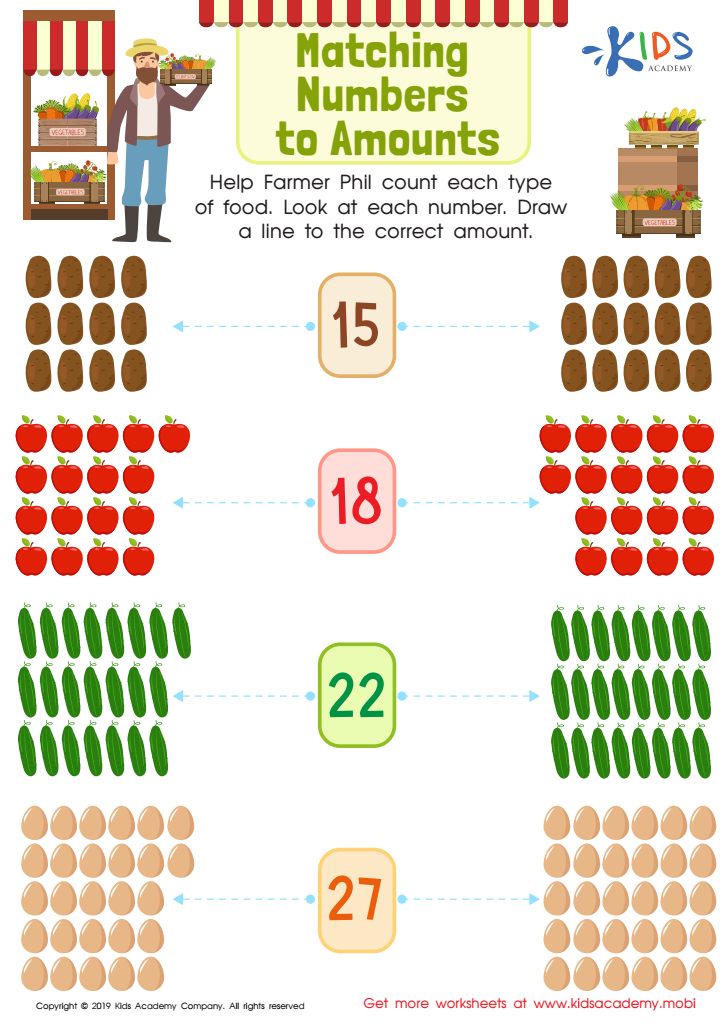
Matching Numbers to Amounts Worksheet
 Assign to My Students

Counting on the City Skyline: Dot-to-Dot Worksheet






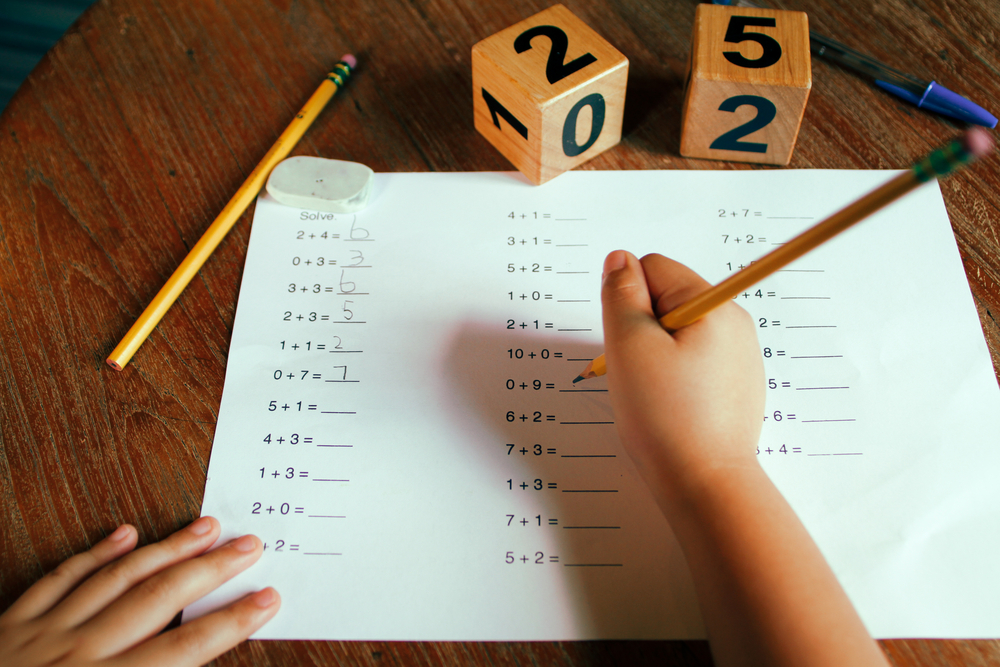

Understanding numbers up to 100 is foundational for young children aged 5-7 and is critical for their early math development. At this stage, grasping numbers up to 100 helps children build a strong numerical sense, which is fundamental for more complex mathematical concepts they will encounter later.
First, recognizing and understanding numbers up to 100 provides children with the ability to perform basic arithmetic operations such as addition and subtraction. These essential skills are necessary for daily activities, from counting their toys to sharing snacks fairly.
Second, working with numbers up to 100 enhances a child's ability to grasp patterns and sequences, which are crucial for logical thinking and problem-solving. Such cognitive skills are essential not only in mathematics but across all subjects and real-life situations.
Third, early exposure to numbers up to 100 helps in developing place value understanding, which refers to knowing that the position of a digit in a number determines its value. This is the cornerstone of the entire number system and is vital for performing more advanced calculations.
Thus, by engaging kids aged 5-7 with numbers up to 100, parents and teachers set the groundwork for their future academic success and everyday competence, fostering not only numerical skills but also confidence and curiosity in learning.