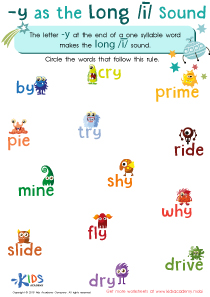
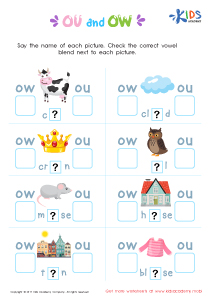
Long Vowels Worksheets for Ages 5-8 - Page 2
29 filtered results
-
From - To
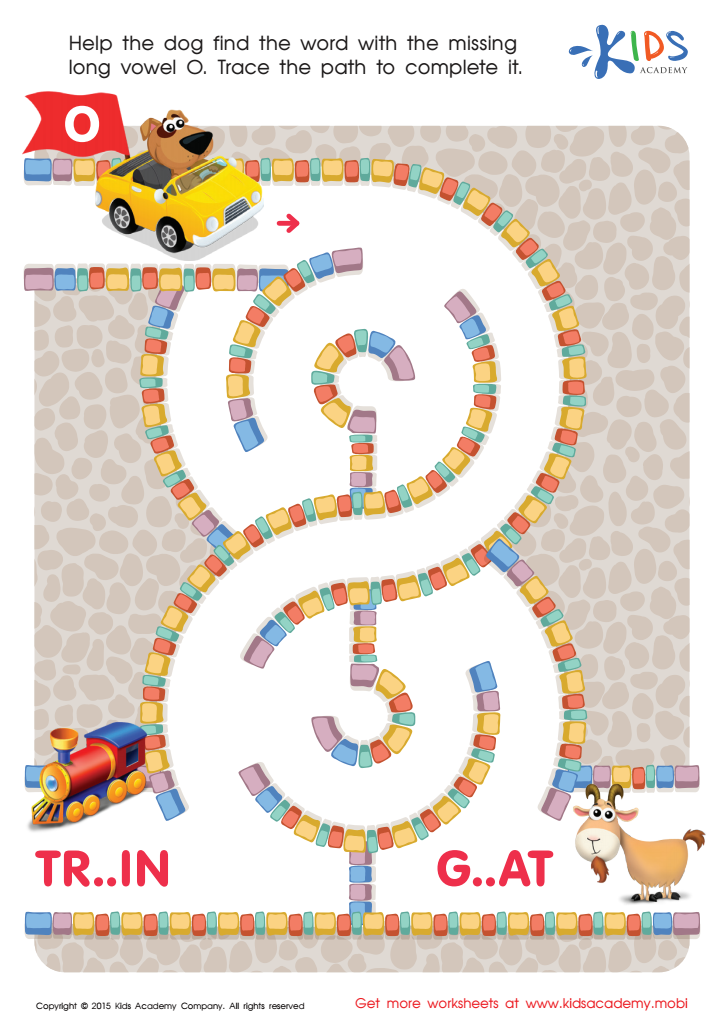
Long Vowel Sound O Worksheet
 Assign to My Students
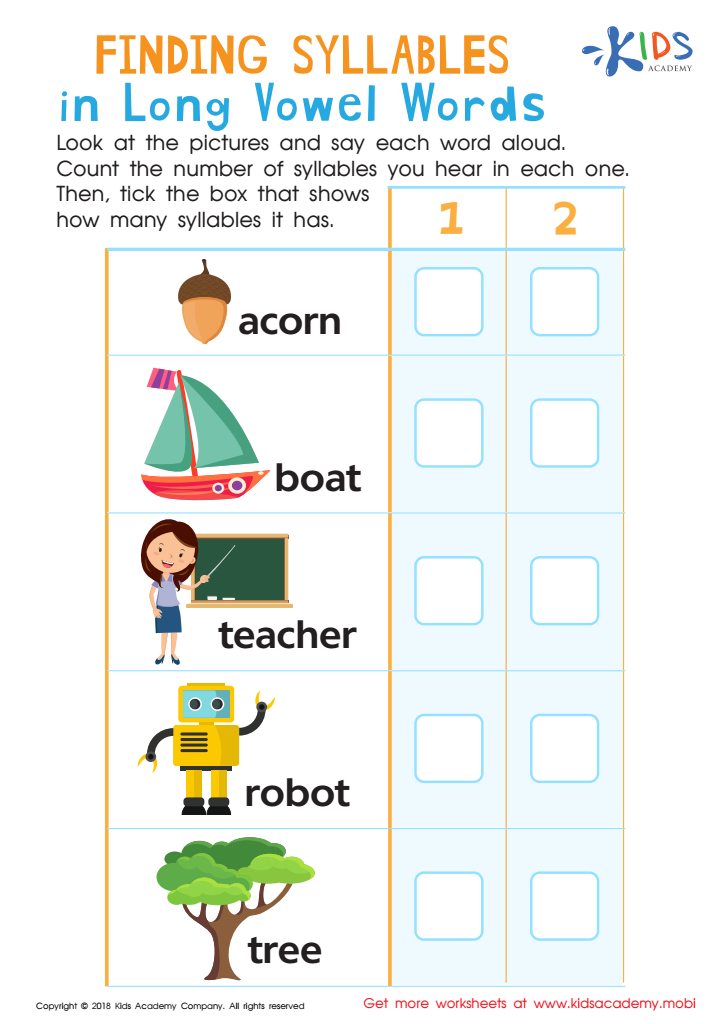
Finding Syllables in Long Vowel Words Worksheet
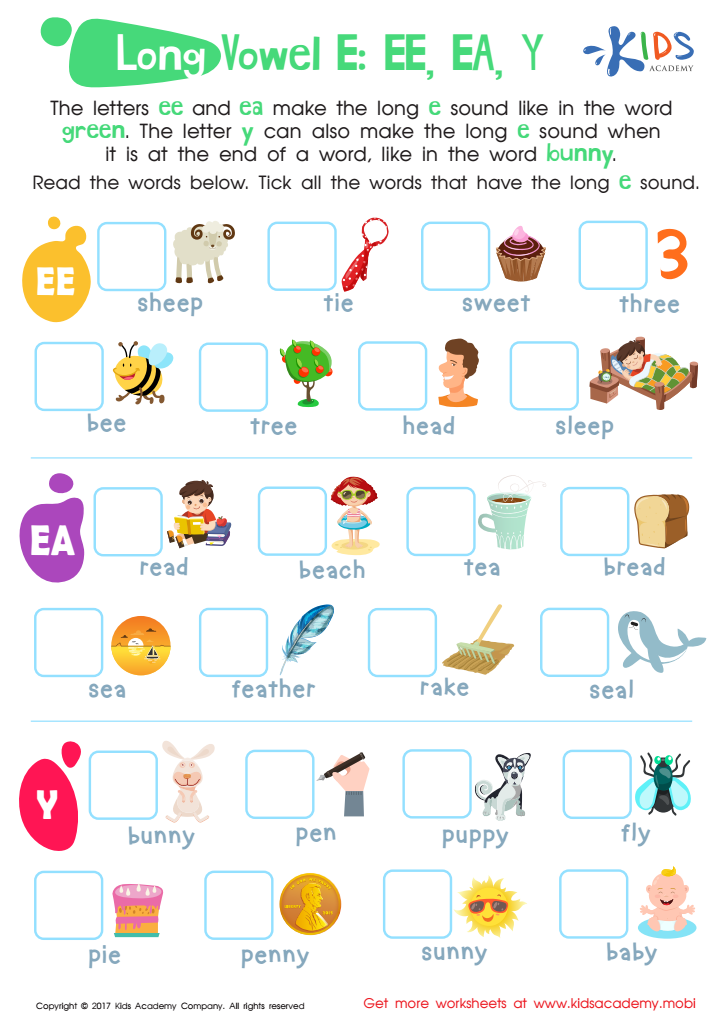
Long Vowel E Printable
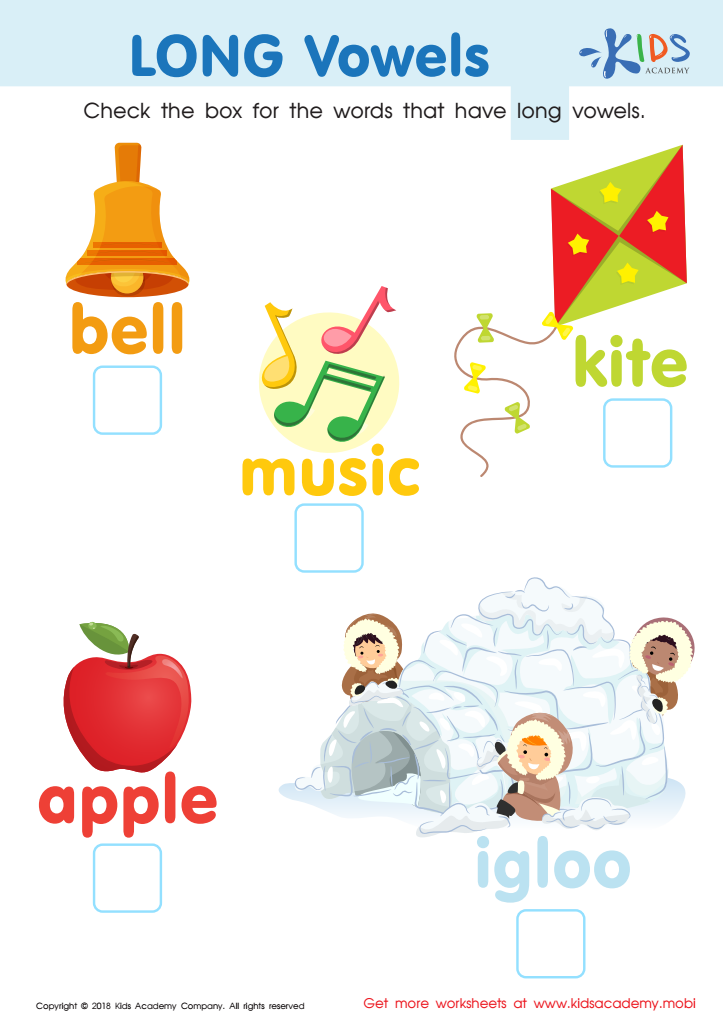
long vowels Worksheet
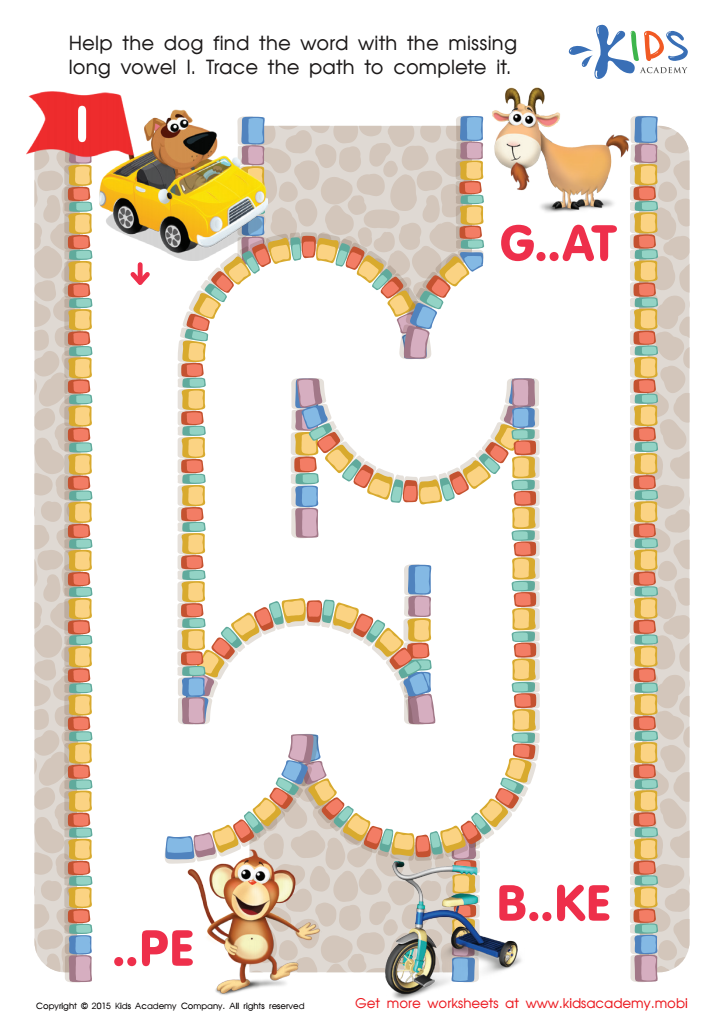
Long Vowel Sound I Worksheet



Long vowels are essential for early readers aged 5-8 because they form the foundation for effective reading and writing skills. Long vowels, where the vowel sound "speaks its name," are vital in distinguishing between similar-sounding words and enhancing vocabulary. For example, knowing the difference between “hat” and “hate” can significantly influence comprehension and communication.
Understanding long vowels also contributes to phonemic awareness, enabling students to decode new words independently. As children learn to recognize patterns, such as vowel combinations (like "ea" in "bead"), it enriches their reading ability and encourages fluent reading.
Moreover, mastering long vowel sounds fosters confidence and motivation in young learners as they realize they can tackle increasingly complex words and texts. Educators and parents can support this learning process through engaging activities, such as phonics games and songs, making the learning experience enjoyable.
Additionally, a strong grasp of long vowels can positively impact spelling skills, as children advance to writing more complicated words. Ultimately, nurturing debilitative connections with long vowels provides a solid linguistic foundation, paving the way for better literacy skills and academic success in later grades. Thus, both parents and teachers hold a crucial role in this critical developmental stage.