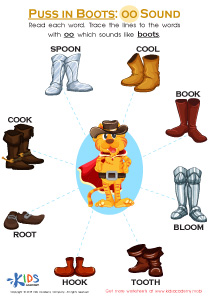
Silent Vowels Worksheets for Ages 5-8
5 filtered results
-
From - To
Discover the perfect resource to help young learners master silent vowels with our Silent Vowels Worksheets for Ages 5-8. Designed to make phonics fun and engaging, these worksheets captivate children's curiosity and enhance their reading skills. Each worksheet includes colorful illustrations, interactive exercises, and simple instructions tailored for early readers. Children will practice identifying and understanding silent vowels, making them more confident and proficient in their reading journeys. With our comprehensive and playful approach, your child will navigate through the nuances of silent vowels in no time. Unlock the excitement of learning and improve phonemic awareness today!
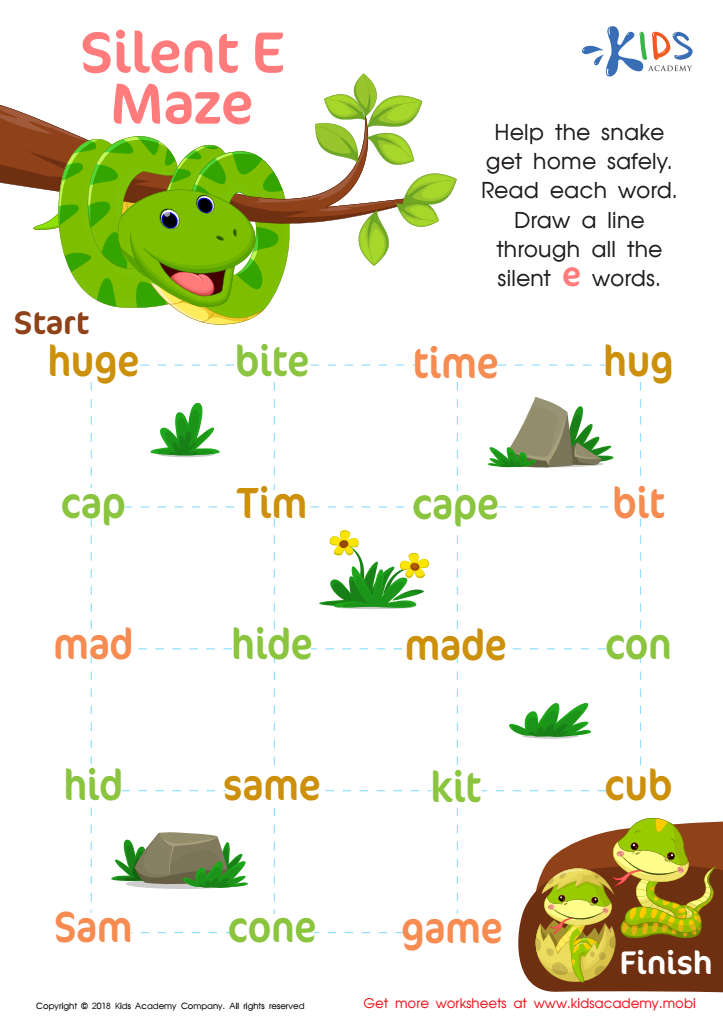
Silent E Maze Worksheet
 Assign to My Students
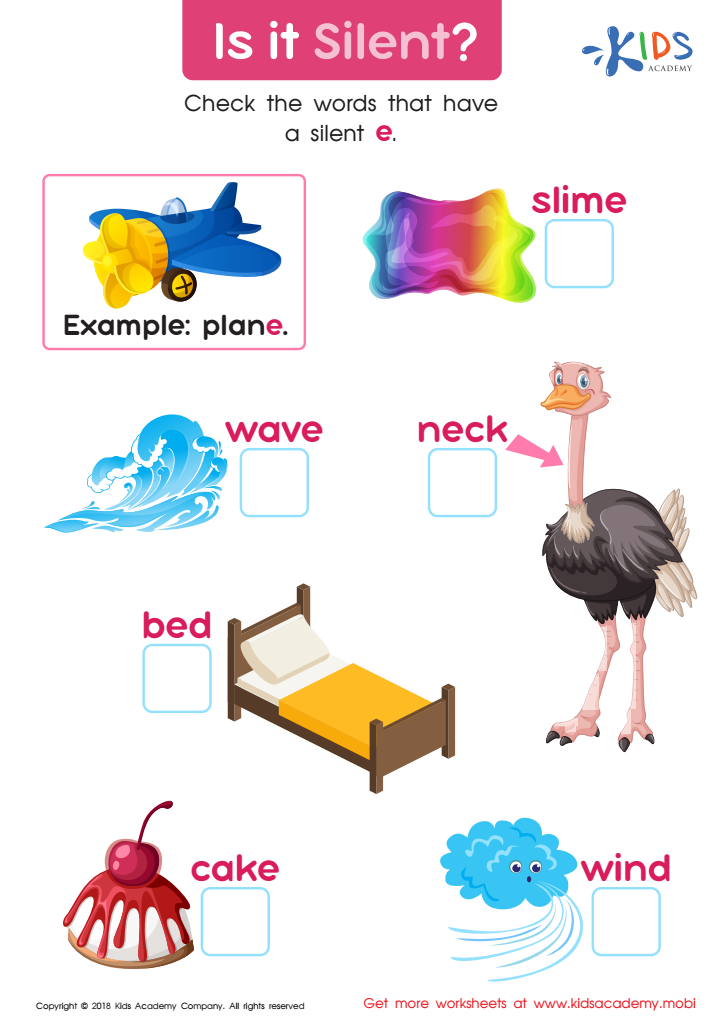
Is It Silent? Worksheet
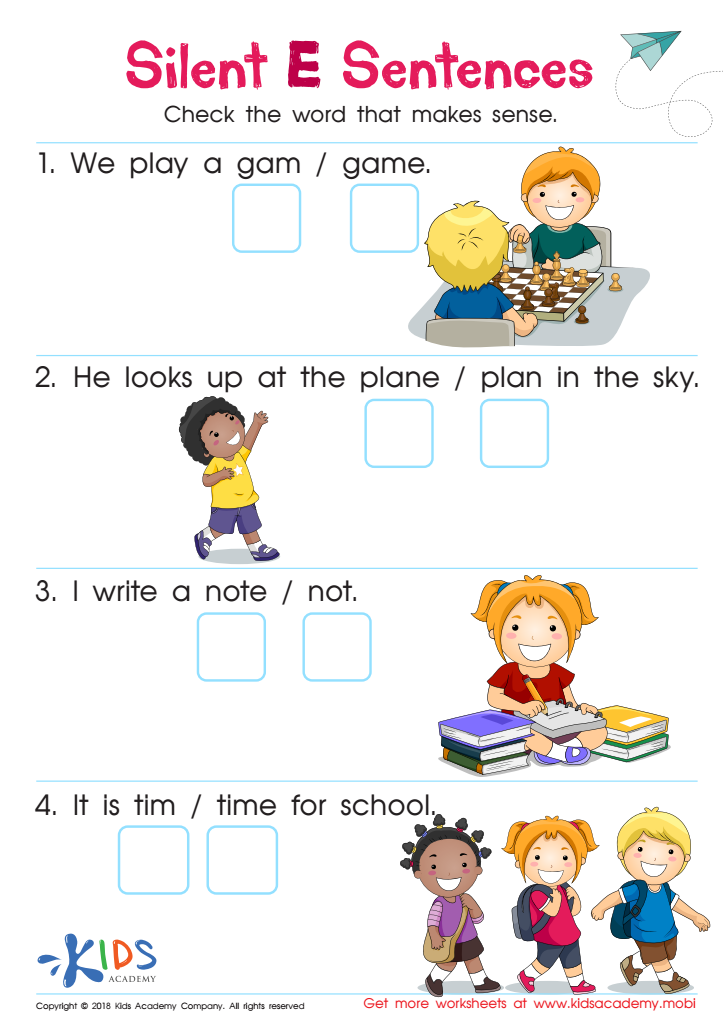
Silent E Sentences Worksheet
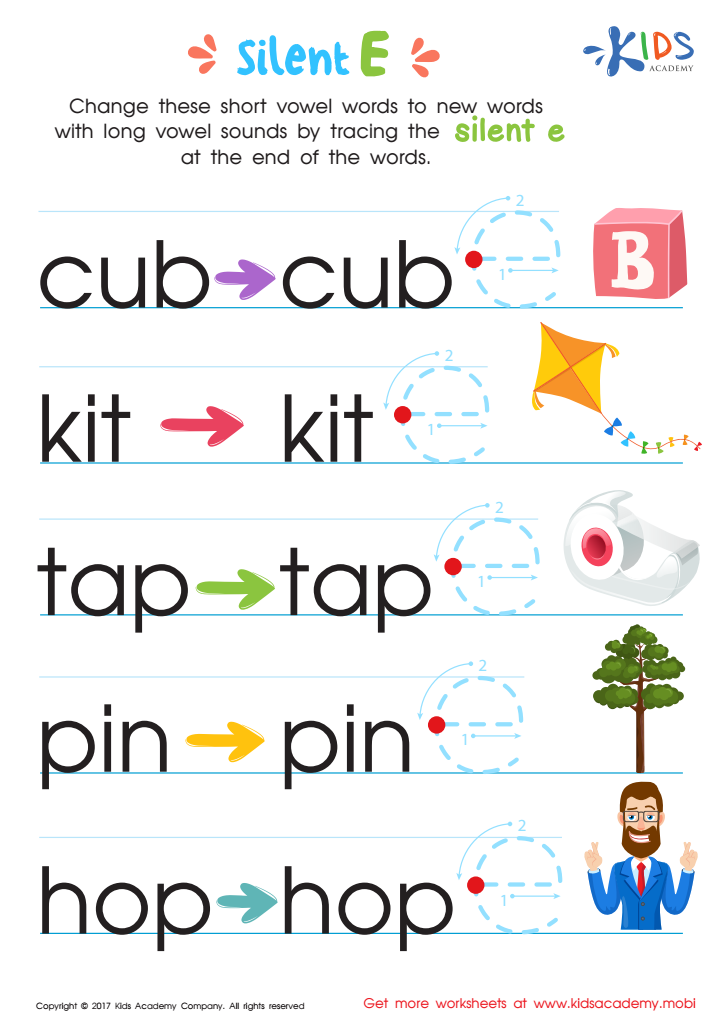
Silent E Words Worksheet
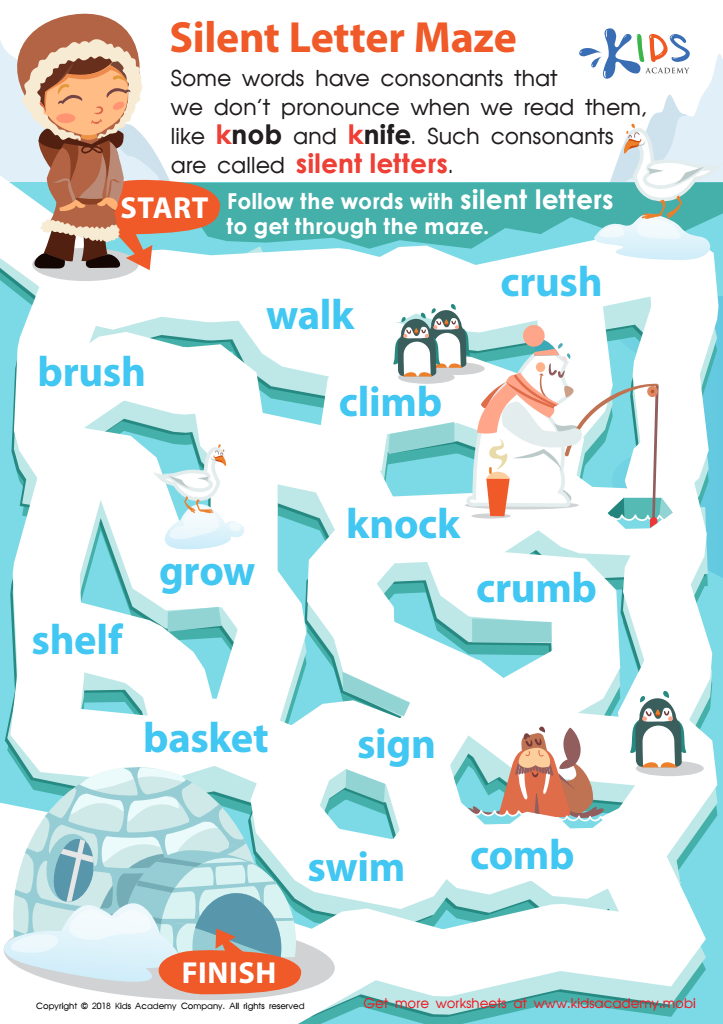
Silent Letter Maze Worksheet


Silent vowels are key contributors to early literacy and phonemic awareness, essential for children aged 5-8. These vowels often affect pronunciation and spelling, and an early understanding of them can significantly impact reading fluency and writing proficiency. When parents and teachers focus on teaching silent vowels, they help demystify the quirks of English spelling for young learners. For instance, understanding that the "e" in "make" makes the "a" a long vowel, even though it isn’t pronounced, can help children correctly read and spell similar words.
Addressing silent vowels also aids in the development of decoding skills. When children come across new words, knowing about silent vowels provides them with strategies to approach complex spellings, thus reducing frustration and fostering a positive learning environment.
Moreover, introducing silent vowels at an early age supports vocabulary development and language comprehension. As children's reading materials become more complex, the frequency of words with silent vowels increases, so a solid foundation in this area can aid in comprehension, enabling smoother transition to advanced texts.
Overall, banning the mystery around silent vowels prepares children for a range of literacy tasks, fundamentally setting them up for academic success and a lifelong love for reading and writing.