Vowel Diphthongs Worksheets for Ages 5-8 - Page 2
27 filtered results
-
From - To
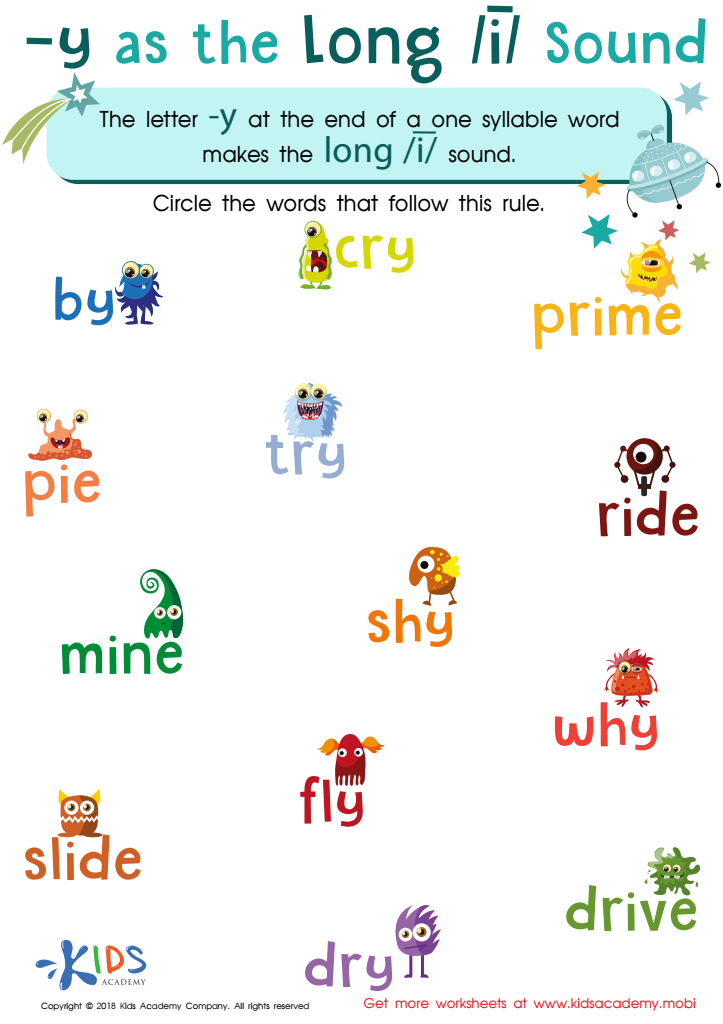
Reading: Y as Long I Worksheet
 Assign to My Students
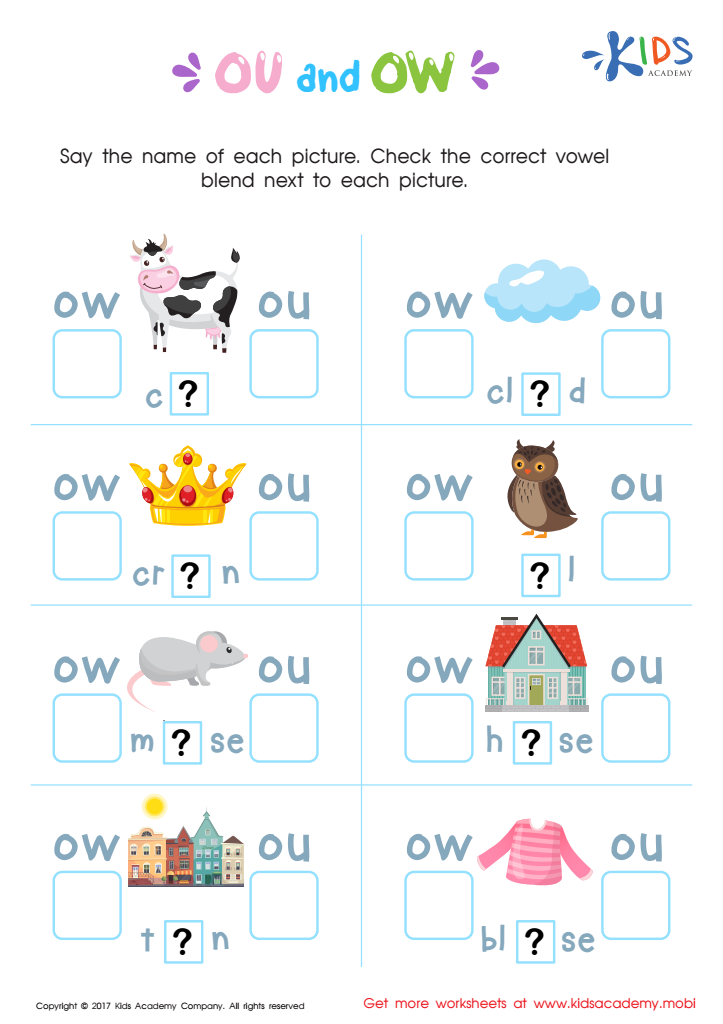
OU and OW Words Worksheet
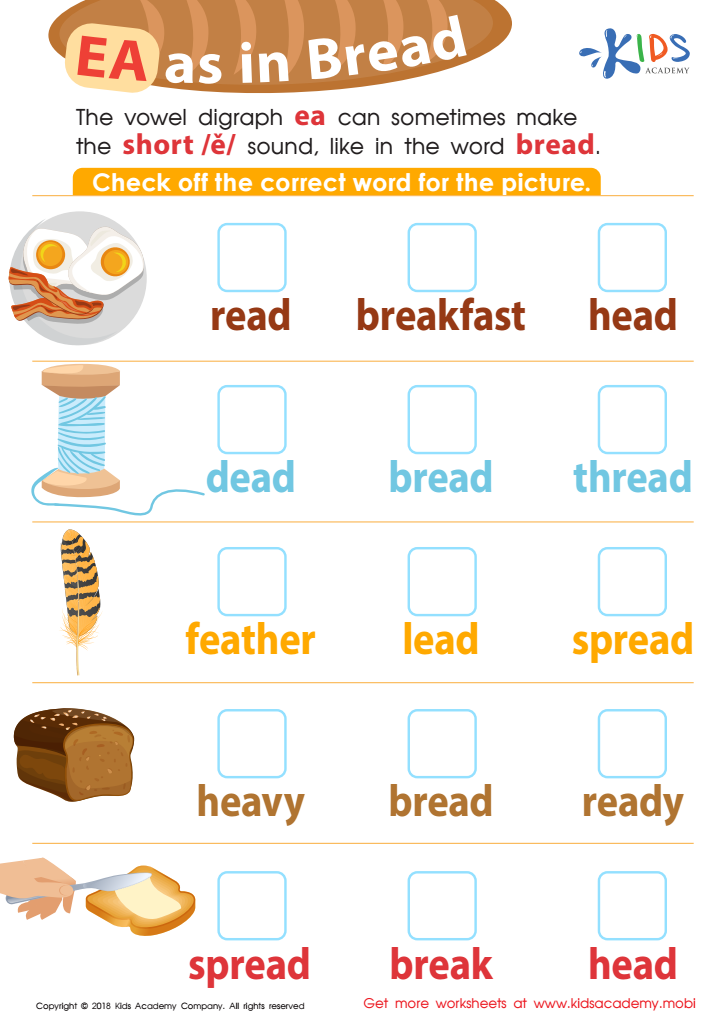
Reading: EA as in Bread Worksheet


Parents and teachers should care about vowel diphthongs for children ages 5-8 because these linguistic elements significantly contribute to early literacy development. Vowel diphthongs—combinations of two vowel sounds within the same syllable—are common in English and appear in many everyday words (e.g., "coin," "loud," "boat"). Recognizing and understanding these sounds help children improve their phonemic awareness, an essential skill for reading and writing.
By mastering diphthongs, young learners enhance their decoding skills, making it easier for them to sound out words and read fluently. This foundation not only supports their reading abilities but also boosts their confidence as they navigate more complex texts. Additionally, effective teaching of diphthongs can foster better pronunciation, helping children express themselves clearly.
Moreover, grasping vowel diphthongs aids in spelling, as children begin to understand how sounds translate into written language. For parents, engaging in playful activities that involve diphthongs can create enriching learning experiences at home. Teachers can integrate games, songs, and rhymes that emphasize these sounds, making learning both fun and impactful. Ultimately, attentive support in mastering vowel diphthongs helps prepare children for future academic success and enriches their overall language skills.