Reading Non-Fiction Worksheets for Ages 5-9 - Page 5
97 filtered results
-
From - To
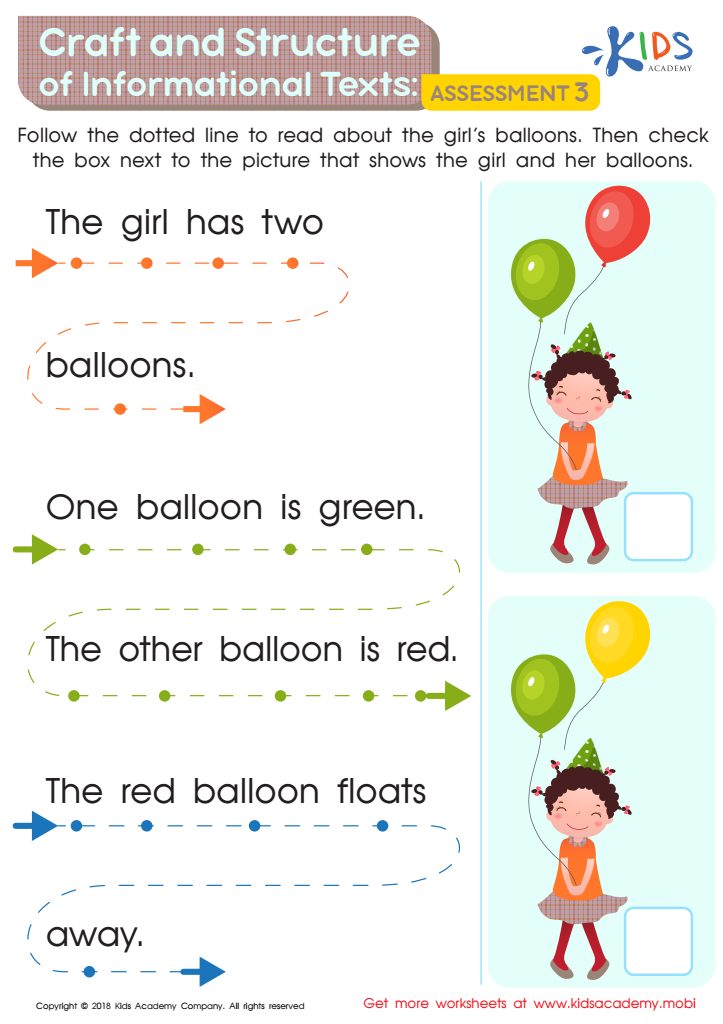
Craft and Structure of Informational Texts: Assessment 3 Worksheet
 Assign to My Students








Reading non-fiction books is vital for children aged 5-9 and should be a priority for parents and teachers. At this formative age, children's brains are like sponges, absorbing information rapidly. Non-fiction texts expand their knowledge about the world, sparking curiosity and fostering a love for learning. These books introduce real-life concepts, expand vocabulary, and develop cognitive skills, allowing children to connect their expanding worlds with factual information.
Moreover, children develop critical thinking skills by engaging with non-fiction material. They learn to ask questions, discern facts from opinions, and understand complex ideas through accessible language. This lays a foundation for later academic success, as non-fiction reading is crucial across subjects, including science, history, and social studies.
Exposure to non-fiction also builds empathy and cultural awareness. Learning about diverse cultures, historical events, and scientific discoveries broadens their perspective, promoting a more inclusive worldview. This helps in shaping well-rounded individuals who appreciate diversity and understand global issues.
Importantly, non-fiction reading helps in the development of important reading skills like skimming, scanning, and comprehension of informative texts. Encouraging children to read non-fiction lays down essential tools for lifelong learning, empowering them to tackle more complex information with confidence in their future academic and personal endeavors.








