Filters

13 filtered results

Clear all filters
Favorites
With answer key
Interactive

13 filtered results

Difficulty Level

Grade


Subject

    Discover our engaging "Arrays Worksheets for Ages 6-7," designed to introduce young learners to essential math concepts. These worksheets are perfect for helping children explore the visual representation of multiplication and division through arrays. They support skill development in counting, grouping, and understanding even and odd numbers. Each activity encourages critical thinking and enhances problem-solving abilities while making math fun and interactive. Ideal for classroom use or home practice, our worksheets cater to different learning styles. Join us on this math adventure and watch your child's confidence blossom as they master arrays with ease! Explore our resources today and get started!

    Check out this FREE Trial Lesson on Arrays for age 6-7!

    Addition with Arrays - Part 1

    Favorites
    With answer key
    Interactive
    • 6-7
    • With answer key
    • Arrays
    Fruity Array Quest Worksheet
    Fruity Array Quest Worksheet

    Fruity Array Quest Worksheet

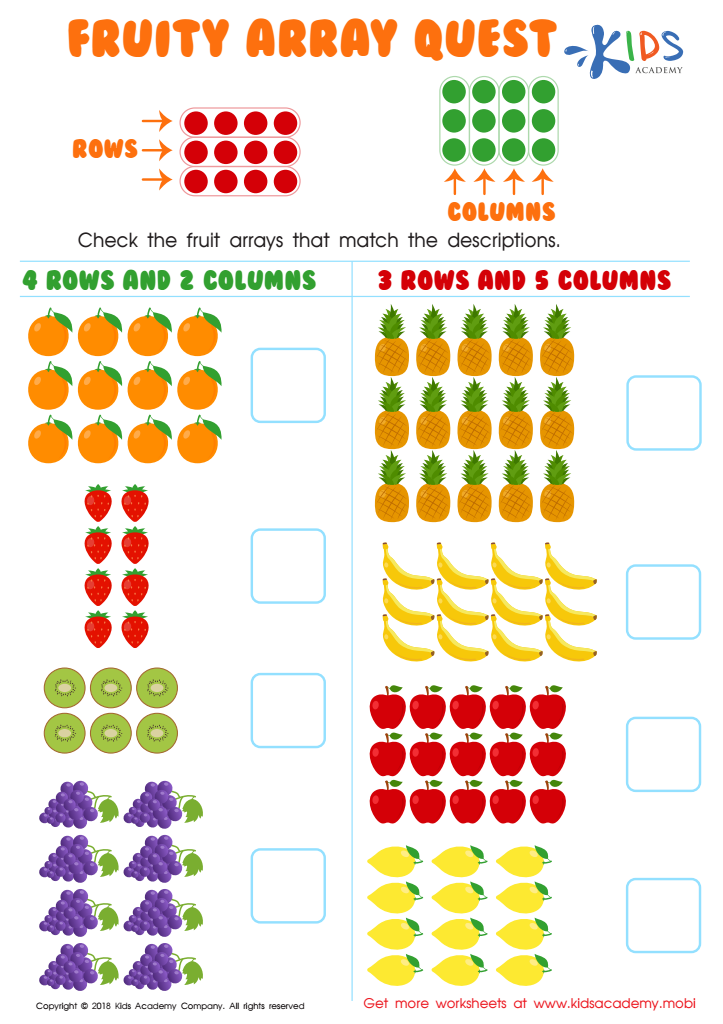
    Explain rows (horizontal) and columns (vertical) to your child before starting the worksheet. Show them the picture and the arrows indicating direction. Your child should be able to answer the questions easily after that. Help them match the fruit arrays that match the descriptions.
    Fruity Array Quest Worksheet
    Worksheet
    Easter Arrays Worksheet
    Easter Arrays Worksheet

    Easter Arrays Worksheet

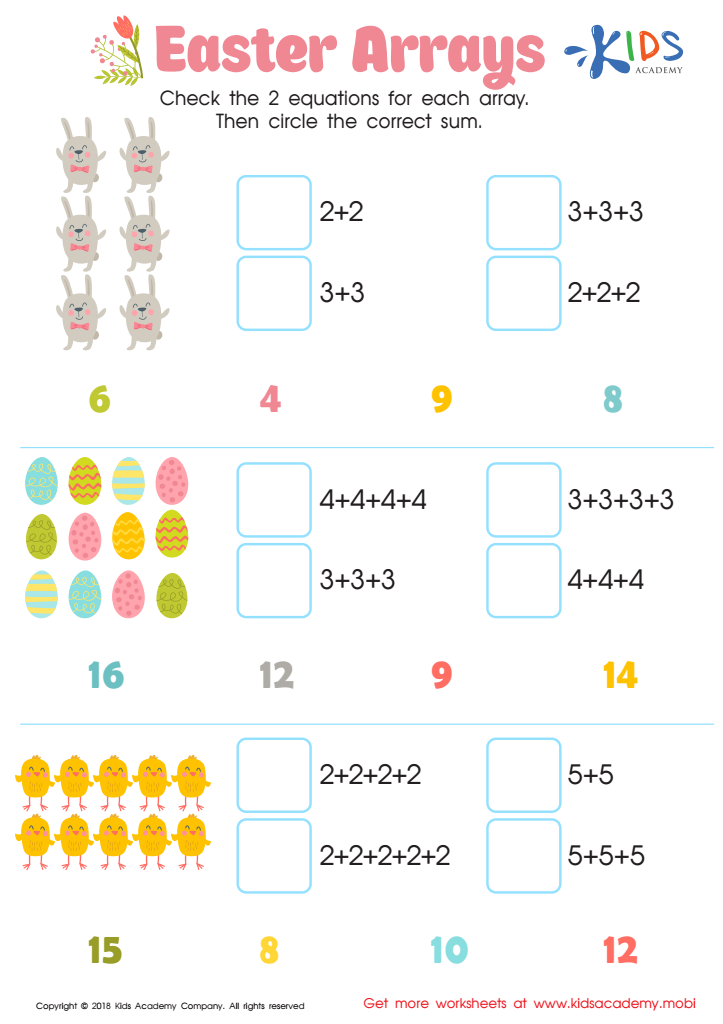
    Does your child love Easter? Do they adore the Easter bunny and egg hunts? Help them have fun with this worksheet! Go through it with them and check the equations for each array. Then, have them circle the correct sum. It's a great way to make the holiday extra exciting!
    Easter Arrays Worksheet
    Worksheet
    Adding with Arrays: Chocolate Bars Worksheet
    Adding with Arrays: Chocolate Bars Worksheet

    Adding with Arrays: Chocolate Bars Worksheet

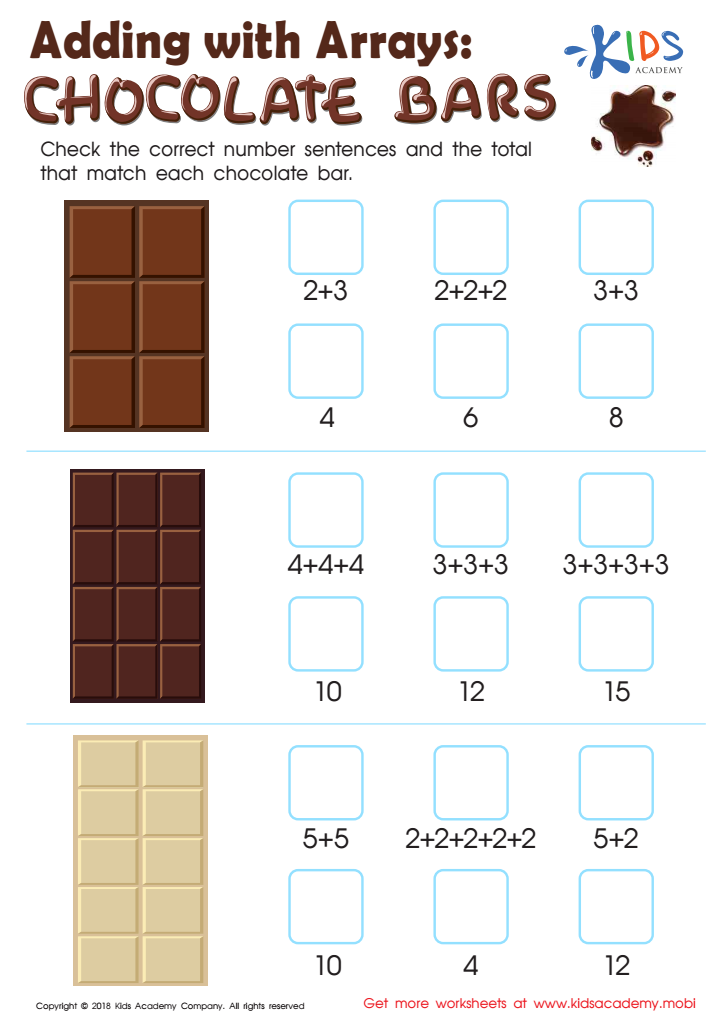
    Kids love chocolates! Gauge how enthused your kids get when you mention them. This worksheet is a fun exercise about chocolates - get your kids to check the correct number sentences and totals for each chocolate bar. Reward their hard work with some chocolates - extra incentive for a job well done!
    Adding with Arrays: Chocolate Bars Worksheet
    Worksheet
    Schoolbag Arrays Worksheet
    Schoolbag Arrays Worksheet
    Schoolbag Arrays Worksheet

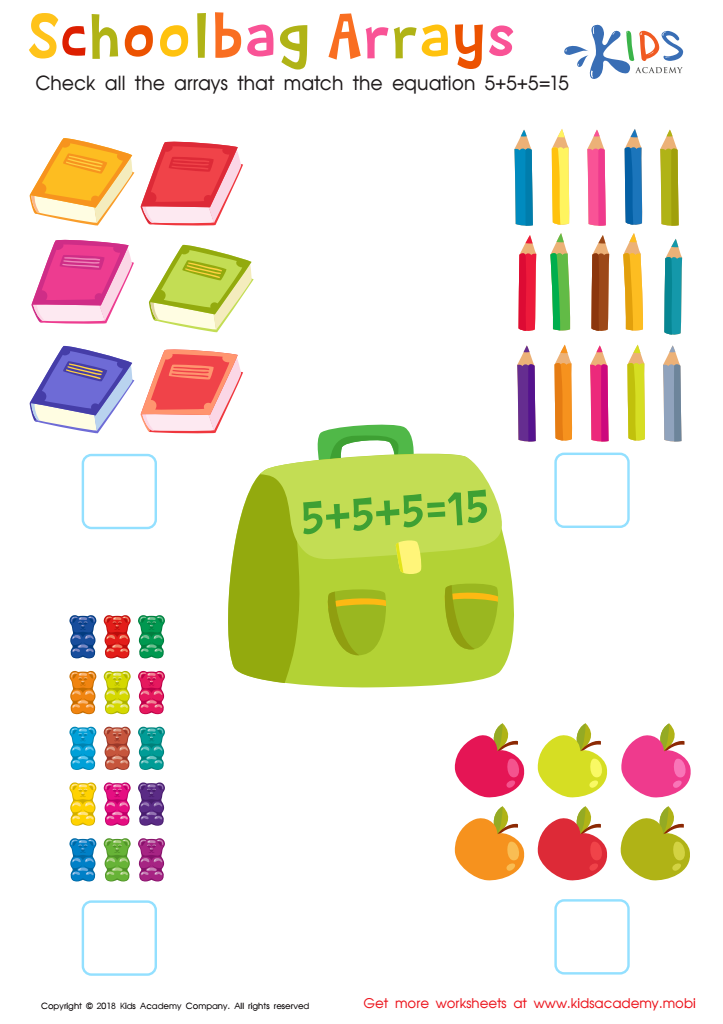
    Help your child spot the correct arrays in this worksheet: having them count the items in each and check the boxes for the ones with 15 objects. Ask them to differentiate between rows and columns and explain which ones match the equation 5+5+5=15.
    Schoolbag Arrays Worksheet
    Worksheet
    Colorful Arrays Bingo Worksheet
    Colorful Arrays Bingo Worksheet

    Colorful Arrays Bingo Worksheet

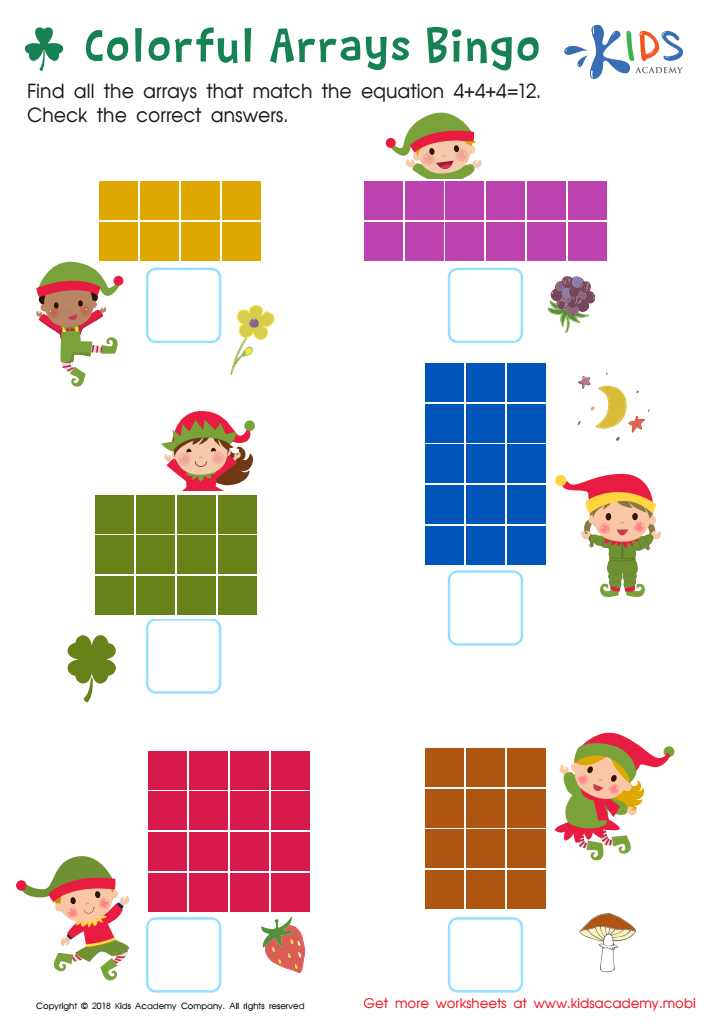
    This worksheet stimulates thinking about arrays and how to represent them. Instruct students to count the 6 arrays and find which ones sum up to 12. Ask them to check the answers for accuracy.
    Colorful Arrays Bingo Worksheet
    Worksheet
    Party Arrays Worksheet
    Party Arrays Worksheet

    Party Arrays Worksheet

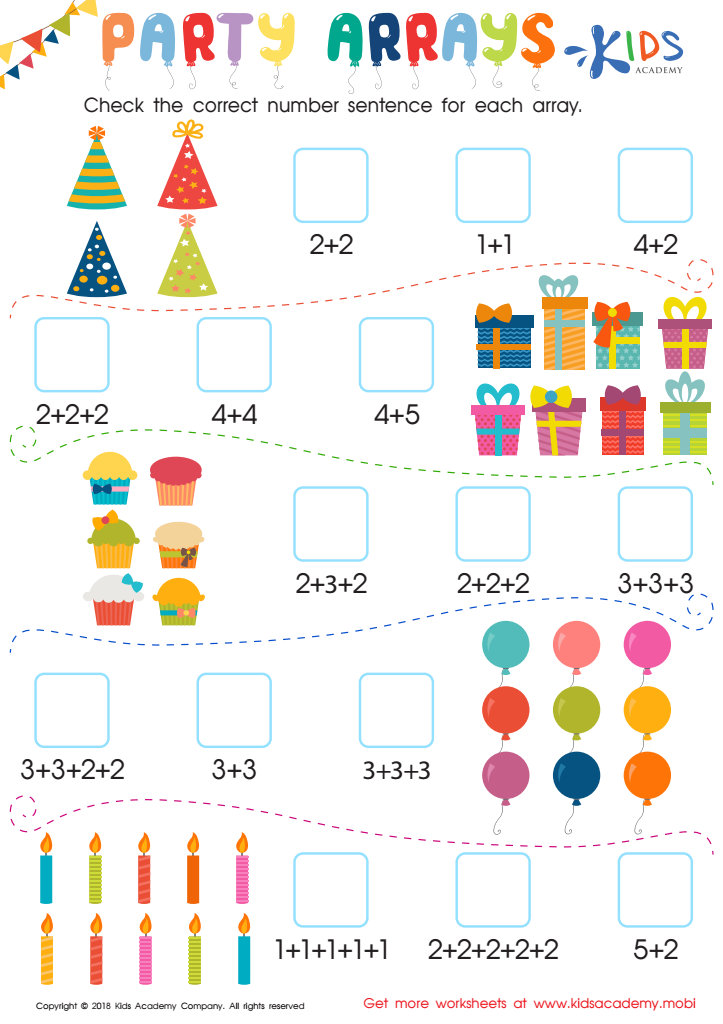
    Help your child count the objects in each of the five arrays, then check the correct number sentence for each. This exercise will test their math skills and understanding of number sentences. Guide them to select the appropriate boxes.
    Party Arrays Worksheet
    Worksheet
    Arrays and Equations Worksheet
    Arrays and Equations Worksheet

    Arrays and Equations Worksheet

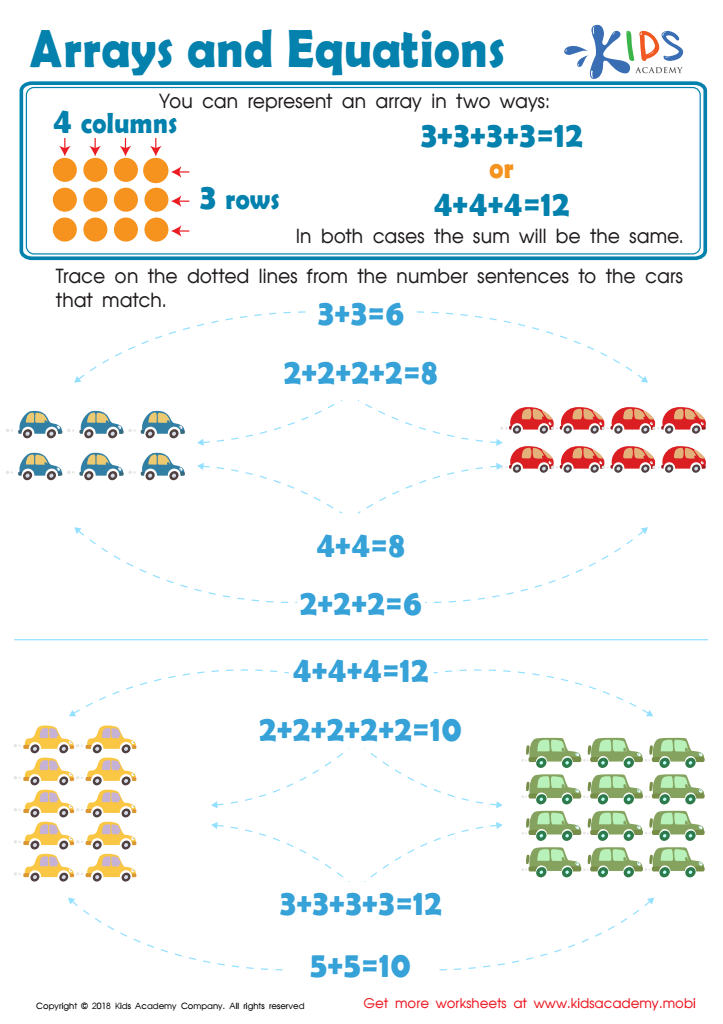
    An array is objects, pix, or numbers organized in rows and columns. Show kids two ways to interpret this: 3 rows in 4 places = 12 and 4 columns in 3 places = 12. Help your child trace the number sentences to the matching cars. All equations always add up to the same amount.
    Arrays and Equations Worksheet
    Worksheet
    Representing Arrays with Number Sentences Worksheet
    Representing Arrays with Number Sentences Worksheet

    Representing Arrays with Number Sentences Worksheet

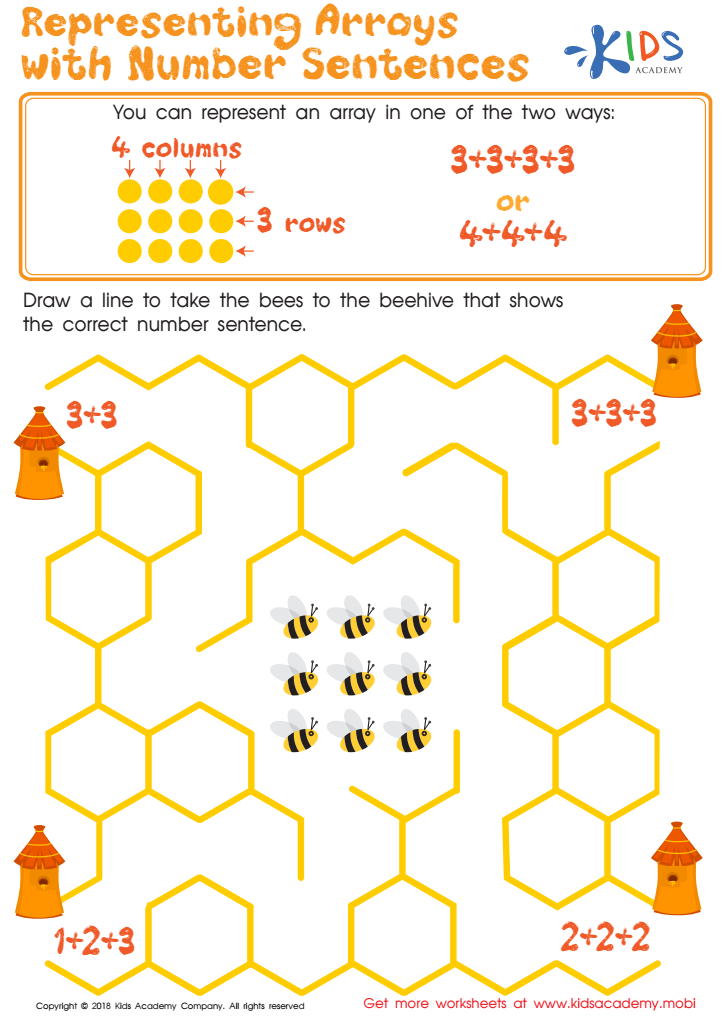
    An array is a collection of objects, pictures or numbers arranged in rows and columns. Teach your kids two ways to interpret an array with this fun worksheet. Represent it in terms of rows or columns then have your student draw a line to the beehive to discover the correct number sentence.
    Representing Arrays with Number Sentences Worksheet
    Worksheet
    Enrichment: Plant the Flowers Worksheet
    Enrichment: Plant the Flowers Worksheet

    Enrichment: Plant the Flowers Worksheet

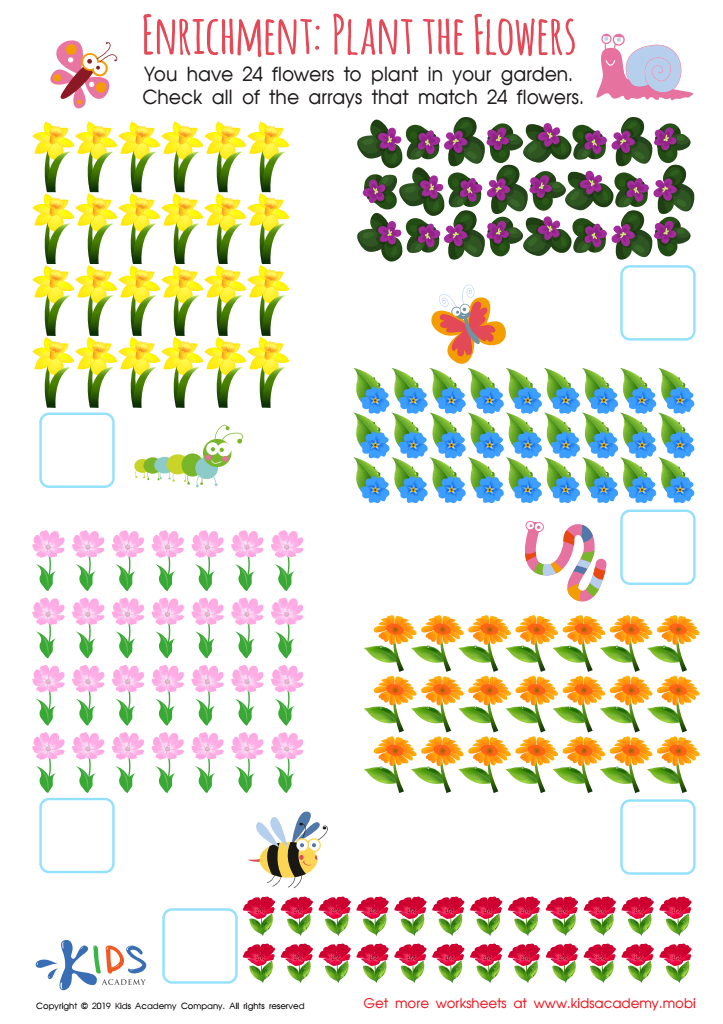
    Do your kids love flowers? Teach them to count and identify some common varieties with this worksheet. There are 24 flowers for them to name and check off in the arrays. Discover the beauty of flowers, their smell and softness with your kids. Help them recognise the ones in your garden and count them with the worksheet.
    Enrichment: Plant the Flowers Worksheet
    Worksheet
    What's an Array? Worksheet
    What's an Array? Worksheet

    What's an Array? Worksheet

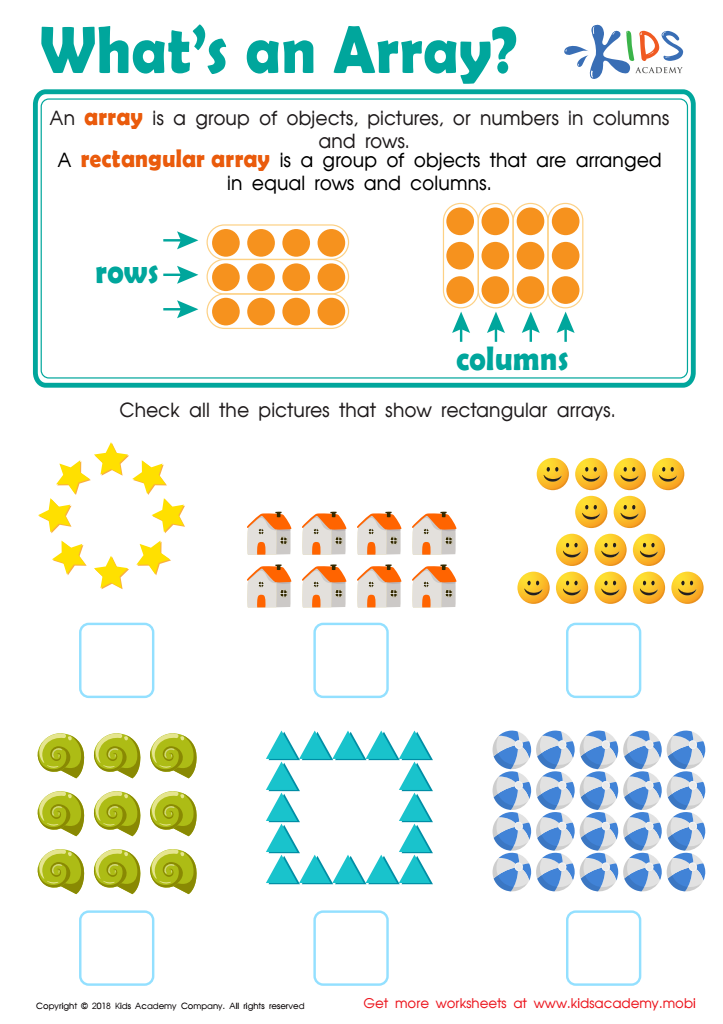
    Explain to your child that an array is a group of objects, pictures, or numbers in columns and rows. Show them a rectangular array is a group of objects in equal rows and columns. Guide them to check the pictures in the worksheet to spot any rectangular arrays. Help them remember this concept.
    What's an Array? Worksheet
    Worksheet
    Flowery Arrays Worksheet
    Flowery Arrays Worksheet

    Flowery Arrays Worksheet

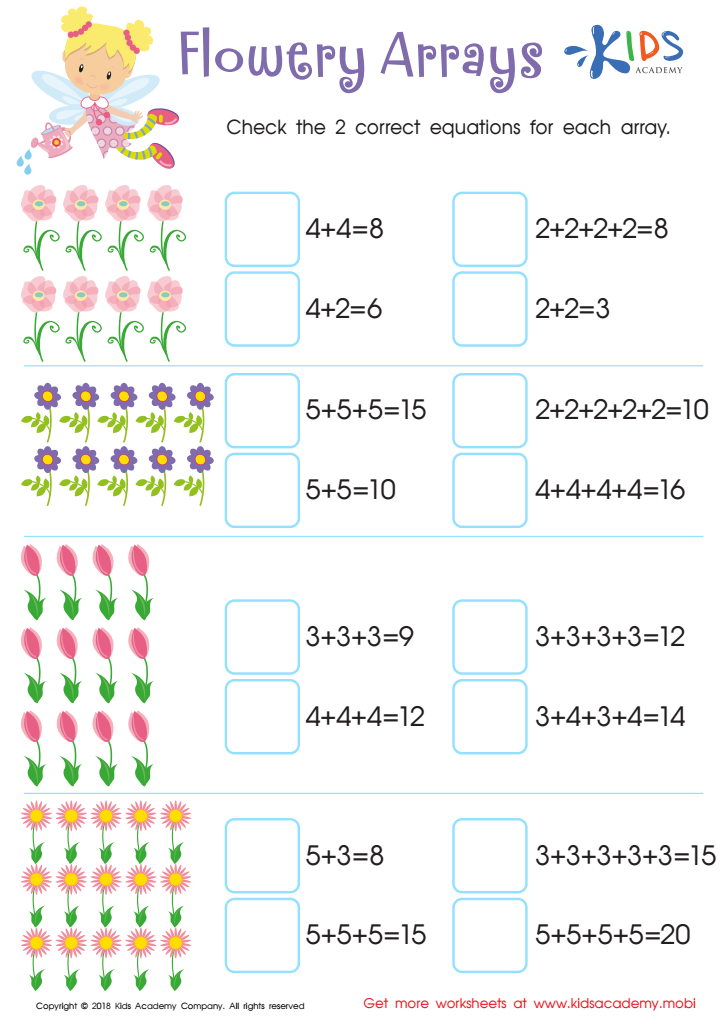
    This worksheet helps your child learn to identify and represent arrays. For example, both 3+3+3+3=12 and 4+4+4=12 are arrays but the first is arranged in rows and the second in columns. Let your child use this knowledge to answer the four questions in this pdf and check the two correct equations.
    Flowery Arrays Worksheet
    Worksheet
    Independence Day Arrays: Rows and Columns Worksheet
    Independence Day Arrays: Rows and Columns Worksheet

    Independence Day Arrays: Rows and Columns Worksheet

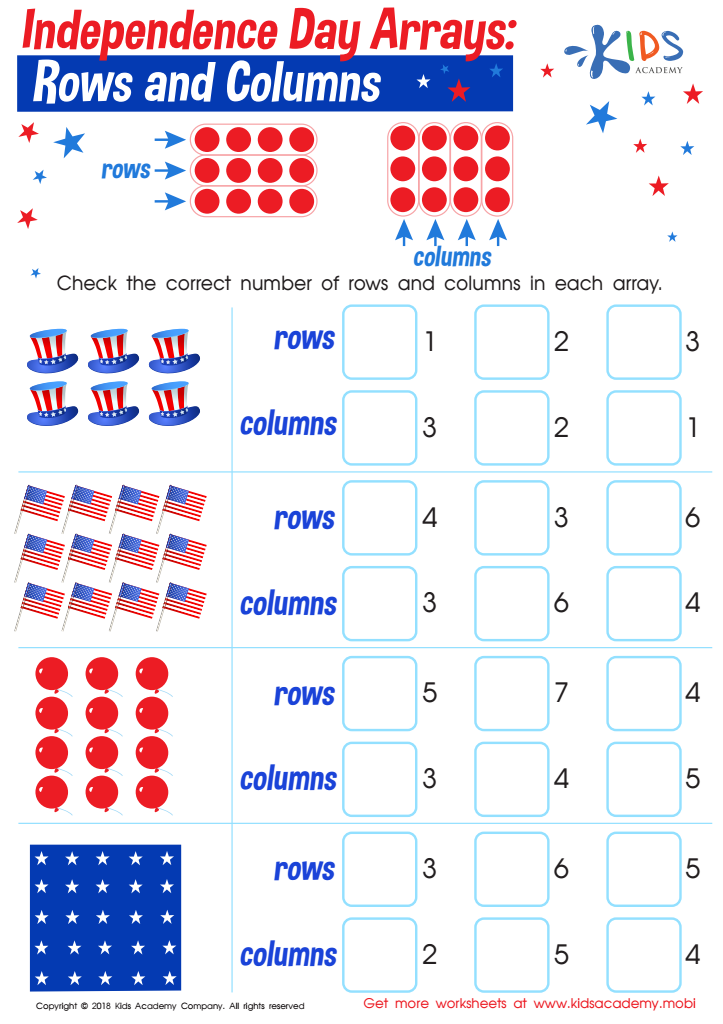
    Does your child know when Independence Day is? They might love the family picnics and fireworks, or they may not understand the significance of the holiday. After this worksheet, they'll comprehend it better. Help them look at the images and count the number of rows and columns in each array.
    Independence Day Arrays: Rows and Columns Worksheet
    Worksheet
    Equal Groups: Assessment 2 Worksheet

    Equal Groups: Assessment 2 Worksheet

    Equal Groups: Assessment 2 Worksheet

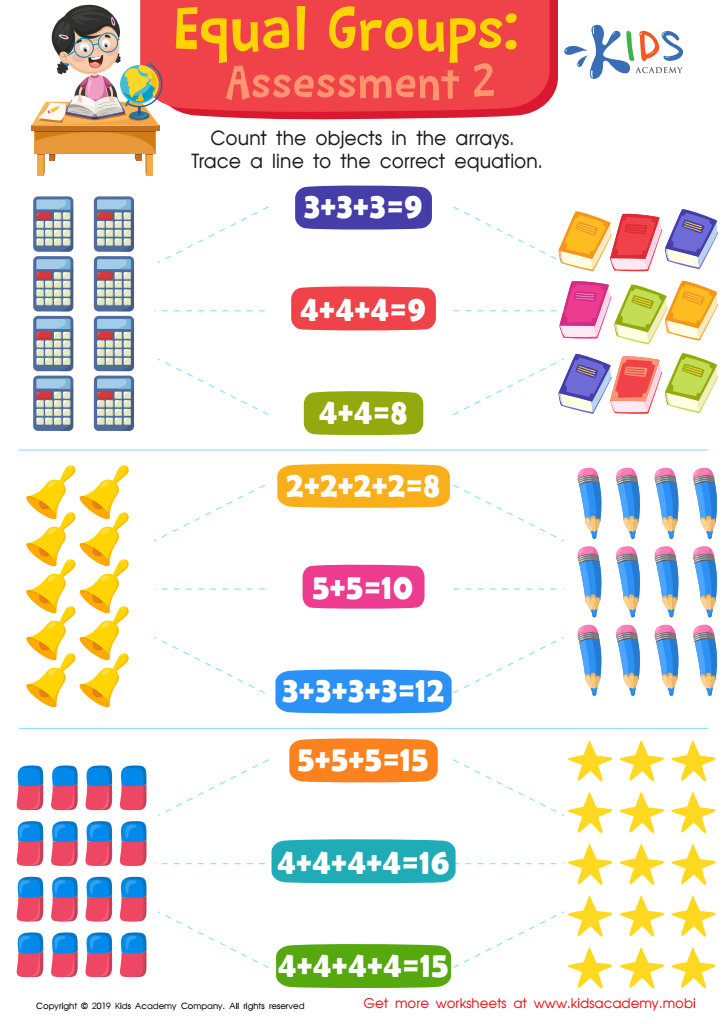
    Get your kids to pay attention to learning with familiar objects, bright colors, and this worksheet. It has six arrays - ask kids to identify them and count the objects. Then, help them trace a line to the correct equation.
    Equal Groups: Assessment 2 Worksheet

    Worksheet


    Arrays are a fundamental concept in mathematics and computer science that can greatly benefit children aged 6-7. At this age, children are developing their problem-solving skills and cognitive abilities, making it a perfect time to introduce them to arrays.

    Firstly, arrays help children organize information systematically. They can visually arrange objects in rows and columns, which promotes an understanding of patterns and sequences. This organization fosters critical thinking and improves cognitive skills, as children learn to recognize relationships between numbers and shapes.

    Moreover, learning about arrays builds a strong foundation for advanced mathematical concepts. Understanding arrays can lead to better comprehension of addition, multiplication, and even division later on. For example, an array can demonstrate multiplication by arranging items into equal groups.

    In addition, arrays can enhance a child's data management skills. In our technology-driven world, familiarizing them with concepts like arrays lays the groundwork for later learning in coding or data structuring.

    Finally, exploring arrays can be a fun and engaging activity. Parents and teachers can make learning enjoyable through games, arts, and hands-on activities, which not only solidify understanding but also foster a love for learning. By introducing arrays early, caregivers can help children develop essential skills for lifelong learning.